
Lemony Greek chickpea soup lands in the bowl with a soft, silky broth, tender chickpeas, and a bright finish that wakes up every spoonful. The lemon doesn’t just add acidity at the end; it lifts the whole pot so the chickpeas taste fuller and the broth tastes clean instead of heavy. A little olive oil gives the soup that rounded, almost velvety mouthfeel that makes it feel comforting without turning thick or muddy.
What sets this version apart is the balance. The onions, garlic, and carrots build a gentle base first, then the oregano and chickpeas simmer long enough to turn the broth savory and full. The lemon goes in at the end so it stays fresh and sharp, not flat. If you’ve ever had chickpea soup taste dull, it usually needed more salt, more acid, or both. This one is built to avoid that problem from the start.
Below, I’ll show you the one texture choice that changes the whole pot, plus the easiest way to adjust the soup if you want it thicker, lighter, or a little more filling.
I blended about half the soup like you suggested and it came out creamy but still had plenty of texture. The lemon at the end made it taste bright instead of heavy, and my husband had seconds without adding anything else.
Save this lemony Greek chickpea soup for a bright, pantry-friendly dinner that still tastes rich and comforting.
The Lemon Stays Bright Only If You Add It at the End
The biggest mistake with chickpea soup is simmering the lemon too long. Heat flattens citrus fast, and what should taste lively ends up tasting vague. The broth can look fine and still feel dull on the tongue, which is why so many versions need extra salt at the table just to wake up.
This soup fixes that by building the savory base first and treating the lemon like a finishing ingredient, not part of the simmer. The chickpeas and vegetables carry the body of the soup, while the lemon sharpens everything right before serving. If you want a deeper, rounder flavor, a drizzle of olive oil at the end helps the broth feel fuller without making it heavy.
What Each Ingredient Is Actually Doing in This Soup

- Chickpeas — These are the body of the soup, and canned chickpeas work well here because they’re already tender. If you use dried chickpeas, cook them fully first or they’ll stay too firm for the soup’s short simmer time.
- Vegetable broth — This carries the seasoning and gives the soup its savory backbone. Use a broth you’d drink on its own; if it tastes thin in the carton, it’ll taste thin in the pot too.
- Lemon juice — Fresh juice matters here. Bottled lemon juice tastes flat and can throw off the clean finish this soup needs. Add it at the end so it stays bright and doesn’t turn bitter.
- Olive oil — A good olive oil gives the broth a silky finish and helps the soup feel satisfying. This is one place where quality matters, because the oil is tasted directly in the final bowl.
- Dried oregano — This brings the Greek-style seasoning that keeps the soup from tasting generic. If yours is old and dusty, replace it; stale oregano disappears in a simple soup like this.
- Fresh dill — Dill adds a fresh, grassy note that works beautifully with lemon and chickpeas. If you don’t have it, parsley is the closest swap, but the soup will lose some of that distinct herbal lift.
The 20 Minutes That Turn Broth and Chickpeas Into Soup
Softening the Vegetables Without Browning Them
Start by heating the olive oil and cooking the onion, garlic, and carrots until they lose their raw edge and the onion turns translucent. You’re not looking for color here; if the garlic browns, it turns bitter and takes the soup with it. Keep the heat at medium and stir often so the vegetables soften evenly. The pot should smell sweet and savory, not sharp.
Letting the Chickpeas Give Up Their Flavor
Add the chickpeas, broth, and oregano, then bring everything to a gentle simmer. A hard boil is unnecessary and can make the carrots break down too fast before the broth has time to pick up the chickpea flavor. After about 20 minutes, the carrots should be tender enough to pierce easily and the broth should taste more integrated, not like separate ingredients floating in liquid.
Blending Only What Needs It
For a creamier bowl, blend a portion of the soup and leave the rest chunky. That’s what gives you body without turning the whole pot into puree. If you blend everything, the soup can taste a little starchy and lose the contrast that makes each spoonful interesting. An immersion blender works well, but even a few quick pulses are enough.
Finishing With Lemon and Dill
Stir in the lemon juice right before serving, then garnish with fresh dill and a drizzle of olive oil. Taste the broth after the lemon goes in; if it suddenly tastes brighter and cleaner, you’re in the right place. If it still tastes flat, it usually needs a pinch more salt, not more lemon. Salt makes the citrus read clearly instead of sour.
How to Adapt This for a Thicker Bowl, a Dairy-Free Finish, or Meal Prep
Make it creamier without adding cream
Blend half the soup and leave the rest as-is. That gives you a thicker, more luxurious texture while keeping enough whole chickpeas for bite. If you blend the entire pot, the soup loses its shape and can start to feel heavy instead of cozy.
Keep it fully vegan and dairy-free
The recipe already fits a dairy-free table as written. The only place people sometimes go off-track is topping it with yogurt or cheese, which isn’t necessary because the olive oil and blended chickpeas already give the soup enough richness.
Use dried chickpeas if that’s what you have
Cook them until fully tender before adding them to the soup. Undercooked dried chickpeas stay chewy after the short simmer and will throw off the texture. Once they’re soft, the soup comes together the same way.
Storage and Reheating
- Refrigerator: Store in an airtight container for up to 4 days. The broth thickens a bit as it sits because the chickpeas keep absorbing liquid.
- Freezer: This freezes well for up to 2 months. Leave a little space at the top of the container since the liquid expands, and wait to add fresh dill until after reheating.
- Reheating: Warm it gently on the stove over medium-low heat with a splash of broth or water if needed. Don’t boil it hard, or the chickpeas can split and the lemon can taste harsh after a second round of heat.
Questions I Get Asked About This Recipe
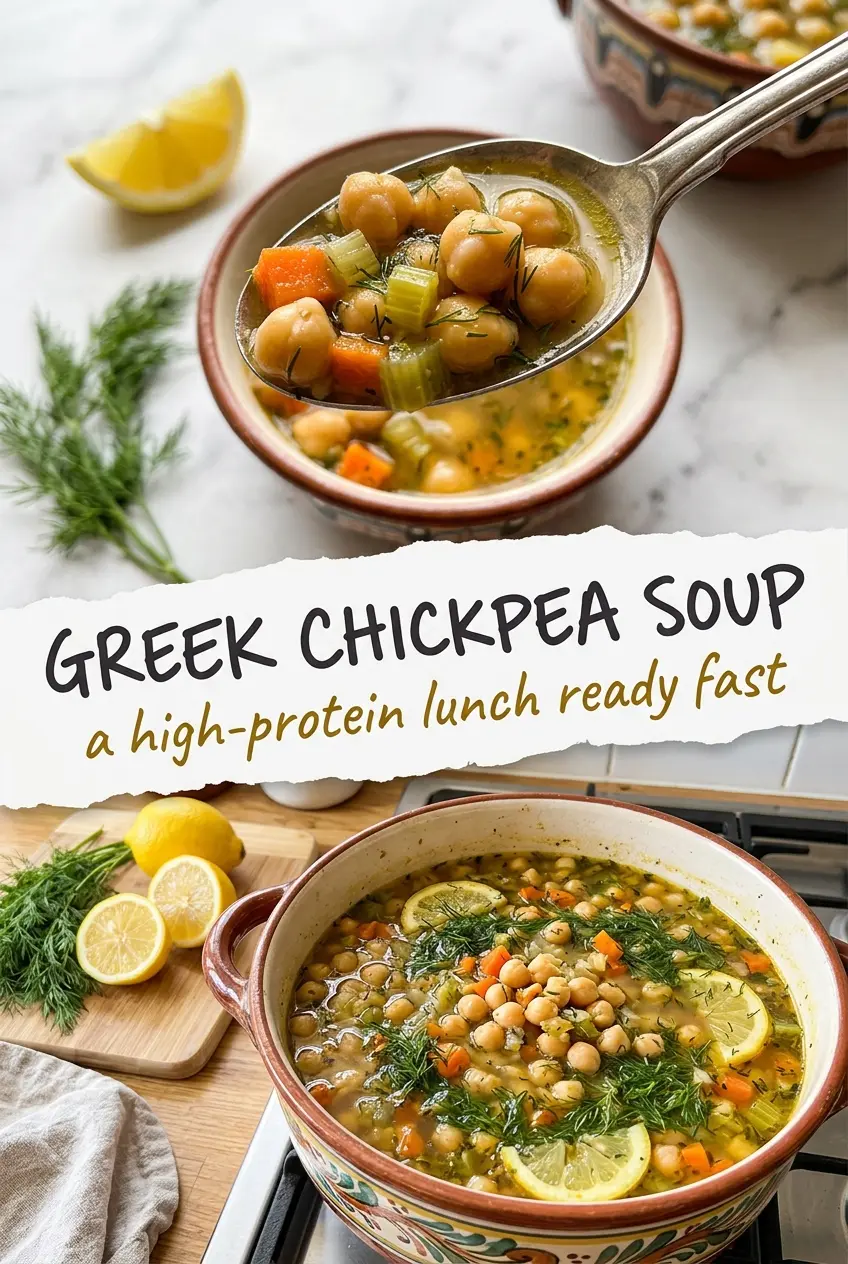
Lemony Greek Chickpea Soup
Ingredients
Equipment
Method
- Heat the olive oil in a Dutch oven over medium heat until shimmering. Add the onion, garlic, and carrots and sauté for 6-8 minutes, stirring often, until softened and fragrant.
- Add the chickpeas, vegetable broth, and dried oregano to the pot and stir to combine. Bring to a simmer over medium-high heat, then reduce to a gentle simmer for 20 minutes, until the vegetables are tender and the broth looks lightly golden.
- Scoop out about half the soup and blend until smooth, then return it to the pot. Stir until the mixture is evenly creamy but still has some whole chickpeas for texture.
- Turn off the heat and stir in the fresh lemon juice right before serving. Taste and adjust seasoning if needed, then keep warm so the citrus stays bright.
- Ladle the soup into bowls and top with fresh dill. Finish with a drizzle of olive oil so the surface glistens.