
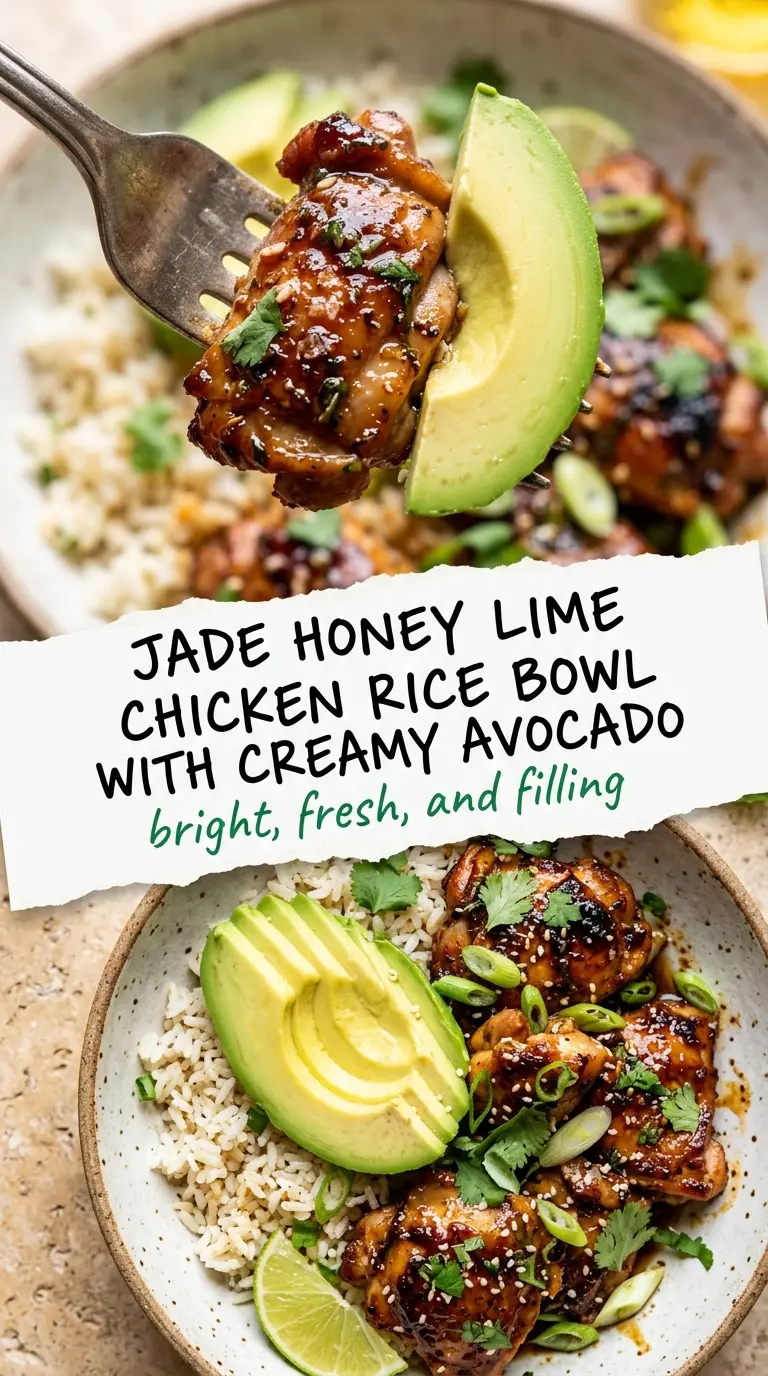
Juicy chicken glazed in honey and lime lands on fluffy rice with cool avocado and a handful of cilantro, and the whole bowl eats like it took a lot more effort than it did. The sweet-tart sauce clings to the chicken instead of pooling at the bottom of the bowl, so every bite gets a little shine and a little acidity. The avocado softens the edges without turning the bowl heavy, which is exactly why this one earns repeat status.
The trick is keeping the marinade tight and purposeful. Honey brings body and browning, lime cuts through the richness, and garlic gives the sauce enough backbone that it doesn’t taste like a glaze for dessert. Half the marinade goes on the chicken before cooking, then the rest gets drizzled over the hot meat at the end so you get freshness and gloss without risking raw marinade in the finished bowl.
Below you’ll find the small details that matter here: how long to marinate for the best flavor, how to keep the chicken from going pale in the pan, and the one avocado move that makes the bowl look as good as it tastes.
The honey-lime sauce coated the chicken beautifully and thickened just enough in the skillet without getting sticky. I served it over jasmine rice and my husband went back for seconds before I even sat down.
Honey Lime Chicken and Avocado Rice Bowl is the kind of bright, creamy dinner that still tastes excellent the next day.
The Reason the Chicken Stays Juicy Instead of Drying Out
Chicken breast goes from tender to chalky fast when it cooks too long, and that risk goes up when honey is involved because the outside can darken before the center is done. Cutting the chicken into small, even pieces solves most of that problem. It cooks quickly, browns well, and gives you more surface area for the marinade to cling to.
The other thing that matters here is when the glaze goes on. If you cook all of the marinade with the chicken from the start, the sugar in the honey can scorch before the meat finishes. Saving some for the end gives you a fresh, glossy finish and keeps the pan from tasting burnt.
- Chicken breast — Diced breast cooks fast and stays tender as long as the pieces are similar in size. Thigh meat works too if you want a little more richness and a wider doneness window.
- Honey — This is what gives the sauce body and the sticky sheen. Maple syrup can stand in, but it tastes a little deeper and less bright.
- Lime juice — Fresh lime is worth using here because bottled juice can taste flat. The acid keeps the bowl lively and balances the sweetness of the honey.
- Rice — Use whatever rice you cook best, but start with hot, fluffy grains. Cold rice turns the bowl dull and makes the avocado feel heavier than it should.
- Avocado — Pick one that gives slightly at the stem end and slices cleanly. If it’s too firm, the bowl loses its creamy contrast; if it’s overripe, it smears instead of fanning nicely.
Getting the Glaze On Without Burning the Pan
The marinade comes together in one bowl, and it should taste sharp, sweet, and a little salty before the chicken goes in. That balance matters because the rice will dilute it later. Use only half of the marinade for the raw chicken, then keep the rest clean for finishing the dish. If you pour raw marinade over cooked chicken without setting any aside, you’re either cooking it again for safety or skipping the last hit of fresh flavor that makes the bowl pop.
Garlic does more than add aroma here. It gives the glaze a savory edge so the honey doesn’t read as dessert, and it works best when minced fine enough to soften into the sauce. The olive oil helps the marinade coat the chicken evenly and keeps the pieces from sticking when they hit the pan.
- Olive oil — Just enough to help the sauce spread and keep the chicken from grabbing the skillet. A neutral oil works if that’s what you have.
- Garlic — Fresh minced garlic tastes better than powder here because it cooks into the glaze and leaves little savory bursts in the finished bowl.
- Cilantro — This is a finishing herb, not a background ingredient. If you don’t like cilantro, chopped scallions or flat-leaf parsley give you freshness without the same flavor.
The 20 Minutes That Actually Matter
Mixing the Marinade
Whisk the honey, lime juice, garlic, and olive oil until the honey loosens and the mixture looks smooth, not streaky. It should feel slightly thick between your fingers, because that tells you it will cling to the chicken instead of slipping off. Taste it before you marinate the chicken; if it tastes harsh, a pinch of salt is usually what it needs to round out the lime.
Letting the Chicken Sit
Toss the diced chicken in half of the marinade and let it rest for about 15 minutes. That’s long enough for the surface to pick up flavor without turning the texture soft or mealy. If you leave it much longer, the lime can start to change the outside of the chicken before it even hits the pan.
Searing Until the Edges Turn Golden
Cook the chicken in a hot skillet in a single layer so the pieces brown instead of steaming. Listen for a steady sizzle when the chicken goes in; if the pan is crowded or too cool, the pieces will turn pale and release liquid. You’re looking for golden edges, opaque centers, and no raw pink in the middle of the largest piece.
Finishing With the Reserved Glaze
Take the skillet off the heat and drizzle the remaining marinade over the hot chicken. The heat from the pan is enough to warm it through and turn it glossy without reducing it into a sticky mess. Spoon the chicken over rice, add the avocado slices, and finish with cilantro while the bowl is still warm so the whole thing feels fresh when it hits the table.
How to Change This Bowl Without Losing What Makes It Work
Make it dairy-free and gluten-free as written
This bowl already fits both diets naturally if you use a gluten-free rice base and keep an eye on any packaged add-ins. The sauce gets its body from honey and olive oil, so you don’t need dairy to make it satisfying, and nothing in the core recipe depends on gluten for texture.
Swap chicken thighs for a richer finish
Boneless thighs stay juicier and take on a little more flavor from the honey-lime glaze. They need a few extra minutes in the skillet, but they give you more margin if you tend to pull chicken a touch early.
Turn it into a meal prep bowl
Cook the rice and chicken ahead, then store the avocado separately and slice it right before serving. The chicken reheats well, but avocado turns brown and soft if it sits mixed in overnight, so keep that fresh element separate until the end.
Use cauliflower rice for a lighter bowl
Cauliflower rice keeps the same bright topping combination while cutting the starchiness of the base. Cook it just until tender and dry, because watery cauliflower rice will dilute the glaze and make the bowl taste flat.
Storage and Reheating
- Refrigerator: Store the chicken and rice for up to 4 days. The avocado should be sliced fresh, because it browns and softens fast.
- Freezer: The chicken and rice freeze well for up to 2 months, but skip freezing the avocado and cilantro. Pack the chicken separately if you can so the rice doesn’t absorb all the sauce.
- Reheating: Warm the chicken and rice gently in the microwave or in a covered skillet with a splash of water. High heat dries out the chicken fast and makes the glaze sticky instead of glossy.
Answers to the Questions Worth Asking

Honey Lime Chicken And Avocado Rice Bowl
Ingredients
Equipment
Method
- Whisk honey, lime juice, garlic, and olive oil together until smooth and fully combined, then set aside 1/2 for glazing later.
- Toss the diced chicken with half the marinade to coat evenly, then cover and refrigerate for 15 minutes.
- Heat a cast iron skillet over medium-high heat, then add the chicken in a single layer and cook until golden and cooked through, about 8–10 minutes.
- Drizzle the remaining marinade over the cooked chicken and let it lightly bubble and cling, about 1–2 minutes.
- Spoon cooked rice into serving bowls, then top with glazed chicken.
- Fan the avocado slices over the top of each bowl.
- Finish with chopped cilantro as a fresh garnish and serve.