
Cheesy hashbrown casserole earns its place on the table because it comes out creamy in the middle, golden on top, and scoopable without falling apart. The potatoes stay tender, the cheddar melts into the sour cream base, and that buttery cornflake crust gives every bite a sharp little crunch that keeps the whole dish from feeling heavy.
The part that separates a good casserole from a soggy one is moisture control. Frozen hash browns carry a lot of water, and if they go into the bowl still icy or wet, the filling loosens up and bakes into a soft, gray layer instead of a rich, cohesive casserole. Thaw them fully, then pat them dry before mixing. The other piece that matters is the topping: buttering the cornflakes before they hit the pan helps them toast instead of just sitting there pale and dry.
Below, I’ve included the timing and texture cues that matter most, plus a few easy swaps if you need to work with what’s already in your kitchen. Once you get the moisture right, this one is almost impossible to mess up.
The cornflake topping stayed crisp all the way through dinner, and the center baked up creamy instead of watery. I used it for brunch and it disappeared before the eggs were finished.
Cheesy hashbrown casserole with a crisp buttery cornflake topping is one to pin for brunch, potlucks, and holiday mornings.
The Trick to Keeping Hash Browns Creamy, Not Watery
The mistake most people make with casserole-style hash browns is treating thawed potatoes like they’re already dry enough. They aren’t. Even after they’ve thawed, frozen shredded hash browns hold enough water to thin out the sour cream and soup mixture, which leaves you with a loose, almost soupy center after baking. Dry potatoes let the filling stay thick and bake into slices that hold their shape when you scoop them.
The second thing worth paying attention to is the balance between fat and starch. The cream of chicken soup brings body, the sour cream adds tang and keeps the texture lush, and the cheddar melts into the mix so the casserole tastes rich without needing extra steps. If the mixture looks stiff before it goes into the dish, that’s a good sign. It should mound a little rather than pour.
What Each Ingredient Is Actually Doing in This Casserole
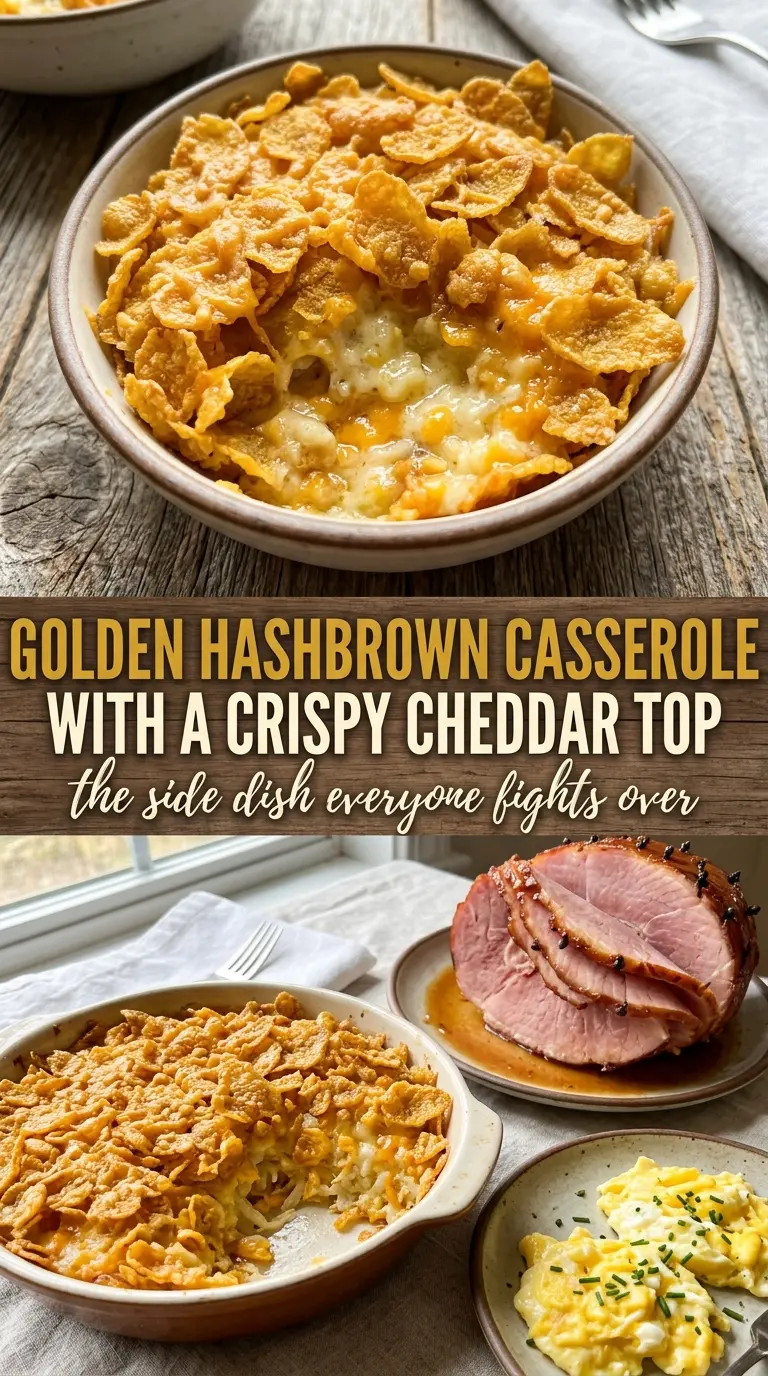
- Frozen shredded hash browns — These are the backbone of the dish, and thawing them fully matters more than using a fancy cheese. If they’re still icy, they leak water into the pan and the casserole turns loose. Pat them dry with paper towels after thawing for the best texture.
- Cream of chicken soup — This is what gives the casserole its built-in seasoning and body. You can use cream of mushroom if you want a different flavor, but the dish loses a little of that classic savory finish. A homemade white sauce can work too, but it needs to be thick before it goes in.
- Sour cream — This brings the tang that keeps the casserole from tasting flat. Full-fat sour cream gives the best texture, though reduced-fat will work in a pinch with a slightly lighter result. Greek yogurt can stand in, but it bakes a little firmer and more tart.
- Cheddar cheese — Sharp cheddar gives the casserole its most noticeable cheese flavor. Pre-shredded cheese melts fine here, though freshly shredded cheese blends more smoothly if you have the time. Mild cheddar works, but the casserole tastes less bold.
- Cornflakes — They’re there for crunch, not color alone. Crushing them by hand keeps a mix of fine crumbs and bigger shards, which gives the top better texture than powdery cereal crumbs. Breadcrumbs work if that’s what you have, but they make a more even, less nostalgic crust.
Building the Casserole So the Top Stays Crisp
Mix the Filling Until It Looks Thick, Not Soupy
Stir the thawed hash browns, soup, sour cream, cheddar, onion, and half the melted butter together until the potatoes are evenly coated and the mixture holds together when you lift a spoonful. The bowl should look creamy and substantial, not wet around the edges. If it seems loose, the hash browns probably still have surface moisture on them. That extra water won’t disappear in the oven; it just turns into steam.
Spread It Into the Dish Without Packing It Down
Spoon the mixture into a greased baking dish and level it gently. Pressing it down hard compacts the potatoes and blocks heat from moving through the center, which can leave you with a dense bottom and a pale top. A light, even layer gives the whole casserole a better chance to bake through at the same pace.
Butter the Cornflakes Before They Go On Top
Toss the crushed cornflakes with the remaining melted butter until every piece looks lightly coated. This is the difference between a topping that turns gold and one that dries out into something dusty. Sprinkle it over the casserole in an even layer, then bake at 350°F until the edges bubble and the top turns deep golden, about 45 minutes. If the top browns before the center is hot, lay a loose piece of foil over it for the last stretch.
How to Change It Without Losing the Character of the Dish
Make It Without the Cream of Chicken Soup
Use cream of mushroom or cream of celery if that’s what you have. The casserole will still set up well, but the flavor shifts a little away from the classic savory note. If you want a homemade version, use a thick white sauce that’s already seasoned before you mix it in.
Dairy-Free Version That Still Holds Together
Use a dairy-free sour cream and a dairy-free shredded cheddar style cheese, then swap in a dairy-free condensed soup or a thick dairy-free white sauce. The texture will be a touch softer, but it still bakes into a scoopable casserole if the potatoes are dry to begin with. Skip any cheese with a very oily melt, since that can make the top greasy.
Gluten-Free Topping Swap
Replace the cornflakes with crushed gluten-free cereal or gluten-free breadcrumbs. The topping will still crisp, but it may brown a little faster, so watch the oven during the last 10 minutes. The casserole itself stays naturally gluten-free only if the soup you use is certified gluten-free.
Make It Ahead for Brunch
Assemble the casserole without the cornflake topping, cover it, and refrigerate it overnight. Add the buttered topping right before baking so it stays crisp instead of softening in the fridge. You may need a few extra minutes in the oven since the dish starts cold.
Storage and Reheating
- Refrigerator: Store leftovers covered for 3 to 4 days. The top softens, but the flavor holds up well.
- Freezer: It freezes well after baking. Cool completely, wrap tightly, and freeze in portions or as a whole pan for up to 2 months.
- Reheating: Reheat in a 350°F oven until hot in the center. The microwave works for single servings, but the topping will lose its crunch, so the oven is the better choice when you want the best texture.
Answers to the Questions Worth Asking
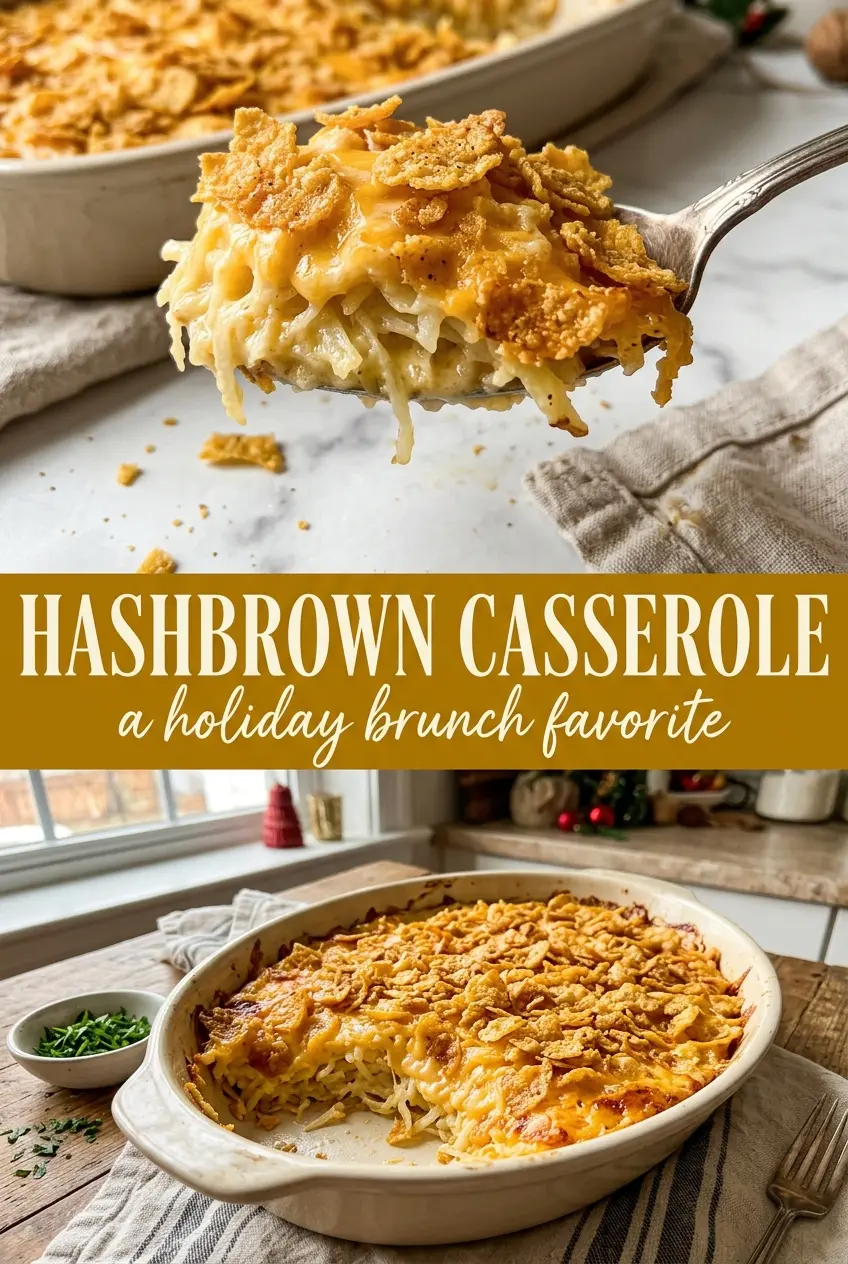
Cheesy Hashbrown Casserole
Ingredients
Equipment
Method
- In a large bowl, mix thawed hash browns, cream of chicken soup, sour cream, shredded cheddar cheese, diced onion, and half the melted butter together until evenly combined.
- Spread the mixture into a greased baking dish and press into an even layer.
- Toss crushed cornflakes with the remaining melted butter until the crumbs look evenly coated.
- Sprinkle the buttered cornflakes evenly over the top of the casserole so coverage reaches the edges.
- Bake at 350°F for 45 minutes, until the top is golden and the center is bubbling.