
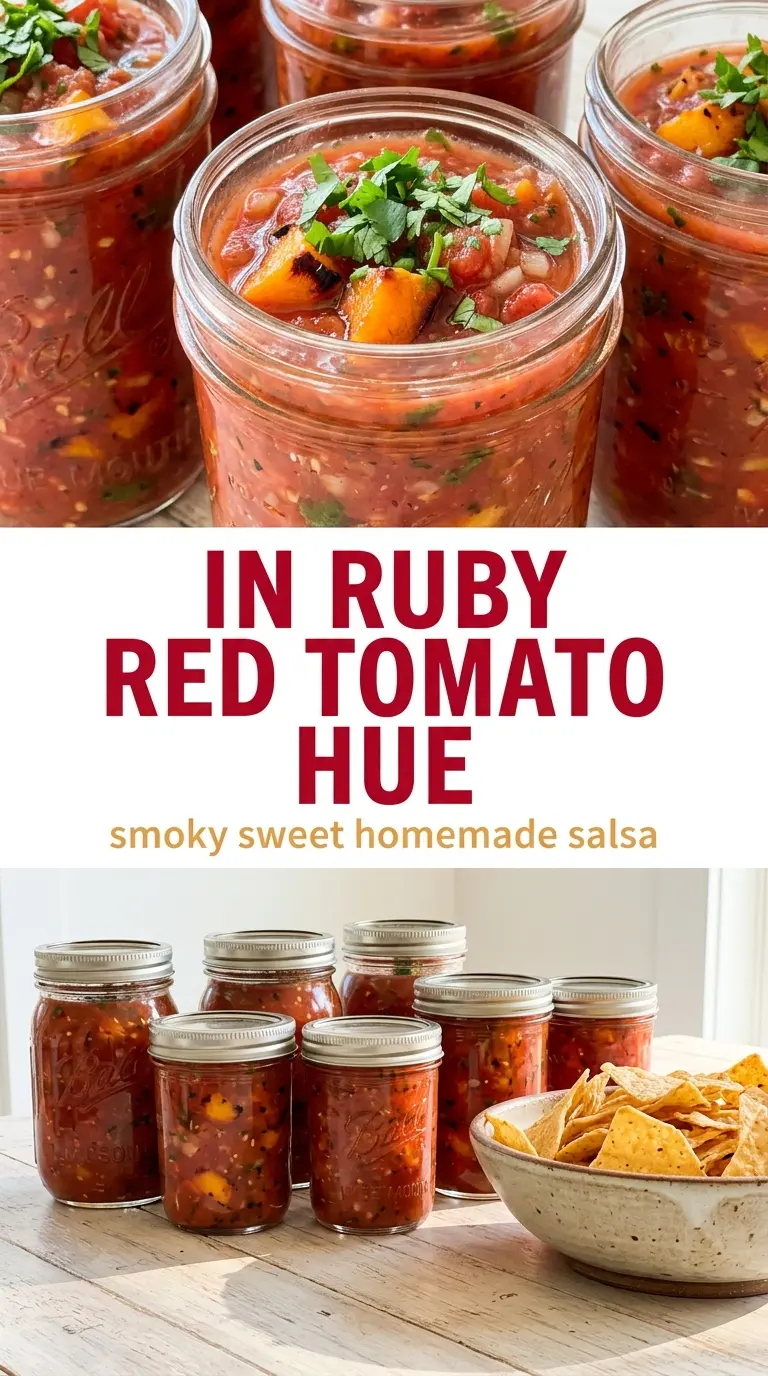
Charred tomatoes and peaches turn into a salsa with a smoky-sweet edge that plain fresh salsa never quite reaches. The peaches soften into the tomatoes instead of standing apart from them, so every spoonful tastes round, bright, and a little unexpected. It’s the kind of jar you open in the middle of winter and immediately wish you had packed more of.
What makes this version work is the quick roast on the fruit and vegetables before they ever hit the saucepan. That bit of char deepens the tomatoes, wakes up the onion, and gives the peaches a jammy note without making the salsa taste like dessert. Using bottled lime juice matters here, too, because it gives you the acidity needed for safe canning in a way fresh lime juice can’t promise.
Below you’ll find the exact method I use to keep the texture balanced, plus a few practical notes on swaps, heat level, and storage so the jars seal cleanly and hold up well on the shelf.
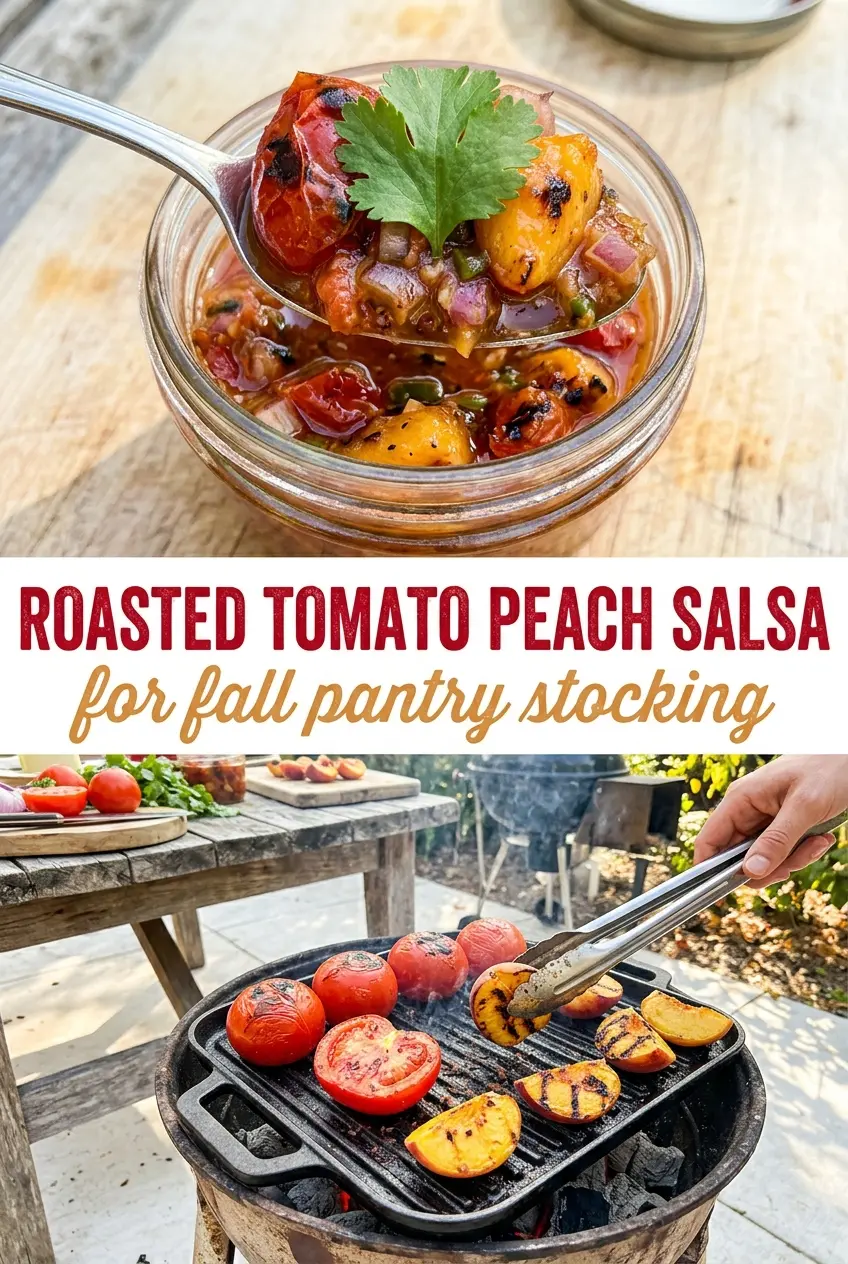
The peaches got this gorgeous smoky edge on the grill pan, and the salsa set up perfectly in the jars without turning watery. We opened the first one with chips and ended up using the rest on tacos all week.
Save this roasted tomato peach salsa for canning when you want a smoky-sweet pantry jar with real roasted flavor.
The Char Matters More Than the Simmer
A lot of peach salsa recipes rush straight to the pot, but that skips the part that gives this jar its depth. The quick char on the tomatoes, peaches, onion, and pepper dries the surface just enough to concentrate flavor before the simmer starts. Without that step, the finished salsa can taste flat and a little too sweet, especially once it’s canned and chilled.
The other thing that matters is keeping the pieces chunky until after the roast. If you dice everything first, the peaches collapse too fast and the tomatoes lose their structure before the canning step even begins. Halving the produce first lets you control the texture, and leaving the skins on after charring brings in a little smoky bitterness that balances the sugar.
What Each Ingredient Is Actually Doing in This Dish
- Peaches — Choose firm-ripe fruit. Soft peaches turn mushy in the canner, while firmer peaches hold a better dice and still pick up enough sweetness from the simmer.
- Tomatoes — Ripe, meaty tomatoes work best because they give body without flooding the salsa with juice. Very seedy tomatoes can work, but expect a looser jar unless you cook the mixture down a bit longer.
- Bottled lime juice — This is the safety ingredient, not a flavor extra. Bottled lime juice has the consistent acidity you need for canning; fresh lime juice isn’t an equal swap here.
- Brown sugar — It rounds out the acidity and makes the char taste deeper. If you reduce it, the salsa will still can, but the sweet-smoky balance gets sharper and less mellow.
Building the Salsa in Layers, Not All at Once
Getting a Real Char Without Burning the Fruit
Set the peaches, tomatoes, onion, and pepper cut-side or skin-side down on the grill pan and leave them alone long enough to color. You’re looking for blackened spots and softened edges, not full collapse. If the pan runs too hot, the skins scorch before the flesh loosens, and that bitter burn will dominate the finished salsa. Medium heat gives you char with control.
Cutting the Pieces After They Cool
Let the vegetables and peaches cool until you can handle them comfortably, then dice them into even pieces. The charred skins stay on, and that’s part of the point — they add color and smoke. If you dice while everything is hot, the fruit starts breaking apart on the cutting board and you lose the texture that makes this salsa feel substantial in the jar.
The Simmer That Pulls It Together
Combine the chopped produce with the habanero, brown sugar, lime juice, and salt in a large saucepan and bring it to a steady simmer. Stir often so the fruit doesn’t stick, and cook until the peaches soften and the liquid looks slightly glossy, about 10 minutes. The salsa should still look spoonable, not jammy. Fold in the cilantro at the end so it stays bright instead of turning dull and muted in the heat.
Filling the Jars for a Safe Seal
Ladle the hot salsa into sterilized jars with 1/2-inch headspace and wipe the rims clean before adding lids and rings. Headspace matters because the salsa expands as it processes, and too little room can keep the jars from sealing. Process in a boiling water canner for 20 minutes, adjusting for altitude, then let the jars cool untouched until the seals set fully.
Make It Milder or Hotter
The habanero is optional for a reason. Leave it out for a family-friendly jar, or use half for a quieter heat that still lingers in the background. If you want more fire, add the full pepper with the seeds and membrane intact, but expect the heat to build after the salsa sits for a day or two.
Lower-Sugar Version
You can reduce the brown sugar a little if your peaches are extra sweet, but don’t remove it entirely unless a tested canning recipe specifically allows that change. The sugar helps balance the acidity and gives the salsa its rounded finish. Without it, the jars taste sharper and the fruit reads more tomato-heavy.
Cilantro-Free
If cilantro tastes soapy to you, leave it out and add a small pinch of ground cumin instead. That won’t replace the fresh finish, but it does keep the salsa from tasting unfinished. The jar will lean deeper and less herbal, which works well with grilled chicken or pork.
Storage and Reheating
- Refrigerator: Once opened, keep refrigerated and use within 1 to 2 weeks. The texture stays chunky, though the juices can settle.
- Freezer: This salsa is better canned than frozen. Freezing softens the peaches and tomatoes too much, which gives you a watery, broken texture when thawed.
- Reheating: If you want it warm for serving, heat only what you need in a small saucepan over low heat. Boiling it hard after opening can push the peaches past their best texture.
Answers to the Questions Worth Asking
Roasted Tomato Peach Salsa for Canning
Ingredients
Equipment
Method
- Preheat a grill pan over medium heat and place peaches, tomatoes, red pepper, and onion halves skin-side down in a single layer. Cook until slightly charred, about 8 to 10 minutes, with visible browning on the cut surfaces.
- Let the charred peaches, tomatoes, onion, and red pepper cool until easy to handle. Dice them and leave the charred skin on for a smoky flavor.
- In a large saucepan, combine the diced peaches, tomatoes, onion, and red pepper with habanero, brown sugar, bottled lime juice, and salt. Stir to distribute the seasonings evenly.
- Bring the mixture to a simmer over medium heat, stirring frequently, and cook until the peaches soften and flavors meld, about 10 minutes. Watch for gentle bubbling throughout the pan.
- Stir in chopped cilantro and turn off the heat. Continue stirring until the cilantro is evenly dispersed.
- Ladle the hot salsa into sterilized jars, leaving 1/2-inch headspace. Wipe rims clean and apply lids according to canning guidelines.
- Process the jars in a boiling water canner for 20 minutes, adjusting for altitude. Keep the water at a full rolling boil for the full processing time and use a rack to prevent direct contact with the pot bottom.