
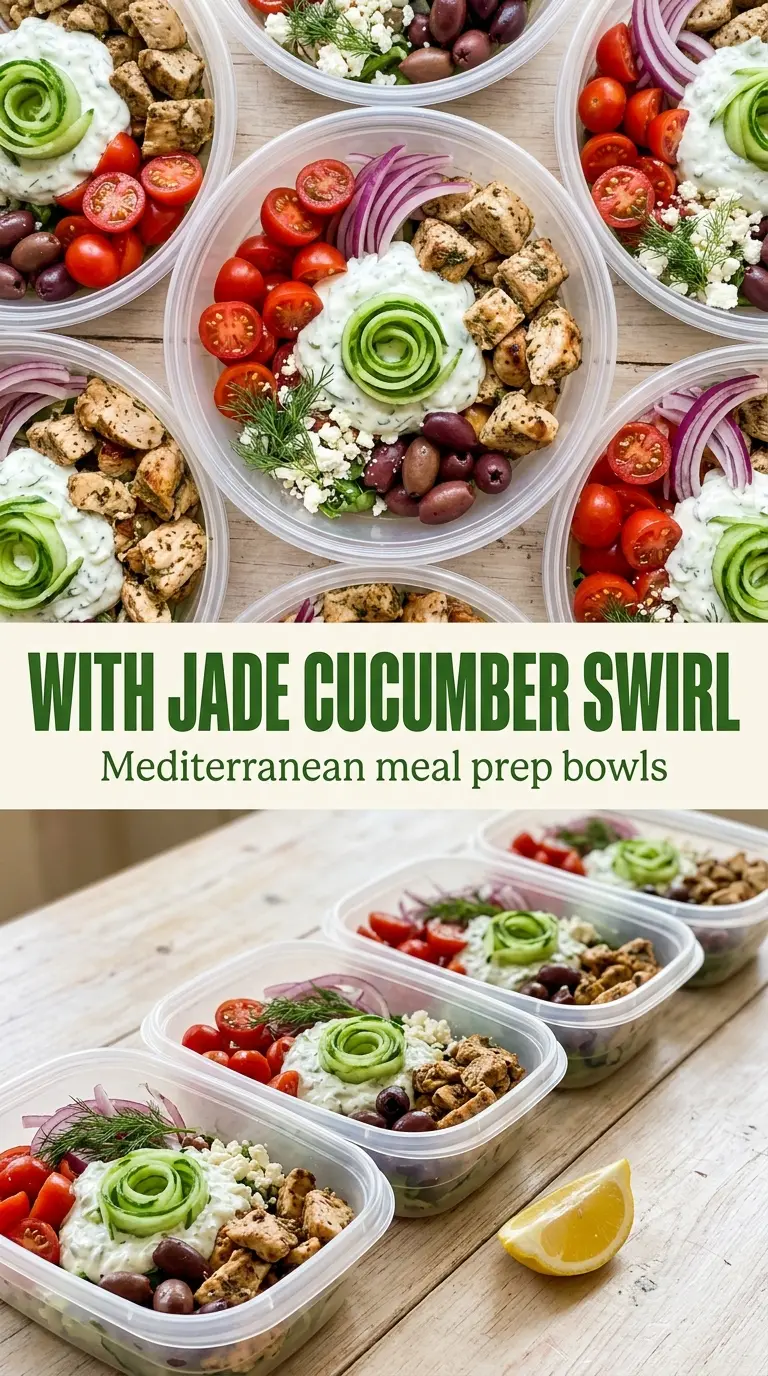
Juicy marinated chicken, cool tzatziki, and crisp cucumber tucked over rice make these Greek Chicken Meal Prep Bowls the kind of lunch that still feels fresh on day four. The chicken stays flavorful instead of turning bland in the fridge, and the vegetables keep enough bite to balance the creamy sauce and salty feta.
What makes this version work is the balance in the marinade and the way the bowl is built. Lemon juice and oregano give the chicken a clean, savory edge, while the yogurt sauce gets its brightness from drained cucumber so it stays thick instead of watery. I also like using cherry tomatoes and red onion for their punch; they hold up better than softer vegetables and keep the whole bowl tasting bright after a couple of days.
Below you’ll find the small details that keep the tzatziki from thinning out, the chicken from drying out, and the bowls from getting soggy before lunch even starts.
The chicken stayed juicy after reheating, and the tzatziki was thick enough that it didn’t water down the rice. I made these on Sunday and they still tasted fresh on Thursday.
Greek Chicken Meal Prep Bowls stay crisp, creamy, and packed with Mediterranean flavor all week long.
The Reason the Chicken Stays Juicy Instead of Drying Out in the Fridge
Meal prep chicken usually fails in one of two ways: it’s bland by day two, or it gets stringy and dry after reheating. The fix here starts with the marinade. Olive oil helps carry the lemon and oregano across the surface of the chicken, while the acid brightens the meat without needing a long soak. Thirty minutes is enough for flavor to settle in; much longer than that and the lemon starts to change the texture in a way that can turn the outside a little soft.
The second piece is doneness. Chicken breast needs to come off the heat as soon as it’s cooked through, not after it has started shrinking and tightening up. Slice it after a short rest so the juices stay in the meat instead of spilling onto the cutting board. That matters even more here, because the chicken gets eaten cold or gently reheated later, and there’s no sauce covering mistakes.
What Each Ingredient Is Actually Doing in These Bowls
- Boneless chicken breast — This is the lean base that carries the marinade well and slices neatly for bowls. If you swap in chicken thighs, you’ll get a richer, more forgiving texture, but the final bowls will be a little heavier.
- Olive oil — It helps the marinade cling and keeps the chicken from tasting dry after cooking. Use a decent extra-virgin oil if you can; this is one place where the flavor comes through.
- Lemon juice — The acid gives the chicken that sharp Mediterranean edge. Fresh lemon is worth it here because bottled juice can taste flat and slightly metallic.
- Greek yogurt — This is the backbone of the tzatziki. Full-fat yogurt gives the creamiest result, but any plain Greek yogurt works as long as it’s thick.
- Grated cucumber, drained — This is what keeps the sauce cool without thinning it out. Skip the draining step and the tzatziki will leak into the rice by the next day.
- Feta cheese — The salty bite wakes up the whole bowl. Crumble it yourself if you can; pre-crumbled feta tends to be drier and less creamy.
The Parts of This Bowl That Actually Need Your Attention
Marinating Without Overdoing It
Whisk the olive oil, lemon juice, garlic, and oregano until the garlic is spread through the mixture, then coat the chicken well. Thirty minutes is enough for flavor; this is not a marinade that needs to sit overnight. If you leave chicken breast in lemon for too long, the surface can turn mealy before it ever hits the pan.
Cooking the Chicken to Stay Tender
Grill or pan-sear the chicken over medium-high heat until it’s cooked through and the outside has a deep golden color. The surface should pick up some browning, but the pan shouldn’t be smoking hard or the garlic in the marinade can scorch. Pull the chicken as soon as the center reaches temperature, then rest it for a few minutes before slicing.
Building the Tzatziki So It Holds Up
Stir the Greek yogurt, grated cucumber, and dill together until the sauce looks thick and spoonable. If the cucumber isn’t drained, the tzatziki loosens up fast and starts pooling in the container. A thick sauce sits on top of the bowl and keeps the rice from turning wet.
Assembling for the Week
Divide the rice into containers first so it can absorb the juices from the toppings instead of sitting under them. Add the chicken, tomatoes, cucumber, onion, and feta in separate pockets if you can. Keep the tzatziki on top or in a small side cup so the whole bowl stays fresh for up to five days.
Three Ways to Make These Bowls Work for Different Needs
Dairy-Free Bowls Without Losing the Bright Finish
Use a thick unsweetened dairy-free yogurt for the sauce and skip the feta. The bowl will be a little less tangy and salty, so add an extra squeeze of lemon and a pinch more oregano to keep the flavor lively.
Swap the Rice for a Lower-Carb Base
Cauliflower rice works well if you want something lighter, but it won’t absorb the juices the same way regular rice does. Cook it until the excess moisture is gone, or the bowls will turn watery in the fridge.
Using Chicken Thighs Instead of Breast
Chicken thighs are a great swap if you want more forgiveness and a juicier bite. They take a little longer to cook and taste richer, so the final bowl feels less lean and a little more savory.
Storage and Reheating
- Refrigerator: Store for up to 5 days. The rice may firm up a bit, but the chicken and vegetables hold their texture well.
- Freezer: The chicken and rice freeze well, but the fresh vegetables and tzatziki do not. Freeze those components separately if you want to batch the base ahead.
- Reheating: Warm the chicken and rice gently, then add the cold vegetables and tzatziki after heating. Microwaving the sauce turns it loose and the cucumber loses its fresh bite.
Questions I Get Asked About This Recipe

Greek Chicken Meal Prep Bowls
Ingredients
Equipment
Method
- Whisk olive oil, lemon juice, minced garlic, and dried oregano in a bowl, then coat the boneless chicken breast and cover.
- Marinate at cool room temperature to speed up surface seasoning, or refrigerate for at least 30 minutes for deeper flavor, until the chicken looks evenly coated.
- Preheat a cast iron skillet over medium-high heat and grill or pan-sear the chicken until cooked through, about 6–10 minutes total depending on thickness, until no longer pink in the center.
- Let the chicken rest 2 minutes off heat, then slice into bite-size pieces so it stacks cleanly in meal prep containers.
- Stir plain Greek yogurt, drained grated cucumber, and chopped fresh dill until smooth and thick, with visible cucumber flecks.
- Taste and adjust texture by pressing out any extra liquid from the cucumber so the sauce holds its shape on top of the bowls.
- Divide cooked rice among meal prep containers, spreading it into an even layer so toppings don’t sink.
- Top each container with sliced chicken, cherry tomatoes, diced cucumber, sliced red onion, and crumbled feta cheese for a layered, colorful bowl.
- Add a dollop of tzatziki on top of each container, spreading slightly so it reaches the chicken and helps keep every bite saucy.
- Refrigerate the assembled bowls for up to 5 days, keeping the lids on and chilling until the tzatziki firms up slightly, about 1–2 hours.