
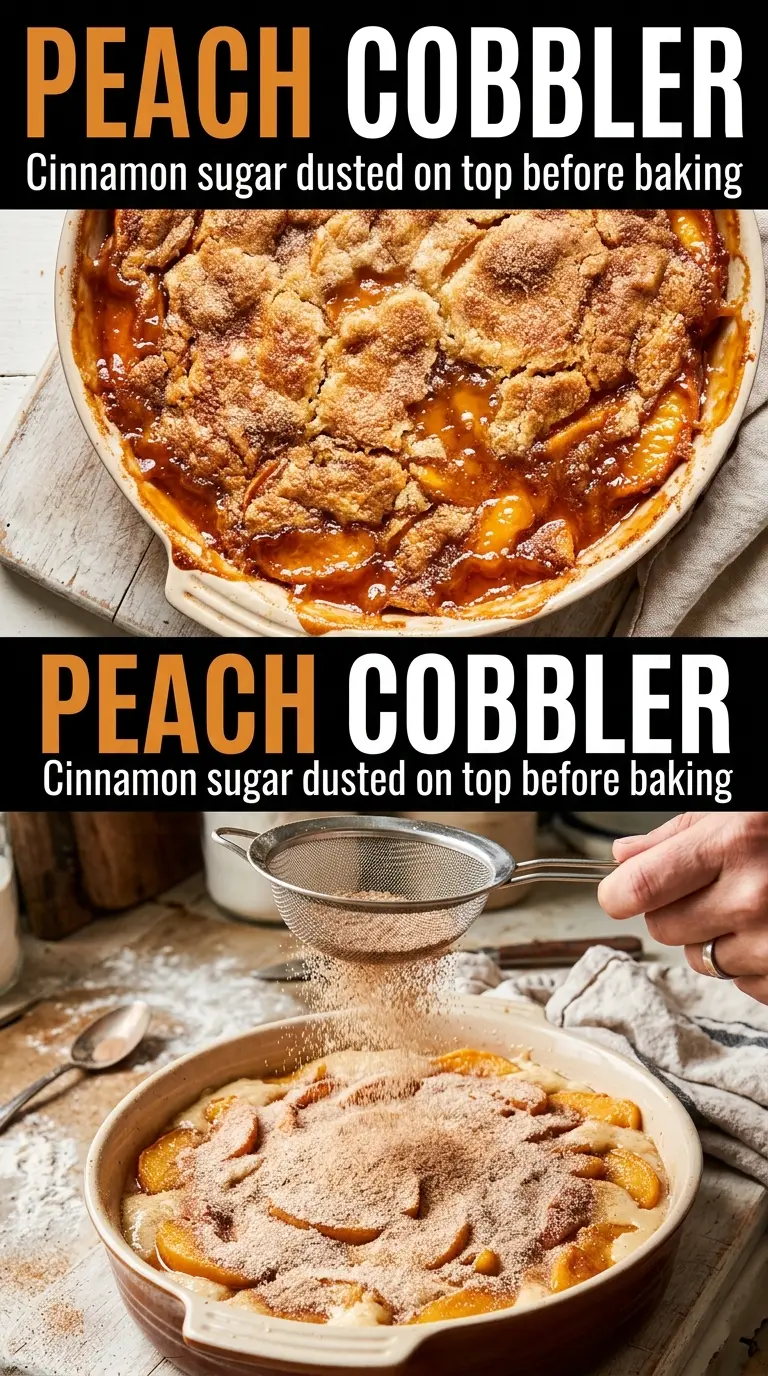
Peach cobbler has a way of disappearing while it’s still warm from the oven. The top bakes into a crackled, cinnamon-scented crust, the peaches sink into a bubbling syrup underneath, and the spoon hits that perfect middle ground between tender fruit and buttery cake. This version earns its keep because the topping bakes right over melted butter without being stirred, which gives you those crisp edges and that soft, almost custardy center cobbler should have.
Brown sugar in the peach filling matters here. It doesn’t just sweeten the fruit; it deepens the juices into a darker syrup that tastes closer to caramel than plain peach juice. A little lemon keeps the filling from going flat, and ginger adds a quiet warmth that keeps the peaches tasting bright instead of one-note. The cinnamon sugar on top is more than garnish. It bakes into a crackled crust that smells like a bakery when it comes out of the oven.
Below, I’ll show you the one mixing order that keeps the batter from turning tough, how to layer the peaches so the cobbler bakes evenly, and a few easy swaps if you need to work with frozen fruit or dairy-free milk.
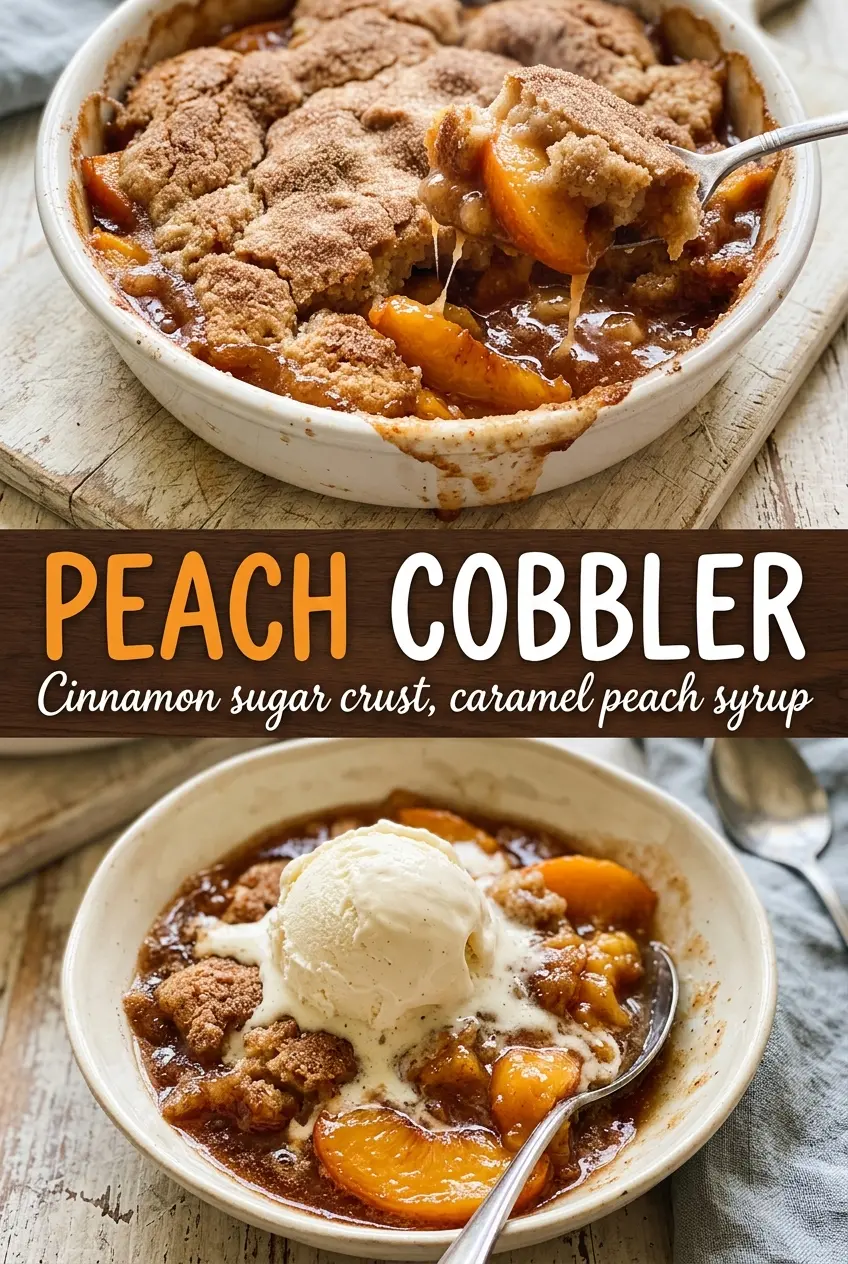
The cinnamon sugar on top baked into the prettiest crackly crust, and the peach filling turned syrupy instead of watery. I served it with vanilla ice cream and there wasn’t a spoonful left.
Pin this peach cobbler for the crackly cinnamon-sugar topping and syrupy brown sugar peach filling.
The Reason the Batter Stays Light Instead of Doughy
The trap with cobbler batter is overworking it or stirring it into the butter. That turns the top heavy and paste-like instead of crisp at the edges and tender in the middle. Here, the melted butter sits in the pan first, then the batter gets poured over it and left alone. That separation is what creates the cobbler’s signature layers as it bakes.
The other place people go wrong is with the peaches. If they’re tossed too aggressively or left to sit too long before baking, the filling can start giving off too much liquid and the top won’t brown properly. A quick toss with sugar, lemon, cinnamon, and ginger is enough to coat the fruit and help it release just enough juice to form a glossy syrup in the oven.
What Each Ingredient Is Actually Doing in This Dish
- Peaches — Fresh, ripe peaches give the best texture and flavor. If they’re very firm, let them sit a day or two on the counter first. Frozen peaches work in a pinch, but don’t thaw them completely or the filling can get watery.
- Brown sugar — This is what gives the peach layer its deep syrupy taste. Light or dark brown sugar both work, but dark brown sugar will push the filling closer to caramel.
- Lemon juice — It keeps the filling bright and keeps the sweetness from flattening out. Bottled lemon juice works if that’s what you have, though fresh tastes cleaner.
- Butter — Melted butter in the pan is part of the structure, not just the flavor. Don’t swap in margarine if you can avoid it; the butter helps the edges brown and gives the topping its rich finish.
- Whole milk — Whole milk gives the batter enough fat to bake up tender. Lower-fat milk will work, but the topping won’t have the same soft, plush texture.
- Cinnamon sugar — This is the detail that makes the crust crackled and fragrant instead of plain. Use it generously. A light dusting won’t give you the same baked-on crunch.
Building the Layers Without Stirring Them Together
Start with the hot butter
Pour the melted butter into the baking dish first and leave it there. The batter spreads over the butter as it bakes, and that’s what creates the crisp underside and the soft lift on top. If the butter has started to cool and thicken, warm it just enough to liquefy again before you pour it in.
Mix the batter just until it comes together
Stir the flour, sugar, baking powder, salt, and milk only until the dry streaks disappear. The batter should look smooth but not whipped. If you keep mixing after that point, the topping tightens up and loses the tender crumb that makes cobbler feel light instead of bready.
Spoon the peaches over the batter
Drop the peach mixture evenly across the surface without stirring. It will look wrong for a minute, like the layers can’t possibly work, but the oven fixes that. Stirring now would smear the batter through the fruit and you’d lose the clean separation between syrupy filling and golden topping.
Bake until the center is set and the top is crackled
The cobbler is done when the top is deeply golden, the edges are bubbling, and a spoon dipped near the center meets resistance instead of wet batter. If the top browns too quickly, lay a loose piece of foil over it for the last 10 minutes. Let it rest a few minutes before serving so the peach syrup settles instead of running everywhere.
Three Ways to Work With What You Have
Frozen Peaches
Use frozen peaches straight from the freezer and toss them with the sugar and spices while they’re still cold. Don’t thaw them first or they’ll release too much juice before the cobbler goes into the oven. The filling may need a few extra minutes in the oven to bubble properly.
Dairy-Free Cobbler
Swap the butter for a good plant-based baking butter and use an unsweetened non-dairy milk with some body, like oat milk. The topping will still bake up nicely, though it won’t have quite the same buttery richness at the edges.
Less Sweet Filling
Drop the brown sugar in the peach layer by a couple of tablespoons if your peaches are very ripe. You’ll get a cleaner fruit flavor and a lighter syrup, though the filling won’t taste as caramel-like.
Storage and Reheating
- Refrigerator: Store covered for up to 4 days. The topping softens as it sits, but the flavor holds up well.
- Freezer: It freezes, but the texture of the peaches softens more after thawing. Wrap tightly and freeze for up to 2 months if you don’t mind a looser filling.
- Reheating: Warm individual portions in the microwave, or reheat the whole dish in a 325°F oven until hot at the center. The oven brings back some of the top’s texture; the microwave makes it softer.
Answers to the Questions Worth Asking
Peach Cobbler
Ingredients
Equipment
Method
- Preheat oven to 350°F. Pour the melted butter into a 9x13 dish.
- Mix the flour, granulated sugar, baking powder, and salt. Stir in the whole milk until just combined.
- Pour the batter over the butter and do not stir. Spoon the batter evenly across the dish.
- Toss the peaches with brown sugar, lemon juice, cinnamon, and ginger. Spread the peaches over the batter and do not stir.
- Dust the top generously with cinnamon sugar. Make sure the surface is lightly but evenly coated.
- Bake 45-55 minutes at 350°F until the top is golden. The cinnamon sugar should look crackled and slightly crisp at the edges.
- Serve warm immediately. Top each portion with vanilla ice cream.