
Glossy peach preserves have a way of disappearing from the pantry faster than almost anything else I make. The peaches stay in soft, spoonable chunks instead of melting into a uniform jam, and that gives each jar a little more presence on toast, biscuits, yogurt, or a cheese board. The flavor is bright, deep, and layered: ripe peach first, then a quiet vanilla note, then those tiny bites of crystallized ginger that finish with warmth instead of heat.
The trick is starting with a maceration. Sugar pulls juice out of the peaches before they ever hit the stove, which shortens the cooking time and helps keep the fruit pieces intact. The lemon juice keeps the preserve tasting lively and helps the set, while the vanilla bean perfumes the pot as the syrup thickens. I tested this long enough to know that the biggest mistake is rushing the boil or walking away from the pot too soon; preserves like this need attention once they start to thicken.
Below you’ll find the detail that matters most for getting a proper set, plus a few practical swaps and storage notes so the jars keep their color and texture as long as possible.
The preserves set up beautifully and the little pieces of ginger turned into sweet chewy bites instead of disappearing. I also loved that the vanilla bean made the whole kitchen smell amazing while it cooked.
Save these peach preserves with vanilla bean and crystallized ginger for the jars that look jewel-bright and taste like ripe summer fruit with a warm, spicy finish.
The Set That Happens When You Don’t Rush the Boil
Peach preserves can go from beautifully chunky to flat and watery if the heat is wrong. A gentle simmer won’t drive off enough moisture, but a hard, steady boil is what thickens the syrup while keeping the fruit pieces suspended instead of collapsing. The goal is large, slow bubbles and a visible shine on the surface, not a furious splatter that scorches the bottom of the pot.
The other mistake is testing too early. Warm preserves always look looser than they will once cooled, so you want to watch for the way the bubbles change near the end of cooking: they get heavier, the sound deepens, and the spoon starts to leave a trail that closes more slowly. That is the moment when the fruit is concentrated enough to set properly in the jar.
- Maceration matters — The hour with sugar and lemon juice pulls liquid from the peaches before cooking, which gives you a head start on the syrup and helps the fruit keep its shape.
- Lemon juice isn’t optional — It brightens the flavor and adds the acidity preserves need for balance. Bottled lemon juice works here if that’s what you have, and it’s fine to use it as long as the amount stays the same.
- Use a heavy pot — Thin pans scorch the peach sugars before the mixture thickens. A wide, heavy-bottomed pot gives you more evaporation and less risk of a burnt edge.
- Crystallized ginger is the signature move — Fresh ginger will taste sharper and less integrated. The chopped candied pieces soften into sweet, chewy little bits that stay visible in the finished preserve.
What Each Ingredient Is Actually Doing in This Preserve
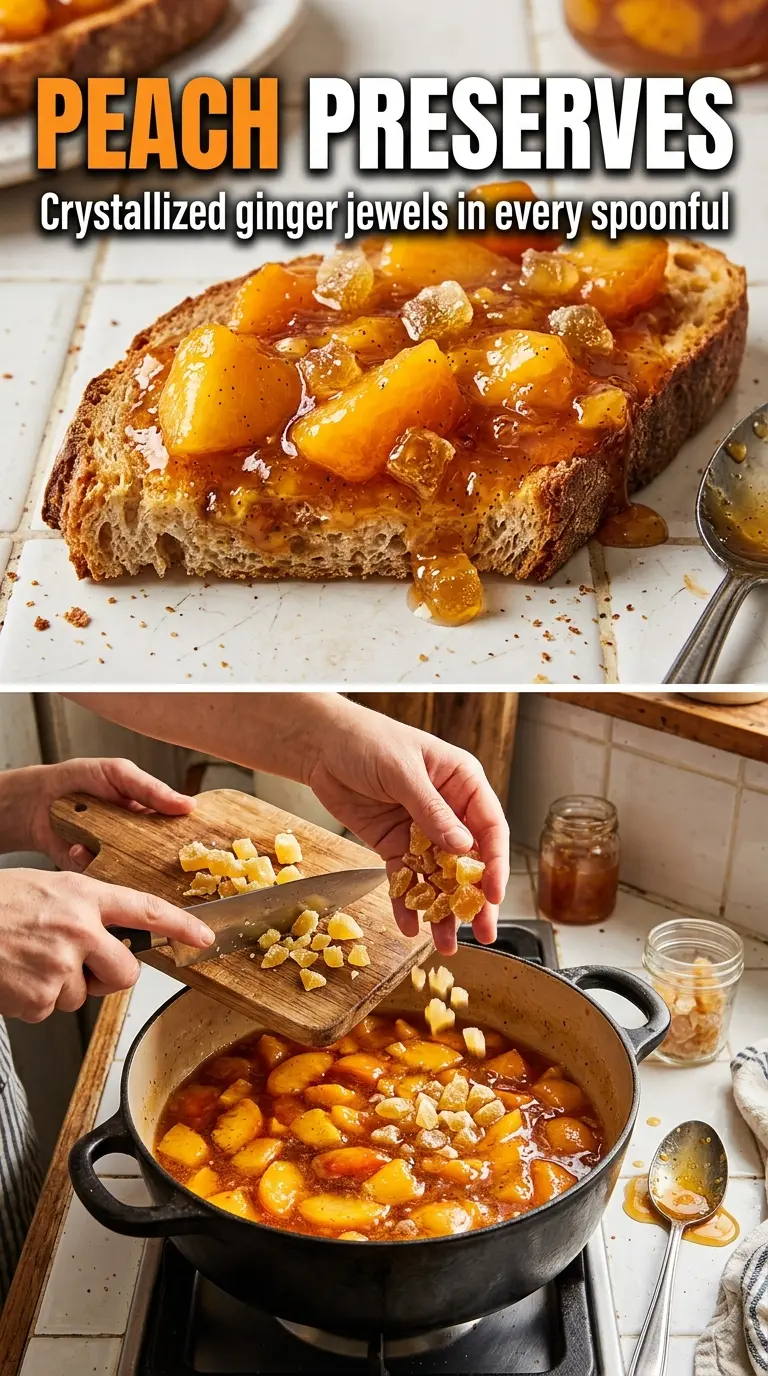
- Fresh peaches — Use ripe peaches with good aroma, but don’t use fruit so soft it falls apart when you peel it. Slightly firm peaches hold their shape better after the long boil, which is what gives this preserve those chunky spoonfuls.
- Granulated sugar — This does more than sweeten. It draws water from the fruit, helps the preserves gel, and gives the syrup its glossy finish. Cutting the sugar much lower changes both the set and the shelf life.
- Lemon juice — This is the acid that keeps the flavor from going dull and supports the thickening process. If you swap it out, the preserve can taste heavy and the final texture may stay loose.
- Vanilla bean — A vanilla extract swap will work in a pinch, but it won’t perfume the pot the same way. The bean gives the preserves a round, floral depth, and the pod can be rinsed, dried, and tucked into sugar afterward.
- Crystallized ginger — Chopped finely, it stays suspended as sweet little pieces instead of sinking. Don’t replace it with powdered ginger unless you want a sharper, less textured preserve.
- Cinnamon and salt — Both are small additions, but they keep the peach flavor from tasting one-note. The cinnamon should stay in the background, not turn the jar into pie filling.
The Part of the Process That Decides the Texture
Let the fruit macerate first
Stir the peaches with sugar and lemon juice until the fruit starts to glisten, then leave it alone for an hour. The bowl will collect a good amount of syrup, and that liquid is the start of your preserves. If you skip this wait, the fruit has to cook longer to release enough juice, which is how you end up with softer peaches and a less clean flavor.
Cook to a hard, even boil
Scrape the peaches, syrup, vanilla bean, and ginger into a heavy pot and bring it all up to a boil. Once it boils, lower the heat just enough to keep steady, large bubbles moving across the surface. If the bottom catches or the boil disappears, the preserve won’t reduce evenly and can develop a cooked sugar taste before it thickens.
Watch for the change in the bubbles
Cook for 35 to 45 minutes, stirring often and scraping the bottom as you go. Early in the process, the bubbles look loose and wet; near the end, they get heavier and slower, and the mixture starts to mound on the spoon instead of running off immediately. That shift is the clearest sign that the sugar has concentrated enough for the preserve to set.
Jar while it is still hot
Remove the vanilla pod, test the set, then ladle the preserves into sterilized jars while the mixture is still hot and fluid. If you wait too long, the preserve thickens in the pot and becomes harder to portion cleanly into jars. For shelf-stable jars, process them for 10 minutes; for refrigerator storage, cool them first and keep them chilled.
How to Adapt This for Different Kitchens and Different Jars
Make it dairy-free and gluten-free without changing a thing
This preserve already fits both of those needs naturally, which is part of why it works so well for gifting. The only thing to watch is what you serve it with afterward; the preserves themselves need no adjustment at all.
Swap the crystallized ginger when you want a cleaner peach flavor
Leave the ginger out and add an extra half vanilla bean or a little more cinnamon if you want the peaches to stay front and center. The preserve will still set the same way, but it loses that sweet-spicy chew that makes this version stand out.
Use frozen peaches when fresh ones aren’t in reach
Thaw them first and drain off excess liquid before macerating. Frozen peaches break down a little faster, so the finished preserve will be softer and less distinct, but the flavor still comes through well if you keep the boil controlled.
Storage and Reheating
- Refrigerator: Keep in a sealed jar for up to 1 month. The preserve will tighten a little as it chills.
- Freezer: It freezes well in freezer-safe jars with headspace left at the top. Thaw in the refrigerator so the fruit texture doesn’t go mushy.
- Reheating: You usually don’t need to reheat it, but if it thickens too much after chilling, warm the jar gently in a bowl of hot water. Don’t microwave the whole jar; uneven heating can make the sugars seize near the edges.
Answers to the Questions Worth Asking
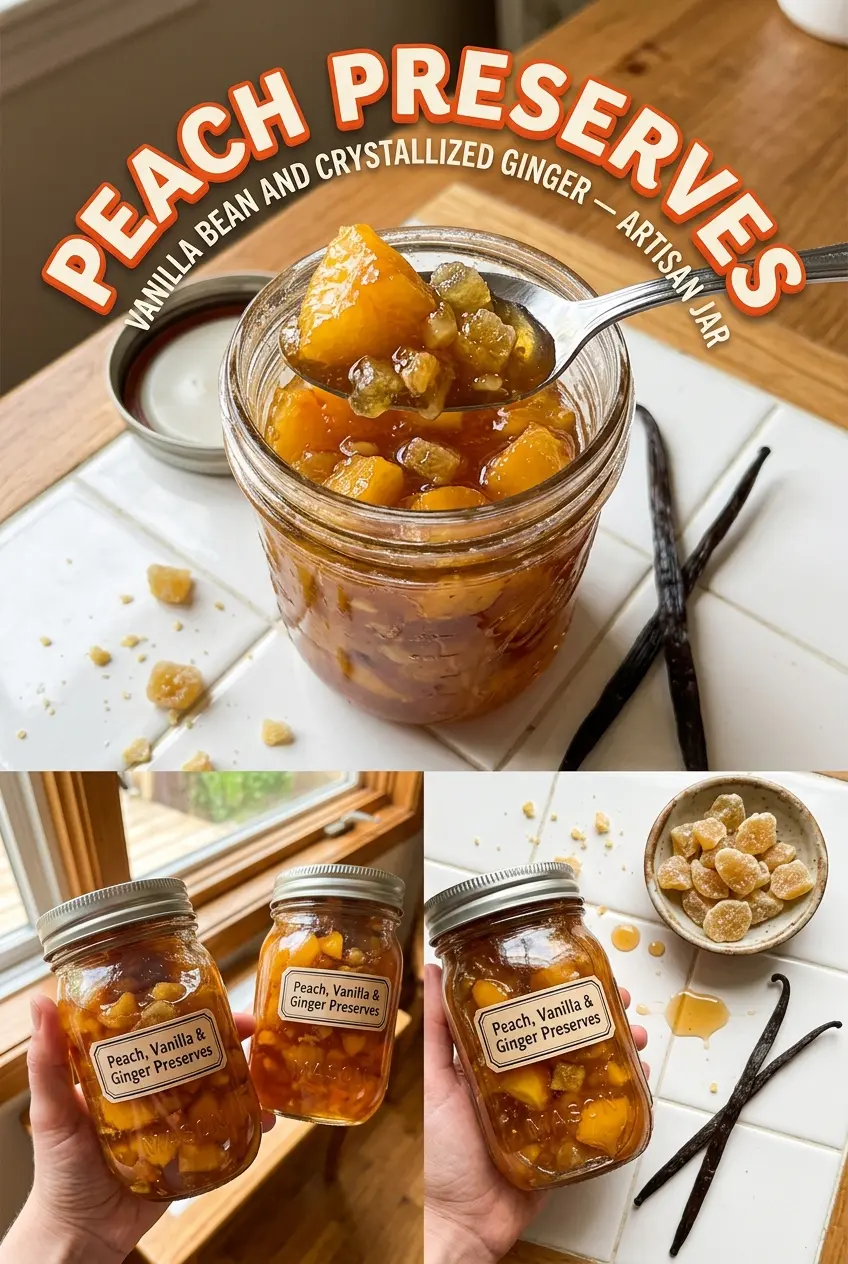
Peach Preserves Recipe
Ingredients
Equipment
Method
- Combine peach chunks with sugar and lemon juice. Let them stand at room temperature for 1 hour until syrupy and fragrant, with the fruit visibly softened.
- Add the vanilla bean and crystallized ginger to the pot. Keep the mixture over medium heat just until it comes together and the ginger is evenly distributed.
- Bring the mixture to a boil over high heat. Look for steady bubbling across the surface that doesn’t stop when you stir.
- Reduce to medium heat and cook for 35-45 minutes until thick and glossy. Watch for large bubbles that rise and burst slowly, indicating a set.
- Remove the vanilla bean pod from the pot. Strain or stir once so the seeds are dispersed and the preserves look uniform.
- Test the set, then ladle into sterilized jars. The preserve should cling to the spoon with a thick, amber sheet that wrinkles as it cools.
- Process the jars for 10 minutes or refrigerate for up to 1 month. Cool completely before checking seals; chilled jars should be stored cold for best texture.