
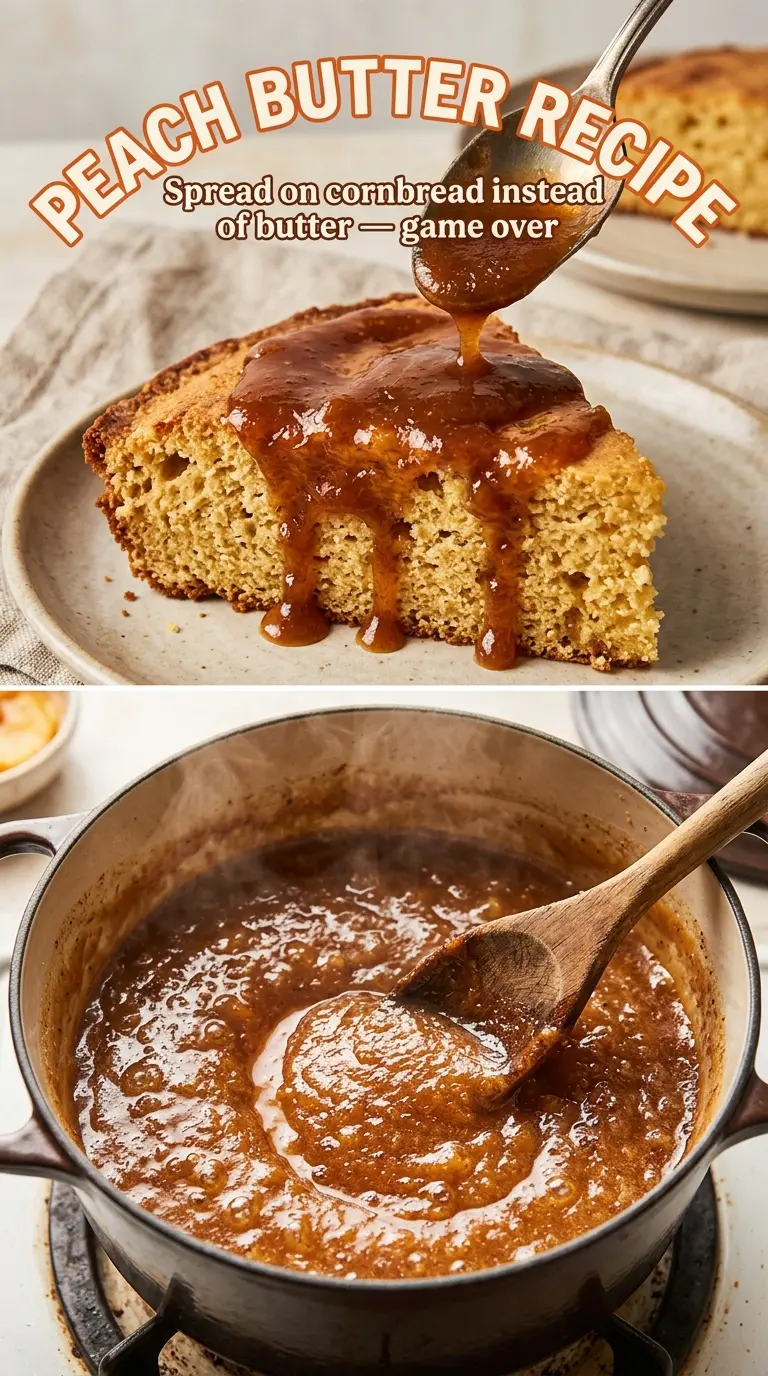
Peach butter cooks down into a thick, velvety spread with a deep peach flavor that tastes more concentrated than jam and smoother than preserves. The brown sugar pulls the fruit toward caramel instead of plain sweetness, and that one change gives the finished butter a darker, rounder flavor that sits beautifully on toast, biscuits, cornbread, or next to roasted pork.
The trick is patience. Peaches hold a lot of water, and if you rush the cook time, you end up with a loose puree instead of something you can spoon and spread. A wide pot helps the moisture evaporate faster, and the slow, uncovered simmer gives the sugar, spices, and fruit time to cook together into something glossy and deeply flavored. The vanilla goes in at the end so it stays soft and aromatic instead of cooking off.
Below, you’ll find the texture cue I watch for when peach butter is done, plus the swap I use when I want the stove to do less work. There’s also a storage note worth reading if you plan to can it or stash a few jars in the fridge.
The texture was spot on after about two hours on the stove — thick enough to hold its shape on a spoon, but still silky and not grainy at all. The brown sugar made it taste almost like peach caramel.
Save this peach butter for the next time you want a silky brown sugar spread with real caramel depth.
The Reason Peach Butter Turns Grainy or Thin
Peach butter only looks simple until you try to cook it fast. The biggest mistake is leaving too much water in the fruit, which keeps the mixture from ever reaching that dense, spreadable stage. Pureeing the peaches first helps the butter become smooth, but the real transformation happens during the long uncovered simmer, when steam can escape and the sugars can concentrate.
Another place people get tripped up is heat. Medium-high heat scorches fruit butter before it thickens; medium-low gives you evaporation without the bitter edge. If the mixture is sputtering hard or sticking in thick paste around the edges, the heat is too high. You want a lazy bubble and steady stirring, especially once it starts to darken and cling to the spoon.
What the Brown Sugar and Spices Are Doing Here
Peaches: ripe peaches matter more here than they do in a pie, because their flavor gets concentrated instead of buffered by crust or cream. Soft, fragrant fruit gives the best result. If your peaches are a little tart, the brown sugar smooths that out, but underripe fruit will taste flat even after a long cook.
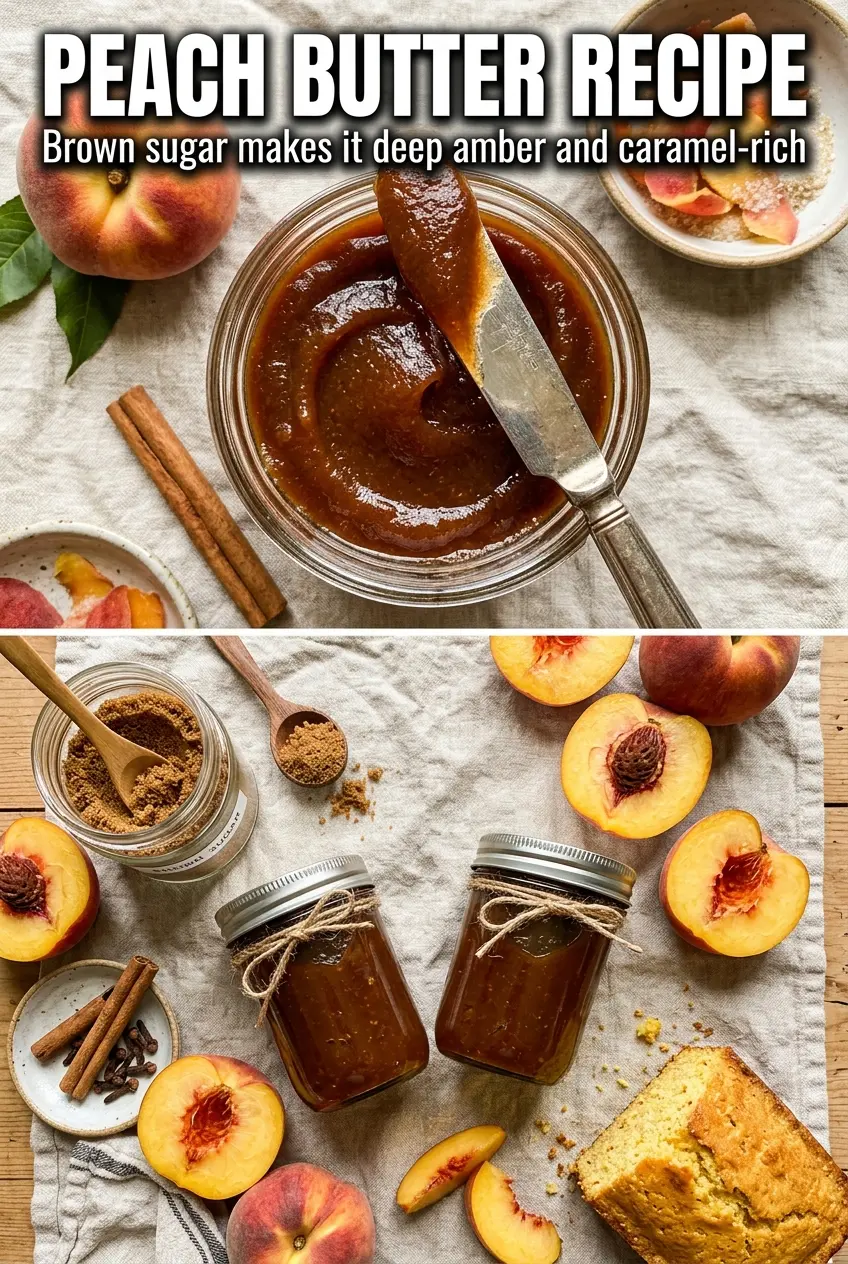
Brown sugar: this is the ingredient that changes the whole personality of the butter. White sugar will sweeten it, but brown sugar adds molasses depth and helps the finished spread taste fuller and warmer. Light brown sugar works fine, though dark brown sugar pushes it farther toward caramel.
Lemon juice: this keeps the butter from tasting heavy and one-note. It brightens the fruit and helps balance the sugar. Fresh lemon juice gives the cleanest finish, and bottled is acceptable if that’s what you have.
Spices and vanilla: cinnamon, ginger, allspice, and cloves build the background warmth, but they should stay in the background. Vanilla belongs at the end because it rounds out the butter without getting dull or cooked down. If you want a lighter spice profile, reduce the cloves first; they’re the easiest one to overpower the fruit.
How to Cook Peach Butter Until It Coats the Spoon
Blend the Fruit First
Start with peeled, pitted peaches and puree them until completely smooth. Any chunks left behind will cook down eventually, but they make the texture less silky and can leave little bits that break the spreadable finish. A blender gives the smoothest result, though a food processor works if you stop and scrape down the sides a few times.
Build the Mixture in a Wide Pot
Combine the puree, brown sugar, lemon juice, cinnamon, ginger, allspice, cloves, and salt in a wide heavy pot. A wide surface matters because it gives the moisture more room to evaporate, which shortens the cook time and helps the butter thicken evenly. If you use a tall narrow pot, the peaches can stay soupy far too long and the bottom may scorch before the top is reduced.
Cook Down the Water Slowly
Cook uncovered over medium-low heat, stirring frequently, until the mixture turns thick and glossy. At first it will look loose and foamy, then it will start to darken and fall from the spoon in a heavy sheet instead of a stream. If it starts sticking in a thick layer on the bottom, lower the heat and stir more often. This stage can take a little patience, but that’s what gives you the dense texture instead of peach sauce.
Add the Vanilla at the End
Stir in the vanilla once the peach butter is off the heat or at the very end of the cook time. Vanilla can fade if it cooks too long, and the final addition keeps the aroma softer and more noticeable. Let the butter cool a bit before tasting, because it will thicken further as it sits and the spice balance becomes clearer.
Three Ways to Adjust Peach Butter Without Losing the Texture
Slow Cooker Method for Low-Effort Cooking
Use the slow cooker on high and cook uncovered for 4 to 6 hours, stirring now and then so the edges don’t dry out. This takes longer, but it saves you from standing over the stove, and the uncovered lid is important because it lets the moisture escape. Stir in the vanilla at the end so it keeps its fragrance.
Lower-Sugar Version
You can reduce the brown sugar a bit if your peaches are very sweet, but don’t cut it too far or the butter will taste sharper and cook down less evenly. Sugar does more than sweeten here; it also helps the fruit take on that rounded, jammy finish. If you reduce it, expect a brighter, slightly looser spread.
Naturally Gluten-Free and Dairy-Free
This peach butter already fits both of those needs without any extra work. The only thing to watch is what you serve it with, since the spread itself is just fruit, sugar, lemon, and spices. That makes it an easy option for a mixed table, especially with biscuits, cornbread, or grilled meats.
Storage and Reheating
- Refrigerator: Keeps about 3 weeks in a clean sealed jar. It will thicken more as it chills, so don’t judge the final texture while it’s still hot.
- Freezer: Freezes well in freezer-safe containers with a little headspace. Leave room for expansion and thaw it overnight in the fridge for the best texture.
- Reheating: Warm only what you plan to use, gently and over low heat or at room temperature. High heat can make it taste cooked-down and dull, which is the opposite of what you want from a fruit butter.
Answers to the Questions Worth Asking
Peach Butter Recipe
Ingredients
Equipment
Method
- Blend the chopped fresh peaches until completely smooth, with no visible chunks.
- Add the peach puree, brown sugar, lemon juice, cinnamon, ginger, allspice, cloves, and salt to a wide heavy pot and stir to combine.
- Cook uncovered over medium-low heat for 90-120 minutes, stirring frequently, until very thick and spreadable with a glossy, amber look.
- Stir in vanilla extract at the end and cook 1-2 minutes to warm through.
- For slow cooker peach butter, combine the peach puree, brown sugar, lemon juice, cinnamon, ginger, allspice, cloves, and salt in the slow cooker and cook uncovered on high for 4-6 hours, stirring as needed.
- Stir in vanilla extract at the end and heat through for 5-10 minutes until fragrant.
- Ladle the hot peach butter into sterilized jars, leaving appropriate headspace, then wipe rims clean.
- Process jars for 10 minutes for shelf-stable storage, or refrigerate for up to 3 weeks if not processing.