
Silky coconut broth, tender shrimp, and a sharp hit of lime make this Thai shrimp soup one of those bowls you start craving again as soon as you finish it. The broth tastes layered and bright instead of heavy, with lemongrass and ginger doing the quiet work in the background while the chilies bring just enough heat to wake everything up. It’s light, but it doesn’t eat like a “light” meal — there’s enough body from the coconut milk to make each spoonful feel complete.
The part that matters most here is how you treat the aromatics. Smashed lemongrass gives up its flavor better than sliced lemongrass ever will, and simmering it in the broth before the shrimp go in keeps the soup fragrant without turning the seafood rubbery. The lime juice goes in at the end for a reason: if you add it too early, the finish gets dull and the brightness disappears.
Below, you’ll find the small details that keep the broth balanced, the shrimp tender, and the seasoning right where it should be. There’s also a simple way to adjust the heat if you want the soup gentler or sharper.
The broth had such a clean lemongrass flavor and the shrimp stayed perfectly tender. I simmered it the full 10 minutes before adding the shrimp, and my husband went back for a second bowl before I even sat down.
Love a bowl with bright lemongrass, coconut milk, and tender shrimp? Save this Paleo Thai Shrimp Soup for the nights when you want something fast, fragrant, and deeply satisfying.
The Trick to Keeping Coconut Broth Bright Instead of Flat
Thai-inspired soups can go wrong when the broth gets boiled hard or the lime goes in too soon. Coconut milk is forgiving, but it still likes a gentle simmer. If you crank the heat, the texture can get a little oily and the aromatics lose that clean, layered taste that makes the soup worth making in the first place.
The other trap is overcooking the shrimp. They only need a few minutes in hot broth, and they’re done the moment they turn pink and opaque. Pulling them as soon as they finish keeps the texture juicy instead of springy, and that short cook time is what makes this soup feel light even though the broth tastes rich.
What Each Ingredient Is Actually Doing in This Dish
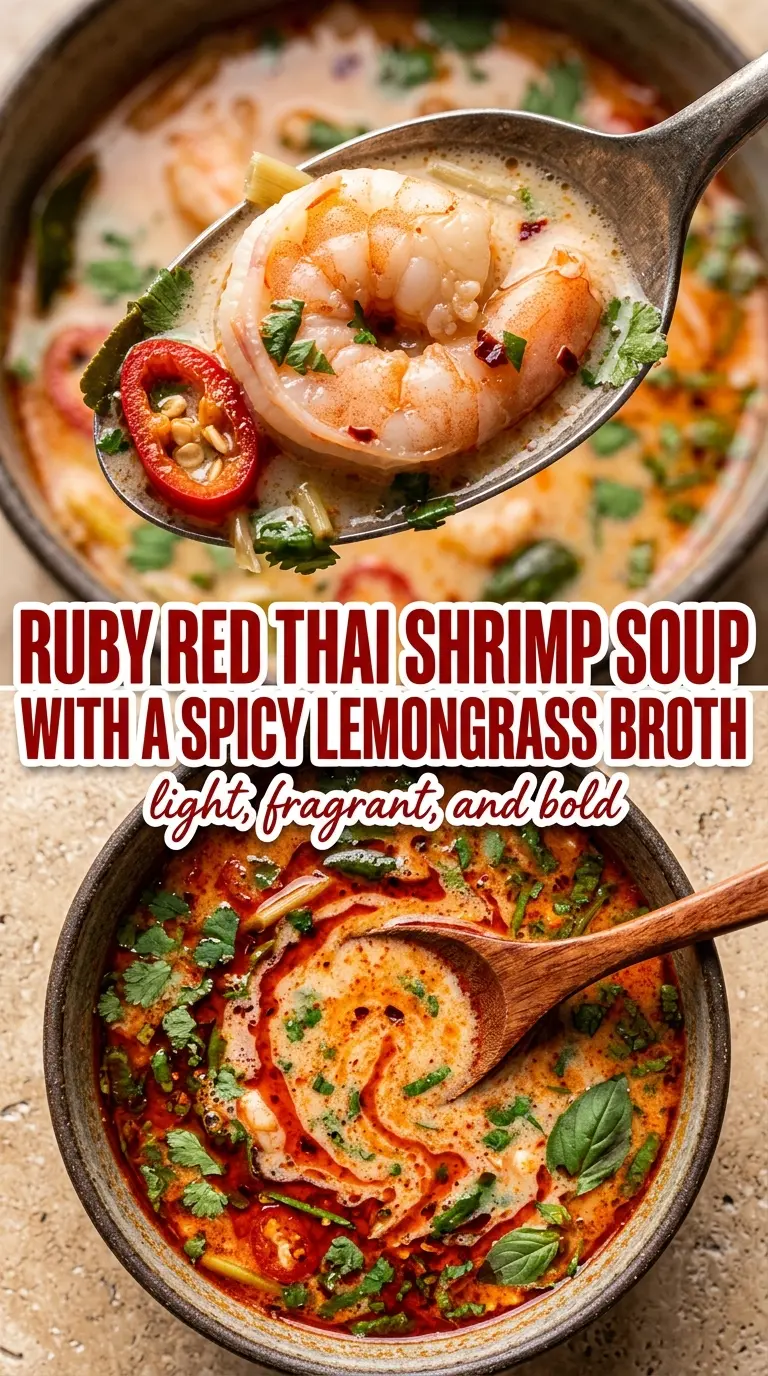
- Lemongrass — Smash the stalks with the side of a knife before they go into the pot. That opens up the fibers and releases the citrusy aroma into the broth. Thin slices won’t give you the same clean infusion unless you simmer them much longer, and by then the shrimp would be overdone.
- Coconut milk — Use full-fat coconut milk if you want the broth to feel round and silky. Lite coconut milk works in a pinch, but the soup will taste thinner and less luxurious. Shake the can well before opening so the cream and liquid don’t stay separated.
- Fish sauce — This is what gives the soup its savory backbone. There isn’t a perfect substitute, but soy sauce can step in if you’re not strict paleo, though the flavor will be less rounded and a little more direct.
- Lime juice — Fresh is worth it here. Bottled juice tastes dull and the acidity can come across as harsh. Stir it in at the end so the soup stays vivid instead of simmering away its brightness.
Building the Broth Before the Shrimp Go In
Infusing the Aromatics
Start with the coconut milk, chicken broth, lemongrass, ginger, and sliced chilies in the pot. Bring everything to a gentle simmer, not a rolling boil, and let it go for the full 10 minutes. That gives the broth time to pick up the citrus, spice, and warmth from the aromatics without muddying the coconut milk. If the broth starts boiling hard, turn the heat down right away.
Adding the Shrimp at the End
Once the lemongrass comes out, add the shrimp and watch them closely. They cook fast in hot broth, usually in 3 to 4 minutes, and they’re ready the moment they curl and turn opaque. If the shrimp sit in the pot too long, they tighten up and lose that plump texture. Pull the pot off the heat as soon as they’re done, then season and finish.
Finishing With Lime and Fish Sauce
Stir in the fish sauce and lime juice after the shrimp are cooked. That timing keeps the flavor sharp and balanced instead of cooked down. Taste the broth after the lime goes in; if it needs more saltiness, add a small splash of fish sauce rather than a pinch of salt, because fish sauce deepens the Thai-style flavor in a way plain salt can’t.
How to Adapt This for Different Diets and Heat Levels
Make it Dairy-Free and Paleo-Friendly
This recipe already fits both of those boxes as written, which is part of why it works so well. The coconut milk gives the soup its body without any cream, and the broth stays clean and bright instead of heavy. Just check your broth and fish sauce labels if you’re being strict about ingredients.
Turn Down the Heat Without Losing the Thai Flavor
Use one chili instead of two, or remove the seeds before slicing if you want a gentler broth. You’ll still get the ginger, lemongrass, and lime, which carry most of the flavor. The soup will taste a little softer, but it won’t go flat.
Swap the Shrimp for Another Protein
Cubed chicken breast or thinly sliced chicken thigh can work if you want a more filling bowl, but it needs longer simmering time than shrimp. Cook the chicken through before finishing with lime, or the broth will taste underseasoned and the meat will be unevenly cooked. The texture changes from delicate to hearty, but the broth still carries the dish.
Make It Vegetarian
Use vegetable broth and swap the fish sauce for tamari or a mushroom-based seasoning sauce. You’ll lose some of the oceanic depth that fish sauce brings, so the soup leans a little more herbal and citrusy. Add sliced mushrooms or tofu to give the bowl more substance.
Storage and Reheating
- Refrigerator: Store for up to 3 days. The shrimp will firm up a little, but the broth keeps its flavor.
- Freezer: The broth freezes well, but shrimp can turn grainy after thawing. For the best result, freeze the broth without shrimp and add fresh shrimp when you reheat.
- Reheating: Warm it gently over low heat until just steaming. Don’t boil it, or the shrimp will tighten and the coconut milk can separate a bit.
Questions I Get Asked About This Recipe
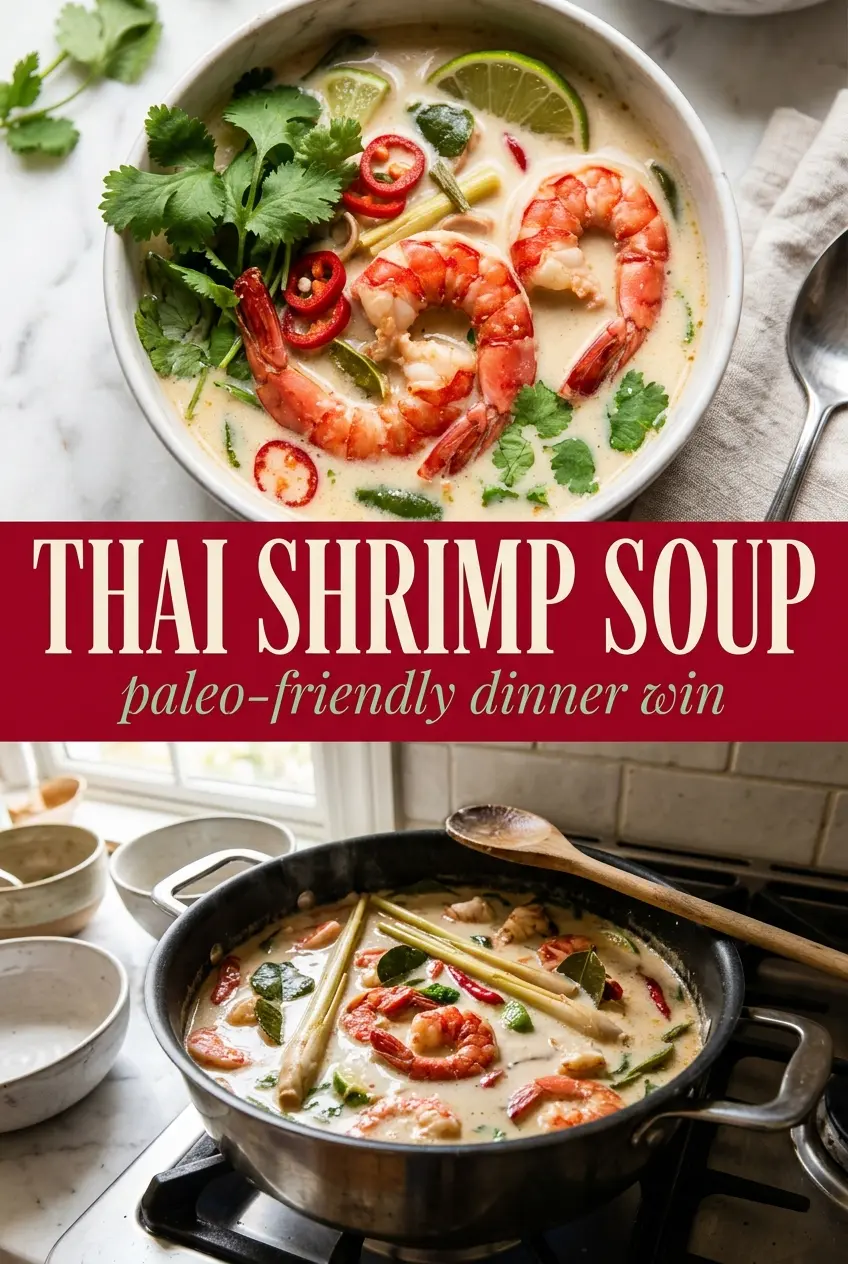
Paleo Thai Shrimp Soup
Ingredients
Equipment
Method
- In a Dutch oven, combine coconut milk, chicken broth, lemongrass, ginger, and red chilies, then bring to a simmer at medium heat with visible small bubbles around the edges.
- Simmer for 10 minutes to infuse flavor, keeping the broth at a gentle simmer (light bubbling) for steady extraction.
- Remove the lemongrass stalks and discard them, leaving the infused broth behind.
- Add shrimp and cook for 3–4 minutes at a gentle simmer until pink and opaque, with a slight curl as they finish.
- Stir in fish sauce and lime juice, then simmer for 1 minute to warm through without boiling.
- Garnish with chopped cilantro before serving, letting the bright green color sit on top.