
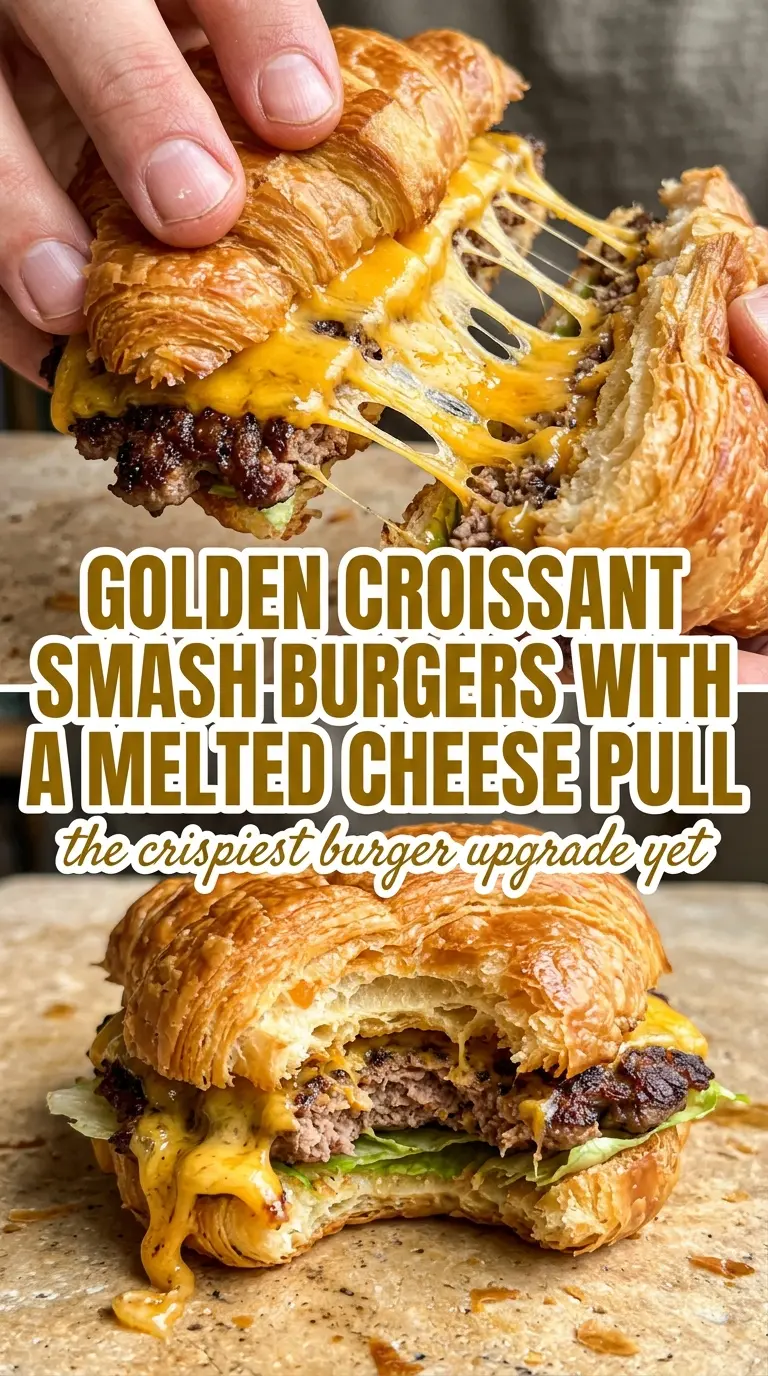
Buttery croissants and a smashed beef patty make the kind of burger that stops the conversation for a second. The edges turn deep brown and crisp in a hot skillet while the middle stays juicy, then the croissant gives you that flaky, almost pastry-like bite that regular buns just can’t match. It’s rich, messy in the best way, and fast enough to pull off on a weeknight without losing the special-occasion feel.
What makes this version work is the contrast. The beef gets smashed thin in a screaming-hot cast-iron skillet, which builds those lacy, caramelized edges that you can’t fake with a thick patty. Then the croissants get toasted cut-side down in the same pan, so they pick up a little of the beef flavor and stay sturdy enough to hold the sauce, lettuce, and tomato without collapsing.
Below, I’ll walk you through the exact heat and timing that give you crisp patties and toasted croissants without drying either one out. There’s also a simple sauce ratio that keeps the whole burger from tasting heavy.
The croissants stayed flaky, the patties got that crisp edge I was hoping for, and the sauce was just enough without making the whole thing soggy. My husband said it tasted like a burger from a diner, but better.
Crispy croissant smash burgers are the kind of burger-night upgrade worth pinning for a fast dinner that feels a little over the top.
The Secret to Crispy Patties Without Steaming the Croissant
The biggest mistake with smash burgers is crowding the pan or using heat that isn’t hot enough. If the skillet isn’t ripping hot, the beef leaks moisture before it can sear, and you end up with a gray patty instead of a crisp, deeply browned crust. The croissants have the opposite problem: they’re soft and delicate, so they need just enough time to toast without turning dry or shattering when you bite in.
That’s why this recipe works best in a cast-iron skillet. Cast iron holds high heat better than a thin pan, which means the smash creates immediate contact and fast browning. Keep the patties thin, season them right after smashing, and leave them alone until the first side has a real crust. If you try to move them too soon, they’ll stick and tear.
What Each Ingredient Is Actually Doing in This Dish
- 80/20 ground beef — The fat content matters here. Lean beef won’t give you the same juicy center or the same crisp edges, and it can taste dry once it’s smashed thin. If you only have leaner beef, don’t overcook it and keep the patties very thin so they stay tender.
- Croissants — Use bakery-style croissants if you can. They hold up better than the flimsy, pre-sliced kind and give you those flaky layers that make this burger feel different from a standard bun. Day-old croissants toast beautifully and are often easier to slice cleanly.
- American cheese — It melts smoothly and fast, which is exactly what you want over a thin patty. Sharp cheddar tastes good, but it doesn’t melt as seamlessly and can slide off the burger. If you swap it, choose another good melting cheese and thinly slice it.
- Mayonnaise and ketchup — This simple sauce gives you creaminess, tang, and a little sweetness without burying the beef. You can swap in pickle relish or a tiny splash of hot sauce if you want more bite, but don’t overload it or the croissant will soften too quickly.
How to Build the Burger So Nothing Goes Soggy
Getting the Pan Hot Enough
Heat the cast-iron skillet over high heat until it’s fully hot before the beef goes in. You want the surface hot enough that the patties sizzle immediately on contact. If you add them too early, they’ll leak fat and steam instead of sear. A light shimmer of oil isn’t necessary here because the beef has enough fat to release on its own.
Smashing for Maximum Browning
Place each beef ball in the skillet and smash it flat right away with a sturdy spatula. Press hard for a few seconds to get as much surface area against the pan as possible, then stop touching it. The goal is a thin patty with ragged, crisp edges. If the burger curls or lifts while cooking, it wasn’t smashed thin enough at the start.
Flipping and Melting the Cheese
Cook the first side for about 2 minutes, until the edges look dark brown and the top loses its raw shine. Flip once, add the cheese immediately, and cook another 1 to 2 minutes. That short second side keeps the center juicy while the cheese melts over the hot meat. If the cheese isn’t softening, cover the pan for a few seconds to trap heat without overcooking the burger.
Toasting the Croissants in the Same Skillet
Butter the cut sides lightly and toast them cut-side down in the same pan until golden. The residual beef flavor in the skillet gives the croissants a little extra depth, and the butter helps them brown before they dry out. Watch them closely; croissants go from golden to too dark fast because of all those thin layers. Pull them as soon as the cut surface looks crisp and lightly lacquered.
Ways to Adjust These Croissant Smash Burgers Without Losing the Point
Dairy-Free Version
Swap the American cheese for a dairy-free slice that melts well and use a plant-based butter or a little neutral oil on the croissants. You’ll lose a bit of that classic creamy melt, but the crispy beef and toasted pastry still carry the burger. Choose a dairy-free cheese that softens evenly, not one that stays rubbery.
Gluten-Free Swaps
Croissants are the whole point here, so a true gluten-free croissant is the best swap if you can find one. If not, use a sturdy gluten-free brioche-style bun and toast it well so it can handle the sauce. The texture changes, but you still get the smashed patty, melted cheese, and diner-style burger feel.
Making It a Little Less Rich
Use only a thin swipe of sauce, and add extra lettuce and tomato for freshness. You can also swap one of the croissant halves for a second lettuce layer if you want a lighter open-faced version. The burger still tastes indulgent, but the acid and crunch keep it from feeling heavy.
Storage and Reheating
- Refrigerator: Store the patties, croissants, and toppings separately for up to 3 days. The croissants will soften once assembled, so keep them unstacked until serving.
- Freezer: The cooked patties freeze well for up to 2 months. Wrap them tightly and freeze without the toppings or croissants; pastry doesn’t thaw back with the same flaky texture.
- Reheating: Reheat patties in a skillet over medium heat until hot, not in the microwave, which makes the crust rubbery. Toast fresh croissants again before assembling so the burger stays crisp instead of soggy.
Questions I Get Asked About This Recipe

Croissant Smash Burgers
Ingredients
Equipment
Method
- Divide ground beef into 4 balls, then heat a cast-iron skillet over high heat until very hot. Visual cue: the skillet should shimmer and feel hot when you hover above it.
- Place 1 beef ball in the skillet and smash flat with a spatula; season with salt and pepper. Visual cue: the patty should spread thin to maximize crispy edges.
- Cook for 2 minutes, then flip and top with American cheese. Visual cue: edges will look browned and the cheese should start to soften immediately.
- Cook 1–2 more minutes until crispy-edged and the cheese is fully melted. Visual cue: the center looks glossy and the edges are dark-golden.
- Butter the croissant halves and toast cut-side down in the same skillet until golden. Visual cue: cut sides turn deeply golden with a flaky, crisp surface.
- Mix mayonnaise and ketchup until smooth for the sauce. Visual cue: the mixture should be uniformly pinkish with no streaks.
- Assemble each burger on the toasted croissant with the sauce, lettuce leaves, and tomato slices. Visual cue: layers should sit neatly so the toppings don’t slide.
- Add the smashed cheese patty to the croissant and press lightly to seat it. Visual cue: cheese should slightly ooze at the edges.