
Rich tomato soup lives or dies on texture, and this version lands in the sweet spot: smooth, velvety, and substantial enough to count as a real meal. The tomatoes simmer down with onion and garlic until they taste deep and rounded instead of sharp, then blended cottage cheese gives the soup a creamy body without the heavy, overly rich finish you get from a lot of classic versions. It eats like comfort food, but it still feels light enough to want a second bowl.
What makes this one work is the order of the ingredients. The tomatoes need time to break down before you blend, and the cottage cheese has to be fully smooth before it goes in, or you’ll end up with little curds instead of a silky finish. If your tomato soup has ever tasted thin or one-note, the answer is usually more simmering time and a better balance between acidity, salt, and fat. That’s exactly what this pot gives you.
Below, I’ve added the small details that matter: how to keep the dairy from turning grainy, why roasted tomatoes deepen the flavor, and the easiest swaps if you want to work with what’s already in your kitchen.
The cottage cheese blended in so smoothly that my kids never guessed it was in there, and the soup stayed creamy even after reheating the next day.
Save this high protein tomato soup for the nights when you want a silky bowl with real staying power.
The Secret to a Tomato Soup That Tastes Full-Bodied, Not Thin
Tomato soup often comes out flat for one reason: the tomatoes never get enough time to lose their raw edge. A quick simmer can soften them, but it won’t build the deep, rounded flavor you want. Here, the onions and garlic cook first, the tomatoes simmer long enough to collapse, and the broth gives everything room to move without watering it down.
The other thing that matters is texture. Once the vegetables are broken down, blending turns the whole pot into something smooth and cohesive instead of brothy with bits suspended in it. If your soup tastes bright but thin, let it simmer a few minutes longer after blending. That last bit of evaporation makes a noticeable difference.
What Each Ingredient Is Actually Doing in This Dish
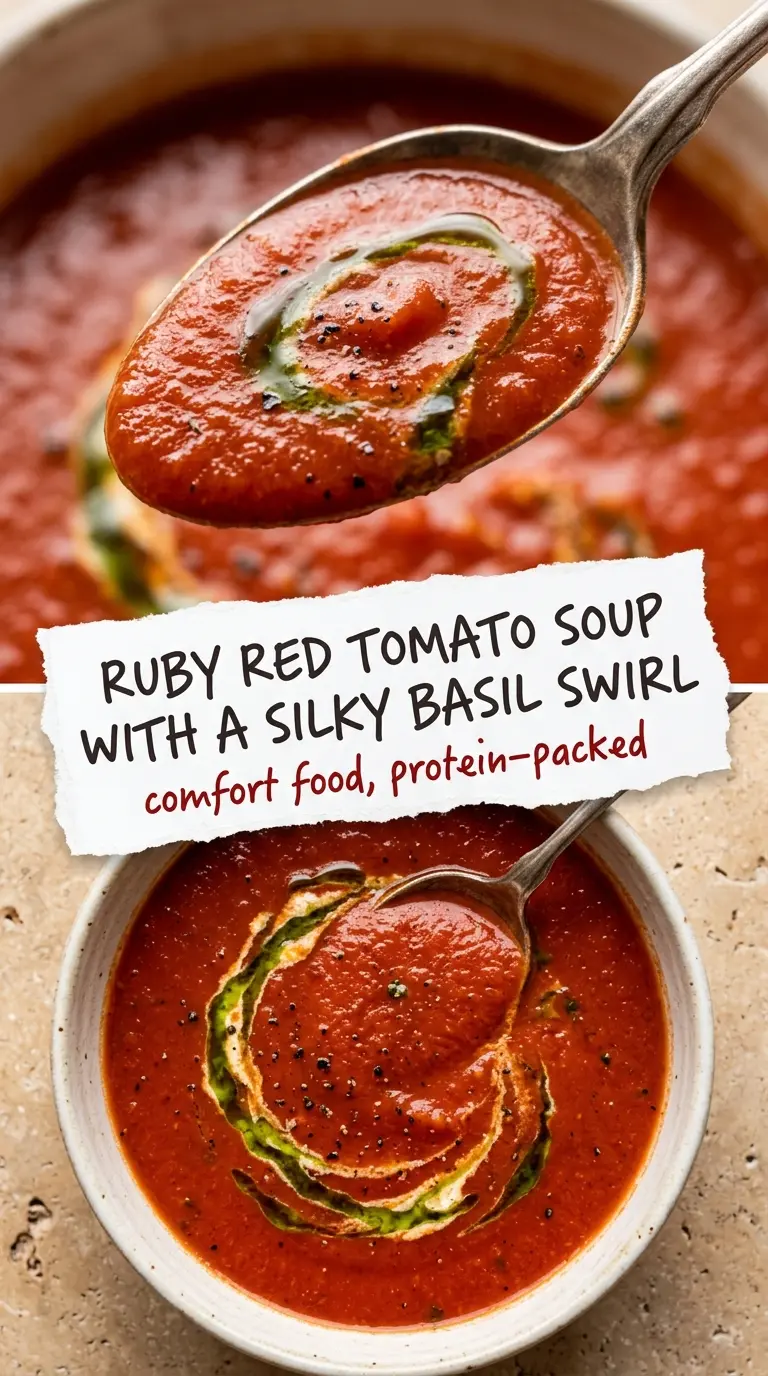
- Tomatoes — Fresh tomatoes give the cleanest flavor here, and rough chopping is enough because they’ll cook down completely. If yours are pale or out of season, roasting them first concentrates the sweetness and makes the soup taste less sharp.
- Chicken broth — This adds body and savory depth that water can’t provide. If you want a vegetarian version, swap in a good vegetable broth, but pick one with real flavor or the soup will taste hollow.
- Cottage cheese — This is the protein boost and the creaminess. It has to be blended smooth before it hits the pot, or the heat can leave you with little curds. Full-fat cottage cheese gives the most luxurious texture, but low-fat works if you’re after a lighter bowl.
- Basil — Add it at the end so it stays fresh and fragrant instead of tasting cooked-down and dull. Dried basil won’t give the same lift, though a tiny pinch can stand in if fresh basil is all you have.
Building the Soup Base Without Making It Watery or Grainy
Softening the Onion and Garlic
Start by cooking the onion and garlic in olive oil over medium heat until the onion turns translucent and smells sweet, not browned. If the garlic darkens early, it will add bitterness to the whole pot, so keep the heat moderate and stir often. This stage is about coaxing out flavor before the tomatoes go in.
Breaking Down the Tomatoes
Add the tomatoes and broth, then simmer until the tomatoes collapse and the liquid takes on a deep red color. You want active bubbling, not a hard boil; too much heat can make the soup taste harsher instead of richer. If the mixture still looks chunky after 20 minutes, give it more time rather than rushing to blend.
Blending to a Silky Finish
Use an immersion blender to smooth the soup directly in the pot until it looks velvety and even. If you use a countertop blender, work in batches and vent the lid so steam doesn’t build up. The goal is a clean, uniform texture with no tomato skins or onion pieces left behind.
Adding the Cottage Cheese Off the Heat
Blend the cottage cheese completely smooth before stirring it in, then lower the heat or pull the pot off the burner for a moment. High heat is the fastest way to turn a creamy soup grainy. Once it’s in, stir until the broth looks thickened and cohesive, then season and finish with basil.
What to Change When You Want a Different Kind of Bowl
Make It Vegetarian
Swap the chicken broth for a well-seasoned vegetable broth. The soup still works because the tomatoes and cottage cheese carry the body, but the broth needs enough salt and savoriness to keep the flavor from turning flat.
Roasted Tomato Version
Roast the chopped tomatoes at 425°F until they shrink and the edges start to caramelize, then add them to the pot with the broth. You’ll get a sweeter, deeper soup with less acidity and a more concentrated tomato flavor.
Dairy-Free Option
Replace the cottage cheese with plain unsweetened cashew cream or a dairy-free cream cheese thinned with a little broth. You’ll lose some of the protein boost, but the soup will still turn out creamy and smooth.
Make It Ahead
This soup is a good meal-prep option because the flavor settles and deepens after a night in the fridge. If it thickens too much, loosen it with a splash of broth while reheating and stir until it’s smooth again.
Storage and Reheating
- Refrigerator: Store for up to 4 days. The soup may thicken as it chills, which is normal.
- Freezer: It freezes well for up to 2 months, but the texture is best if you freeze it before adding the basil. Thaw in the fridge overnight.
- Reheating: Warm it gently over low heat and stir often. Boiling can make the dairy separate and dull the fresh tomato flavor, so keep it at a bare simmer and add a splash of broth if needed.
Answers to the Questions Worth Asking
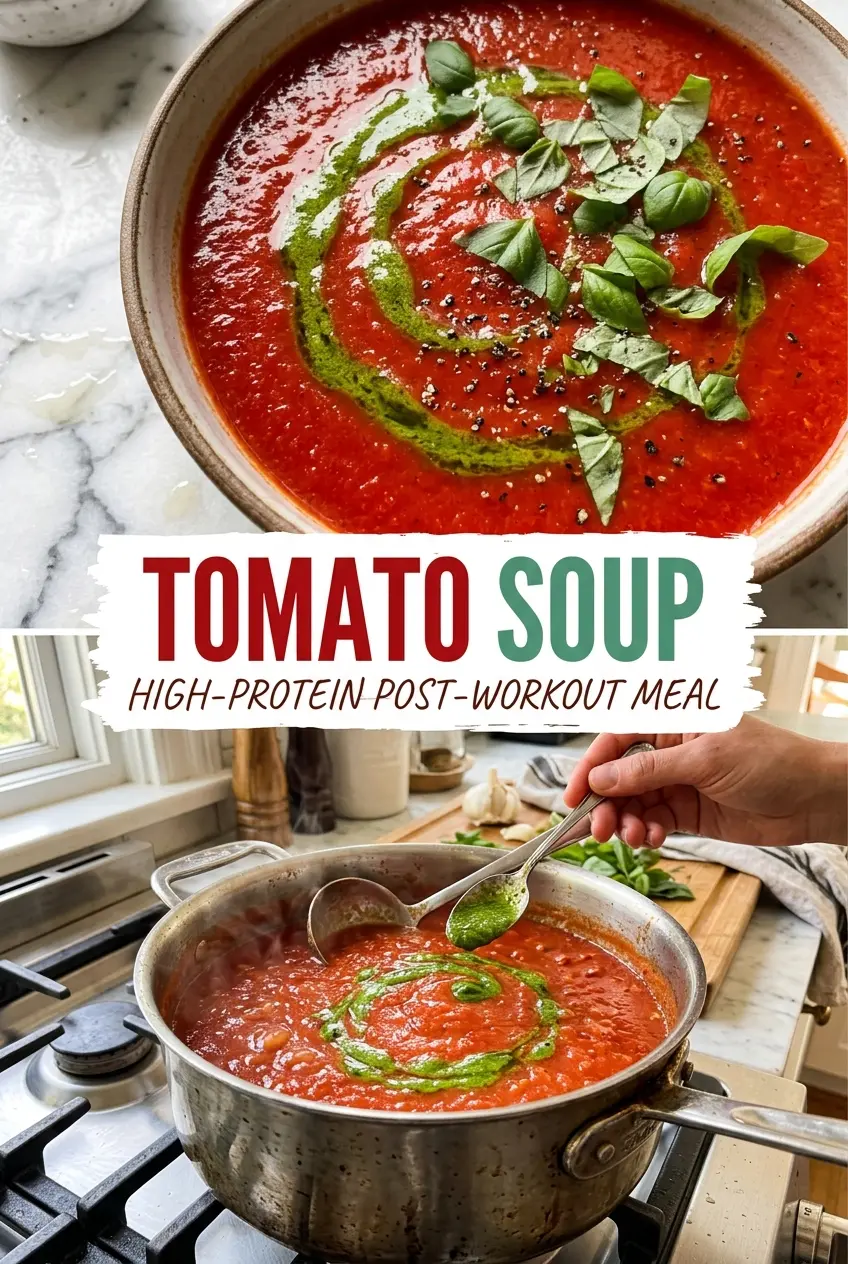
High Protein Tomato Soup
Ingredients
Equipment
Method
- Heat the olive oil in a pot over medium heat, then sauté the diced onion and minced garlic until softened, about 5 minutes. Keep it moving so the aromatics don’t brown.
- Add the chopped tomatoes and chicken broth to the pot, then bring to a gentle simmer. Simmer for 20 minutes, until the tomatoes break down and the base turns deep ruby-red.
- Use an immersion blender to blend the soup until fully smooth and velvety. Blend carefully until no tomato chunks remain.
- Stir in the blended cottage cheese and heat gently just until combined, about 2 minutes. The soup should look silky and creamy after the cheese disperses.
- Season with salt and pepper to taste, stirring well to distribute evenly. Taste and adjust before serving.
- Swirl in the chopped basil right before serving. The basil should stay fresh-looking and aromatic, not overcooked.