
Golden Parmesan-crusted chicken cutlets are one of those dinners that disappears fast because the contrast is just too good: a crisp, salty crust on the outside, juicy chicken inside, and a silky garlic cream sauce that clings to every bite. The coating stays shatter-crisp when the chicken is pounded thin and cooked in a hot skillet, so you get a real crunch instead of a heavy breading that turns soft before it ever reaches the plate.
What makes this version work is the balance between the Parmesan and the breadcrumbs. Parmesan brings the sharp, nutty flavor and helps the crust brown deeply, while the breadcrumbs keep the coating light enough to stay crisp. The sauce is built right in the same pan after the chicken comes out, which means the browned bits from frying melt into the cream and broth instead of getting washed away. That is where most of the flavor lives.
Below, I’ll walk through the one detail that keeps the crust from going soggy, the ingredient swap that still gives you a good bite if you need it, and the best way to reheat leftovers without losing the crunch completely.
The chicken stayed crisp even after I spooned on the sauce, and the garlic cream thickened up in just a few minutes. I used the rack like you suggested, and it made a huge difference.
Crispy Parmesan Chicken with Creamy Garlic Sauce is the kind of dinner worth bookmarking for a fast chicken cutlet night.
The Crust Only Stays Crisp If You Respect the Resting Time
The biggest mistake with breaded chicken cutlets is serving them straight from the skillet onto a plate. Steam has nowhere to go, so the bottom softens fast. A wire rack fixes that because air moves around the cutlets instead of trapping moisture underneath them. That one habit is what keeps the Parmesan crust audibly crisp long enough for the sauce to go on top without turning the whole thing limp.
The second part people miss is heat control. If the oil is too cool, the coating drinks it up and turns greasy. If the pan is too hot, the Parmesan browns before the chicken cooks through. You want a steady sizzle the moment the cutlets hit the oil, then a golden crust after 4 to 5 minutes per side, depending on thickness. If the breading looks dark before the center is done, lower the heat and let the chicken finish more gently.
What Each Ingredient Is Doing in This Dish
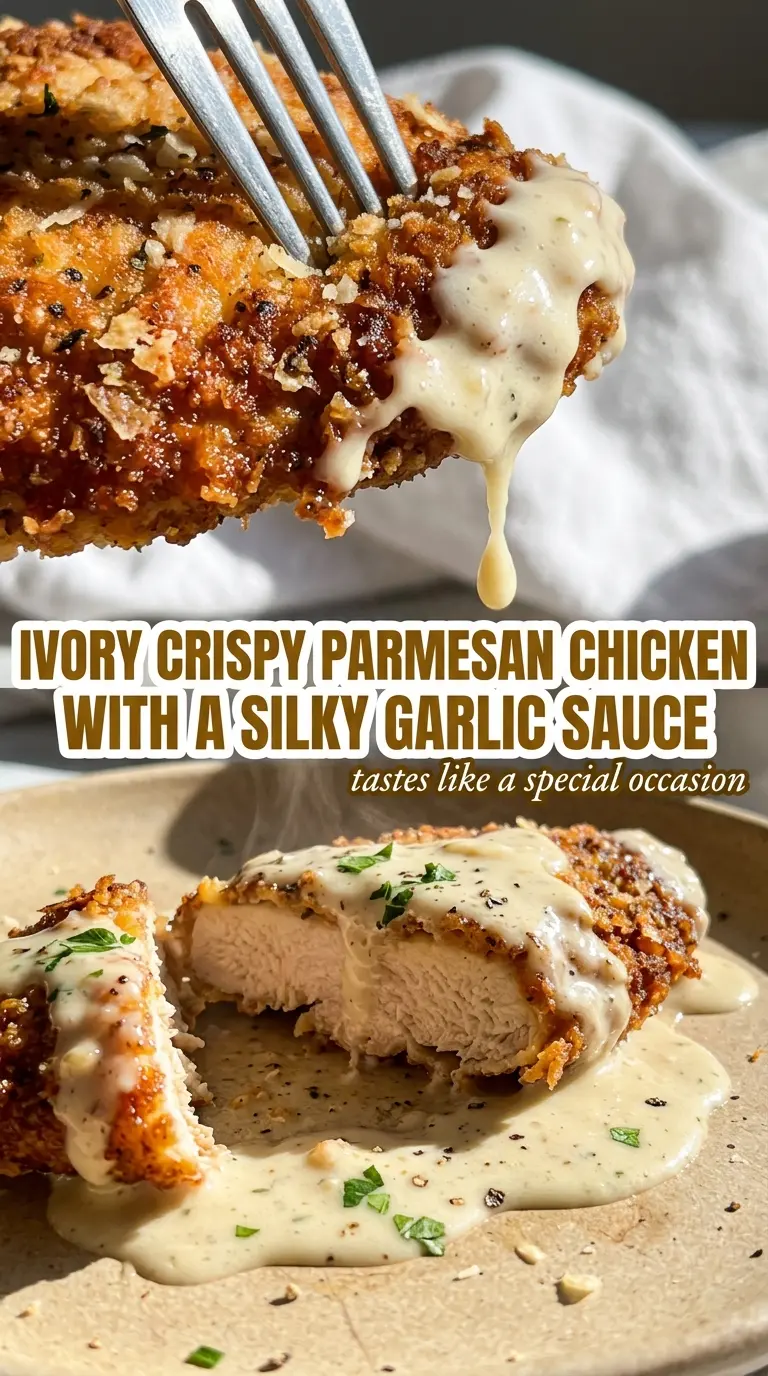
- Boneless chicken breasts — Pounding them thin does two things at once: it shortens the cook time and keeps the meat tender because the pieces cook evenly. If your cutlets vary in thickness, the thinner edges will dry out before the middle is done. Aim for an even, slim layer across the whole breast.
- Parmesan cheese — This is the flavor anchor. Freshly grated Parmesan browns better and tastes sharper than the shelf-stable stuff in a can. If you have to substitute, use another hard, salty cheese like Pecorino Romano, but expect a slightly saltier, more aggressive finish.
- Breadcrumbs — They keep the coating light and help the crust hold together instead of becoming a thick cheese shell. Panko gives a rougher, crunchier bite; finer breadcrumbs make a tighter crust. Either works, but panko is the best pick if you want maximum texture.
- Eggs — The egg is the glue between the chicken and the coating. Beat them until smooth so the chicken gets an even film, not streaks. If the coating falls off in the skillet, the chicken was either too wet or the pan was handled before the crust set.
- Heavy cream — This gives the sauce its body and protects it from splitting when it simmers. Half-and-half will work in a pinch, but the sauce will be thinner and a little less stable. Keep the heat low once the cream goes in.
- Chicken broth — It loosens the sauce without making it bland. The broth also carries the browned bits from the pan into the sauce, which is where the real savory depth comes from. Use low-sodium if your Parmesan is on the salty side.
The Fastest Way to Keep the Sauce Smooth and the Chicken Crispy
Mixing the Coating
Stir the Parmesan and breadcrumbs together in a shallow dish until the mixture looks evenly speckled, not clumpy. That even distribution matters because big pockets of cheese can melt too fast and patch the crust. Dredge the chicken in egg first, let the excess drip off, then press it into the coating so it actually sticks. If you rush this part, the breading will slide off as soon as it hits the oil.
Frying to a Deep Golden Color
Heat the olive oil in a skillet until it shimmers, then lay the chicken in gently. You should hear an immediate, steady sizzle. Fry the cutlets in a single layer so the pan doesn’t cool down, and resist moving them around early. If they stick, give them another minute; a crust that has set will release more easily than one that gets pried up too soon.
Building the Garlic Cream Sauce
Once the chicken is out, lower the heat and add the garlic to the same skillet. Thirty seconds is enough to take off the raw edge; any longer and it can burn fast in the leftover oil. Pour in the broth first, scrape up the browned bits, then add the cream and let it simmer until it lightly coats a spoon. If the sauce looks thin, give it another minute or two instead of turning up the heat.
Finishing Without Sogging the Crust
Spoon the sauce over the chicken right before serving, or drizzle just enough that the top gets coated while the edges still stay crisp. A full bath in sauce will soften the crust quickly, even if you cooked it perfectly. Scatter the parsley at the end for color and a fresh bite. That final contrast keeps the dish from feeling too heavy.
How to Adapt This for Different Plates and Different Kitchens
Gluten-Free Cutlets That Still Crisp Up
Swap the breadcrumbs for gluten-free panko or finely crushed gluten-free crackers. You still get a crisp shell, though cracker crumbs tend to brown a little faster, so keep the heat at medium rather than pushing it. The texture stays close to the original, especially if you press the coating on firmly.
Dairy-Free Version With a Different Kind of Richness
Use a dairy-free Parmesan-style shred for the coating and replace the cream with full-fat coconut milk or an unsweetened oat-based cooking cream. The sauce won’t taste exactly the same, but it will still be silky and savory if you keep the garlic in the same pan and simmer gently. Choose an option with a neutral flavor so the chicken still comes through.
Chicken Thighs for a Juicier, Richer Bite
Thin boneless thighs work well here if you want more flavor and don’t mind a slightly softer texture under the crust. They usually need a minute or two longer than breasts, so cook by color and internal temperature instead of the clock alone. The sauce pairs especially well with thighs because the extra richness matches the cream.
Storage and Reheating
- Refrigerator: Store the chicken and sauce separately for up to 3 days. The crust softens a bit in the fridge, but it still reheats well if you handle it gently.
- Freezer: The chicken can be frozen after frying, but the cream sauce is better made fresh. Freeze the cutlets on a tray first, then wrap tightly; reheat from frozen in the oven for the best texture.
- Reheating: Warm the chicken in a 375°F oven or air fryer until hot and crisp again, then heat the sauce on low on the stovetop. The common mistake is microwaving everything together, which turns the crust leathery and can cause the sauce to separate.
Answers to the Questions Worth Asking
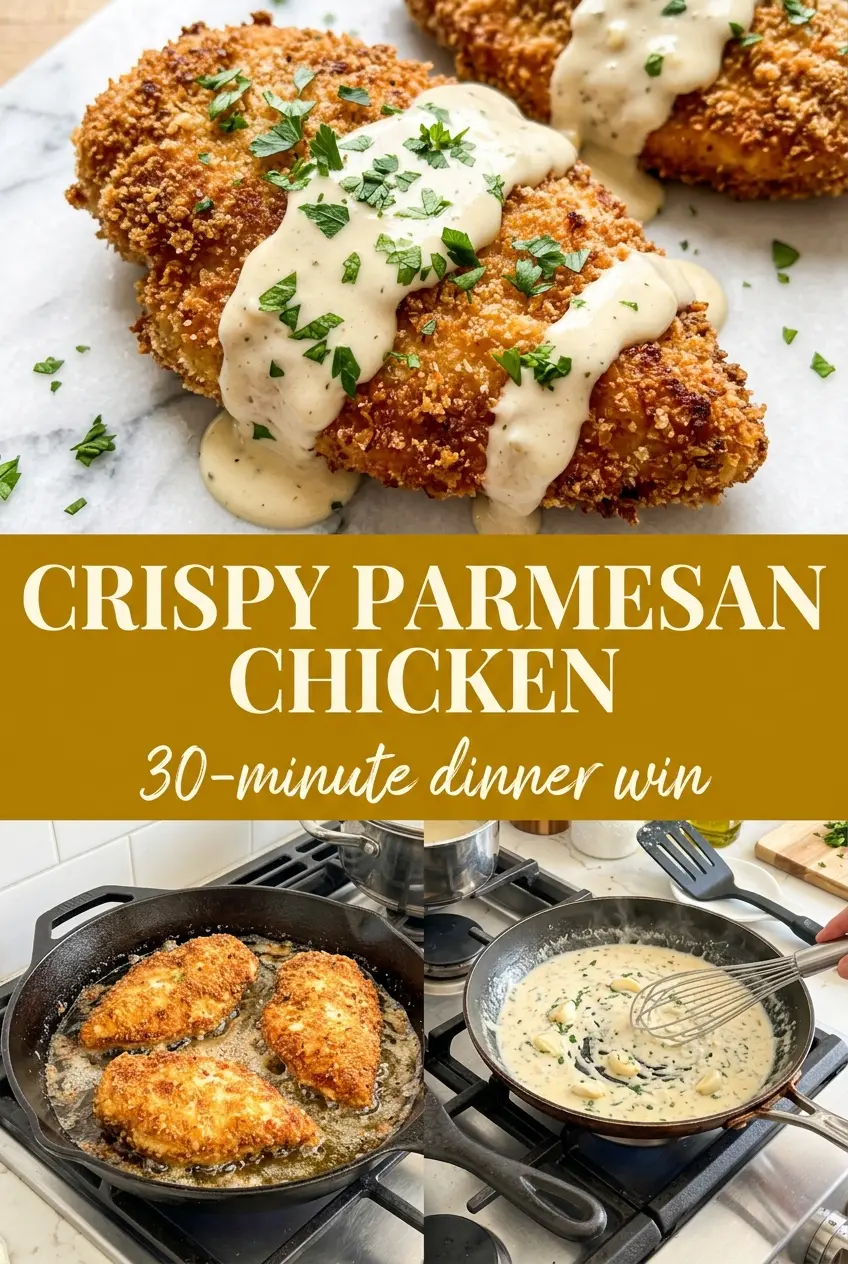
Crispy Parmesan Chicken With Creamy Garlic Sauce
Ingredients
Equipment
Method
- Mix the grated Parmesan cheese and breadcrumbs in a shallow dish until evenly combined, creating a consistent crust.
- Dip the pounded chicken breasts into the beaten eggs, then press into the Parmesan breadcrumb mixture so the coating clings evenly.
- Heat the olive oil in a cast iron skillet over medium-high heat until shimmering, then lay the coated chicken in the pan.
- Fry the chicken for 4–5 minutes per side until golden and crispy, then transfer to a wire rack to hold the crunch.
- In the same cast iron skillet, sauté the minced garlic for 30 seconds until fragrant, then pour in the chicken broth and heavy cream.
- Simmer the sauce until thickened, stirring as needed so it turns creamy and coats the back of a spoon.
- Drizzle the garlic cream sauce over the crispy chicken cutlets so the crust stays crisp at the edges.
- Garnish with chopped parsley for fresh color and herb flavor right before serving.