
Baked salmon settles into a pan of lemony orzo, tomato, and briny feta, and the whole dish comes out tasting like far more effort than it asks for. The salmon stays tender on top while the orzo underneath absorbs the broth, tomato juices, olive brine, and melted feta into a creamy base with just enough bite left in the center. It’s the kind of one-pan dinner that lands on the table looking complete, not assembled.
What makes this version work is the order of the ingredients. Dry orzo goes straight into the baking dish so it can drink in every bit of liquid as it cooks, and the salmon rests on top so it steams gently from the heat below instead of drying out. The feta isn’t just garnish here; it melts into the orzo and seasons the whole pan with salt and tang, which means you don’t need a heavy sauce to make the dish feel finished.
Below, I’m walking through the one detail that keeps the orzo from turning soft, the ingredient swaps that still make sense, and the timing that gives you salmon that flakes cleanly without overcooking the pasta underneath.
The orzo cooked right in the tomato broth and came out creamy without turning mushy, and the salmon stayed flaky on top. My husband kept saying it tasted like something from a restaurant.
Save this salmon and lemon orzo bake for the nights when you want a full Mediterranean dinner with barely any cleanup.
The Reason the Orzo Cooks Properly Instead of Turning to Paste
Orzo can go wrong fast in the oven. Too little liquid and it stays chalky in the center. Too much stirring and it breaks down before the salmon is done. The key here is giving the pasta enough broth to absorb while keeping the dish uncovered, so steam can escape and the orzo thickens in the pan instead of collapsing into a gummy mass.
The other thing that matters is where the salmon sits. It belongs on top of the orzo mixture, not buried in it. That placement protects the fish from direct contact with the bottom of the dish, where the hottest liquid sits, and it lets the top roast gently while the juices drip down and season the pasta below.
- Dry orzo — It has to go in uncooked. Cooked orzo would turn soft and heavy in the oven, while dry orzo absorbs the broth and tomato liquid as intended.
- Vegetable broth — This is the cooking liquid for the pasta, so use one with enough flavor to stand on its own. If yours is very salty, back off on extra seasoning until the end.
- Kalamata olives — Their brine gives the dish depth that plain olives can’t match. Green olives work in a pinch, but the flavor shifts sharper and less rounded.
- Feta — Crumbled feta melts into the orzo in pockets, which is what gives the whole pan that creamy-briny finish. Block feta crumbled by hand usually tastes better and melts more softly than pre-crumbled.
Building the Pan So the Salmon and Pasta Finish at the Same Time
Mix the Orzo Base First
Start by combining the dry orzo, diced tomatoes, broth, garlic, oregano, olives, and red pepper flakes in a wide baking dish. The mixture should look loose and soupy before it goes into the oven; that liquid is what the pasta needs to cook evenly. If the dish is too shallow, the orzo can dry out at the edges before the center softens, so use a wide pan with enough room for bubbling.
Set the Salmon on Top, Not Underneath
Lay the salmon fillets over the orzo mixture and drizzle them with olive oil. The fish will cook from the heat of the oven and the steam rising from the sauce below, which keeps the flesh moist and helps the top develop a light sheen instead of a dry crust. If the fillets are very thick, tuck them into the mixture just slightly so they sit snugly without disappearing under the liquid.
Bake Until the Orzo Is Tender and the Salmon Just Flakes
Scatter the feta over the salmon and the orzo, then bake uncovered until the pasta is tender and the salmon gives up in clean flakes. The oven time matters here because undercooked orzo feels hard and chalky, while overbaked salmon turns dry and loses its richness. Pull the dish when the center of the salmon is opaque and the orzo still has a little bite, then let it sit a couple of minutes so the sauce finishes thickening.
Finish With Lemon and Dill
Stir in the lemon juice and zest after baking, not before. Lemon tastes brighter and fresher when it stays out of the oven, and adding it at the end wakes up the tomatoes, olives, and feta without making the dish harsh. A final shower of dill gives the pan a clean herbal finish that keeps the whole meal from feeling heavy.
What to Change When You Need a Different Version
Dairy-Free Version That Still Tastes Full
Leave out the feta and finish with a little extra olive oil plus a pinch of salt at the end. You’ll lose the creamy tang that feta brings, but the tomatoes, olives, lemon, and dill still give the dish plenty of character.
Gluten-Free Swap for the Orzo
Use a gluten-free orzo-style pasta that’s labeled for baking, and keep a close eye on the liquid. Some gluten-free pastas need a little more broth and a slightly shorter rest after baking, so check the texture a few minutes early.
Swap the Salmon for Another Fish
Firm white fish like cod or haddock works, but the bake time gets shorter and the flavor becomes milder. Watch for opaque flesh that flakes with gentle pressure, because these fish dry out faster than salmon if they sit in the oven too long.
Storage and Reheating
- Refrigerator: Store leftovers in an airtight container for up to 3 days. The orzo will thicken as it chills, and the salmon will be best when reheated gently.
- Freezer: I don’t recommend freezing the finished dish. The orzo turns soft and the salmon loses its clean texture after thawing.
- Reheating: Warm covered in a 300°F oven with a splash of broth or water until just heated through. High heat dries out the salmon and tightens the pasta, so slow reheating is the part that keeps leftovers worth eating.
Answers to the Questions Worth Asking
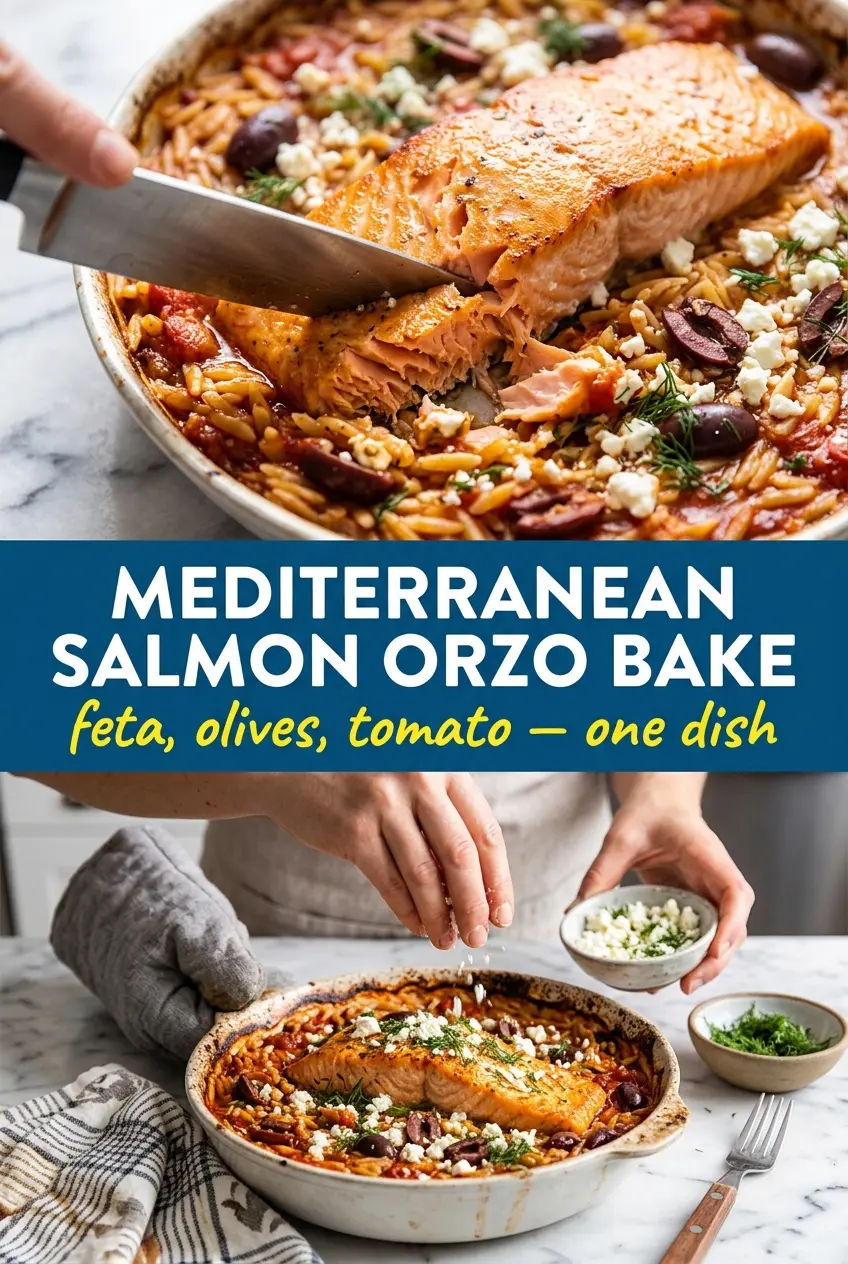
One Skillet Salmon with Lemon Orzo
Ingredients
Equipment
Method
- Preheat oven to 400°F. Set out a wide baking dish so the orzo bakes evenly.
- In a wide baking dish, combine dry orzo, diced tomatoes, vegetable broth, garlic, dried oregano, and red pepper flakes. Stir just until the dry orzo is evenly distributed.
- Add the Kalamata olives to the baking dish and stir to spread them through the broth. The olives should be visibly mixed into the tomato base.
- Nestle salmon fillets on top of the orzo mixture. Drizzle everything with olive oil so the salmon develops golden edges.
- Scatter crumbled feta over the salmon and orzo. Bake uncovered at 400°F for 22–25 min until orzo is tender and salmon is cooked through, and the feta looks partially melted.
- Remove the dish from the oven and let it rest for 2 min. This helps the broth thicken slightly around the orzo.
- Finish with lemon juice, lemon zest, and fresh dill. Add extra feta if desired for a more briny, creamy bite.