
Vibrant stuffed bell peppers like these earn their place in the dinner rotation because they don’t eat like a compromise. The peppers soften into sweet, silky shells while the filling stays savory and bright, with coconut rice giving the center a richer, more fragrant base than plain rice ever could. The peanut sauce on top finishes the whole dish with a glossy, salty-sweet heat that makes each bite feel complete instead of just stuffed.
The trick here is layering flavor in stages. Ground chicken gets cooked with garlic and ginger first, then seasoned with fish sauce, soy, lime, and sesame oil before the rice and vegetables go in. That order matters. If you dump everything together at once, the filling tastes flat and the coconut rice disappears into the background. The baked peppers also need a covered stretch in the oven so they steam first, then an uncovered finish so the tops dry just enough to hold the sauce.
Below, I’ve included the part that matters most when people make stuffed peppers at home: how to keep the filling bold, how to avoid watery peppers, and how to make the peanut drizzle taste like it belongs on the plate, not just on top of it.
The filling had so much flavor on its own, and the peanut sauce took it over the top. My peppers were tender but still held their shape, and the coconut rice stayed fluffy instead of getting mushy.
These stuffed bell peppers with coconut rice and peanut sauce are the kind worth keeping on repeat.
The Reason These Peppers Taste Full Instead of Fussy
Most stuffed peppers fail for one of two reasons: the filling tastes underseasoned, or the pepper itself stays too firm and tastes raw against the filling. This version avoids both problems by cooking the filling before it goes into the peppers and by using a covered bake first, which gives the pepper walls a chance to soften without drying out the top.
Coconut rice is doing more than adding bulk. It gives the center a rounded, slightly rich flavor that catches the ginger, garlic, and lime instead of letting them disappear. The fish sauce matters even more than the soy here because it brings the kind of savory depth that makes the filling taste finished. Skip it, and the dish turns noticeably flatter.
What Each Ingredient Is Actually Doing in This Dish
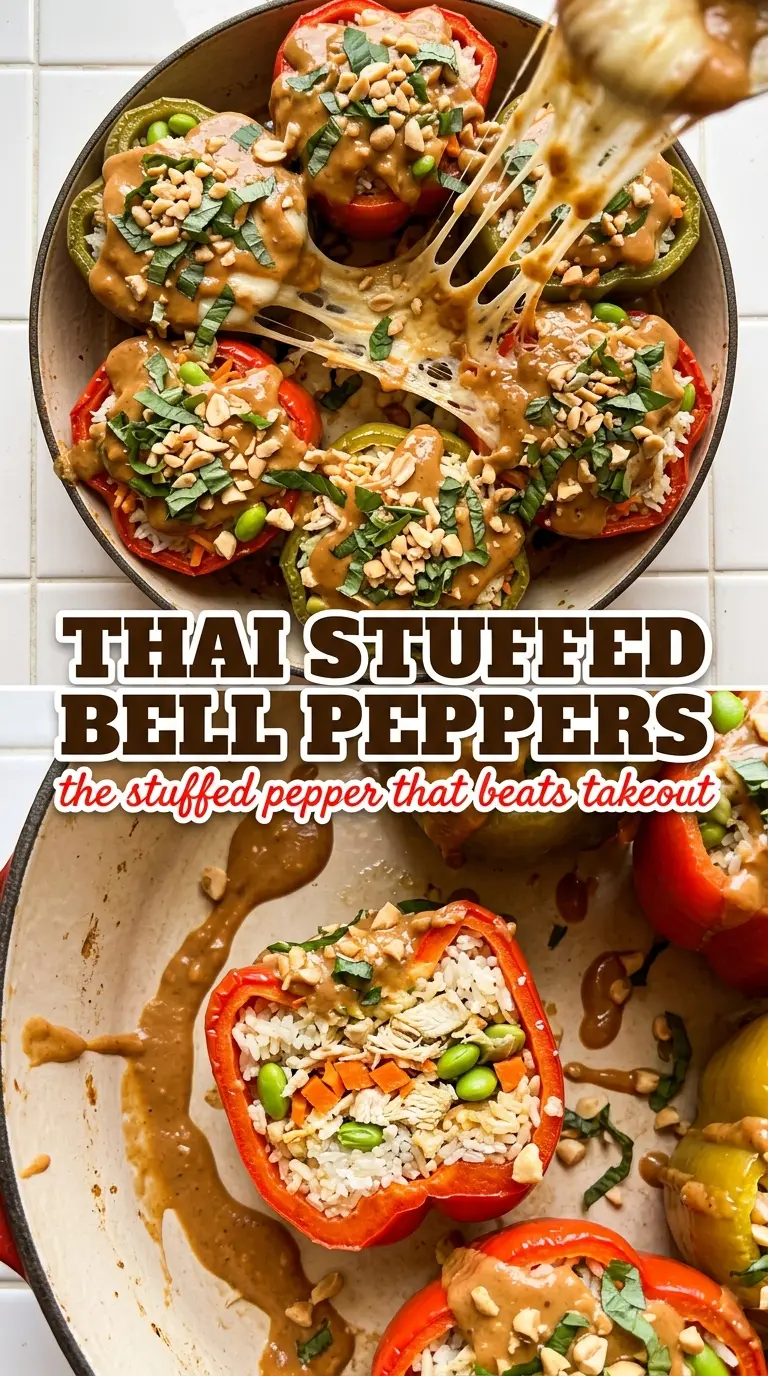
- Bell peppers — Red and orange peppers bring more sweetness than green ones and hold up well in the oven. If you use green peppers, the dish will taste sharper and less rounded. Choose peppers with flat bottoms so they sit upright in the baking dish.
- Ground chicken — This gives you a lean filling that soaks up the seasoning fast. Ground turkey works in the same way, though it can taste a little drier, so the coconut rice and sauce matter even more.
- Coconut rice — This is the backbone of the filling, not just a filler. Cooked rice mixed with coconut milk brings softness and subtle richness that plain rice can’t replace. If you need a shortcut, use plain cooked rice, but the dish loses its distinct character.
- Fish sauce, soy sauce, lime juice, and sesame oil — These four seasonings build the salty, bright, savory base. Fish sauce is the one that gives the filling real depth; if you skip it, add a little extra soy and a pinch of salt, but it still won’t taste the same.
- Ginger and garlic — These need to hit the pan before the liquid seasonings so their flavor blooms in the fat. If they go in too late, they taste harsh and raw instead of warm and aromatic.
- Peanut sauce — The drizzle changes the whole dish. Peanut butter alone would be heavy, but soy, lime, honey, sriracha, and hot water turn it into something glossy and spoonable that cuts through the richness of the rice and chicken.
- Thai basil and chopped peanuts — These aren’t garnish in the decorative sense. The basil gives the dish a peppery, fresh finish, and the peanuts bring crunch that keeps each bite from going soft all the way through.
Building the Filling So It Tastes Like More Than Rice and Chicken
Cooking the Aromatics First
Start by browning the chicken with the garlic and ginger until the meat loses its pink color and the garlic smells fragrant, not sharp. That early sautéing step wakes up the aromatics and gives the filling a base layer of flavor before the wet seasonings go in. If the pan is too hot, the garlic can scorch fast, so keep the heat moderate and stir as soon as it starts to color.
Seasoning Before You Add the Rice
Fish sauce, soy sauce, lime juice, and sesame oil go in while the chicken is still hot so they cling to the meat instead of sitting in the bottom of the pan. Taste at this stage before adding the rice. The filling should already be bold, slightly salty, and bright enough to stand on its own, because the rice will soften everything once it goes in.
Bringing in the Rice and Vegetables
Stir in the coconut rice, carrots, and edamame until everything looks evenly coated and the mixture holds together when you scoop it. You’re looking for a filling that’s moist but not wet. If it looks soupy, the peppers will leak and the rice will slump in the oven; if it seems dry, add a spoonful of coconut milk or a splash of water before stuffing.
Baking the Peppers in Two Stages
Pack the filling into the peppers, set them snugly in the dish, and cover for the first 30 minutes. That covered time traps steam and softens the peppers from the inside out. Uncover for the last 10 minutes so the tops dry slightly and the edges pick up a little color instead of staying pale and watery.
Make It Dairy-Free and Naturally Gluten-Free
This recipe already fits a dairy-free and gluten-free table as written, as long as your soy sauce is gluten-free tamari or certified gluten-free soy sauce. That makes it an easy one to serve when you need a meal that doesn’t rely on cream, cheese, or breading to taste complete.
Swap the Chicken for Turkey or Tofu
Ground turkey works with the same seasoning, though it benefits from the full amount of peanut sauce because it’s a touch leaner. For a vegetarian version, use crumbled extra-firm tofu browned in the pan until it loses its moisture and starts to take on some color; the texture changes, but the ginger, lime, and peanut sauce still carry the dish.
Make It Less Spicy or Turn Up the Heat
The sriracha in the peanut sauce is easy to pull back if you want a milder plate, and the dish still tastes complete because the lime and peanut bring plenty of character. If you want more heat, add extra sriracha or a pinch of chili flakes to the filling so the spice is woven through instead of only sitting on top.
Storage and Reheating
- Refrigerator: Store the stuffed peppers for up to 4 days. The peppers soften a bit more as they sit, but the flavor stays strong.
- Freezer: They freeze well without the fresh basil and peanuts. Wrap individually and freeze for up to 2 months, then thaw overnight in the fridge before reheating.
- Reheating: Warm in a covered 350°F oven until heated through, or use the microwave in short bursts. The common mistake is blasting them uncovered until the filling dries out and the peppers collapse.
The Things That Trip People Up With This Dish
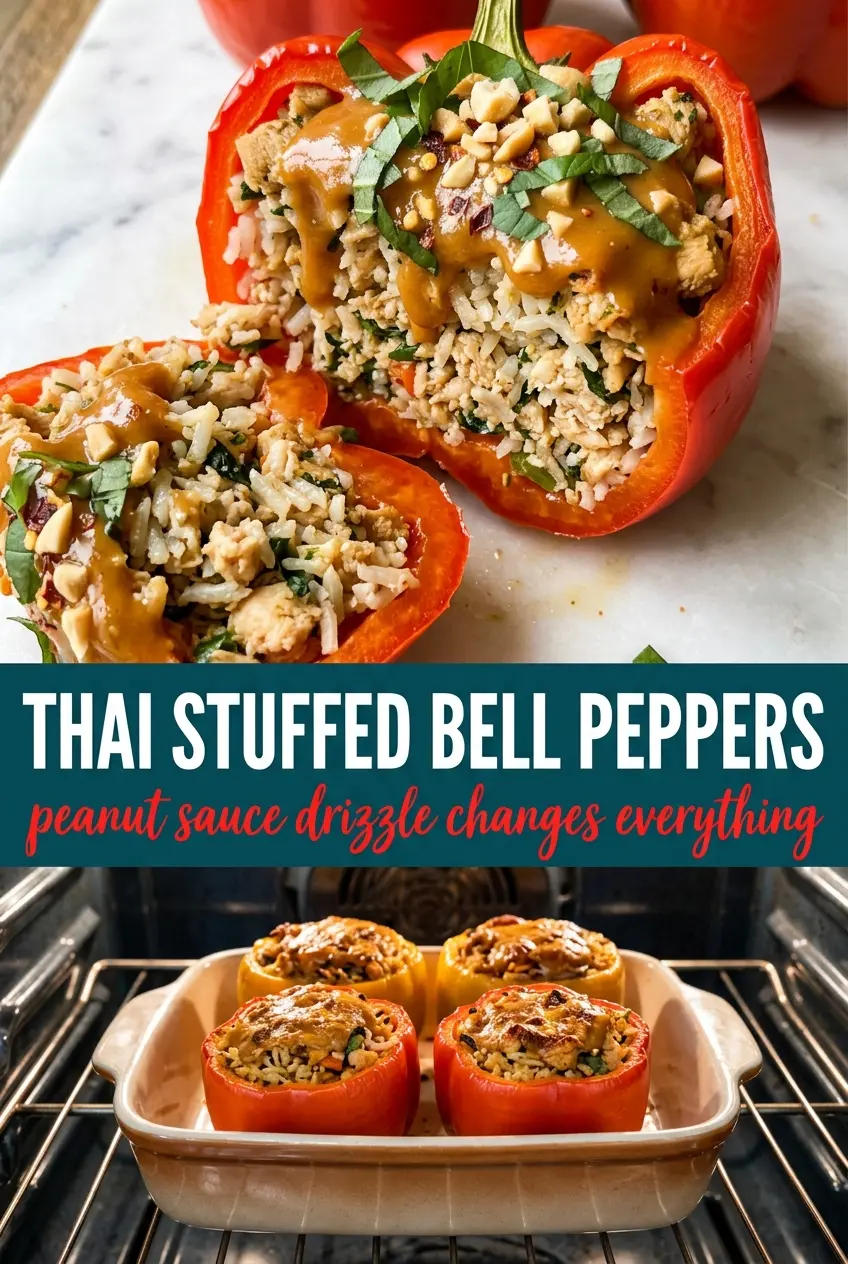
Stuffed Bell Peppers
Ingredients
Equipment
Method
- Preheat the oven to 375°F and cut the tops off the bell peppers so they’re ready to fill.
- Place the peppers on a sheet pan and set aside while you cook the filling.
- Brown the ground chicken with the minced garlic and grated ginger until the chicken is cooked through and fragrant.
- Stir in the fish sauce, soy sauce, lime juice, and sesame oil and cook 1–2 minutes to combine the flavors.
- Mix in the coconut rice, shredded carrots, and edamame, then taste and adjust seasoning as needed.
- Fill each bell pepper with the chicken-and-coconut-rice mixture, packing lightly so the filling sits level.
- Cover the peppers and bake at 375°F for 30 minutes, until the shells start to soften.
- Uncover and bake at 375°F for 10 minutes more, until the peppers are tender and the filling is hot throughout.
- Whisk or stir the peanut sauce ingredients, then drizzle the glossy sauce over the baked stuffed peppers.
- Top with fresh Thai basil and chopped peanuts, and serve with lime wedges.