
Glossy spaghetti tangled with burst cherry tomatoes, golden garlic, and torn basil is one of those dinners that disappears fast and leaves the pan looking cleaner than it should. The tomatoes collapse just enough to release their juices, the olive oil picks up the garlic and pepper, and the pasta water pulls everything into a sauce that clings instead of pooling at the bottom of the bowl. It tastes bright and rich at the same time, which is exactly why this one earns a regular spot on the table.
The trick is treating the tomatoes like the sauce, not just a mix-in. Once they start blistering and splitting, their juices need a little help from wine and pasta water to turn silky. If you rush that part, you get oily pasta with loose tomatoes; if you take the extra minute, you get a proper glossy coating that tastes like it took much longer than 20 minutes. A spoonful of burrata on top isn’t required, but it melts into the hot pasta and softens the sharpness of the garlic and pepper in the best way.
The tomatoes broke down into the prettiest sauce and the pasta water made it cling to every strand. I added burrata on top and my husband asked why we hadn’t been making this for years.
Keep this cherry tomato pasta for the nights when you want a bright, garlicky sauce that comes together in one pan and tastes like you did much more work.
The Reason the Tomatoes Need Heat Before the Pasta Goes In
Cherry tomatoes aren’t just a garnish here. They need direct heat in the pan long enough to blister, split, and give up their juices before the pasta shows up. That step is what turns a pile of tomatoes and oil into sauce. If you toss everything together too early, the tomatoes stay stubborn and the pasta ends up coated in oil instead of a glossy tomato glaze.
The other mistake is moving too fast once the wine goes in. Let it simmer for a minute or two so the sharp edge cooks off and the juices concentrate a little. You want the pan looking juicy, not watery. By the time the spaghetti goes in, the sauce should already smell sweet, garlicky, and a little peppery.
- Cherry tomatoes — Mixed colors look beautiful, but the bigger reason to use them is their thin skins and quick collapse. Halve them so they blister evenly and start releasing juice right away.
- Good olive oil — This is the backbone of the sauce, so use one you actually like the taste of. A bitter, stale oil will show up immediately. There isn’t a good substitute here unless you want a different dish.
- Dry white wine — It lifts the tomato juices and adds a clean acidity that water can’t give you. If you don’t use wine, add a splash of extra pasta water with a little squeeze of lemon at the end, though the sauce will taste less rounded.
- Basil — Add it off the heat so it stays fresh and aromatic. Dried basil won’t give you the same lift, and it tastes flat in a dish this simple.
- Burrata — Optional, but worth it if you want a creamy center that softens the garlicky heat. If you skip it, the pasta still holds up beautifully on its own.
Building the Sauce in the Pan, Not in the Pot
Getting the Garlic to Gold, Not Brown
Warm the olive oil over medium and slide in the sliced garlic. You’re looking for pale gold edges and a strong fragrance, not dark brown chips. If the heat is too high, garlic turns bitter before the tomatoes even hit the pan. Keep it moving gently so it softens and perfumes the oil without burning.
Letting the Tomatoes Break Before You Stir in the Pasta
Add the halved tomatoes with the red pepper flakes and give them a few minutes of undisturbed heat. They should start to wrinkle, blister, and burst on their own. Stir too early and they just warm through; leave them alone long enough and they collapse into the oil and garlic, which is what builds the sauce.
Using Pasta Water to Turn Juices into Sauce
Once the wine has simmered down, add the drained pasta and a splash of the reserved pasta water. Toss constantly until the strands look shiny and the liquid thickens enough to coat them instead of sliding off. If it still looks thin, keep tossing over low heat and add another splash of water. Starch is what gives this dish that silky finish, so don’t skip the reserve cup.
Finishing Off Heat
Take the pan off the burner before you add the basil and parmesan. Cheese can get grainy if you dump it into a pan that’s too hot, and basil loses its fresh flavor fast under direct heat. The last toss should smell bright and garlicky, with the tomatoes still holding shape but soft enough to melt into the pasta.
How to Adapt This for a Different Night or a Different Diet
Make It Dairy-Free
Skip the parmesan and burrata, then finish with a little extra olive oil and a handful of torn basil. You lose the creamy richness, but the tomato and garlic flavors stay front and center. If you want more body, add a spoonful of pasta water and toss a little longer until the sauce looks emulsified.
Gluten-Free Pasta Swap
Use a sturdy gluten-free spaghetti or linguine and cook it just to tender, because it can go mushy fast once it hits the pan. Reserve extra pasta water if your brand tends to absorb more liquid, since you’ll need that starch to help the sauce cling. A rice- or corn-based pasta works best here.
Turn It Into a Bigger Meal
Add a can of drained cannellini beans or some seared shrimp at the end if you want more protein without changing the character of the dish. Beans make it heartier and keep it vegetarian; shrimp cooks fast and works with the same garlic-tomato base. Don’t add either too early or they’ll overcook while the sauce finishes.
Storage and Reheating
- Refrigerator: Store leftovers in an airtight container for up to 3 days. The pasta will soak up some of the sauce, so it won’t look as glossy the next day.
- Freezer: This freezes poorly once it’s tossed with pasta, because the tomatoes and basil lose their fresh texture. If you want to get ahead, freeze the cooked tomato-garlic sauce on its own and boil fresh pasta later.
- Reheating: Warm it gently in a skillet with a splash of water over low heat, stirring until the sauce loosens again. The common mistake is blasting it in the microwave until the pasta dries out and the garlic tastes harsh.
Answers to the Questions Worth Asking
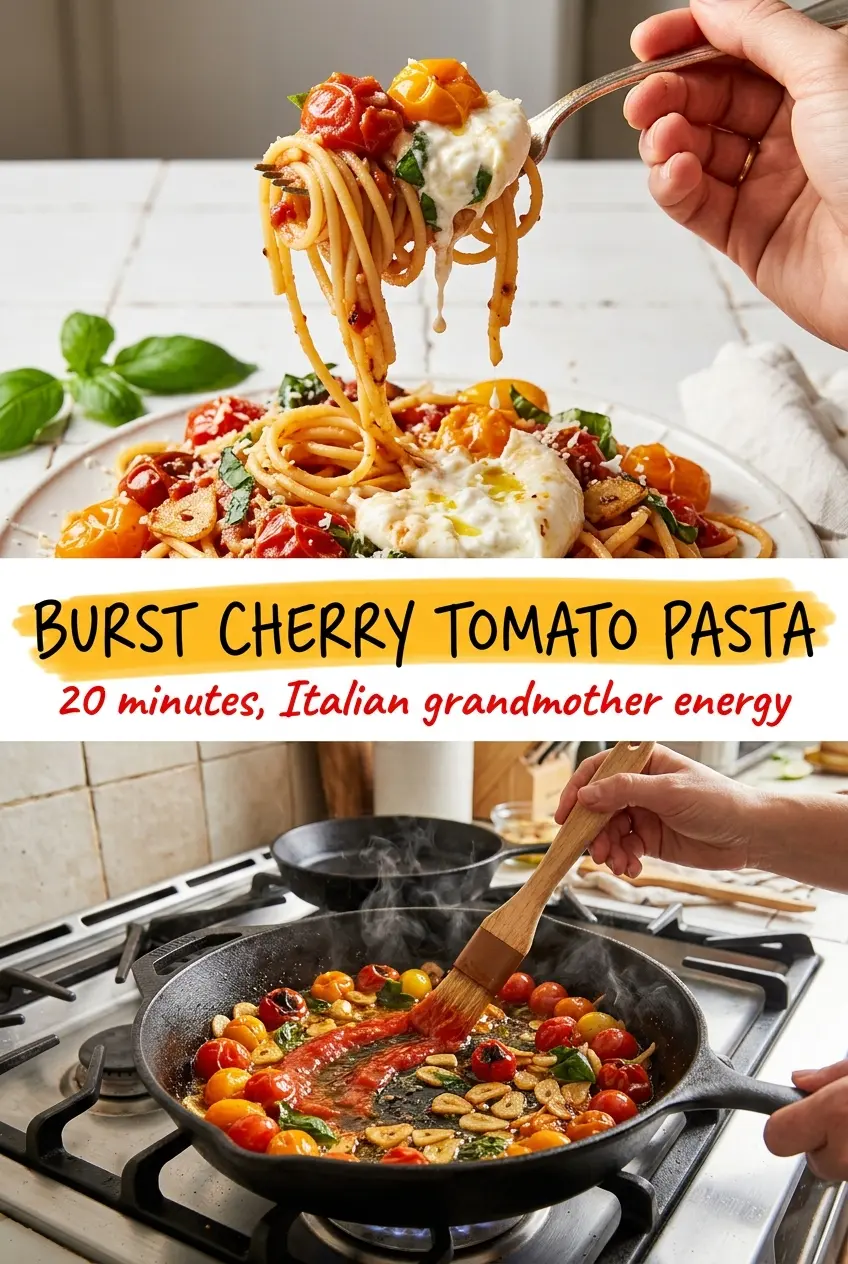
Cherry Tomato Spaghetti with Garlic and Basil
Ingredients
Equipment
Method
- Bring a pot of salted water to a boil and cook spaghetti or linguine until al dente, then reserve 1 cup pasta water (about 8–10 minutes depending on the brand).
- Keep the pasta warm off the heat while you make the sauce so it stays flexible for tossing.
- Heat olive oil in a large skillet over medium heat and sauté thinly sliced garlic until golden at the edges, about 2–3 minutes, stirring to prevent browning.
- Add halved mixed cherry tomatoes and red pepper flakes, then cook 3–4 minutes until blistered and bursting.
- Pour in dry white wine and simmer for 2 minutes to reduce slightly, then season generously with salt and black pepper.
- Add al dente pasta to the skillet and toss with the reserved pasta water until loosened into a glossy sauce, about 1–2 minutes.
- Turn off the heat and top with torn fresh basil, grated parmesan, and burrata if using.