
Golden, puffed Monte Cristo breakfast casseroles bring the same sweet-salty contrast you expect from the classic sandwich, but the ramekin format gives each serving a custardy center and crisp, bronzed top. The result feels a little theatrical in the best way: ham and Gruyère tucked under soft brioche, a vanilla-kissed egg base soaking into every corner, and a bright raspberry coulis to cut through the richness. It’s the kind of brunch dish that lands on the table looking polished without asking for much more than a whisk and a baking dish.
The small details matter here. Brioche gives you a softer, richer base than regular bread, and the overnight rest is what lets the custard soak all the way through instead of sitting on top. Dijon sharpens the whole thing without turning it savory in a loud way, and the vanilla plus maple syrup keep the sweet side of the Monte Cristo idea intact. That balance is what keeps this from tasting like just another ham-and-egg bake.
Below, I’ve included the timing cues that matter most, the one serving habit that keeps the texture right, and a few smart swaps if you need to work with what’s already in the fridge.
The brioche soaked up the custard perfectly overnight, and the raspberry sauce made the ham and Gruyère taste even better. Mine puffed up beautifully in the ramekins and still held its shape long enough to get to the table.
Save these individual Monte Cristo breakfast ramekins for a brunch that bakes puffed, golden, and ready to finish with raspberry coulis.
The Custard Needs Time to Reach the Bread All the Way Through
The biggest mistake with baked Monte Cristo-style casseroles is rushing the soak. If you bake the ramekins after a quick pour, the top gets set before the center has time to absorb the custard, and you end up with dry bread on top and liquid at the bottom. The overnight rest solves that problem because the brioche softens evenly and bakes into a plush, unified texture instead of separate layers.
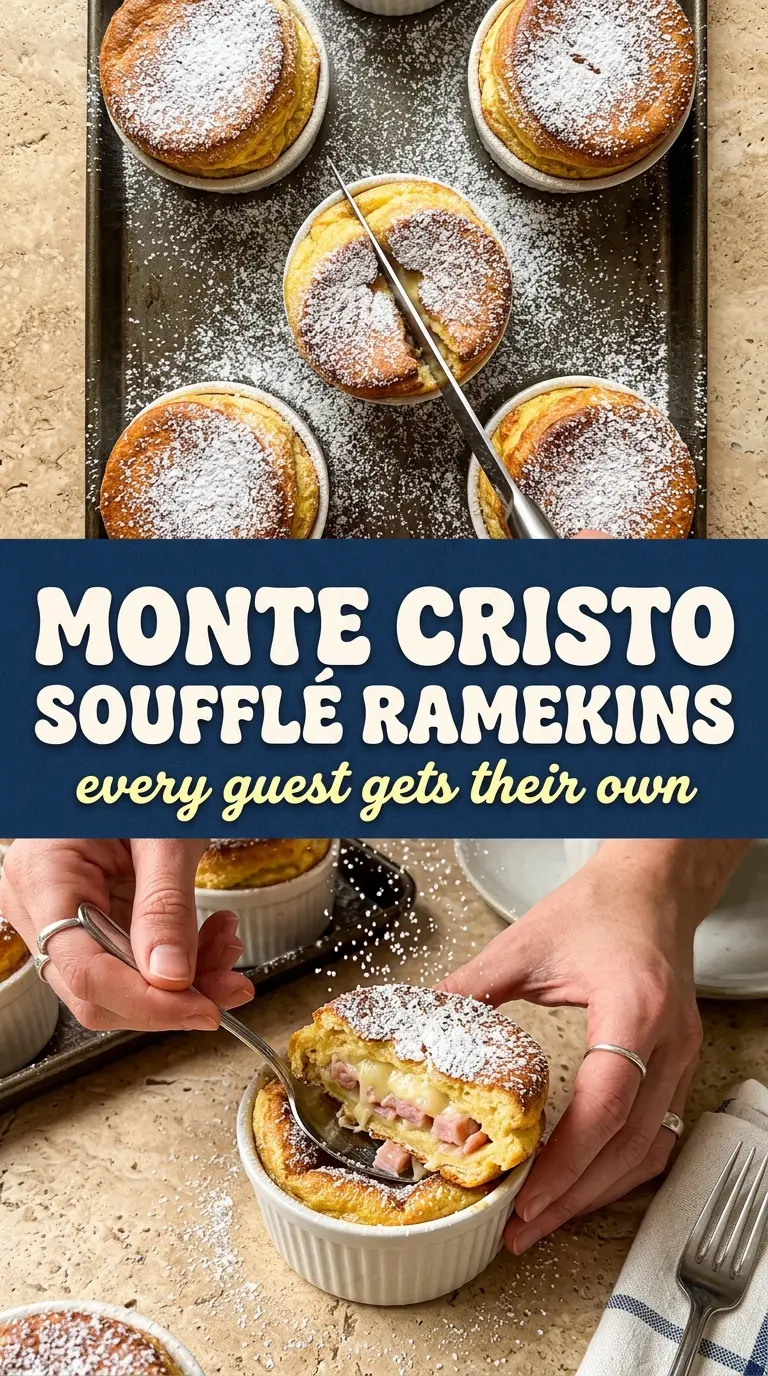
Individual ramekins help more than most people expect. They bake faster than one big casserole, which means the eggs set before the bread turns dense, and the portions hold their shape well enough to dust with sugar and serve immediately. That also means you need to watch the oven closely in the last few minutes. You want puffed tops, golden edges, and centers that wobble just a little when the ramekins are nudged.
What Each Ingredient Is Actually Doing in This Dish
- Brioche rolls — Brioche is the base that gives this casserole its soft, almost bread-pudding texture. Regular sandwich bread works in a pinch, but it won’t give you the same buttery richness or tender crumb.
- Black Forest ham — The smoky, cured edge of the ham is what keeps the dish from reading as dessert. Dice it small so it spreads through the ramekins instead of clumping in one salty pocket.
- Gruyère — This cheese melts into the custard and adds a nutty depth that cheddar won’t match. If you need a substitute, Swiss is the closest stand-in; it’ll be milder, but the melt is still excellent.
- Dijon and vanilla — Dijon keeps the sweet elements from getting flat, while vanilla quietly supports the brioche and maple. Don’t skip either one, because together they give the casserole its Monte Cristo character.
- Raspberry coulis — This isn’t just garnish. The tart fruit cuts through the rich egg, ham, and cheese and makes each bite taste balanced instead of heavy.
The 25 Minutes That Turn a Soaked Brunch Bake Into a Puffy Ramekin Finish
Building the Ramekins
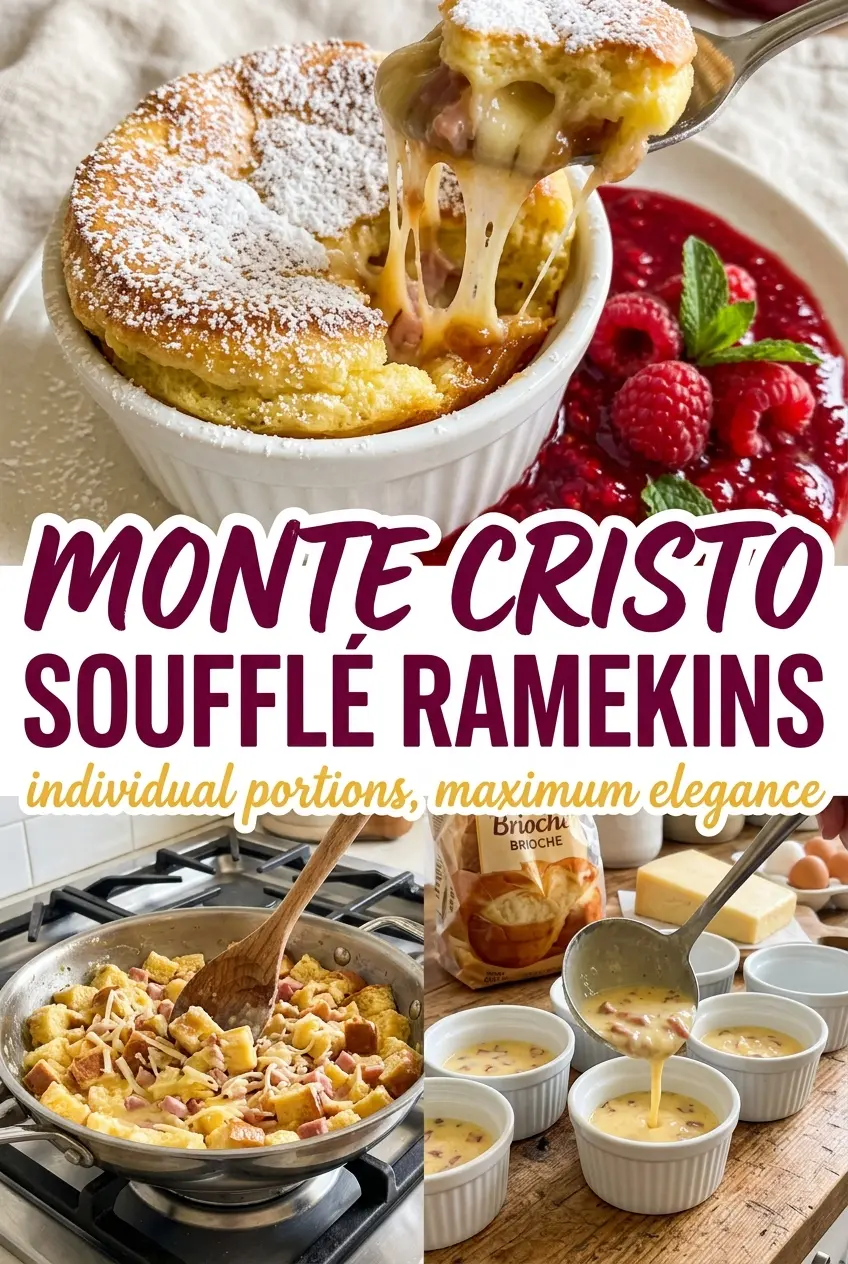
Grease the ramekins well, then divide the torn brioche, ham, and Gruyère evenly among them. Tuck the bread down gently with your fingers so the cheese and ham aren’t sitting only on top. The goal is a loose, layered fill, not a packed-down mound, because the custard needs space to move through the bread.
Whisking the Custard
Whisk the eggs, milk, Dijon, vanilla, maple syrup, and salt until the mixture looks fully blended and slightly frothy. If streaks of Dijon or egg white remain, they’ll bake unevenly and leave sharp pockets in the finished custard. Pour the mixture evenly over each ramekin, then press the bread down just enough to help it soak without compacting it.
The Overnight Rest
Cover the ramekins and refrigerate them for at least 2 hours, though overnight gives you the best texture. The bread should look fully saturated by the time they go into the oven. If you skip this rest, the tops brown too quickly before the centers set.
Baking and Serving Fast
Bake at 350°F until the tops are puffed and deeply golden and the centers no longer look wet when lightly jiggled, usually 25 to 28 minutes. They’ll continue to settle after they leave the oven, so have the powdered sugar and raspberry coulis ready before they come out. Serve them right away while the tops are still lifted and the texture is at its best.
What to Change When You Need a Different Brunch Path
Gluten-Free Version
Use a sturdy gluten-free brioche or enriched gluten-free bread with enough structure to soak overnight. Soft sandwich-style GF bread tends to collapse, so aim for a loaf that can hold moisture without turning pasty.
Dairy-Free Direction
Swap the milk for an unsweetened, neutral plant milk and use a dairy-free cheese that melts well. The result won’t be as rich or nutty as Gruyère, but the custard still sets cleanly if the substitute milk isn’t thin and watery.
Make It Without Ramekins
You can bake the same mixture in a buttered 9×13-inch dish, but the bake time will be longer and the texture will be less dramatic on the plate. Expect a softer, more casserole-like finish instead of the puffed individual tops that make the ramekin version special.
Storage and Reheating
- Refrigerator: Store leftovers for up to 3 days. The bread softens more as it sits, so the texture becomes denser and less puffed.
- Freezer: Freeze after baking only if you need to; wrap each cooled ramekin tightly. The texture won’t be as delicate after thawing, but it’s usable for a make-ahead brunch backup.
- Reheating: Warm in a 325°F oven until heated through. Microwaving makes the custard rubbery and collapses the top, which is the exact thing you’re trying to avoid.
Answers to the Questions Worth Asking
Monte Cristo Breakfast Casserole
Ingredients
Equipment
Method
- Grease 6 ramekins, then divide brioche, Black Forest ham, and Gruyère evenly among them.
- Whisk large eggs, whole milk, Dijon, vanilla, maple syrup, and salt until smooth and combined.
- Pour the custard equally into each ramekin, then press the brioche down gently so it sits under the liquid.
- Refrigerate the ramekins for 2+ hours or overnight for a set custard.
- Preheat to 350°F, place ramekins on a sheet pan, and bake for 25–28 minutes until puffed and golden.
- Serve immediately dusted with powdered sugar and spooned with raspberry coulis.
- To make raspberry coulis, blend raspberries with sugar and lemon juice, then strain until smooth.
- Garnish each plate with fresh raspberries.