
Tender shredded chicken baked under a rich, creamy layer and finished with a buttery cracker crust has a way of disappearing fast from the table. The contrast is what makes this casserole work: the filling stays lush and savory while the top bakes into a crisp, golden layer that crackles when you spoon through it. It’s comforting without being heavy in a bland, same-texture kind of way.
The key is balance. Cream cheese gives the filling body, sour cream keeps it from turning dense, and the cheddar and mozzarella bring both sharpness and stretch. The cracker topping gets tossed with melted butter before it goes on top, which is what turns it from plain crumbs into an even, bronzed crust instead of a dry, patchy sprinkle.
Below, I’ve broken down the small details that keep the casserole creamy instead of greasy, plus a few smart swaps if you want to stretch it, lighten it up, or work with what’s already in your kitchen.
The filling stayed creamy and set up perfectly after a short rest, and the cracker topping came out buttery and crisp all the way across. My family kept sneaking bites from the pan before dinner even started.
Creamy Million Dollar Chicken Casserole with buttery cracker topping is the kind of dinner that disappears fast and reheats beautifully the next day.
The reason the filling stays creamy instead of turning greasy
Most casseroles like this go wrong when the dairy gets overheated or the filling is mixed too loosely. If the cream cheese is still cold, it leaves little lumps that don’t melt out evenly in the oven. If the chicken is packed into the dish without enough binder, the fat separates and pools instead of staying in the sauce.
This version works because the cream cheese and sour cream are mixed until smooth before the chicken goes in. That gives you a stable base that coats every strand of chicken. The cheeses melt into that base as it bakes, so the filling sets up in a creamy layer that holds together when you scoop it.
The cracker topping matters for the same reason. Dry crumbs on top just look pale and dusty. Crumbs tossed with melted butter brown evenly and give you the crisp, salty finish that keeps each bite from feeling soft all the way through.
What each ingredient is actually doing in this casserole

- Cooked shredded chicken — Use chicken that’s already seasoned if you have it. Rotisserie chicken works well because it stays moist and saves time, but any cooked chicken will do as long as it’s shredded into bite-size pieces so the filling bakes evenly.
- Cream cheese — This is what gives the casserole its body. Soften it fully first; if it’s cold, you’ll fight little cream cheese pebbles the whole time you’re mixing. Full-fat cream cheese gives the best texture, but reduced-fat will still work if that’s what you have.
- Sour cream — This keeps the filling from eating like a brick. It adds tang and loosens the cream cheese just enough to spread cleanly. Plain Greek yogurt can work in a pinch, but the texture will be a little tighter and the flavor a little sharper.
- Cheddar and mozzarella — Cheddar brings the flavor, mozzarella brings the melt. If you only use cheddar, the casserole tastes richer but less stretchy. If you only use mozzarella, it can turn mild and a little bland. Together, they give you both depth and that gooey pull people expect.
- Buttery crackers — These are the topping’s secret weapon. They toast into a crisp shell that contrasts with the soft filling beneath. Ritz-style crackers are ideal because they’re already rich and seasoned, but any buttery cracker will work.
- Butter — Don’t skip tossing the crumbs with melted butter. That step helps the topping brown instead of drying out. It also keeps the cracker layer from blowing around or baking into uneven patches.
- Garlic powder — This adds background savoriness without making the filling wet. Fresh garlic can burn or turn sharp in a casserole like this, but garlic powder stays smooth and rounded through the bake.
Building the casserole so the top crisps and the center sets
Mix the filling until it’s completely smooth
Stir the softened cream cheese and sour cream together first until there are no lumps. That base should look glossy and thick before the chicken goes in. If you add the chicken too early, the cream cheese never fully blends and you’ll see streaks in the finished casserole. Once the dairy is smooth, fold in the chicken, cheeses, and garlic powder until everything is evenly coated.
Spread it into the dish without packing it down
Spoon the mixture into a greased baking dish and level the top gently. Don’t smash it flat with the back of a spoon; you want it settled, not compacted. A loose, even layer gives the heat a chance to move through the casserole and helps the center set at the same time the edges bubble. If the layer is too dense, the middle takes longer and the top can overbake before the filling is ready.
Butter the crumbs before they hit the oven
Toss the crushed crackers with melted butter until every crumb looks lightly coated. That’s what makes the topping crisp instead of sandy. Sprinkle it evenly over the filling so the whole surface bakes at the same rate. A few dry pockets are fine, but if you see bare spots, those areas will bake pale while the buttery sections turn golden.
Bake until the edges are bubbling and the top is deep gold
At 350°F, the casserole should bake until the center is hot and the edges are actively bubbling. The top should be golden with a few darker spots, not pale beige. If the crust is browning too fast before the filling is hot, tent it loosely with foil for the last part of the bake. Let it rest for 5 minutes after it comes out so the sauce settles and the spoonfuls hold together instead of running across the plate.
How to adapt this for a lighter pan, a bigger crowd, or a gluten-free table
Gluten-free cracker topping
Swap the buttery crackers for a gluten-free butter cracker or crushed gluten-free saltines. Keep the butter step the same so the topping still browns and crisps instead of baking into dry crumbs. The texture stays close to the original, though the flavor may be a little less rich depending on the brand.
Lower-lactose version
Use lactose-free cream cheese and sour cream if that’s what you need, and keep the rest of the recipe the same. The casserole still gets its creamy texture because the structure comes from the dairy base, not from any one brand. The flavor stays mild and comforting.
Make it stretch farther
Add a cup of cooked rice or small pasta shells to the filling if you need more servings. That turns the casserole into a sturdier one-dish meal and softens the richness a bit. Just keep the mixture moist enough that the starch doesn’t soak up all the sauce while it bakes.
Storage and Reheating
- Refrigerator: Store covered for up to 4 days. The topping softens a bit, but the filling stays creamy.
- Freezer: This freezes well before baking. Assemble it without the cracker topping, wrap tightly, and freeze for up to 2 months. Add the buttered crumbs just before baking for the best texture.
- Reheating: Reheat in a 325°F oven, covered at first so the filling warms through without drying out. Uncover near the end to bring the topping back to life. The microwave works for a quick lunch, but it softens the crust completely.
Answers to the questions worth asking
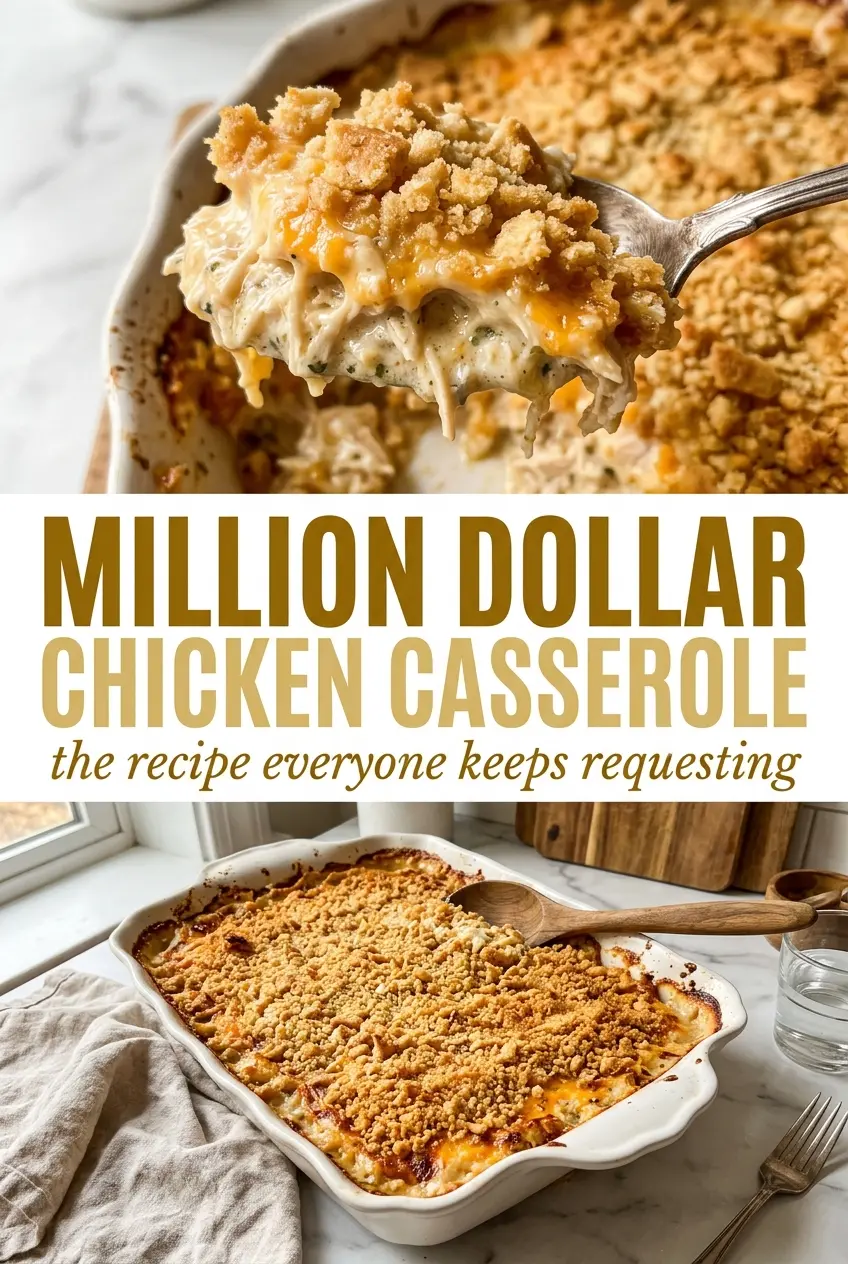
Million Dollar Chicken Casserole
Ingredients
Equipment
Method
- Combine cooked shredded chicken, softened cream cheese, sour cream, shredded cheddar, shredded mozzarella, and garlic powder in one mixture until evenly blended and creamy.
- Spread the mixture evenly into a greased baking dish.
- Toss crushed buttery crackers with melted butter until the crumbs look evenly coated.
- Sprinkle the buttery cracker crumbs evenly over the top of the casserole.
- Bake at 350°F for 30-35 minutes, until the center is bubbly and the top is golden and crispy.
- Rest the casserole for 5 minutes after baking so it sets before serving.