
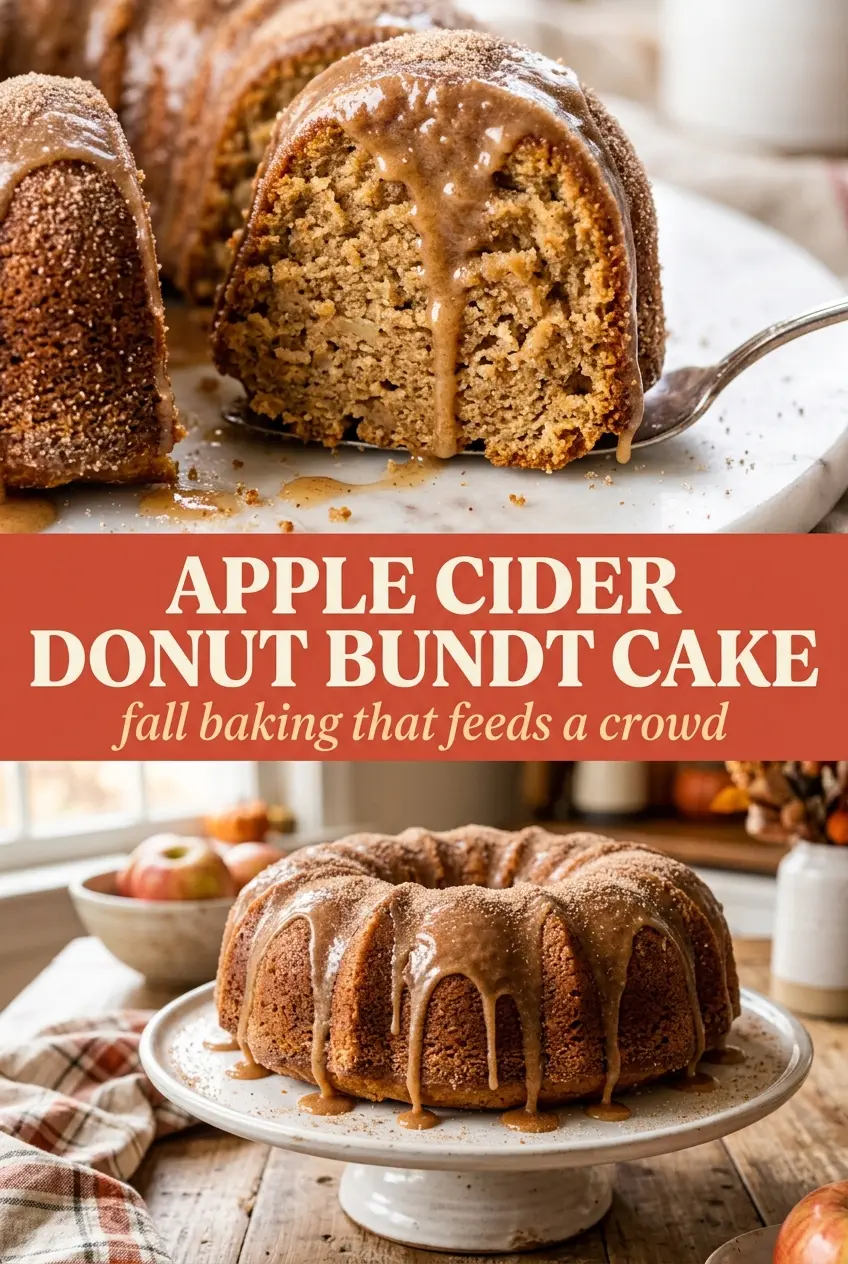
Apple cider donut bundt cake has that same sugar-dusted, cinnamon-kissed charm you get from a fresh cider donut, but in a form that’s easier to slice, serve, and keep on the counter for an afternoon snack. The crumb stays tender and moist, the edges bake up with a gentle crust, and the glaze settles into every ridge of the pan so each piece tastes like the best part of a bakery donut.
What makes this version worth keeping around is the reduced cider. Cutting the apple cider down first concentrates the flavor so the cake tastes like apples instead of just sweet spice. Sour cream keeps the crumb soft without making it heavy, and the butter-and-brown-sugar base gives the cake a deep, almost caramel note that plays well with cinnamon and nutmeg. The glaze goes on while the cake is still warm, which helps it set with that shiny, slightly crackly finish instead of sliding right off.
Below, I’ll walk you through the one bundt-pan step that matters most, the ingredient choices that actually change the texture, and a few practical swaps if you need to work with what’s in your kitchen.
The apple cider flavor came through so clearly, and the glaze set up beautifully without making the cake soggy. I made it for brunch and every slice released cleanly from the bundt pan, which never happens for me.
Save this apple cider donut bundt cake for the kind of fall baking that tastes like a cider donut in sliceable form.
The Bundt Pan Is the Whole Trick Here
A bundt cake looks forgiving, but this kind of cake exposes every weak spot in your pan prep. If the butter isn’t worked into every groove, the glaze and tender crumb can cling to the ridges and tear when you turn it out. That’s why this recipe depends on a generous greasing and flouring step. The cake itself is sturdy enough to hold the shape, but only if the pan releases cleanly.
The other mistake is overbaking. A bundt cake keeps cooking from residual heat, so if you wait for the top to look completely dry in the oven, the crumb can end up tighter than it should. Pull it when a tester comes out clean and the center springs back when lightly pressed. That gives you a cake that slices neatly but still eats like a soft cider donut.
What the Cider, Sour Cream, and Brown Sugar Are Each Doing
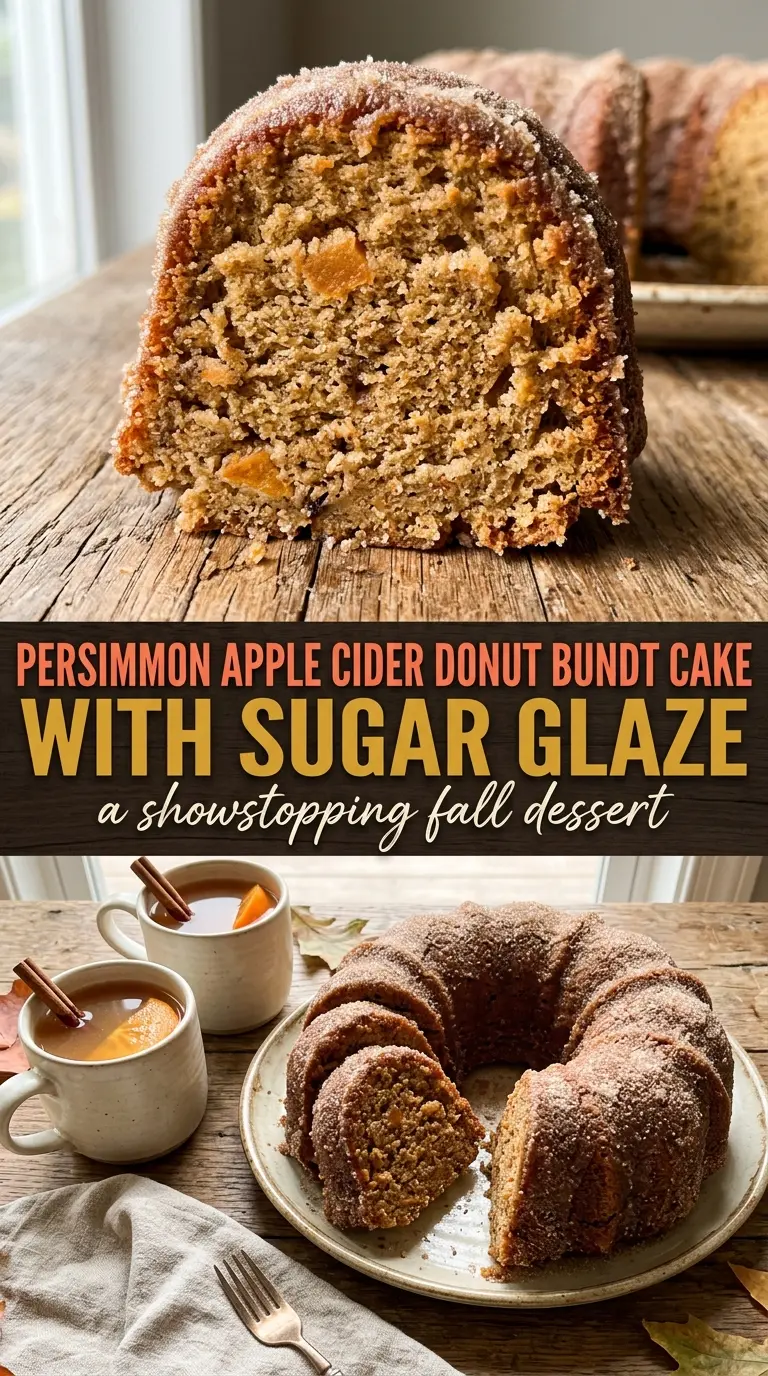
- Apple cider — Reducing it by half concentrates the flavor without adding extra water to the batter. Plain cider straight from the jug works in a pinch, but it tastes flatter and can dilute the spice. Reduce it first, then let it cool before mixing it in.
- Brown sugar — This brings moisture and a deeper molasses note that makes the cake taste more like a donut shop treat. White sugar will work, but the cake loses some of that warm, rounded sweetness.
- Sour cream — This is what keeps the crumb tender and gives the batter enough acidity to stay soft after baking. Full-fat plain Greek yogurt can stand in, though the texture will be a touch firmer and a little less rich.
- Butter — Softened butter traps air when you beat it with the sugar, which helps the cake rise into a light, even crumb. Don’t use melted butter here; you’ll lose that structure and the cake can bake up denser.
- Cinnamon and nutmeg — These are the spices that push the cake into cider-donut territory. Freshly grated nutmeg gives the strongest aroma, but ground nutmeg works fine if that’s what you have.
Building the Batter Without Deflating It
Whipping the Butter and Sugar
Beat the softened butter and brown sugar until the mixture looks pale and fluffy, not just blended. That step takes a few minutes, and it matters because it sets up the crumb before any flour goes in. If the butter is too cold, the mixture stays gritty and won’t trap enough air. If it’s too warm, the batter can turn greasy instead of fluffy.
Adding the Eggs and Reduced Cider
Add the eggs one at a time so the batter stays smooth and emulsified. The mixture might look a little curdled after the cider and sour cream go in, and that’s fine as long as it comes together once the dry ingredients are added. Stir in the reduced cider after it cools; hot cider can loosen the butter too much and make the batter unstable.
Finishing With the Flour
Fold in the dry ingredients just until no streaks of flour remain. Overmixing at this point is what turns a tender bundt cake into something tight and bready. The batter should be thick and spoonable, not pourable like a thin cake batter. Once it’s mixed, get it into the pan right away so the leavening starts working in the oven, not on the counter.
How to Adapt This for Different Kitchens and Different Needs
Dairy-Free Version
Use a good plant-based butter and plain dairy-free yogurt in place of the sour cream. The cake will still bake up tender, though the flavor will be a little less rich and the crumb a touch lighter. Choose an unsweetened yogurt so the glaze doesn’t become cloying.
Gluten-Free Swap
A 1:1 gluten-free baking flour can work here because the cake already has plenty of moisture from the butter, eggs, and sour cream. Don’t use a single gluten-free starch on its own. The cake needs a blend with structure, or it’ll collapse in the center.
Extra-Spiced Bakery Style
If you want the cake to taste more like a classic apple cider donut, add a pinch of cloves or allspice to the dry ingredients. Go light with both. Too much and you’ll bury the cider flavor instead of supporting it.
Storage and Reheating
- Refrigerator: Store covered for up to 4 days. The glaze will soften a bit, but the cake stays moist.
- Freezer: It freezes well. Wrap individual slices tightly and freeze for up to 2 months. Thaw at room temperature before serving.
- Reheating: Warm slices for 10 to 15 seconds in the microwave or a few minutes in a low oven. Don’t heat it long enough to melt the glaze completely, or it can turn sticky and soak into the crumb.
Answers to the Questions Worth Asking
Apple Cider Donut Bundt Cake
Ingredients
Equipment
Method
- Whisk flour, baking powder, cinnamon, and nutmeg together until evenly combined, with no visible spice streaks.
- Beat softened butter and brown sugar until fluffy, then mix in eggs one at a time, scraping the sides as needed.
- Stir in reduced apple cider and sour cream until the batter looks smooth and thick.
- Fold in the dry ingredients until just combined, stopping as soon as no dry flour remains.
- Pour batter into a greased and floured bundt pan, making sure batter fills the ridges evenly.
- Bake at 350°F for 55-60 minutes, until a toothpick comes out clean.
- Cool slightly in the pan, then whisk powdered sugar with apple cider and glaze the warm cake so the glaze melts and pools in the ridges.