
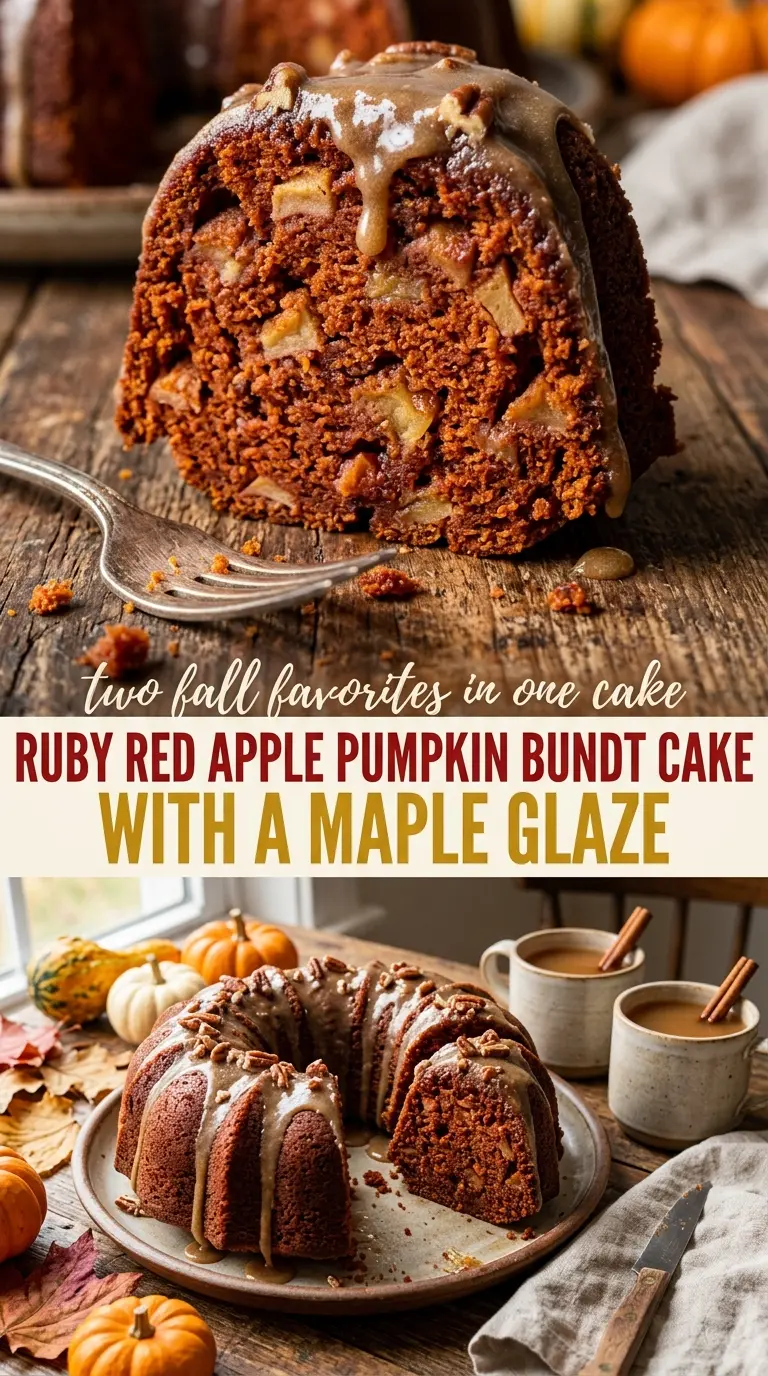
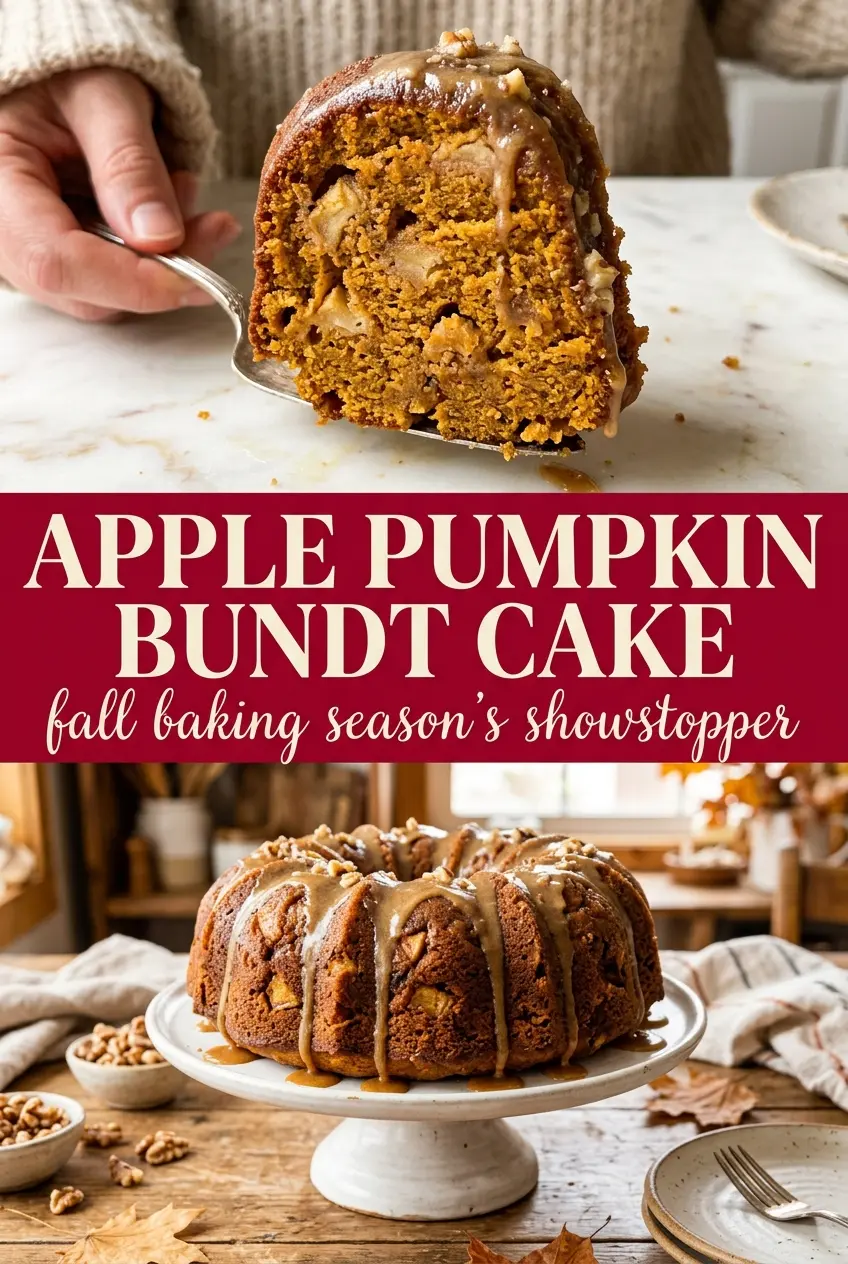
Apple pumpkin bundt cake bakes up with a soft, dense crumb that stays moist for days, and the little pockets of tender apple keep every slice from feeling heavy. The maple glaze settles into the ridges and gives each cut edge a sweet finish that tastes just right with the warm spice in the cake.
What makes this version work is the balance. Pumpkin puree brings moisture and structure, while the oil keeps the crumb plush instead of dry. Brown sugar adds a deeper note than white sugar would, and the diced apple gives you a fresh bite that cuts through the richness. The batter comes together fast, but the order matters: whisk the dry ingredients first, beat the sugar and oil until smooth, then fold everything together just until the flour disappears.
Below, you’ll find the small trick that keeps the apple from sinking, why a bundt pan needs a thorough coating, and the easiest way to know when the center is baked through without overbaking the edges.
The glaze soaked into the ridges beautifully and the apple pieces stayed suspended instead of sinking. I baked it for 58 minutes and the center came out perfectly moist, not gummy.
Apple pumpkin bundt cake with maple glaze is the kind of bake that fills the kitchen with warm spice and slices cleanly for a crowd.
The Reason Bundt Cakes Turn Dense Instead of Light
Bundt cakes often go heavy when the batter gets overmixed or the pan isn’t prepared well enough for the cake to release cleanly. Once flour is stirred in, every extra stroke builds more gluten, which tightens the crumb instead of keeping it tender. This cake avoids that by mixing the wet ingredients until smooth, then folding in the dry ingredients just until the flour disappears.
The other place people lose a bundt cake is the pan itself. Grease every curve and dust it with flour, especially around the center tube and the top edges where batter likes to cling. If you’ve ever flipped a cake out and left half of it behind, the problem was usually pan prep, not the recipe.
What Each Ingredient Is Actually Doing in This Cake
- All-purpose flour — This gives the cake its structure without making it tough. A lower-protein cake flour would make it softer, but it also can’t support the weight of the pumpkin and apple quite as well.
- Baking powder — Since there’s no baking soda here, the baking powder does the lifting. Fresh baking powder matters; if yours is old, the cake can bake up flat and compact.
- Brown sugar — Brown sugar adds moisture and a deeper caramel note that works with the pumpkin. White sugar will sweeten the cake, but it won’t give the same soft crumb or flavor depth.
- Vegetable oil — Oil keeps the crumb tender for days. Melted butter can be used, but the cake will be a little firmer once cooled and won’t stay as plush on day two.
- Pumpkin puree — Use pure pumpkin puree, not pumpkin pie filling. Pie filling already contains sugar and spices, which throws off the balance and can make the cake too sweet.
- Diced apple — The apple brings brightness and little bursts of moisture. Tossing it with a spoonful of flour before folding it in helps keep the pieces suspended instead of sinking to the bottom.
- Maple syrup — In the glaze, maple syrup gives you a thinner, more flavorful finish than milk alone. If you use only powdered sugar and liquid, the glaze tastes flat.
Getting the Batter Into the Pan Without Losing the Apple
Mix the Wet Ingredients Until They Look Glossy
Beat the oil and brown sugar together first, then add the eggs one at a time. You’re looking for a thick, glossy mixture that no longer looks grainy. That step helps the sugar start dissolving, which gives the cake a finer crumb. If the eggs go in all at once, the batter can look split before it comes back together.
Fold, Don’t Stir, Once the Flour Goes In
Add the dry ingredients in one batch and fold just until you stop seeing dry streaks. The batter should look thick and smooth, but not whipped. Overmixing at this stage makes the crumb tight and can make the cake dome oddly in the pan. Fold in the diced apple last so it stays evenly distributed.
Watch the Center, Not the Timer Alone
Bake at 350°F until a toothpick comes out clean from the thickest part, usually 55 to 60 minutes. The top should spring back lightly when touched, and the edges will pull just a little from the pan. If the top is deeply browned but the center still looks wet, cover loosely with foil for the last part of baking. Pull it too early and the middle sinks as it cools.
Glaze the Cake After It Cools
Let the cake cool before you add the glaze. If the cake is warm, the glaze runs straight off and you lose that pretty ribboned look. Whisk the powdered sugar and maple syrup until it’s smooth and pourable, then drizzle it over the ridges so it catches in the grooves instead of pooling underneath.
How to Adapt This for Different Kitchens and Different Eaters
Make it dairy-free without changing the crumb
This cake is naturally dairy-free as written, which is part of why the crumb stays so soft. Just check your powdered sugar if you’re using a specialty brand, and keep the glaze on maple syrup and sugar rather than adding butter or cream.
Swap the apple for pear when that’s what you have
Pears work nicely here as long as they’re firm, not soft and juicy. They bake into the same tender pockets as apple, but the flavor is a little softer and less tart. Use the same amount and toss the diced pear in flour the same way.
Gluten-free works best with a 1:1 baking blend
Use a good gluten-free all-purpose flour blend that includes xanthan gum. The cake will be a touch more fragile when sliced, but the pumpkin keeps it moist enough that it doesn’t turn dry or crumbly. Don’t swap in almond flour on its own; it won’t hold the bundt shape well.
Storage and Reheating
- Refrigerator: Keep the cake covered for up to 5 days. The crumb stays moist, and the glaze softens a bit as it sits.
- Freezer: This cake freezes well. Wrap individual slices tightly and freeze for up to 2 months, then thaw at room temperature while still wrapped so condensation doesn’t make the glaze sticky.
- Reheating: Warm slices for 10 to 15 seconds in the microwave, just enough to take the chill off. Too much heat makes the glaze melt and the crumb turn rubbery.
Questions I Get Asked About This Recipe
Apple Pumpkin Bundt Cake
Ingredients
Equipment
Method
- In a mixing bowl, whisk all-purpose flour, baking powder, cinnamon, and nutmeg together until evenly combined.
- Keep whisking until there are no visible spice clumps and the mixture looks uniform.
- In a large mixing bowl, beat vegetable oil and brown sugar together until smooth.
- Add large eggs one at a time, beating well after each addition.
- Stir in pumpkin puree until the batter is smooth and fully incorporated.
- Fold in the dry ingredients just until combined, then fold in diced apple.
- Pour the batter into a greased and floured bundt pan, spreading it evenly into the ridges.
- Bake at 350°F for 55-60 minutes, until a toothpick inserted in the center comes out clean.
- Let the cake cool fully before glazing so the powdered sugar sets glossy instead of melting.
- Whisk powdered sugar with maple syrup until smooth, then pour over the cooled cake ridges.