
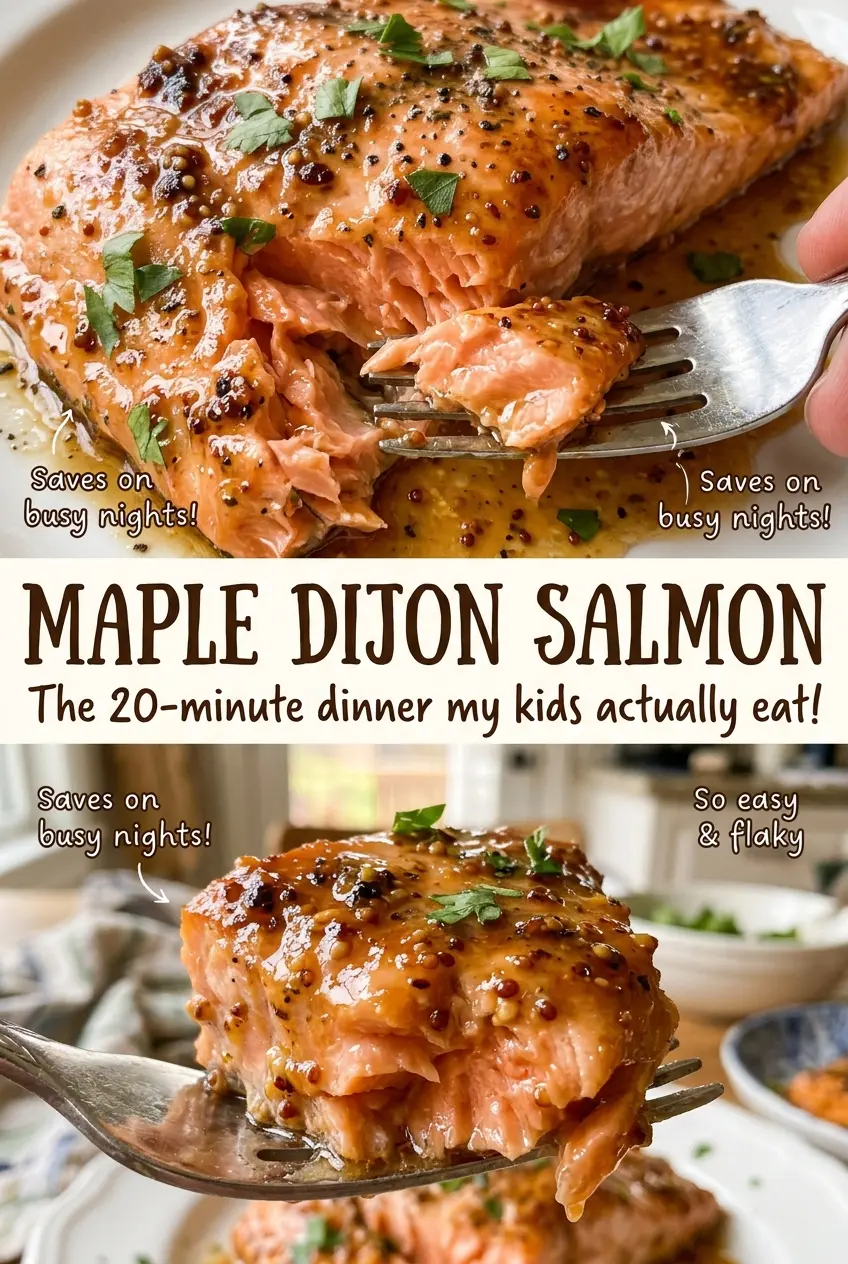
As the salmon bakes, the maple Dijon glaze turns glossy and the edges begin to color, but the fish stays tender underneath. Maple Dijon Salmon is a simple way to give a skin-on fillet a savory-sweet coating without making the whole dish taste like syrup. The glaze comes together in a bowl, and the salmon goes straight onto a lined baking sheet.
I pat the salmon dry before brushing it with olive oil, then keep it skin-side down while it bakes. The glaze isn’t reduced in a saucepan; whisking it and brushing it right over the fish keeps the process quick and lets the mustard, soy, garlic, and lemon balance the maple. What you get is a shiny, tangy coating over tender salmon, ready for four servings.
Kitchen Note
I leave the skin on and set the fillet skin-side down. It gives the soft flesh a steadier base on the parchment, so the fish is easier to lift without breaking apart.
Save Maple Dijon Salmon for a night when you want tender baked fish under a glossy, tangy-sweet glaze.
Why This Maple Dijon Glaze Doesn’t Need to Be Cooked First
A glaze can turn heavy when it’s reduced until thick, especially when its main sweetener is maple syrup. Here, the glaze is whisked just until combined and brushed directly over the salmon. It doesn’t need to cling like a candy coating before it goes into the oven. The fish’s surface and the heat of baking do the rest, leaving a thin, shiny layer rather than a thick pool of sauce.
The balance matters as much as the texture. Maple brings sweetness, while Dijon and lemon keep it from tasting flat; soy sauce and garlic add a savory edge. Whisking everything together before brushing helps distribute the minced garlic and mustard through the glaze, so one part of the fillet doesn’t get all the sharpness while another gets only syrup. Use a light, even coating across the top of the fish instead of letting a puddle collect on the baking sheet.
What the Maple, Mustard, and Soy Bring to the Glaze
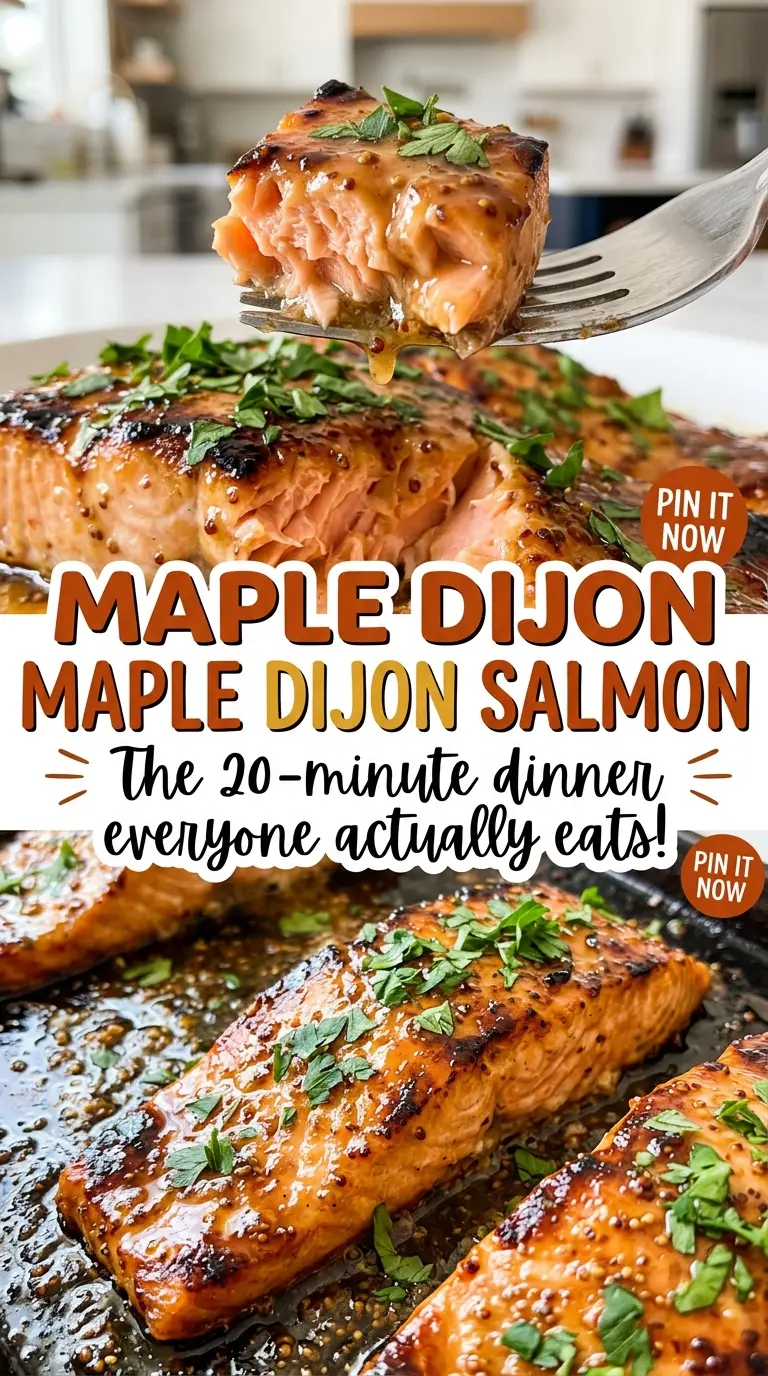
- Salmon fillet — Skin-on salmon stays supported on the pan as it bakes, and the skin makes the cooked fish easier to lift. A fresh fillet with an even thickness through the center cooks more evenly than one that tapers sharply.
- Pure maple syrup — Pure syrup gives the glaze its clean maple sweetness. Pancake syrup has a different flavor and can make the coating taste more one-note, so this is the place to choose the real thing.
- Dijon mustard — Dijon brings a smooth, sharp bite that balances the maple and blends easily into the glaze. A jar with a fresh, lively mustard aroma is worth choosing; an older, dried-out mustard won’t have the same lift.
- Soy sauce — Soy sauce gives the glaze a salty, savory backbone. Low-sodium soy sauce works if you prefer a less salty finish, though the glaze will taste a little milder.
- Garlic — Mince the clove finely so it disperses throughout the glaze instead of landing in one strong bite. Fresh garlic has a brighter aroma here than prepared garlic from a jar.
- Lemon juice — The small splash of lemon keeps the sweet and savory flavors tasting lively. Freshly squeezed juice has the brightest taste, though bottled lemon juice works when that’s what you have.
- Olive oil — A light brush of olive oil helps coat the salmon before seasoning. A neutral oil such as avocado oil can stand in without competing with the glaze.
How to Bake the Salmon Without Drying the Thin End
Set Up the Fillet Skin-Side Down
Heat the oven to 400°F and line a rimmed baking sheet with parchment paper. Pat the salmon dry, then place it skin-side down on the prepared pan. Brush the top with olive oil and season it with kosher salt and ground black pepper. Drying the surface first helps the oil and glaze sit on the fish instead of sliding over moisture.
Whisk the Glaze Until Smooth
In a small bowl, whisk together the maple syrup, Dijon mustard, soy sauce, minced garlic, and lemon juice. Keep whisking until the mustard is blended through and the mixture looks even. If you see streaks of mustard or syrup at the bottom of the bowl, scrape and whisk again before brushing. There’s no need to heat or thicken the mixture separately.
Brush, Bake, and Check the Thickest Part
Brush the glaze over the salmon, spreading it across the top of the fillet. Bake for 12 to 15 minutes, checking the thickest part with an instant-read thermometer rather than judging the thin tail. The salmon is ready when that center reaches 145°F; the exact point within the baking window depends on the fillet’s thickness. Let it rest for 3 minutes before serving so the fish settles and is easier to portion.
Easy Swaps for a Different Mustard or a Gluten-Free Glaze
Make the glaze gluten-free with tamari
Replace the soy sauce with the same amount of gluten-free tamari. The glaze keeps its savory depth, though tamari can taste a little different from brand to brand; choose one labeled gluten-free if you need to avoid gluten.
Use whole-grain mustard for a textured finish
Swap Dijon for the same amount of whole-grain mustard. Its mustard seeds leave little flecks through the glaze and make the coating less smooth, while keeping that tangy contrast with the maple.
Storage and Reheating
- Refrigerator: Refrigerate leftovers within 2 hours and keep them covered for up to 3 days. The salmon will be firmer and less moist after chilling.
- Freezer: Freeze portions in an airtight container for up to 2 months. Thaw overnight in the refrigerator; the glaze may look less glossy after thawing.
- Reheating: Cover the salmon and warm it in a 275°F oven until the center reaches 165°F. High heat or a long stint in the microwave can dry the fish quickly.
Questions That Come Up When Making Maple Dijon Salmon
Maple Dijon Salmon
Ingredients
Equipment
Method
- Heat the oven to 400°F.
- Line a rimmed baking sheet with parchment paper.
- Pat the salmon dry.
- Place the salmon skin-side down on the baking sheet.
- Brush the salmon with the olive oil.
- Season the salmon with the salt and pepper.
- Whisk together the maple syrup, Dijon mustard, soy sauce, garlic, and lemon juice in a small bowl.
- Brush the glaze over the salmon.
- Bake for 12 to 15 minutes, until the thickest part reaches 145°F on an instant-read thermometer.
- Let the salmon rest for 3 minutes before serving.