
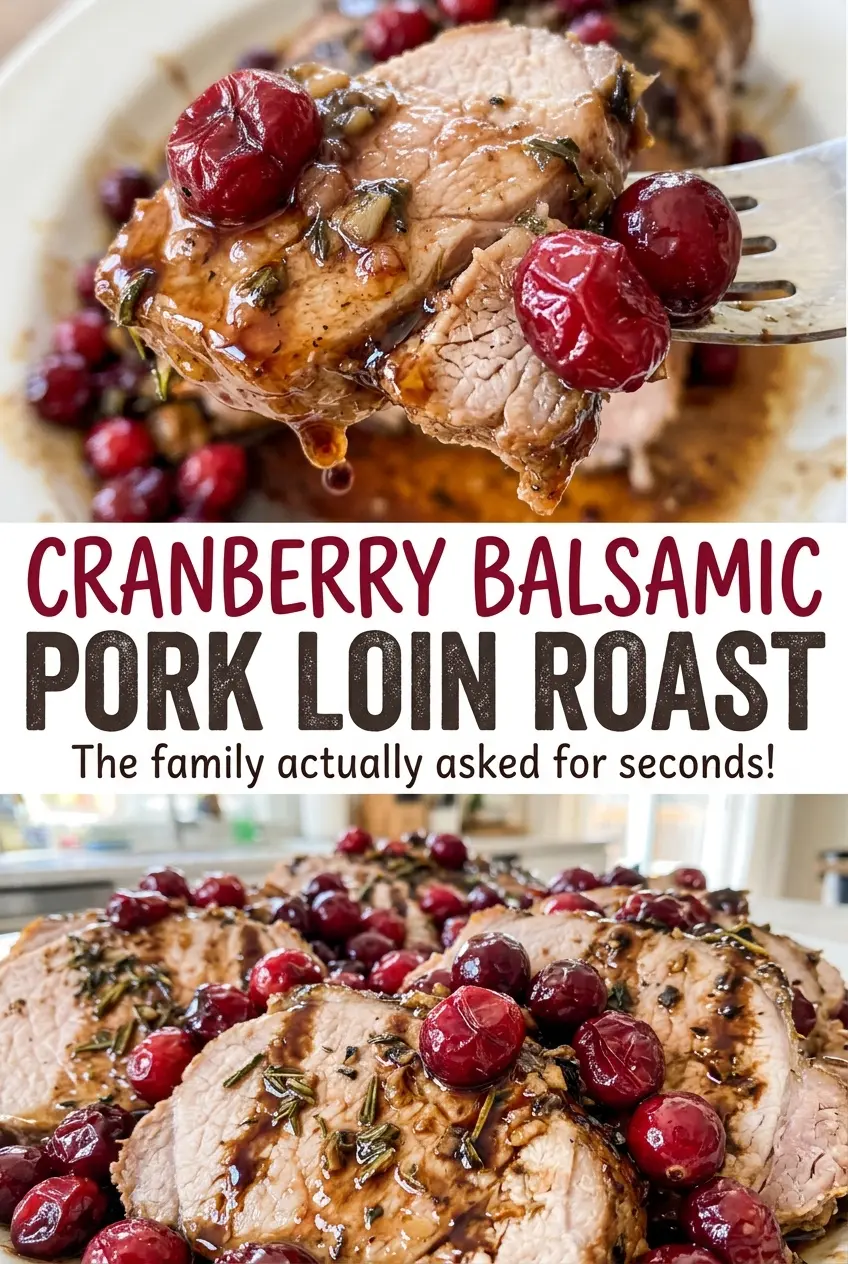
The pork gives a sharp sizzle when it hits the skillet, and that first round of browning is where the savory smell of garlic and rosemary starts to build. I like that contrast with the tart cranberry sauce: each slice of this Cranberry Balsamic Pork Loin Roast gets a bright, tangy spoonful instead of a heavy gravy.
A boneless loin is lean, so a thermometer is more useful than guessing from the clock. The roast cooks at 375°F, and the cranberry sauce comes together on the stovetop while the meat rests. Fresh cranberries burst into a thick, spoonable sauce with balsamic vinegar, brown sugar, chicken broth, and Dijon. It’s a straightforward way to turn a single roast into a dinner with plenty of contrast: browned edges, tender slices, and a lively sauce.
Kitchen Note
If the loin has a loose flap or an uneven shape, tie it snugly before seasoning. A compact roast is easier to brown evenly and gives you neater slices.
Save this cranberry balsamic pork loin roast for a dinner with browned, herb-seasoned pork and a tart-sweet sauce made from fresh cranberries.
Why the Cranberry Sauce Should Stay a Little Tart
It’s easy to expect a cranberry sauce to taste like a sweet side dish, but this one has a different job. The pork is seasoned with garlic and rosemary, so the vinegar’s tang and the berries’ sharpness cut through the savory, browned meat. Brown sugar softens that edge without turning the sauce into jam, while Dijon gives the mixture a gentle savory note.
Fresh cranberries also bring their own structure. As they simmer and burst, their natural pectin helps the sauce thicken, so you don’t need to puree it or add a thickener. The finished texture should be glossy and spoonable, with some cranberry pieces still visible. If you cook it until it’s stiff in the saucepan, it will be harder to spoon over the pork; aim for a sauce that clings but still moves easily.
That balance is what makes the sauce work with a lean roast. Each bite gets acidity and fruit, but the balsamic and brown sugar keep it from tasting sharp or watery. Let the berries stay recognizable, and the sauce will feel like a fresh counterpoint to the meat rather than a sugary topping.
What Makes the Loin, Cranberries, and Balsamic Work Together
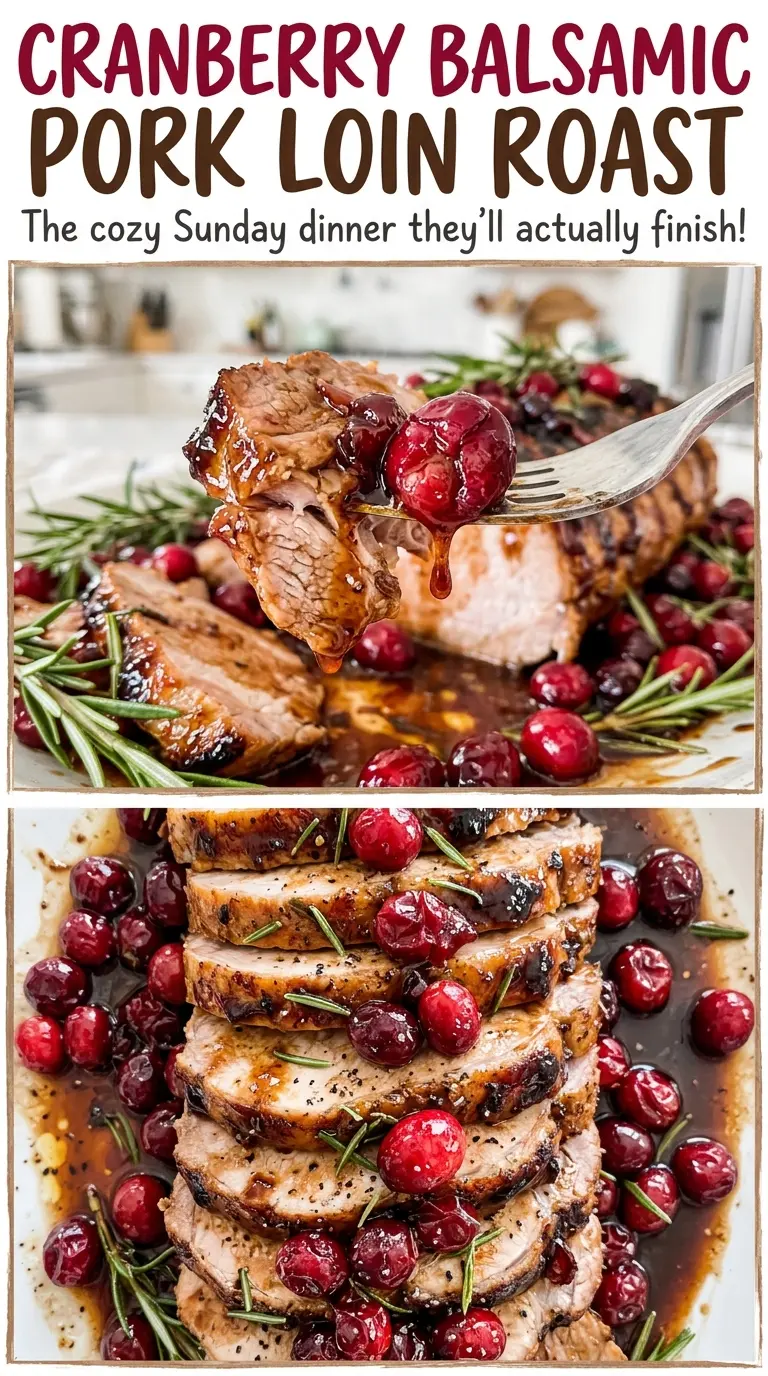
- Boneless pork loin — This cut is broad and lean, which gives you slices suited to the chunky sauce. Choose a roast with an even thickness; a basic trimmed loin is fine, and there’s no need for a premium specialty cut. Pork tenderloin isn’t a direct substitute because it’s much smaller and cooks on a different schedule.
- Fresh cranberries — Firm, brightly colored berries burst and thicken as they simmer. Frozen cranberries work in the same quantity; add them frozen and allow extra time for the pan to return to a simmer. Fresh or frozen is fine here, so choose what’s available.
- Balsamic vinegar — It brings mellow acidity and a little natural sweetness that plain vinegar won’t match. A regular grocery-store balsamic is all you need; a costly aged bottle is unnecessary. There isn’t a close one-for-one vinegar swap that keeps the same sweet-tart balance.
- Packed light brown sugar — Its molasses notes round off the cranberries and vinegar. Pure maple syrup can replace it in the same volume, though the sauce will taste less caramel-like and may be a little looser.
- Dijon mustard — Dijon adds a quiet savory bite and helps keep the sauce from tasting one-note. Whole-grain mustard works in the same amount, with visible seeds and a more textured finish; an inexpensive Dijon is perfectly suitable.
- Dried rosemary and garlic powder — Dried rosemary holds its piney flavor through the sear and roast, while garlic powder spreads evenly across the meat. If you’re out of rosemary, use the same amount of dried thyme for a softer, earthier result. Garlic powder is preferable to fresh minced garlic here, which can scorch during searing.
- Olive oil and chicken broth — Olive oil helps the roast brown, and ordinary olive oil works well for this sear; avocado oil is a neutral alternative. Broth gives the sauce a savory base, and vegetable broth can stand in at the same volume with a slightly less meaty flavor.
How to Brown the Loin and Finish It Without Drying It Out
Season the roast evenly
Heat the oven to 375°F, then pat the pork dry so its surface can brown instead of steaming. Rub the salt, black pepper, garlic powder, and dried rosemary over the entire roast. If the shape is uneven, tie it before seasoning so it stays compact in the skillet. Keep the seasoning on all sides, including the ends.
Build a browned crust in the skillet
Heat the olive oil in a 12-inch skillet over medium-high heat. Sear the pork on all sides, turning it as needed, for about 8–10 minutes total. Look for a deep golden-brown exterior rather than pale patches; if the skillet smokes heavily, lower the heat slightly. Browning adds savory flavor, but the center will finish cooking in the oven.
Roast to temperature, then let it rest
Move the pork fat-side up to a 9×13-inch roasting pan and roast for 45–65 minutes. The clock is a range because the roast’s shape affects how quickly its center heats. Check the thickest part with a thermometer and take it out when it reads 145°F. Transfer the roast to a cutting board, tent it loosely with foil, and let it rest for 10–15 minutes before slicing.
Simmer the berries while the pork rests
Combine the cranberries, balsamic vinegar, chicken broth, brown sugar, and Dijon in a medium saucepan over medium heat. Bring the mixture to a simmer, then cook for 10–15 minutes, stirring occasionally. The berries will pop and soften, and the liquid will reduce into a thicker sauce; if many berries are still whole, keep simmering until they burst. Slice the rested pork and serve it with the cranberry balsamic sauce.
Three Useful Twists on the Cranberry-Balsamic Roast
A maple-sweetened cranberry sauce
Replace the brown sugar with the same volume of pure maple syrup. The sauce will have a lighter, woodsy sweetness instead of the deeper molasses note, and it may finish slightly thinner, so let it simmer until it coats a spoon.
A lower-sodium version
Use no-salt-added chicken broth and reduce the kosher salt on the pork to 1 teaspoon. The roast will taste a little less boldly seasoned, while the rosemary, garlic, and tangy sauce still bring plenty of character.
A thyme-scented roast
Swap the dried rosemary for the same amount of dried thyme in the pork rub. Thyme gives the crust a gentler, earthier aroma and pairs neatly with the balsamic sauce without changing the cooking method.
Storage and Reheating
- Refrigerator: Refrigerate leftover pork and sauce within 2 hours and use within 3–4 days. The sauce will firm up as it chills.
- Freezer: Freeze sliced pork and sauce in separate airtight containers for up to 2–3 months for best quality. Thaw overnight in the refrigerator.
- Reheating: Warm the pork covered in a 300°F oven with some sauce spooned over it, until it reaches 165°F. Keep it covered so the lean slices don’t dry out, and warm extra sauce separately.
Questions That Come Up With This Pork Loin Roast
Cranberry Balsamic Pork Loin Roast
Ingredients
Equipment
Method
- Heat the oven to 375°F.
- Pat the pork dry.
- Rub the pork all over with the salt, pepper, garlic powder, and rosemary.
- Heat the olive oil in a 12-inch skillet over medium-high heat.
- Sear the pork on all sides until browned, about 8–10 minutes total.
- Transfer the pork, fat-side up, to a 9x13-inch roasting pan.
- Roast for 45–65 minutes, until a thermometer inserted into the thickest part reads 145°F.
- Transfer the pork to a cutting board.
- Tent the pork loosely with foil and rest for 10–15 minutes.
- While the pork rests, combine the cranberries, balsamic vinegar, chicken broth, brown sugar, and Dijon mustard in a medium saucepan over medium heat.
- Bring the mixture to a simmer.
- Cook for 10–15 minutes, stirring occasionally, until the cranberries have burst and the sauce has thickened.
- Slice the pork.
- Serve the pork with the cranberry balsamic sauce.