
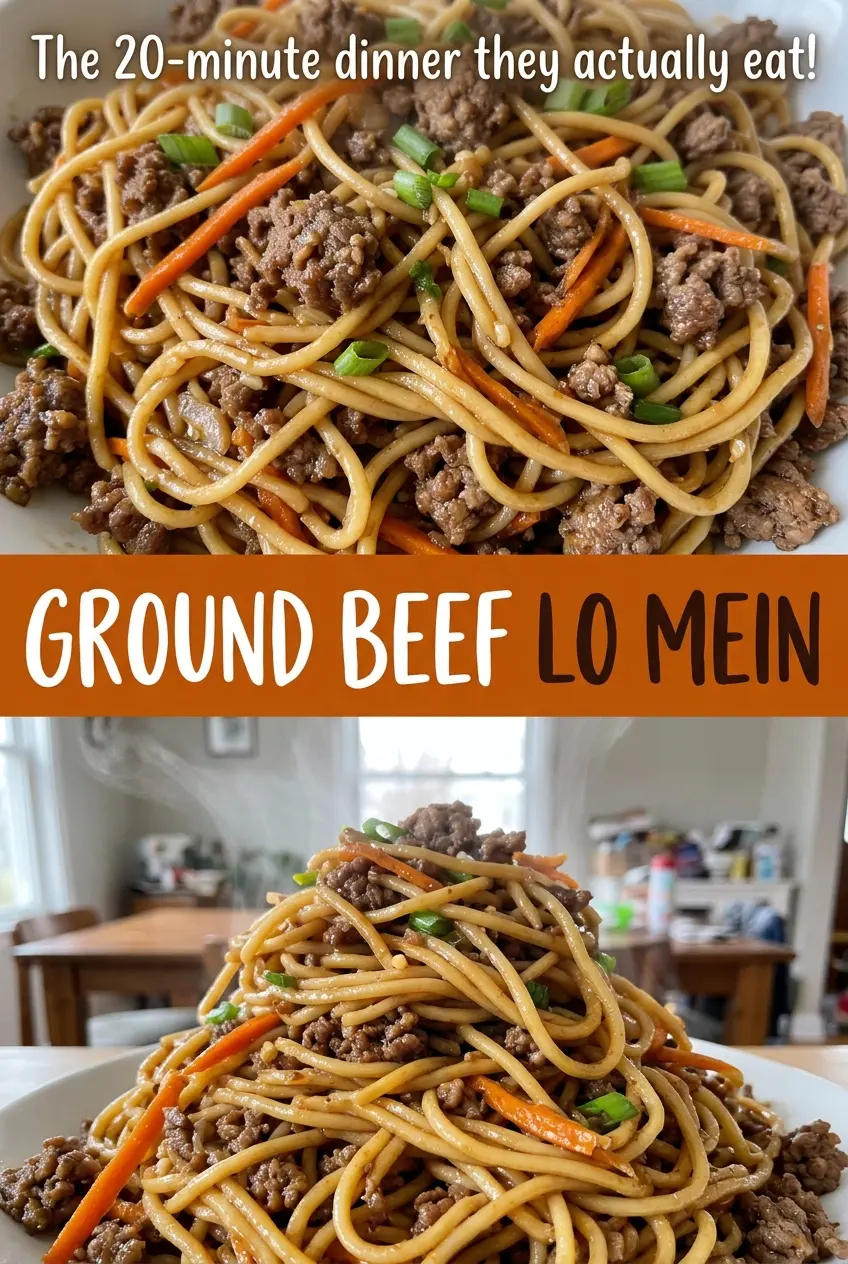
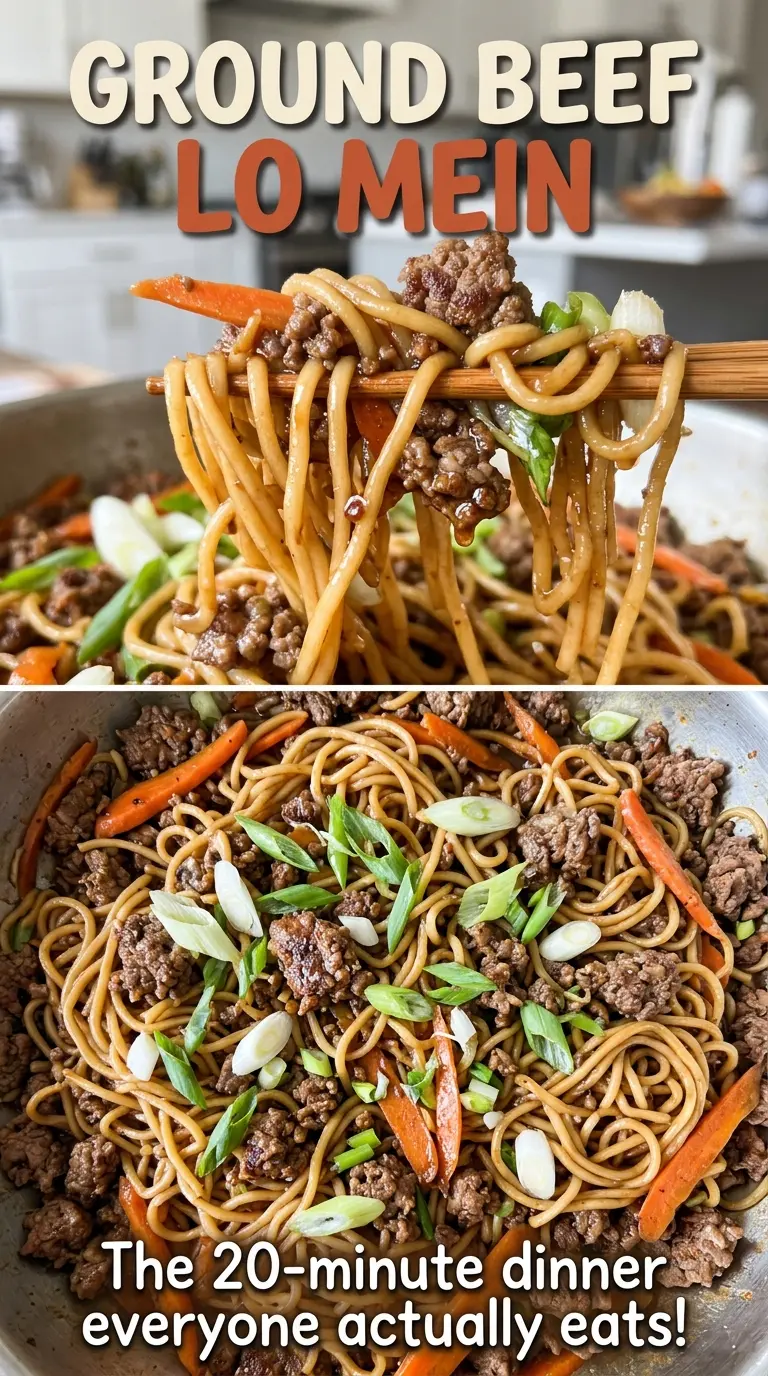
The sauce turns glossy in the skillet, and the noodles start to pull it along instead of sitting in a puddle. That’s the moment this ground beef lo mein comes together: browned beef, quick-cooking vegetables, and noodles all coated in a savory-sweet sauce. I like how the carrot and cabbage keep a little bite, even after everything gets tossed together.
There’s a short window between noodles that are just tender and noodles that turn soft while they finish in the pan. I cook them according to the package directions, drain them, then let the skillet finish the job with the sauce. The ground beef makes the dish hearty without needing a separate protein, and the ginger and garlic bring a fresh, warm edge to each forkful.
Kitchen Note
Keep the scallions in their 2-inch pieces. They stay distinct through the final toss and give you a fresh onion bite alongside the browned beef.
Save this ground beef lo mein for a quick, savory noodle dinner with crisp-tender vegetables and a glossy sauce.
Why the Cornstarch Needs to Be Mixed Into the Sauce First
The sauce has to do two jobs: season the noodles and cling to them. Cornstarch helps with that second job, but it won’t thicken evenly if it goes straight into a hot skillet. Whisking it into the cool sauce first gives it a chance to disperse before heat turns it into a thickener.
At the start of the final toss, the sauce will look loose. As it heats, the starch thickens the liquid and helps it coat the noodles instead of collecting at the bottom of the pan. That change happens quickly, so keep tossing over medium-high heat and watch the sauce rather than waiting for it to become very thick. The soy sauce and oyster sauce bring savory depth; rice vinegar and brown sugar keep that richness in balance. Sesame oil adds a toasted aroma, so it belongs in the sauce rather than being treated as the main cooking oil.
What Each Ingredient Brings to This Lo Mein
- Low-sodium soy sauce and oyster sauce — Together, they make the sauce savory without relying on soy sauce alone. Low-sodium soy sauce matters here because the oyster sauce contributes plenty of savory character too; I wouldn’t swap in regular soy sauce and expect the same balance.
- Rice vinegar and light brown sugar — Rice vinegar gives the sauce a gentle tang, while packed light brown sugar rounds it out with mild sweetness. The combination keeps the sauce from tasting one-note. Keep both in the mix rather than increasing one to compensate for leaving the other out.
- Cornstarch and toasted sesame oil — The cornstarch thickens the sauce as it heats, and toasted sesame oil gives it a distinctive nutty aroma. Toasted matters: it’s added for its fragrance, not used as the neutral oil for browning.
- Dried lo mein noodles — The dried noodles are sturdy enough to cook in boiling water and then finish in the skillet. Follow the package directions for their timing; different noodle brands can vary, so the package is a better guide than a fixed minute count.
- Ground beef — The 85% lean beef browns well and brings enough fat for a rich, savory bite. Breaking it into small pieces helps it mix evenly through the noodles. Drain excess fat from the skillet before cooking the vegetables so the finished dish doesn’t feel greasy.
- Carrot and green cabbage — Matchstick-cut carrot and thinly sliced cabbage cook quickly but keep some texture. A matchstick cut gives the carrot a chance to soften at the same pace as the cabbage; large chunks would take longer.
- Fresh ginger, garlic, and scallions — Grated ginger and minced garlic release their fragrance quickly, so they go into the skillet after the vegetables have started cooking. Cut the scallions into 2-inch pieces so they remain noticeable in the finished noodles.
- Neutral vegetable oil and water — The neutral oil handles the skillet cooking without competing with the sauce. Water loosens the sauce ingredients so the cornstarch can be whisked in evenly.
Build the Lo Mein in Stages, Then Toss Until Glossy
Whisk a Smooth Sauce
Whisk the soy sauce, oyster sauce, rice vinegar, brown sugar, water, cornstarch, and toasted sesame oil in a small bowl. Keep whisking until the cornstarch dissolves and you don’t see dry white specks or lumps. This gives you a ready-to-pour sauce for the last stage. Set it nearby so it’s easy to add when the beef and noodles are back in the skillet.
Cook the Noodles Just Until Tender
Bring water to a boil in a 6-quart pot, then cook the dried lo mein noodles according to the package directions until just tender. Drain them well. They’ll spend another 2 to 3 minutes in the skillet, so noodles that are already soft can lose their chew during the final toss. Keep the timing on the package in view, since brands differ.
Brown the Beef and Clear the Skillet
Heat 1 tablespoon of the vegetable oil in a 12-inch skillet over medium-high heat. Add the beef and break it into small pieces as it cooks for 5 to 7 minutes, until browned and it reaches 160°F. Transfer it to a plate, then drain excess fat from the skillet. Leaving a little behind is fine; the goal is to get rid of the extra fat before the vegetables go in.
Cook the Vegetables Until Crisp-Tender
Add the remaining 1 tablespoon of vegetable oil, the carrot, and the cabbage to the skillet. Cook for 3 to 4 minutes, stirring often, until the vegetables are crisp-tender rather than limp. Stir in the grated ginger and minced garlic and cook for 30 seconds. That short cook is enough to release their fragrance without letting the garlic burn.
Toss Until the Sauce Coats the Noodles
Return the beef to the skillet and add the drained noodles, sauce, and scallions. Toss over medium-high heat for 2 to 3 minutes, moving the noodles around so the sauce reaches the beef and vegetables too. The sauce should thicken and coat the noodles, and everything should be hot. If you stop before it clings, keep tossing until the loose sauce has turned glossy.
Scale the Skillet for a Smaller Dinner or a Crowd
Make a Half Batch for Two
Halve every ingredient for a smaller meal, then use the same order of steps. The sauce still has the same balance of salty, sweet, and tangy notes, and you won’t be left with as many servings to store. Keep an eye on the vegetables as they cook; a smaller quantity can reach crisp-tender sooner.
Double It for a Bigger Crowd
Double every ingredient, but cook two complete batches rather than crowding everything into one 12-inch skillet. Working in batches gives the beef room to brown and lets the vegetables cook against the hot pan instead of steaming. Serve the batches together once each has been tossed with its sauce.
Storage and Reheating
- Refrigerator: Store leftovers in a covered container for 3 to 4 days. The noodles will soften a little as they sit.
- Freezer: Freeze portions in airtight containers for up to 2 months for the best noodle texture. Thaw overnight in the refrigerator; the noodles may be softer after thawing.
- Reheating: Warm leftovers in a skillet with a small splash of water, tossing until steaming hot throughout, or reheat in the microwave, stirring partway through. Avoid heating them for too long, which makes the noodles softer.
Questions That Come Up When Making Ground Beef Lo Mein
Ground Beef Lo Mein
Ingredients
Equipment
Method
- Whisk the soy sauce, oyster sauce, rice vinegar, brown sugar, water, cornstarch, and sesame oil in a small bowl until the cornstarch dissolves.
- Cook the noodles in a 6-quart pot of boiling water according to the package directions until just tender, then drain.
- Heat 1 tablespoon of the vegetable oil in a 12-inch skillet over medium-high heat, add the beef, and cook for 5 to 7 minutes, breaking it into small pieces, until browned and it reaches 160°F.
- Transfer the beef to a plate and drain excess fat from the skillet.
- Add the remaining 1 tablespoon vegetable oil, carrot, and cabbage to the skillet and cook for 3 to 4 minutes, stirring often, until crisp-tender.
- Stir in the ginger and garlic and cook for 30 seconds.
- Return the beef to the skillet and add the drained noodles, sauce, and scallions; toss over medium-high heat for 2 to 3 minutes, until the sauce thickens and coats the noodles and everything is hot.