
The skillet should be hot enough that the tenderloin starts browning as soon as it hits the pan. I turn it until every side has color, then give it a short rest while I mix the salt shell. That order makes it easier to pack the crust evenly without wrestling a piping-hot roast.
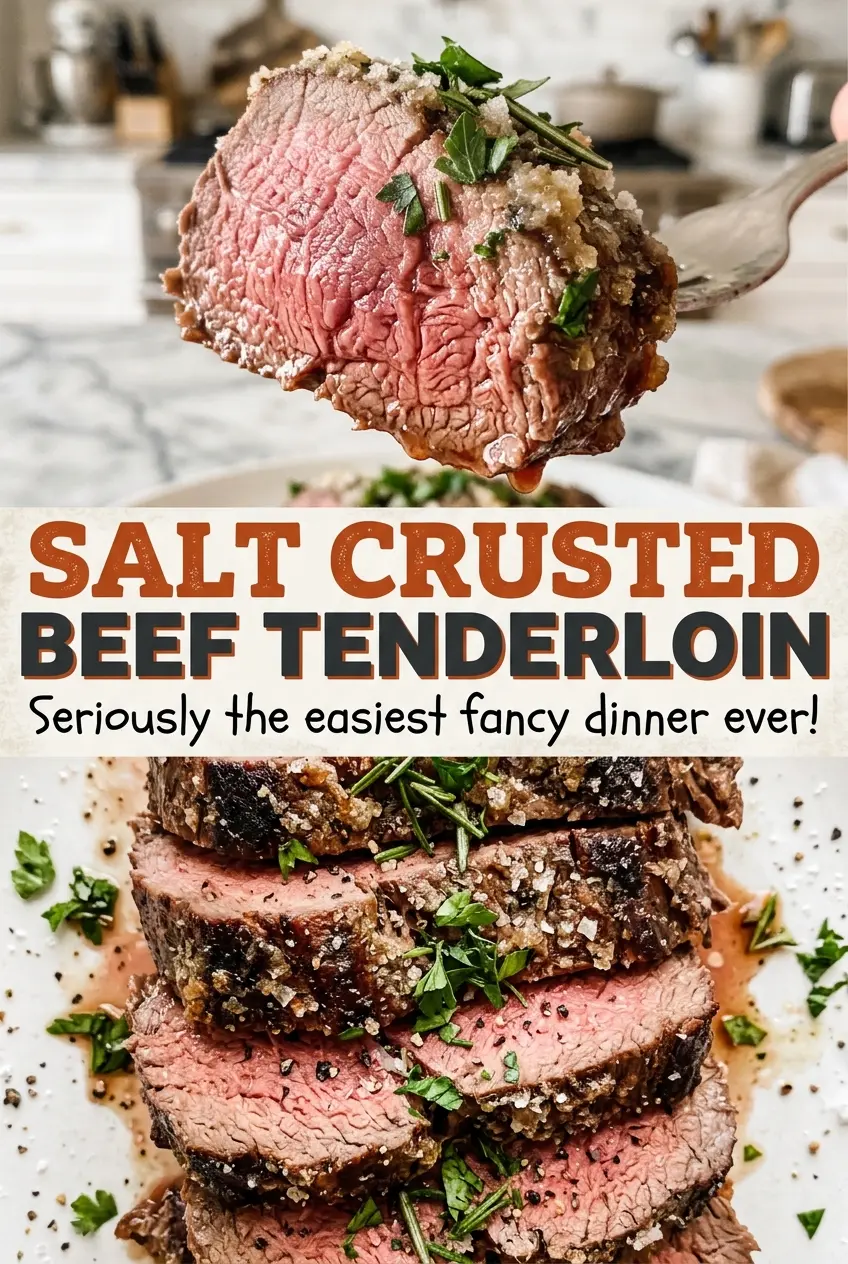
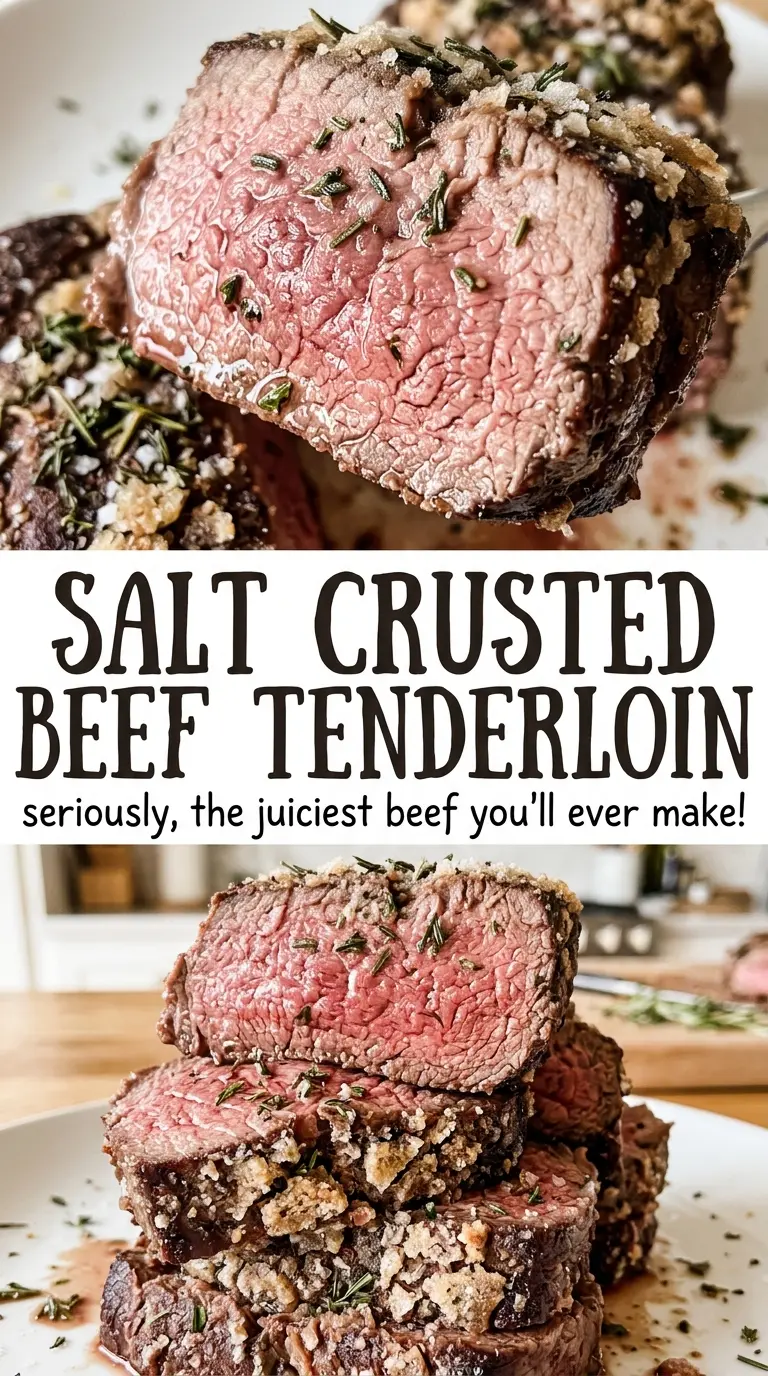
For this salt crusted beef tenderloin, coarse kosher salt and egg whites form a firm shell around the beef, with fresh rosemary tucked into the mix. The crust keeps the roast enclosed as it cooks, while the tenderloin stays the star once you crack the shell and brush away the clinging salt. An instant-read thermometer takes the guesswork out of the long roast window, and the finished slices are tender with a browned outside and a subtle rosemary aroma.
Kitchen Note
The tenderloin is trimmed and tied before it goes into the pan, and that tied shape matters: it helps the roast keep a more even form instead of spreading out as it browns. If your butcher has already tied it, leave the twine on through roasting.
Save this salt crusted beef tenderloin for a dinner centerpiece with a rosemary-scented shell and beautifully browned beef.
The Salt Shell Should Be Thin Enough to Seal, Not Bury the Beef
A salt crust works best as a close-fitting shell, not a mound of salt piled high around the roast. I spread a thin base under the tenderloin, then press the rest over and around it in an even layer. That gives the crust a consistent thickness and leaves fewer weak spots where it can split during roasting.
Look at the mixture before it touches the baking sheet: it should resemble damp sand and hold together when squeezed. If it’s loose and crumbly, it won’t pack into a solid shell; if it’s pressed on unevenly, thin spots are more likely to break. Keep the base and cover within the specified thickness, and seal any visible cracks before the pan goes into the oven. The shell is there to enclose the beef during cooking, not to become a seasoning crust you serve with each slice. Once the roast is done, crack it open and brush away any salt clinging to the tenderloin.
This approach also explains why coarse kosher salt matters. It gives the egg whites a sturdy, packable texture without turning the shell into a dense layer of fine salt. The tenderloin itself gets its seasoning from the olive oil and black pepper, while the salt mixture stays on the outside.
Why Coarse Salt and Egg Whites Make This Crust Work
- Coarse kosher salt — The crystals give the shell the structure this method needs. Fine table salt packs more tightly and is not a good one-for-one swap here. Stick with coarse kosher salt; brand crystal size can vary, so focus on making a shell that packs evenly rather than pressing on extra salt.
- Egg whites — These bind the salt into a moldable mixture while keeping it from turning into a wet paste. Use the whites on their own; yolks would change the mixture’s texture and aren’t part of this crust. There isn’t a straightforward replacement that gives the same packable shell.
- Fresh rosemary — Finely chopped leaves distribute their aroma through the shell. Fresh rosemary has a brighter, more noticeable scent than a dried substitute, and chopping it finely keeps larger pieces from interrupting the packed layer. If you don’t have it, leaving it out is better than changing the crust’s texture with a different ingredient.
- Center-cut beef tenderloin — The trimmed, tied shape fits the salt shell and cooks evenly as a single roast. Ask for a center-cut piece that’s already trimmed and tied if that makes shopping easier. This ingredient list contains no wheat or dairy, so the dish as written is naturally gluten-free and dairy-free.
- Olive oil and black pepper — The oil helps coat the beef before searing, and the pepper seasons its surface. Use an olive oil you’re comfortable cooking with; there’s no need for a specialty bottle. Freshly cracked black pepper gives a more assertive aroma, while regular ground black pepper works too.
From a Browned Exterior to a Sealed Rosemary Crust
Brown the Tenderloin on Every Side
Heat the oven to 425°F with a rack in the center, and set out a 12-inch skillet and an 18×13-inch rimmed baking sheet. Pat the tenderloin dry, then rub it all over with olive oil and black pepper. Heat the skillet over medium-high until very hot, and sear the beef, turning it until browned on all sides; the total searing time is 6 to 8 minutes. Transfer it to a plate and let it cool for 10 minutes before packing the crust around it.
Mix and Pack the Salt Shell
In a large bowl, mix the coarse kosher salt, egg whites, and finely chopped rosemary until the mixture looks like damp sand and holds together when you squeeze it. Spread a quarter-inch layer on the baking sheet in a shape just larger than the tenderloin. Set the beef on top, then pack the remaining mixture around and over it to form an even quarter- to half-inch shell. Press the mixture into place and close any cracks so the beef is enclosed.
Roast, Rest, Then Crack
Roast until an instant-read thermometer inserted through the crust into the thickest part of the beef registers 145°F; this usually takes 40 to 60 minutes. The thermometer reading, rather than the outside color of the salt shell, tells you when the tenderloin has reached its target. Let the roast rest in its crust for 10 minutes after it comes out of the oven. Crack the shell open, lift out the tenderloin, brush off any salt that clings to it, and slice.
Small Changes That Keep the Tenderloin’s Centerpiece Feel
Leave Out the Rosemary
Skip the chopped rosemary if you want a more neutral salt shell. The egg whites still bind the coarse salt, so the crust can be packed the same way; you’ll simply lose the herb’s fragrant note.
Make the Beef Pepper-Free
Omit the black pepper from the rub for a gentler, simpler seasoning. Keep the olive oil and the salt crust unchanged; the tenderloin will have less peppery bite, while the searing and crust method stay the same.
Storage and Reheating
- Refrigerator: Refrigerate sliced leftovers in an airtight container within 2 hours and use them within 3 to 4 days. The beef will firm up as it chills.
- Freezer: Freeze slices in an airtight freezer container or well-sealed freezer bag for up to 2 to 3 months for best quality. Thaw overnight in the refrigerator before reheating.
- Reheating: Reheat slices covered in the microwave at reduced power in short intervals, stopping when they reach 165°F. Heating a large piece for too long at once can dry out the tenderloin.
Questions That Come Up When Cooking Beef in a Salt Crust
Salt Crusted Beef Tenderloin
Ingredients
Equipment
Method
- Heat the oven to 425°F and set a rack in the center.
- Pat the tenderloin dry, then rub it all over with the olive oil and black pepper.
- Heat the skillet over medium-high heat until very hot.
- Sear the beef, turning, until browned on all sides, 6-8 minutes total.
- Transfer the beef to a plate to cool for 10 minutes.
- In a large bowl, mix the kosher salt, egg whites, and rosemary until the mixture resembles damp sand and holds together when squeezed.
- Spread a 1/4-inch layer of the salt mixture on the baking sheet in a shape slightly larger than the tenderloin.
- Set the beef on top and pack the remaining mixture around and over it in an even 1/4- to 1/2-inch shell, sealing any cracks.
- Roast for 40-60 minutes, until an instant-read thermometer inserted through the crust into the thickest part of the beef registers 145°F.
- Rest the beef in its crust for 10 minutes.
- Crack the crust open and lift out the tenderloin.
- Brush off any clinging salt and slice.