
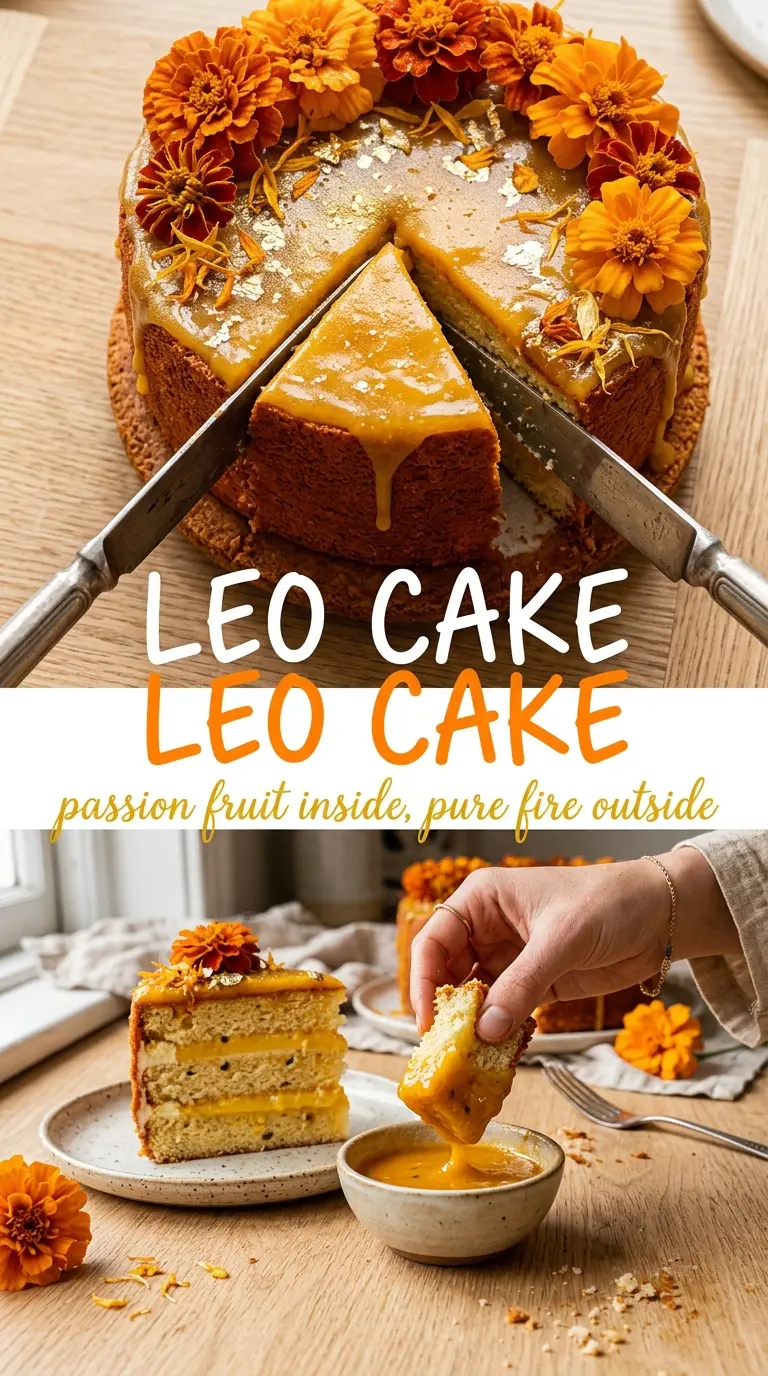
Burnt-orange buttercream, a bright passion fruit center, and a gold mirror glaze drip give this Leo cake the kind of dramatic finish that earns a spot in the middle of the table before anyone even cuts a slice. It looks regal, yes, but the real payoff is in the contrast: soft vanilla sponge, tangy curd, and a frosting that tastes like a proper butter cake instead of a sugar sculpture.
What makes this cake work is the balance between color, flavor, and structure. The sponge stays simple and sturdy enough to hold a curd filling, while the buttercream gets its deep orange-brown tone from gel coloring rather than too much extract or food dye. That matters, because bright orange frosting can read playful when what this cake needs is rich and polished. The gold glaze is used sparingly, just enough to catch the light and run down the sides without burying the cake under decoration.
Below, I’ve included the small details that make the finish look intentional instead of crowded, plus the one thing to watch if you want the filling and frosting to stay neat when you slice it.
The passion fruit curd kept the cake from tasting too sweet, and the burnt orange buttercream held its shape perfectly once it chilled. I loved how the gold drip looked dramatic without sliding all over the sides.
Leo Cake with burnt-orange buttercream, passion fruit curd, and a gold mirror glaze finish for a dramatic party centerpiece.
The Trick to Making a Bold Cake Look Elegant Instead of Busy
The line between striking and overdone comes down to restraint. With a cake like this, the color story does the heavy lifting: deep burnt orange, a flash of gold, and the bright cut-through of passion fruit. If you pile on too many finishes, the cake stops reading as intentional and starts looking like a craft project. The cleanest version uses one strong frosting color, one glossy accent, and one careful garnish.
The other part people miss is temperature. Buttercream needs to be smooth enough to spread cleanly, but the cake itself needs to be cold before the glaze goes on, or the drip will run too far and lose its shape. That chilled surface is what gives you those dramatic, controlled drips instead of a puddle at the base. It also helps the gold leaf and petals sit on top instead of sinking into the frosting.
What the Sponge, Filling, and Finish Each Need From You
- Flour — All-purpose flour gives the sponge enough structure to hold the curd without collapsing. Cake flour will make the crumb finer, but it can be a little too delicate for a layered cake with filling unless you chill it well before slicing.
- Buttermilk — This keeps the cake tender and gives the vanilla batter a subtle tang that plays nicely against the passion fruit. If you don’t have it, mix 1 cup milk with 1 tablespoon lemon juice or vinegar and let it sit for 5 minutes.
- Butter — Use real butter for both the cake and the frosting. The flavor matters here, especially because the cake is otherwise built around a few simple ingredients, and margarine won’t give the same smooth, rich finish.
- Passion fruit curd — Store-bought is fine if it tastes bright and tangy. The filling should be thick enough to stay put between the layers; if it’s loose, chill it first so it doesn’t squeeze out when you stack the cake.
- Orange extract and gel coloring — The extract adds a light citrus note, but the gel coloring is what creates the burnt-orange tone without thinning the buttercream. Liquid food coloring can make the frosting loose and streaky, which is the last thing you want on a cake with sharp edges.
- Mirror glaze — Use the glaze sparingly. The goal is a partial drip that looks deliberate, not a full coat, and the cake should be cold so the glaze sets where it lands.
- Edible gold leaf and marigold petals — These are the finishing touches that make the cake feel ceremonial. Use only food-safe marigold petals, and place them just before serving so they stay vivid and don’t wilt into the buttercream.
Building the Layers Without Losing the Shape
Baking the Vanilla Sponge
Mix the batter until it’s smooth and evenly combined, then stop. Overmixing tightens the crumb and gives you a tougher cake that fights the filling later on. Bake the layers until the centers spring back when touched and the edges pull slightly from the pan. If the middle still sinks when you press it, give it a few more minutes; if you pull it too early, the cake won’t hold up under the curd.
Filling With Passion Fruit Curd
Let the layers cool completely before filling them. Even a little warmth will melt the curd and turn the center slippery. Spread the curd in an even layer, keeping it slightly inside the edge of the cake so it doesn’t ooze out when the top layer goes on. If the curd is too soft, chill it first; cold curd slices cleaner and helps the cake stay neat.
Smoothing the Burnt-Orange Buttercream
Beat the butter until it’s pale and fluffy before adding the sugar, then keep mixing until the frosting feels light and spreadable. The burnt-orange color should look deep and warm, closer to terracotta than neon orange. If the buttercream looks grainy, keep mixing; if it looks loose, it needs more powdered sugar or a short chill. A thin crumb coat first will trap loose crumbs and give you a cleaner final layer.
Adding the Gold Drip and Crown Finish
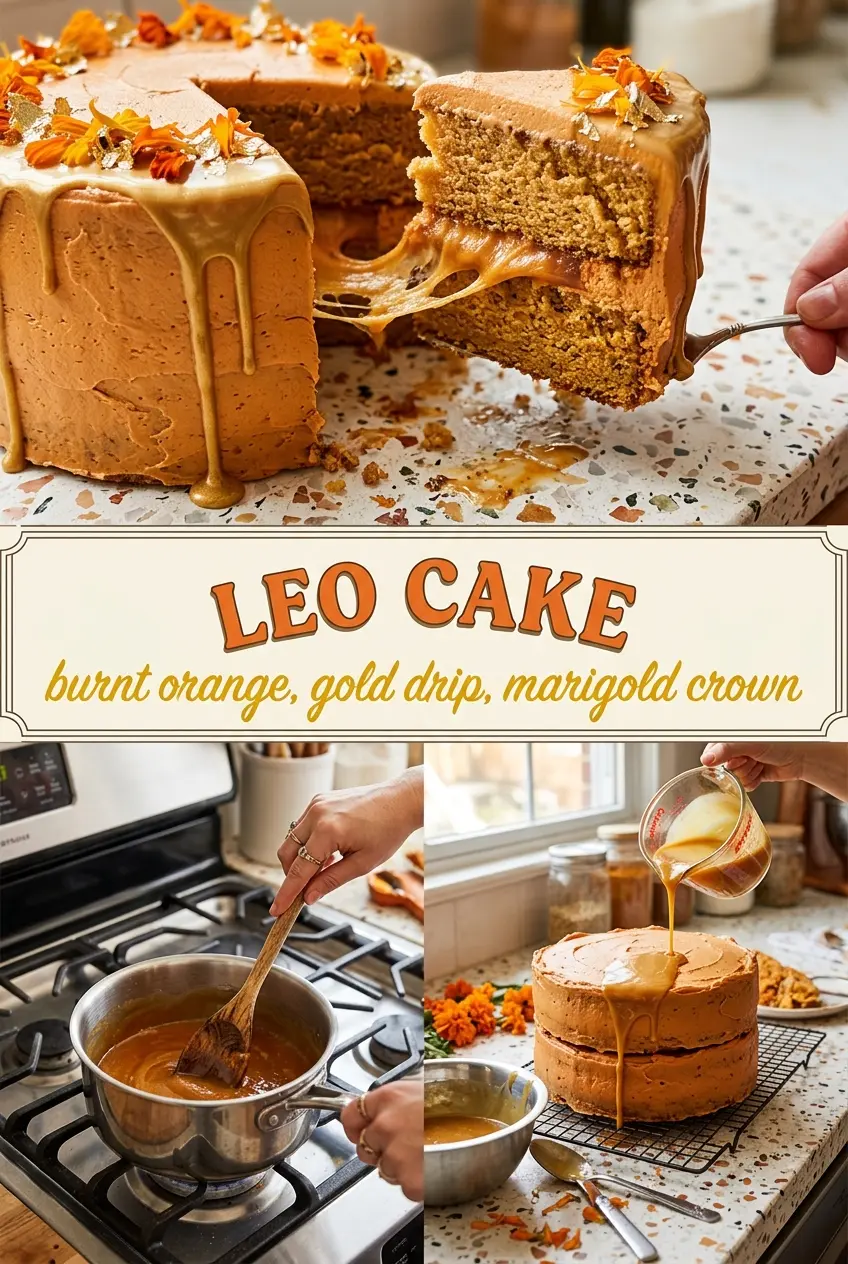
Chill the frosted cake until the outside feels firm to the touch. That cold surface is what lets the mirror glaze fall in controlled trails instead of sliding everywhere. Spoon or drizzle the glaze near the top edge and stop before it reaches the base of the cake. Finish with gold leaf and marigold petals right before serving, placing them where they form a crown instead of scattering them randomly.
Three Ways to Adapt the Cake Without Losing the Leo Look
Dairy-Free Version With a Softer Crumb
Use a good dairy-free butter for the frosting and swap the buttermilk for unsweetened plant milk mixed with 1 tablespoon lemon juice. The cake will still be tender, but the frosting may soften faster at room temperature, so chill the finished cake before decorating.
Gluten-Free Cake Layer Swap
A 1:1 gluten-free baking blend works here if it already contains xanthan gum. The crumb will be a little more delicate, so let the layers cool fully before moving them, and chill the assembled cake before slicing for the cleanest cut.
Less Sweet, More Tart Filling
If you want the passion fruit to stand out more, use a thinner layer of curd and add a thin ring of plain buttercream around it before stacking the second layer. That keeps the filling from spilling while letting the tartness cut through the frosting instead of getting buried under it.
Storage and Reheating
- Refrigerator: Store covered for up to 4 days. The buttercream will firm up, and the curd layer will stay cleanest when the cake is chilled.
- Freezer: Freeze the unfrosted layers tightly wrapped for up to 2 months. I don’t recommend freezing the fully decorated cake because the gold leaf, petals, and glaze won’t keep their best look.
- Reheating: Let slices sit at room temperature for 20 to 30 minutes before serving. Cold cake tastes dense and can mute the passion fruit filling, so give it time to soften slightly instead of microwaving it.
Answers to the Questions Worth Asking
Leo Cake
Ingredients
Equipment
Method
- Heat the oven to 350°F (175°C). Grease and line two 9-inch cake pans so the layers release cleanly after baking.
- Whisk flour, baking powder, and salt together in the bowl for even lift. Keep the dry mix ready while you combine the wet ingredients.
- Beat sugar with softened butter until the mixture looks light and cohesive. Add eggs one at a time, mixing until smooth before adding vanilla.
- Alternate adding buttermilk and the dry ingredients to the batter, mixing just until no dry streaks remain. Stop as soon as the batter is uniform to keep the sponge tender.
- Divide batter evenly between the two prepared pans and bake at 350°F (175°C) for 20–25 minutes. Look for lightly golden tops and a toothpick coming out with a few moist crumbs.
- Cool the baked layers in their pans for 10 minutes, then turn out onto a rack. Let them cool completely so the filling and buttercream won’t melt.
- Place one cooled layer on a serving stand and spread passion fruit curd evenly over the top. Add the second layer and press gently to level.
- Make burnt-orange buttercream by mixing butter and powdered sugar until smooth. Blend in orange extract, burnt orange coloring, and gold gel coloring until the color is deep orange-brown.
- Frost the entire cake with burnt-orange buttercream, covering the sides and top. Use an offset spatula to smooth the surface for crisp drip edges.
- Pour or spoon a partial gold mirror glaze drip around the top edge so some runs down the sides artfully. Let it drip naturally without spreading it further to preserve the drippy pattern.
- Press edible gold leaf and deep-orange marigold petals into a crown arrangement on top. Place them while the glaze is still tacky so the petals and leaf adhere.