
Golden banana pepper rings do something store-bought pickles rarely manage: they keep their snap while the brine turns them bright, tangy, and a little sweet. The honey softens the vinegar just enough that the peppers still taste like peppers, not like sour brine, and the turmeric gives the jars that deep yellow color people notice the second they open the fridge. They’re the kind of quick pickle that disappears on sandwiches, pizzas, grain bowls, and chopped salads before you realize the jar is half gone.
The trick here is balance. Banana peppers have enough natural sweetness that they don’t need a harsh brine, so the vinegar gets rounded out with honey and warmed up with mustard seed, turmeric, and a small pinch of red pepper flakes. The garlic and dill don’t take over; they just add a clean, savory edge that keeps the pickles from tasting flat. Because this is a refrigerator pickle, you get the bright crunch without the fuss of canning, and the flavor is already good after a couple of hours.
The brine turned the prettiest golden color and the peppers stayed crisp instead of going limp. I had them on sandwiches the next day, and the honey-turmeric flavor was balanced enough that even my picky husband kept reaching for more.
These golden banana pepper rings bring crunchy sweet heat to sandwiches, pizzas, and snack boards — pin this jar for the next time you want a quick pickle with real personality.
The Reason These Banana Peppers Stay Crisp Instead of Going Limp
The biggest mistake with quick pickled peppers is overcooking the brine or leaving the peppers sitting in hot liquid for too long. Banana peppers are thin enough that they don’t need any extra help softening, and once they lose their crunch, the whole jar feels dull. This recipe avoids that by bringing the brine to a boil just long enough to dissolve the honey and wake up the spices, then pouring it straight over the packed peppers.
The other thing that matters is how tightly you pack the jars. Too much empty space leaves the peppers floating and unevenly flavored. Pack them snugly, press them down after the brine goes in, and let the liquid cover every ring. That quick contact is what gives you peppers that taste seasoned all the way through instead of just sour on the edges.
What the Honey, Turmeric, and Mustard Seed Are Doing Here
- Banana peppers — Fresh peppers are the whole point. Their mild heat and natural sweetness hold up well to vinegar, and slicing them into rings gives the brine more surface area to work on. If you swap in something thinner and softer, like sweet peppers, the texture will be less crisp; if you use thicker peppers, they’ll need a longer rest before the flavor reaches the center.
- White wine vinegar — This gives you a clean, bright acidity without the harsh edge some stronger vinegars bring. Apple cider vinegar works in a pinch, but it will add a fruitier note and a slightly murkier color. Keep the ratio steady so the brine stays strong enough to pickle quickly.
- Honey — The honey takes the sharpness off the vinegar and gives the peppers that lightly glazed, rounded taste that makes them feel special. Sugar can replace it, but the flavor will be less layered. Stir it fully into the hot brine so it dissolves before it hits the jars.
- Turmeric and mustard seed — Turmeric is what turns the brine that bright golden yellow, and mustard seed adds a warm, savory back note. You can leave the turmeric out if you don’t care about color, but the flavor and visual impact both suffer. The mustard seed is worth keeping; it gives the pickles a more finished, deli-style character.
- Garlic and dill — These are the quiet builders in the jar. The garlic adds depth, and the dill keeps the brine from tasting one-note sweet-sour. Fresh dill works best here because it keeps its aroma in the cold brine longer than dried dill.
The 10 Minutes That Turn Peppers Into Pickles
Filling the Jars
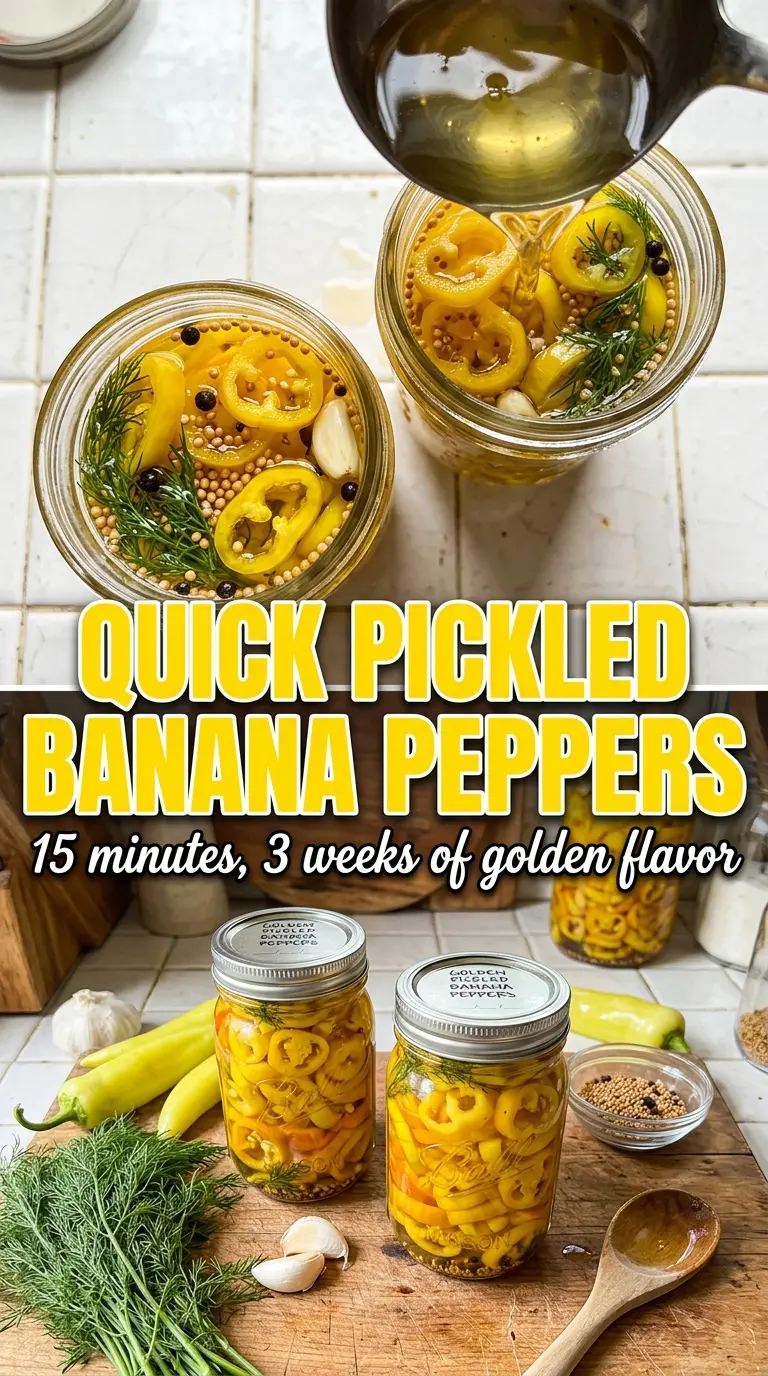
Start with two sterilized pint jars and pack in the banana pepper rings along with a dill sprig and smashed garlic cloves. You want them snug, not mashed. If the jars are too loose, the brine won’t season the peppers evenly, and the top layers can turn bland while the bottom ones pickle faster. Leave just enough room for the liquid to move through the jar.
Heating the Brine
Combine the vinegar, water, honey, salt, turmeric, mustard seed, and red pepper flakes in a small saucepan and bring it to a boil. The goal is to fully dissolve the honey and wake up the spices, not to reduce the liquid or concentrate it. If you boil it too long, the vinegar can sharpen and the balance gets out of whack.
Pouring and Pressing
Pour the hot brine over the peppers until they’re completely covered, then press down gently to release any trapped air pockets. A spoon handle or clean chopstick works well here. If the peppers float, they’ll pickle unevenly and the exposed pieces can stay pale and under-seasoned.
Cooling and Waiting
Let the jars cool to room temperature before sealing and refrigerating. That pause keeps condensation from fogging the jar and gives the peppers time to absorb the brine evenly. You can eat them after about 2 hours, but the flavor gets deeper and more balanced after 24 hours, when the garlic, dill, and turmeric have had time to settle in.
How to Adjust the Jar When You Want More Heat, Less Sugar, or a Different Herb
Make it spicier
Add another 1/4 to 1/2 teaspoon red pepper flakes, or tuck in a sliced fresh hot pepper with the banana peppers. That gives the brine a sharper finish and a little more bite, but the honey still keeps it from turning harsh. This version is better on sandwiches and grain bowls where you want the peppers to stand out.
Make it dairy-free and vegan-friendly
This recipe is already naturally dairy-free and vegan if you use a plant-based sweetener in place of honey. Maple syrup works, but it softens the brine with a deeper, more noticeable flavor than honey. If you want the cleanest pepper flavor, use organic sugar instead and keep the quantity the same.
Swap the herbs
If you don’t have dill, use a small sprig of thyme or oregano instead. The jar will taste less like a deli pickle and more like a bright herb pickle, which works well with roasted vegetables and Mediterranean-style bowls. Dried herbs won’t give the same fresh aroma, so use them sparingly if that’s all you have.
Storage and Reheating
- Refrigerator: Keep the pickles refrigerated for up to 3 weeks. They’ll stay crisp for the first week, then soften a little while the flavor deepens.
- Freezer: These don’t freeze well. The peppers lose their crunch once thawed, so this is a refrigerator-only pickle.
- Reheating: No reheating needed. Serve them cold or straight from the jar. If the brine chills too tightly and the flavors seem muted, let the jar sit at room temperature for 10 to 15 minutes before serving.
Answers to the Questions Worth Asking
Banana Pepper Recipe
Ingredients
Equipment
Method
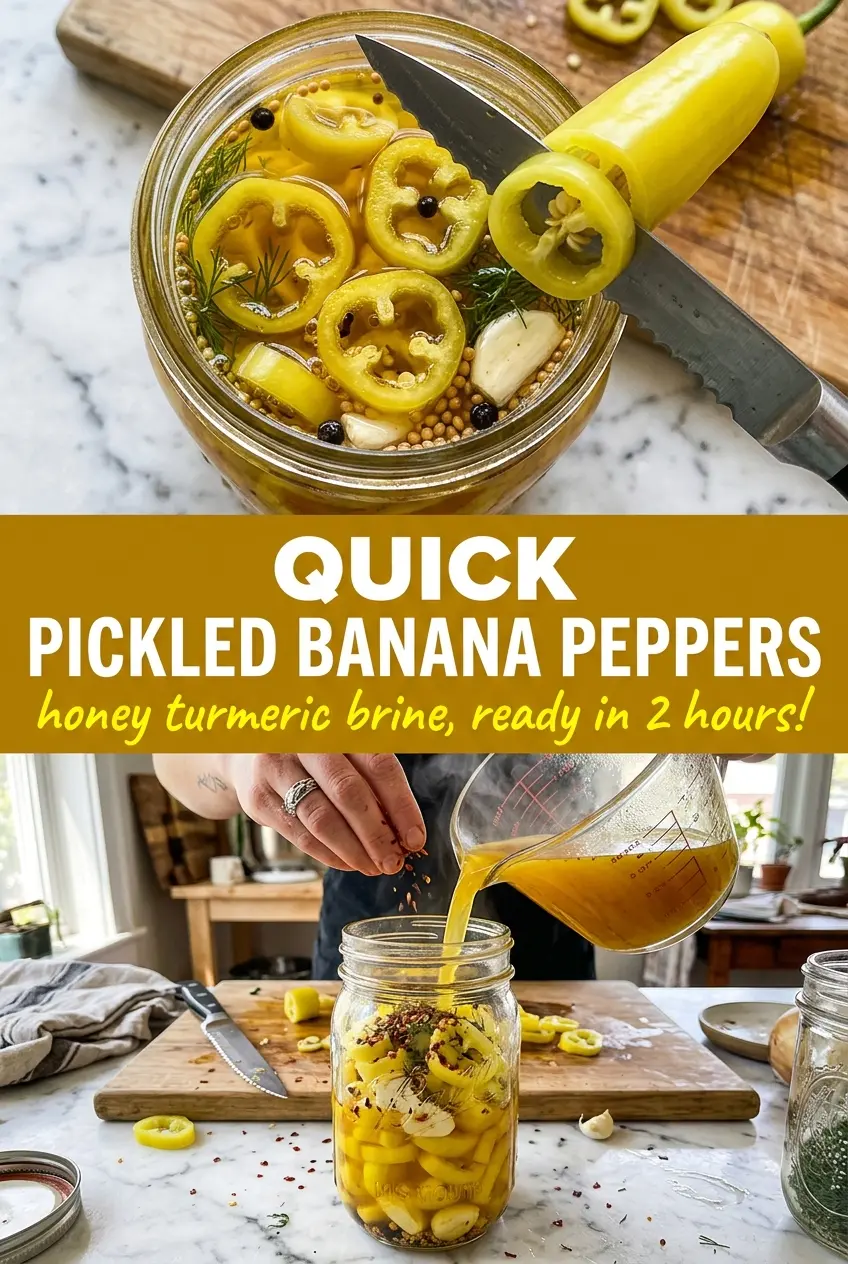
- Slice banana peppers into rings, then pack them into 2 sterilized pint jars with a dill sprig and the smashed garlic cloves visible.
- Press the peppers down firmly so the jar has room for the brine and the rings stay packed.
- In a Dutch oven, bring the white wine vinegar, water, honey, salt, turmeric, mustard seed, and red pepper flakes to a boil over high heat until the honey fully dissolves.
- Continue boiling briefly while stirring so the brine turns a golden-yellow.
- Pour the hot brine over the peppers, then press down to submerge the rings under the liquid.
- Cool the jars to room temperature, then seal and refrigerate for at least 24 hours.
- Serve after 2 hours for a quick pickle, with best flavor after 24 hours.