
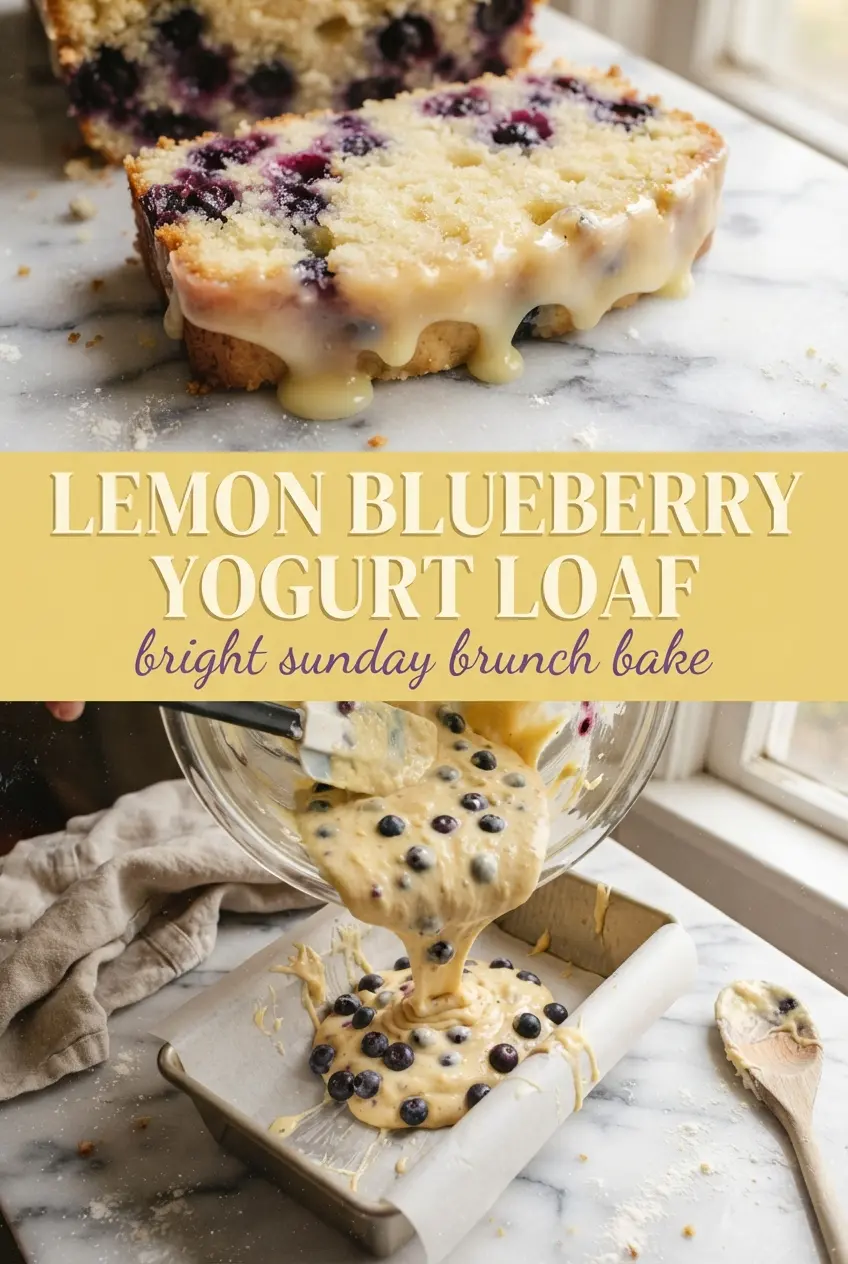
Moist lemon blueberry yogurt loaf has the kind of tender crumb that makes people cut one slice, then come back for a second before the first is gone. The yogurt keeps it soft for days, the lemon gives the batter a clean bright edge, and the blueberries stay juicy enough to break open in little purple pockets instead of disappearing into the crumb. The glaze on top finishes the loaf with just enough sweetness to pull everything together without turning it into dessert bread.
What makes this version work is the balance. Plain yogurt brings moisture and a little tang, which keeps the loaf from tasting heavy, and the oil gives it a softer texture than a butter-based quick bread. Fresh lemon zest does most of the aromatic work here; the juice adds lift, but the zest is what makes the loaf taste unmistakably lemony. Tossing the blueberries with a little flour before folding them in helps them stay suspended instead of sinking to the bottom.
Below, you’ll find the small details that matter most: how to keep the crumb tender, when to glaze so it sets instead of melting away, and a few variations for when you want to change the fruit or skip the dairy.
The loaf came out so tender and the blueberries stayed evenly spread through the batter. I also loved that the lemon glaze set up nicely once it cooled — it didn’t soak in and disappear like other recipes I’ve tried.
Save this lemon blueberry yogurt loaf for the days when you want a moist, bright loaf with a glossy lemon glaze and juicy berries in every slice.
The Reason This Loaf Stays Tender Instead of Dry
The most common mistake with quick breads is overbaking them and calling it done when the top looks set. Lemon blueberry loaf needs a little more patience. The center should spring back lightly, but a toothpick can still come out with a few moist crumbs attached. If it comes out bone dry, you’ve gone past the sweet spot and the loaf will taste tighter after it cools.
Yogurt changes the texture in a useful way. It gives the batter moisture and a slight tang without making it heavy, and that acidity helps the crumb stay soft. Oil helps even more because it stays liquid at room temperature, which is why this loaf still tastes tender on day two. The other trap is stirring the batter too long after the flour goes in. That builds gluten and turns a soft loaf into something springy and tough.
What Each Ingredient Is Actually Doing in This Loaf

- Plain yogurt — This is what keeps the crumb plush and moist. Full-fat yogurt gives the best texture, but regular plain yogurt works too. If you only have Greek yogurt, thin it with a spoonful or two of milk so the batter doesn’t get too dense.
- Lemon zest and lemon juice — The zest carries the real lemon aroma, while the juice sharpens the flavor and helps the batter taste clean instead of flat. Don’t skip the zest. Juice alone won’t give you the same bright lift.
- Vegetable oil — Oil keeps the loaf softer than butter would in a quick bread like this. Neutral oil is ideal because it doesn’t compete with the lemon. Melted coconut oil can work, but it will bring its own flavor and firms up as the loaf cools.
- Fresh blueberries — Fresh berries hold their shape better and leak less color into the batter. If you use frozen blueberries, add them straight from the freezer and expect a little more purple swirl in the crumb. Tossing them with a bit of flour helps them stay suspended.
- Powdered sugar — This makes the glaze smooth and glossy. There isn’t a good substitute if you want that quick-set finish, so use powdered sugar here rather than granulated sugar.
Building the Batter Without Beating the Life Out of It
Mix the wet ingredients until the batter looks smooth
Whisk the yogurt, sugar, eggs, oil, lemon zest, and lemon juice until the mixture looks glossy and even. You’re not trying to whip air into it the way you would for a cake batter. The goal is a smooth base that will carry the flour without streaks. If the eggs still look separated at this stage, keep whisking until the mixture turns fully emulsified and pale.
Fold in the flour just until the batter disappears
Add the flour and stir only until you stop seeing dry patches. The batter will look thick, and that’s right. Stop as soon as the flour is incorporated because every extra turn of the spoon tightens the crumb. If you’re using a stand mixer, don’t use it here. A spatula gives you more control and a softer loaf.
Add the blueberries at the very end
Fold in the berries gently so they stay whole. If you crush them now, the batter will streak gray-purple and the fruit will bleed into the loaf instead of sitting in juicy pockets. A quick dusting of flour helps them cling to the batter and stay distributed through the pan. This is the point where overmixing causes the most damage, so use broad, slow folds and stop once the berries are tucked in.
Bake until the center is set, not dry
Pour the batter into a greased 9×5-inch loaf pan and bake until the top is deeply golden and the center springs back lightly. Start checking near the 50-minute mark because ovens vary and this loaf can go from perfect to dry faster than you expect. A toothpick should come out with a few crumbs, not wet batter. If the top browns too quickly, lay a sheet of foil loosely over it for the last part of baking.
Cool fully before glazing
Let the loaf cool completely before you whisk the glaze together. Warm bread will melt the glaze into the crust, and you’ll lose that clean white drizzle on top. When the loaf is cool, the glaze should be thick enough to fall slowly off a spoon and set within minutes. That final step gives the loaf its finished look and keeps each slice neat.
Three Ways to Change the Loaf Without Breaking It
Make it dairy-free with a plant-based yogurt
Use an unsweetened plain plant-based yogurt with a thick texture, such as almond or coconut yogurt. The loaf will still stay moist, though the tang will be a little softer and the crumb may be slightly less rich than the dairy version. Choose one that isn’t watery or the batter will loosen too much.
Swap the blueberries for raspberries or blackberries
Raspberries give you a softer, more jammy loaf, while blackberries add a deeper berry flavor and a few seedier bites. Both work best when folded in gently at the end, and both can stain the batter more than blueberries do. If the berries are very soft, reduce the mixing even more so they don’t collapse.
Turn it into muffins for grab-and-go portions
Portion the batter into a lined muffin tin and start checking for doneness much earlier, usually around 18 to 22 minutes. Muffins bake faster and lose moisture sooner, so pull them when the tops spring back and a toothpick shows a few crumbs. You’ll get a tighter crumb than the loaf, but the flavor stays the same.
Storage and Reheating
- Refrigerator: Store tightly wrapped for up to 4 days. The crumb stays moist, though the glaze may soften a little.
- Freezer: This loaf freezes well without the glaze. Wrap slices individually and freeze for up to 2 months, then glaze after thawing if you want the best finish.
- Reheating: Warm slices briefly at room temperature or for a few seconds in the microwave. Don’t overheat it or the blueberries can burst and the crumb can turn rubbery.
Questions I Get Asked About This Recipe
Lemon Blueberry Yogurt Loaf
Ingredients
Equipment
Method
- Preheat the oven to 350°F and grease a 9x5-inch loaf pan with oil or cooking spray, then set the pan aside as a visual cue of readiness.
- Whisk together the all-purpose flour and set it aside, leaving it dry and ready to be combined with the wet mixture.
- In a mixing bowl, combine the plain yogurt, sugar, eggs, vegetable oil, lemon zest, and fresh lemon juice until smooth.
- Fold the dry ingredients into the wet mixture until just combined, keeping the batter thick and lumpy rather than overmixed.
- Toss the fresh blueberries in a little flour before folding them in gently so they stay suspended through the loaf.
- Pour the batter into the loaf pan and bake at 350°F for 50-55 minutes, stopping when a toothpick comes out clean from the center.
- Cool the loaf completely, then whisk the powdered sugar with lemon juice (for glaze) until glossy and pourable.
- Drizzle the glaze over the cooled loaf so it sets on top and drips slightly down the sides for an even finish.