
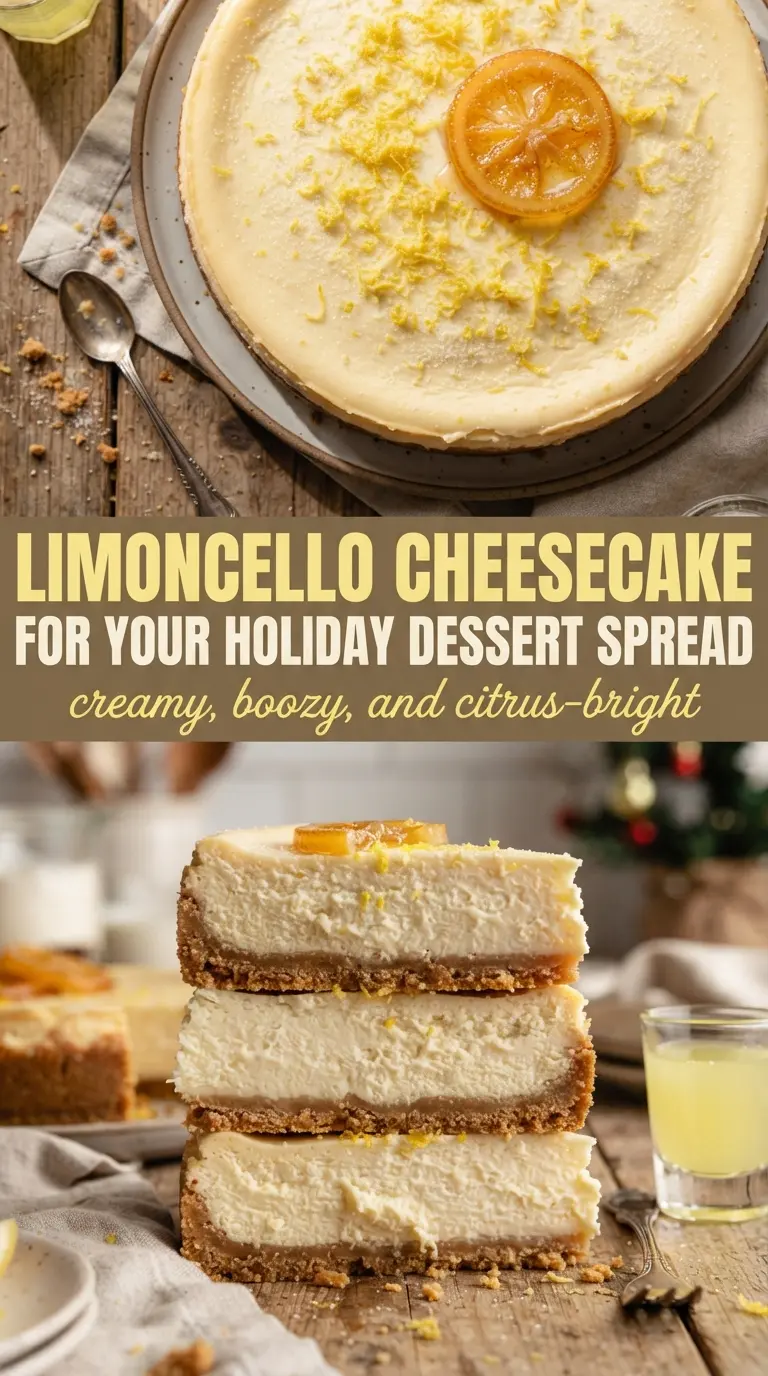
Silky, dense cheesecake and a bright limoncello finish make this dessert land in that rare spot between elegant and easy to love. The filling bakes up creamy instead of airy, with a clean lemon edge that keeps each bite from feeling heavy. On the plate, it slices like a dream after a proper chill, and the graham cracker crust gives just enough buttery crunch to keep the texture balanced.
What makes this version work is the way the lemon shows up in three places: the limoncello for aroma and sweetness, the zest for real citrus oils, and the juice for a sharper note that keeps the filling awake. The trick is to beat the cream cheese until it’s completely smooth before anything else goes in, then add the eggs one at a time so the batter stays silky instead of lumpy. A water bath helps, but even more important is stopping the bake when the center still has a slight wobble; that carryover heat finishes the custard without drying it out.
Below, I’m walking through the texture cues that matter, the one chilling step you don’t want to rush, and a few smart swaps if you need to adjust the booze or make the crust a little different.
The filling baked up smooth and creamy, and the limoncello gave it a bright citrus flavor without tasting too boozy. I chilled it overnight like you said and got the cleanest slices I’ve ever had with cheesecake.
Love the bright lemon flavor and creamy limoncello filling? Save this cheesecake for the next time you want a dessert that slices clean and tastes like pure citrus.
The Reason This Cheesecake Stays Creamy Instead of Cracking
The biggest mistake with limoncello cheesecake is treating it like a cake batter. It isn’t. Once you beat too much air into the filling, the cheesecake rises in the oven, then sinks and splits as it cools. What you want is a dense, smooth batter with just enough mixing to combine everything without whipping it light.
The other place people go wrong is baking until the center looks fully firm. Cheesecake keeps cooking after it comes out of the oven, and if you wait for the middle to set completely, it ends up dry and prone to cracks. Pull it when the edges are set and the center still has a small, soft wobble. That wobble is a good sign, not a problem.
- Room-temperature cream cheese blends into a smooth filling fast. Cold cream cheese leaves little lumps that don’t disappear later.
- The eggs set the custard. Add them one at a time so the batter stays smooth and doesn’t turn grainy.
- Limoncello gives the cheesecake its signature citrus aroma. Too much can thin the filling, so the measured amount here matters.
- Water bath isn’t just about preventing cracks. It keeps the heat gentle and even, which helps the center bake with a soft, creamy finish.
What Each Ingredient Is Doing in the Pan
- Graham cracker crumbs form a sturdy, sweet base that stands up to the rich filling. If you switch to cookie crumbs, use the same measurement by weight if you can, because volume can drift fast with different textures.
- Melted butter binds the crust and helps it set into a sliceable layer. If the crust feels sandy after mixing, it needs another spoonful of butter; if it looks greasy, it has gone too far.
- Cream cheese is the backbone of the cheesecake, so the quality and softness matter. Full-fat bricks give the most reliable texture; whipped tubs or low-fat versions won’t bake up the same.
- Sugar sweetens the filling and helps the texture stay smooth. Don’t cut it too far or the lemon and limoncello will taste sharp instead of balanced.
- Eggs create the custard structure. There isn’t a clean substitute here if you want the same dense cheesecake finish.
- Limoncello liqueur brings the dessert’s signature flavor. If you want less alcohol, reduce it slightly and replace the missing amount with more lemon juice or a little heavy cream, but the flavor will be a touch less round.
- Lemon zest is where the bright citrus aroma lives. Use fresh zest only; bottled lemon flavor can’t replace the oils in the peel.
- Fresh lemon juice sharpens the flavor and keeps the cheesecake from tasting flat. Bottled juice works in a pinch, but fresh juice tastes cleaner and brighter.
Building the Crust and Filling Without Overworking Either One
Pressing the Crust Firmly
Mix the graham cracker crumbs with melted butter until every crumb looks evenly moistened, then press the mixture into the pan in an even layer. A flat-bottomed measuring cup helps you pack it tightly, which keeps the crust from crumbling when you slice the cheesecake. If the edges are thicker than the center, they’ll bake harder and turn bitter at the rim.
Making the Filling Smooth
Beat the cream cheese and sugar until the mixture looks glossy and no pale lumps remain. Add the eggs one at a time, mixing just until each one disappears. Overbeating after the eggs go in pulls in too much air, and that air is what opens the door to cracks later.
Finishing the Bake
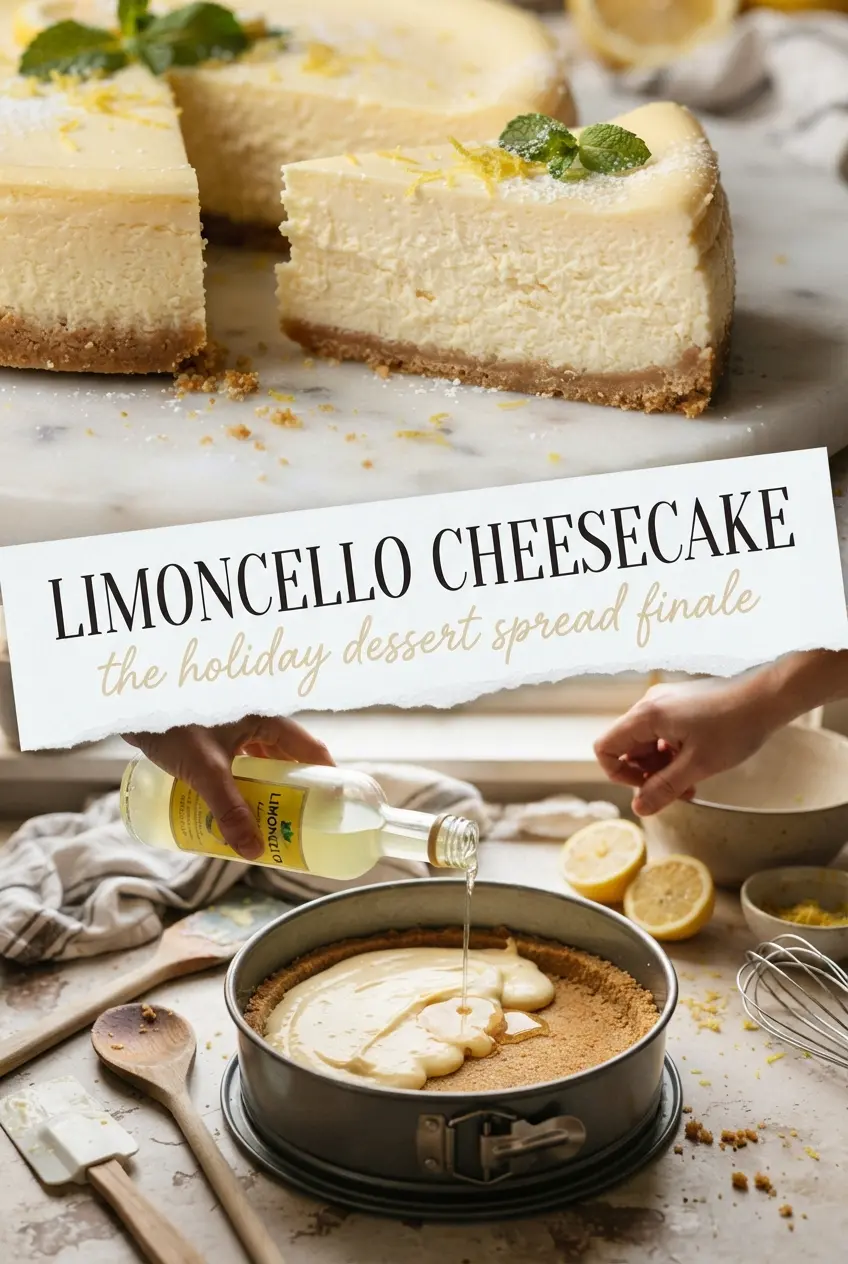
Stir in the limoncello, lemon zest, and lemon juice last, then pour the filling over the crust and smooth the top. Bake until the edges are set and the center still has a gentle wobble when you tap the pan. Let it cool slowly before chilling; fast temperature swings are hard on cheesecake and usually show up as surface cracks.
How to Adapt This for a Different Crowd or a Different Pantry
Dairy-Free Version
Use a plant-based cream cheese that’s designed for baking, not the whipped kind from a tub. The texture will be a little softer and less rich, but it still sets into a clean slice if you chill it overnight.
Lower-Alcohol Option
Cut the limoncello back a little and replace the missing liquid with extra lemon juice or a spoonful of cream. You’ll keep the citrus character, but the flavor will lean brighter and less liqueur-forward.
Gluten-Free Crust
Swap the graham crackers for a gluten-free cookie crumb that bakes up crisp, then keep the butter amount the same. The filling doesn’t need any changes, so this is one of the easier swaps to make without changing the whole dessert.
Storage and Reheating
- Refrigerator: Store covered for up to 5 days. The texture stays dense and creamy, and the flavor deepens after a day.
- Freezer: Freezes well for up to 2 months. Slice first, wrap each piece tightly, and thaw in the fridge overnight for the cleanest texture.
- Reheating: Cheesecake isn’t meant to be reheated. Serve it cold or let it sit at room temperature for 15 to 20 minutes so the filling softens slightly without turning loose.
Answers to the Questions Worth Asking
Limoncello Cheesecake
Ingredients
Equipment
Method
- Preheat the oven to 325°F. Mix the graham cracker crumbs with melted butter, then press firmly into a springform pan and set aside.
- Prepare a water bath for crack prevention by setting the springform pan in a larger roasting pan. Add hot water to the outer pan so it comes about halfway up the sides of the springform pan.
- Beat the cream cheese and sugar until smooth. Stop to scrape the bowl so no lumps remain.
- Add the eggs one at a time and beat just until each egg disappears. Keep mixing gentle to avoid excess air.
- Stir in the limoncello, lemon zest, and lemon juice until evenly combined. The filling should look glossy and uniform.
- Pour the filling over the crust in the springform pan. Use a spatula to smooth the top for an even bake.
- Bake at 325°F for 50-55 minutes, until the center is just set with a slight jiggle. Look for edges that look set while the middle still wobbles.
- Cool the cheesecake completely at room temperature. Leave it undisturbed until it stops steaming and firms up.
- Refrigerate for at least 4 hours before slicing. Chill until fully cold for the cleanest cuts.