
Warm biscuits turn strawberry shortcake from a simple dessert into something you want to serve with both hands and eat before the cream slides off the sides. The biscuit should be tender and flaky, with enough structure to catch the strawberry juices without collapsing into mush. That balance is what makes this version worth the extra few minutes.
The trick is keeping the butter cold and handling the dough just enough to bring it together. Overmixing is what makes biscuits tough, and using cream in the dough gives you a richer crumb than milk alone. The strawberries also need time to sit with sugar so they release their own syrup; that juice is what soaks into the biscuit and ties the whole dessert together.
Below, I’ve laid out the part that matters most: how to get tall biscuits, how to keep the centers tender, and how long the berries need to macerate before they’re ready to layer.
The biscuits baked up tall and flaky, and the strawberry juice soaked in just enough without making them soggy. I let the berries sit the full 20 minutes and it made all the difference.
Save this strawberry shortcake with homemade biscuits for the kind of dessert that needs flaky layers, juicy berries, and cream piled high.
The Biscuit Problem: Tall and Flaky vs. Dense and Dry
Shortcake biscuits fail for the same reasons regular biscuits do: warm butter, overworked dough, and too much flour added during shaping. If the butter softens before it hits the oven, you lose those pockets of steam that create layers. If you knead the dough like bread, the biscuits bake up tight instead of tender.
This version keeps the method simple, but the details matter. The dough should look a little rough when it comes together. That’s a good sign. When you pat it out and cut the biscuits, use a straight-down motion with the cutter so you don’t seal the edges. Sealed edges can’t rise as freely, and that’s how you end up with squat biscuits that spread instead of lift.
- The butter must stay cold all the way through mixing. Those little visible bits of butter are what create the flaky interior.
- Heavy cream gives the biscuits richness and tenderness. Milk works in a pinch, but the crumb will be lighter and less plush.
- A hot oven matters here. The biscuits need that blast of heat to set the outside before the butter melts out too early.
- Cutting the dough into 6 biscuits keeps them thick enough to split cleanly and hold the strawberries without crumbling.
What Each Ingredient Is Doing in This Shortcake

The flour gives the biscuits their structure, but not all flour handling is equal. Spoon it into the measuring cup instead of packing it down, or the dough will start out dry and the biscuits will bake dense. Baking powder is the lift here, and it needs to be fresh enough to still puff in the oven; if your tin has been open for ages, the rise will be weak.
Cold butter is the ingredient you can’t fake. You can substitute shortening for a more uniform texture, but you’ll lose the buttery flavor that makes these biscuits worth eating on their own. Heavy cream does double duty in the dough and the topping. If you need a swap in the biscuit dough, half-and-half can work, but the biscuits won’t be as rich. The strawberries should be ripe and fragrant, because they’re not cooked down into jam here; their natural juice carries the dessert.
- All-purpose flour — Gives the biscuits enough strength to split open cleanly while still baking tender.
- Baking powder — Provides the lift. Use a fresh can so the biscuits rise instead of baking flat.
- Sugar — Just enough sweetness for the biscuit itself and for drawing juice from the berries.
- Cold butter — Creates the flaky layers. Keep it cubed and chilled until the moment it goes into the flour.
- Heavy cream — Enriches the dough and makes the crumb soft without making it cakey.
- Strawberries — The better the berries, the better the shortcake. This dessert depends on their flavor, not a thick sauce.
- Whipped cream — Brings the whole thing together with lightness, especially against the warm biscuit.
Building the Biscuits, Macerating the Berries, Assembling at the Right Moment
Mixing the Dough Without Warming It
Whisk the dry ingredients first, then cut in the cold butter until the mixture looks like coarse crumbs with a few larger pieces scattered through it. Those larger pieces are important; they melt in the oven and create the flaky layers people want in shortcake biscuits. Pour in the cream and stir only until the dough holds together. If you keep stirring after that point, the biscuits turn tough and bake up dull instead of tender.
Shaping for Height, Not Spread
Pat the dough into a round that’s about 1 inch thick, then cut straight down without twisting the cutter. Twisting seals the edges and limits the rise. Place the biscuits close enough to encourage lift but not so close that they bake into each other. You’re looking for golden tops, pale sides, and a biscuit that sounds hollow when tapped on the bottom.
Letting the Strawberries Make Their Own Syrup
Toss the sliced strawberries with sugar and leave them alone for about 20 minutes. At first they’ll look dry, then you’ll see a glossy syrup pool at the bottom of the bowl. That liquid is the difference between berries that sit on top and berries that soak into the biscuit in the best possible way. If you skip this step, the dessert tastes flatter and less balanced.
Layering While Everything Is Still Warm
Split the biscuits while they’re still warm enough to steam a little. Spoon the strawberries and their juices over the bottom half, then add a generous cloud of whipped cream before capping it with the top biscuit. Warm biscuit plus cold cream plus juicy berries is the whole point here. If the biscuits sit too long before serving, they lose that contrast and the dessert gets ordinary fast.
How to Adapt This for Different Needs and Different Tables
Dairy-Free Shortcake
Use a good plant-based butter in place of the cold butter and swap the heavy cream in the dough for full-fat canned coconut milk. The biscuits will still rise and hold together, though the flavor becomes a little more coconut-forward. For the topping, use a coconut whipped topping or another dairy-free whipped cream that holds peaks well.
Make It a Little Less Sweet
Reduce the sugar in the strawberries to 1 tablespoon and leave the biscuit sugar as written. That keeps the dessert from tipping into candy-sweet while still giving the berries enough help to release their juices. The result tastes brighter and more strawberry-forward.
Bigger Crowd, Same Texture
Double the recipe and keep the biscuit dough in two separate batches instead of one huge bowl. Large batches warm up fast, and once that butter softens, the texture changes. Bake on two sheets and rotate them halfway through so every biscuit gets the same color.
Storage and Reheating
- Refrigerator: Store the biscuits, strawberries, and whipped cream separately for up to 2 days. The berries will keep softening and releasing juice, so assemble at the last minute for the best texture.
- Freezer: The baked biscuits freeze well for up to 2 months. Wrap them tightly and thaw at room temperature; don’t freeze the assembled shortcakes, since the berries and cream will turn watery.
- Reheating: Warm the biscuits in a 300°F oven for 5 to 8 minutes. Avoid the microwave, which makes the crumb rubbery and steals the flaky edge.
Answers to the Questions Worth Asking
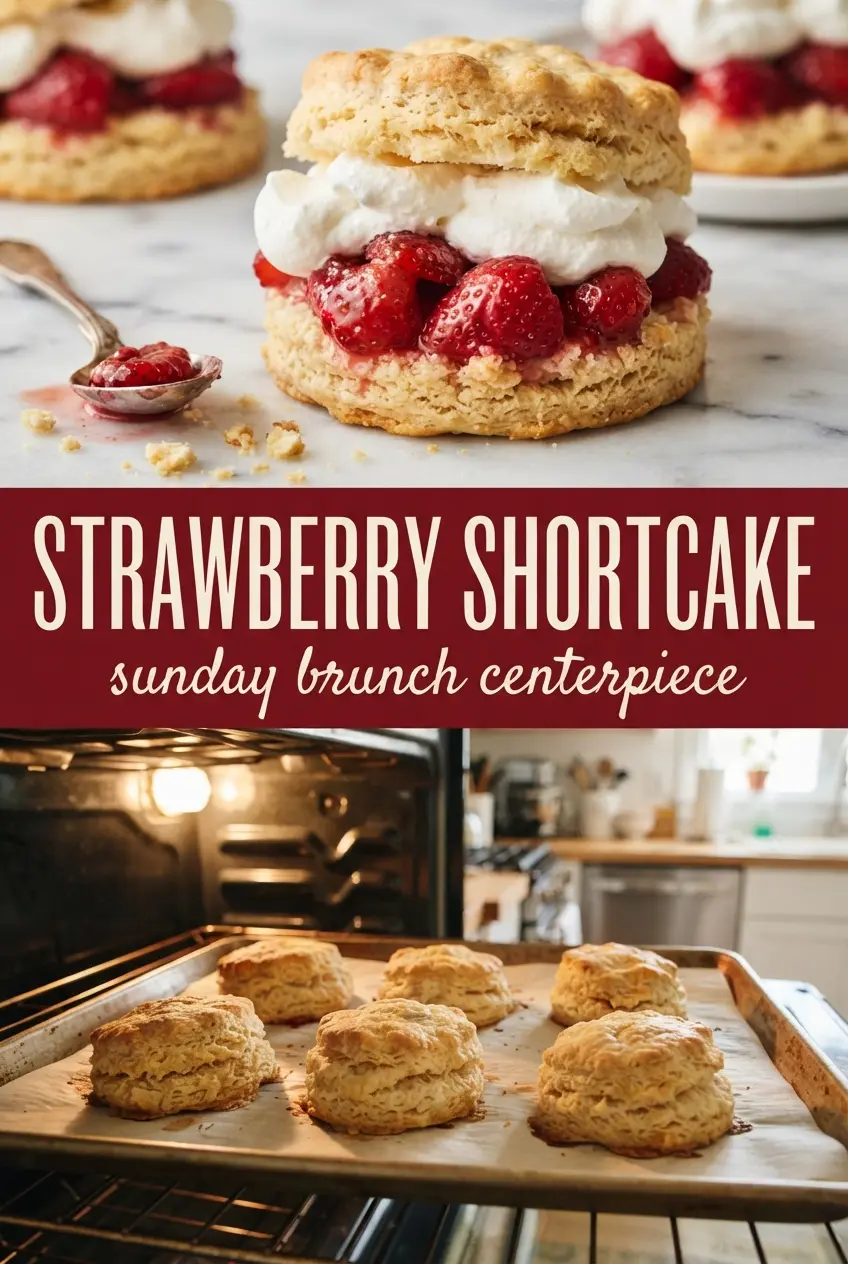
Strawberry Shortcake with Homemade Biscuits
Ingredients
Equipment
Method
- Preheat the oven to 425°F. Line a sheet pan and set it aside.
- Whisk together all-purpose flour, baking powder, and sugar in a mixing bowl until evenly combined.
- Cut in the cold butter until the mixture resembles coarse crumbs.
- Stir in the heavy cream just until a dough forms.
- Pat the dough into a circle and cut into 6 biscuits, placing them on the baking sheet.
- Bake for 12-15 minutes until golden.
- Toss the sliced strawberries with sugar and let sit for 20 minutes to release their juices.
- Split the warm biscuits and layer with macerated strawberries and whipped cream.