
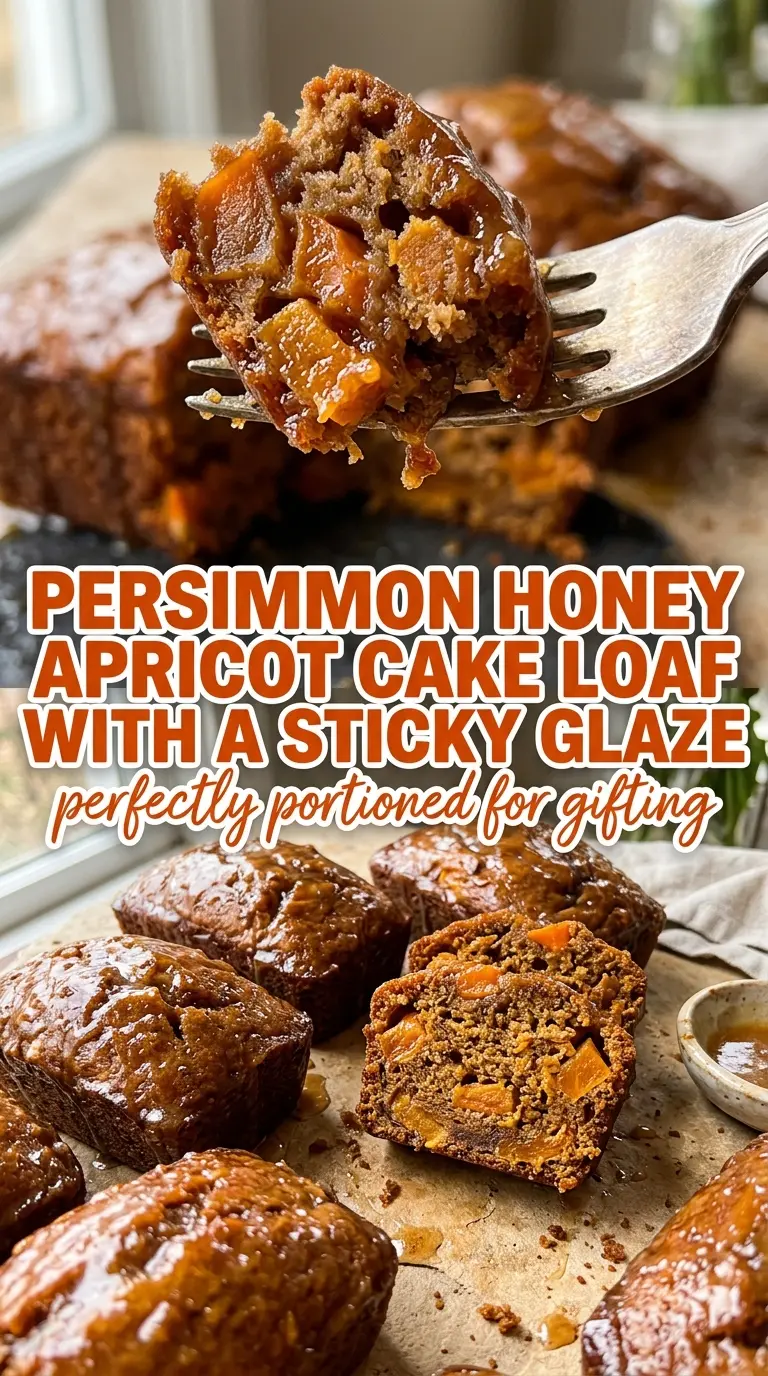
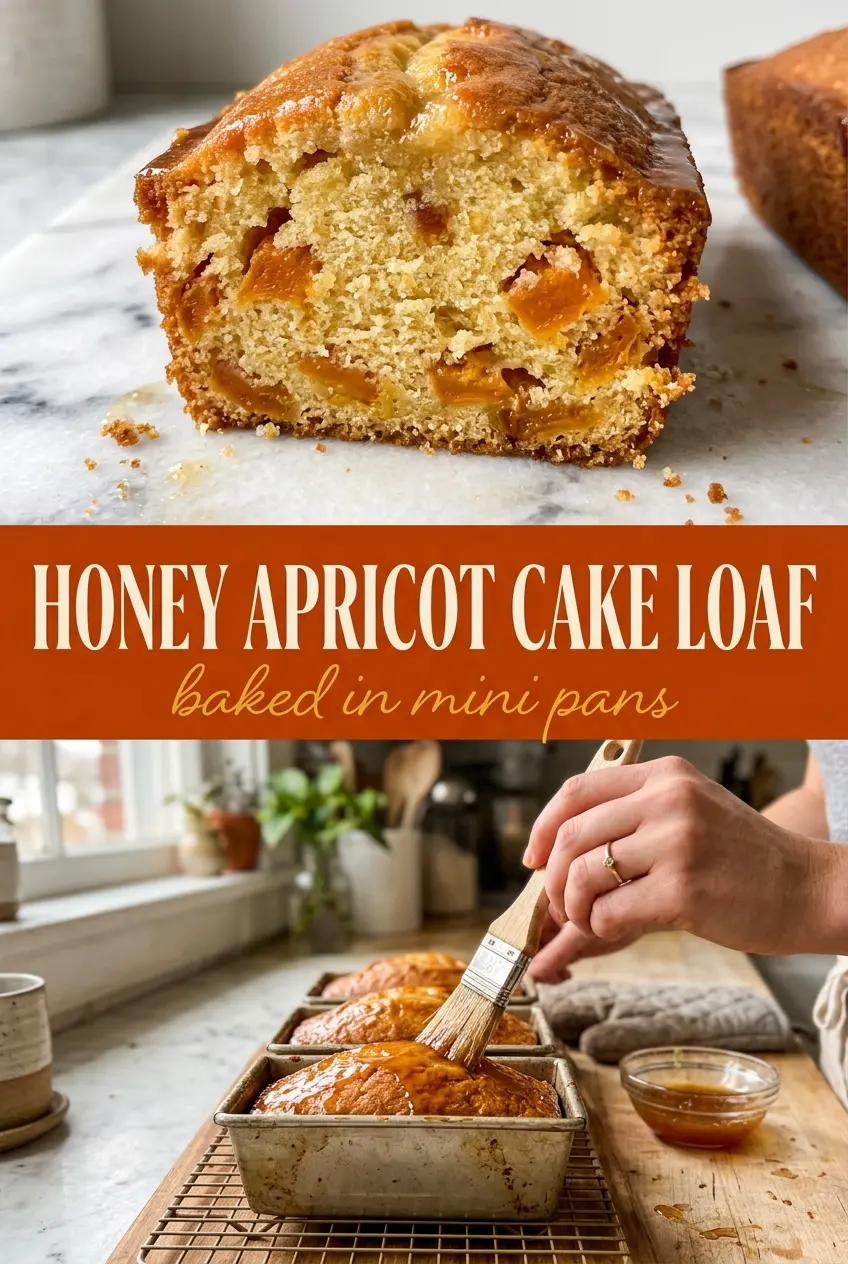
Sweet honey and juicy apricot chunks bake into a tender crumb that stays soft for days, and the little loaf shape gives you more of the caramelized edge that makes a simple cake feel special. The warm honey glaze sinks into the top while the loaves are still cooling, so each slice gets a sticky finish without turning heavy or soggy.
What makes these mini cake loaves work is the balance between moisture and structure. Honey brings flavor and tenderness, but it also softens the crumb, so the batter needs enough flour and eggs to hold the fruit without collapsing. Dicing the apricots small matters more than people expect; big pieces sink, leak juice in one spot, and throw off the bake. Small pieces distribute evenly, so every slice gets a little fruit instead of a few wet pockets.
Below, I’ve included the part that matters most: how to keep the loaves from turning dense, what to do if your apricots are extra ripe, and how to store them so they stay soft instead of drying out by day two.
The crumb was so tender and the apricot pieces stayed evenly suspended instead of sinking to the bottom. I brushed the honey on while the loaves were still just warm, and it soaked in beautifully without making the tops sticky in a bad way.
These honey apricot mini cake loaves bake up soft, fruity, and perfect for gifting when you need a small sweet loaf with a sticky glaze.
The Secret to Keeping Honey Loaves Tender Instead of Heavy
Honey changes the texture of quick breads in a few ways at once. It sweetens, yes, but it also holds moisture and can make the batter feel looser than a standard loaf cake. That’s why this recipe needs the flour and milk added in stages. Dumping everything together at once can leave you with a dense center or a batter that looks smooth on top but bakes up uneven underneath.
The other place people lose the texture is in the fruit. Apricots are juicy, and if they’re cut too large, they can sink before the batter sets. Small dice gives you a cleaner crumb and better distribution. The loaves also bake more evenly in mini pans because there’s less risk of a raw middle, which is the usual problem when fruit-filled cakes are baked in a larger loaf pan.
What Each Ingredient Is Actually Doing in These Mini Loaves
- Honey — This is the main flavor here, not just the sweetener. It keeps the crumb soft and gives the loaf that warm floral note you don’t get from plain sugar. If your honey is thick or crystallized, warm it just enough to stir smoothly, but don’t cook it.
- Fresh apricots — Fresh fruit gives the brightest flavor and the cleanest texture. Canned apricots turn too soft and tend to disappear into the batter, while frozen apricots add too much moisture unless you thaw, drain, and pat them dry first.
- Butter — Softened butter creams with the honey and gives the batter a little lift before the flour goes in. You can use salted butter if that’s what you keep on hand; just skip adding extra salt if your pantry version runs heavy on it.
- Milk — Milk loosens the batter enough to keep the mini loaves tender without making them cake-like and fragile. Whole milk gives the richest crumb, but 2% works fine. Non-dairy milk also works if it’s plain and unsweetened.
- Eggs — The eggs hold the batter together and help the loaves rise in the oven instead of slumping in the center. Room-temperature eggs blend faster and keep the butter from seizing up in little lumps.
- Flour and baking powder — These set the structure and give the loaf its lift. The batter should look thick but spreadable; if it seems too stiff, the loaves will bake up dry, and if it’s too loose, the apricot pieces can sink.
Building the Batter So the Fruit Stays Put
Cream the honey and butter until they look pale
Start here and give it enough time. The mixture should look fluffy and a little lighter in color, not just blended. That step traps air, which helps the mini loaves rise without turning gummy. If the butter is too cold, the mixture will look grainy and won’t cream properly, so soften it first but don’t melt it.
Beat in the eggs one at a time
Add the eggs slowly so the batter stays smooth. If you dump them all in at once, the mixture can look broken for a minute, then stay uneven even after the flour goes in. Scrape the bowl after each addition so no streaks of butter are hiding at the bottom.
Alternate the dry ingredients and milk
Add a little flour mixture, then a little milk, and keep going until both are gone. That keeps the batter from overworking and gives you a finer crumb. Stop mixing as soon as the flour disappears; once the batter turns glossy and stretchy, you’ve gone too far and the loaves can bake up tough.
Fold in the apricots at the end
The fruit goes in last so it doesn’t break apart during mixing. Use a spatula and fold gently until the pieces are evenly scattered. If you stir hard here, you can bruise the fruit and tint the batter with juice, which softens the crumb around the edges.
Bake until the tops spring back
Mini loaves usually need 25 to 30 minutes at 350°F, but go by the signs, not the clock alone. The tops should be golden, the edges lightly pulling from the pan, and a toothpick should come out clean or with a few moist crumbs. If the tops brown before the center sets, lay a loose piece of foil over the pans for the last few minutes.
How to Adapt These Mini Loaves for Different Pan Sizes and Preferences
Dairy-Free Version
Swap the butter for a plant-based butter that behaves like dairy butter at room temperature, and use plain unsweetened almond or oat milk. The texture will still be tender, though the flavor is a little less rich and buttery. Don’t use melted coconut oil here unless you want a more delicate crumb and a hint of coconut in the background.
Gluten-Free Swap
Use a 1:1 gluten-free baking blend that already includes xanthan gum. The loaves will be a little more delicate and may need a few extra minutes in the oven, but the honey and apricots still shine through. Don’t switch to almond flour alone; it won’t give you the structure this batter needs.
Turning Them Into One Standard Loaf
You can bake the batter in one 8×4-inch loaf pan if that’s what you have, but the bake time will be longer, usually around 45 to 55 minutes. Watch the center carefully, because the fruit makes it look done on top before the middle has finished setting. If the top is browning too fast, cover it loosely with foil.
Storage and Reheating
- Refrigerator: Store wrapped tightly for up to 4 days. The crumb stays moist, though the glaze may soak in more over time.
- Freezer: These freeze well. Wrap each cooled loaf tightly, then place in a freezer bag for up to 2 months. Thaw at room temperature while still wrapped so condensation doesn’t make the tops sticky.
- Reheating: Warm a slice for 10 to 15 seconds in the microwave or a few minutes in a low oven. Long reheating dries out quick breads fast, so stop as soon as the crumb feels soft again.
Questions I Get Asked About This Recipe
Honey Apricot Mini Cake Loaf
Ingredients
Equipment
Method
- Preheat the oven to 350°F and grease mini loaf pans so the loaves release cleanly.
- Cream butter and honey until fluffy, then beat in eggs until the mixture looks smooth and light.
- Alternate adding flour, baking powder, and milk into the batter, mixing just until combined to keep the crumb tender.
- Fold in diced apricots so the fruit is evenly distributed without overmixing.
- Divide batter among mini loaf pans and bake for 25–30 minutes at 350°F until golden and a toothpick comes out clean.
- Brush warmed honey over the cooled loaves so the glaze seeps into the crumb and sets on top.