
Apple cider donut bread bakes up with the same cozy cinnamon-sugar crust and tender, cake-like crumb you expect from a fresh cider donut, but in a loaf you can slice, toast, and keep on the counter for a few days. The top turns crackly after a brush of melted butter and a generous roll in cinnamon sugar, while the center stays soft and lightly tangy from sour cream and reduced cider.
The part that makes this loaf taste like the real thing is reducing the apple cider first. That extra simmer concentrates the apple flavor, so you get cider in every bite instead of a loaf that just tastes like cinnamon cake. Sour cream keeps the crumb moist without making it heavy, and the butter-sugar base gives the loaf a tight, tender structure that slices cleanly once it cools.
Below, I’ve included the timing trick that keeps the crumb from turning dense, plus a few ways to adapt the loaf if you want it a little richer, a little lighter, or better suited to what’s already in your pantry.
The cider flavor came through so well after reducing it first, and the cinnamon sugar crust stayed crisp even the next day. My kids kept sneaking slices before it even cooled.
Love the crackly cinnamon-sugar crust on this apple cider donut bread? Save it to Pinterest for the days when you want a bakery-style loaf with real cider flavor.
The Real Reason This Loaf Tastes Like a Cider Donut
Most apple bread recipes lean on raw cider straight from the bottle, and that usually means the flavor fades once the loaf bakes. This version starts with reduced cider, which pulls out the apple intensity before the batter even goes together. That matters because bread batter is full of flour and butter, both of which dilute flavor fast.
The other mistake is overmixing once the dry ingredients go in. A loaf like this should be tender, not tough, and overworking the batter develops gluten that makes the crumb tight and rubbery. Fold just until the flour disappears, then stop. The oven will finish the rest.
What Each Ingredient Is Actually Doing in This Dish
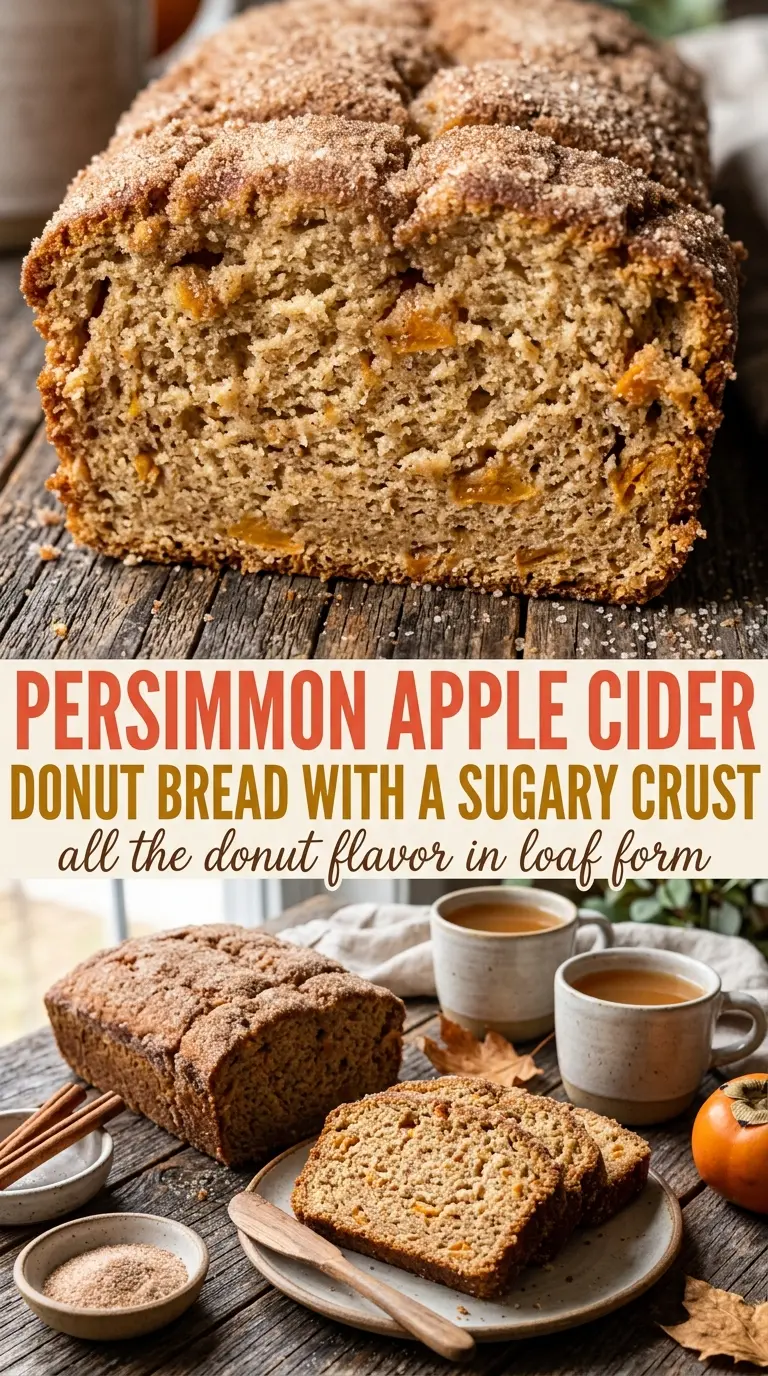
- Reduced apple cider — This is the anchor of the recipe. Simmering it down concentrates the fruit flavor and takes the edge off the liquid, so the loaf tastes like cider instead of sweet spice bread. Don’t skip this step unless you want a much softer, less distinct apple note.
- Sour cream — It adds moisture and a slight tang that keeps the loaf from tasting flat. Full-fat yogurt works if that’s what you have, but the texture will be a touch less rich.
- Brown sugar — It brings molasses depth and helps the bread stay tender. Light or dark brown sugar both work; dark brown gives the loaf a deeper, almost caramel note.
- Cinnamon sugar coating — This is what turns the loaf into something that feels like a donut. Apply it while the bread is still warm so the butter grabs the sugar instead of sliding off the crust.
How to Keep the Batter Tender and the Topping Crisp
Reducing the Cider First
Pour the cider into a small saucepan and simmer it until it’s cut roughly in half. You want it to smell concentrated and look a little syrupy, not just warm. If it’s still thin and sharp, the flavor won’t show up in the finished loaf. Let it cool before adding it to the batter so it doesn’t melt the butter mixture.
Building the Base
Beat the softened butter and brown sugar until the mixture looks fluffy and a little paler. That step traps air, which helps the loaf rise without becoming bready. Add the eggs one at a time and mix just until each one disappears. If the mixture looks curdled after the cider and sour cream go in, that’s normal as long as it smooths out once the flour is added.
Folding Without Toughening the Crumb
Add the dry ingredients in one or two additions and fold gently until no dry streaks remain. The batter should look thick and scoopable, not silky and overworked. If you keep stirring after the flour is incorporated, the loaf can bake up dense at the center. Transfer it to the pan right away and smooth the top with a spatula.
Finishing Like a Donut, Not Just a Loaf
Bake until the top is deeply golden and a toothpick comes out clean or with a few moist crumbs. Let it sit in the pan long enough to set, then brush the warm loaf with melted butter and coat it in cinnamon sugar. If the bread is too hot, the sugar melts into a paste; if it’s too cool, the coating won’t stick evenly. Warm is the sweet spot.
How to Adapt This Apple Cider Donut Bread for Different Kitchens
Dairy-Free Version
Use a plant-based butter for both the batter and the coating, and swap the sour cream for a thick dairy-free yogurt. The loaf will still be tender, though the crumb usually comes out a little lighter and less rich than the original.
Extra-Spiced Loaf
Add a pinch of cloves or allspice if you want the bread to taste more like a classic cider doughnut stand treat. Go light here; too much clove can take over fast and make the loaf taste medicinal instead of warm.
Gluten-Free Swap
Use a 1:1 gluten-free baking blend that already includes xanthan gum. The texture will be slightly more delicate, so let the loaf cool completely before slicing or it can crumble at the center.
Storage and Reheating
- Refrigerator: Store tightly wrapped for up to 4 days. The cinnamon sugar coating softens a little, but the loaf stays moist.
- Freezer: Freeze slices or the whole loaf, well wrapped, for up to 2 months. Freeze before coating if you want the best texture; add the butter and cinnamon sugar after thawing and warming.
- Reheating: Warm slices in a 300°F oven for 8 to 10 minutes or toast them lightly. The biggest mistake is microwaving too long, which turns the crumb gummy and melts the coating into a sticky patch.
Answers to the Questions Worth Asking
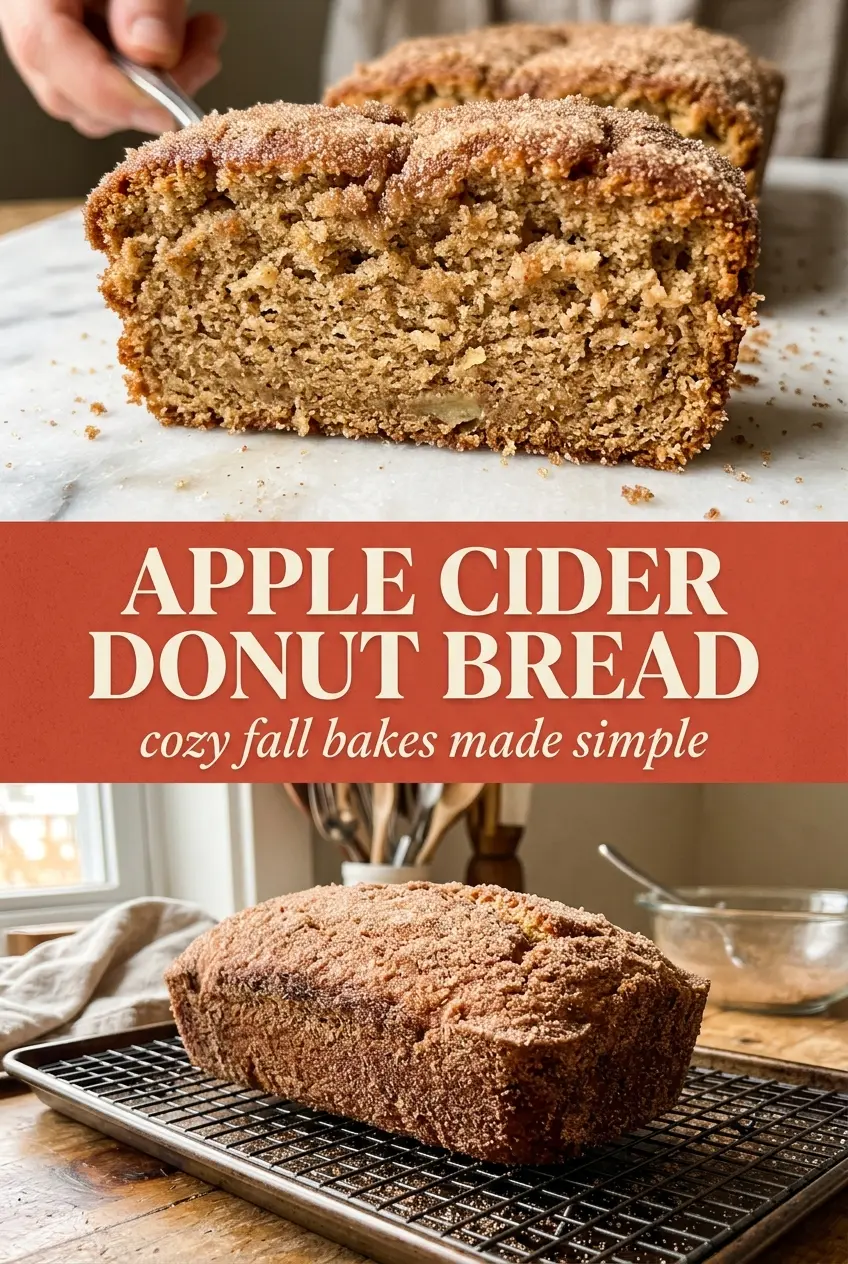
Apple Cider Donut Bread
Ingredients
Equipment
Method
- Whisk all-purpose flour, baking powder, cinnamon, and nutmeg together in a mixing bowl until evenly combined and no streaks of spices remain.
- Beat softened unsalted butter and brown sugar until fluffy, then mix in the large eggs one at a time until the mixture looks smooth.
- Stir in reduced apple cider and sour cream just until incorporated, scraping the bowl to keep the batter uniform.
- Fold in the dry ingredients until just combined, stopping as soon as no dry flour pockets remain.
- Pour batter into a greased loaf pan and bake at 350°F for 50-55 minutes, until a toothpick inserted in the center comes out clean and the top is golden.
- Brush the warm loaf with melted butter, then roll or sprinkle generously with the cinnamon sugar mixture so the coating looks glossy and crackly.