
Sticky, caramelized Hawaiian chicken sheet pan dinners earn their place fast because the oven does the heavy lifting while the sauce turns glossy and the pineapple edges brown in all the right spots. The chicken stays juicy, the peppers soften just enough to keep a little bite, and the sweet-savory glaze clings to every piece instead of pooling on the pan.
What makes this version work is the balance. Teriyaki sauce brings the salt and depth, soy sauce sharpens it, and honey helps the glaze lacquer the chicken as it roasts. Pineapple does more than add sweetness; its juices mingle with the sauce and create those sticky browned edges that make the whole pan taste like more than the sum of its parts. Using boneless thighs keeps the meat forgiving, since they hold up well under high heat and don’t dry out the way leaner cuts can.
Below, I’m walking through the small choices that matter here — how to keep the pan from getting watery, when to broil for better caramelization, and what to swap if you need to work with what’s already in the kitchen.
The glaze thickened up on the pan and the pineapple edges got those browned spots I was hoping for. I served it over rice and my husband went back for seconds before I’d even sat down.
Sticky Hawaiian chicken sheet pan dinners with caramelized pineapple deserve a spot in your Pinterest board for busy nights.
The Reason This Pan Doesn’t Turn Watery
The biggest problem with sheet pan dinners like this is steam. If the pan is crowded, the pineapple and peppers release juice faster than the oven can evaporate it, and you end up with chicken that looks glazed but tastes boiled. Spreading everything in a single layer gives the glaze a chance to concentrate instead of thinning out.
The other thing that matters is the finish. That last short broil isn’t there for drama; it drives off the extra moisture and darkens the sticky spots around the chicken and fruit. If your broiler runs hot, keep the pan on a middle rack and watch closely, because the line between caramelized and burnt is thin.
What Each Ingredient Is Actually Doing in This Dish
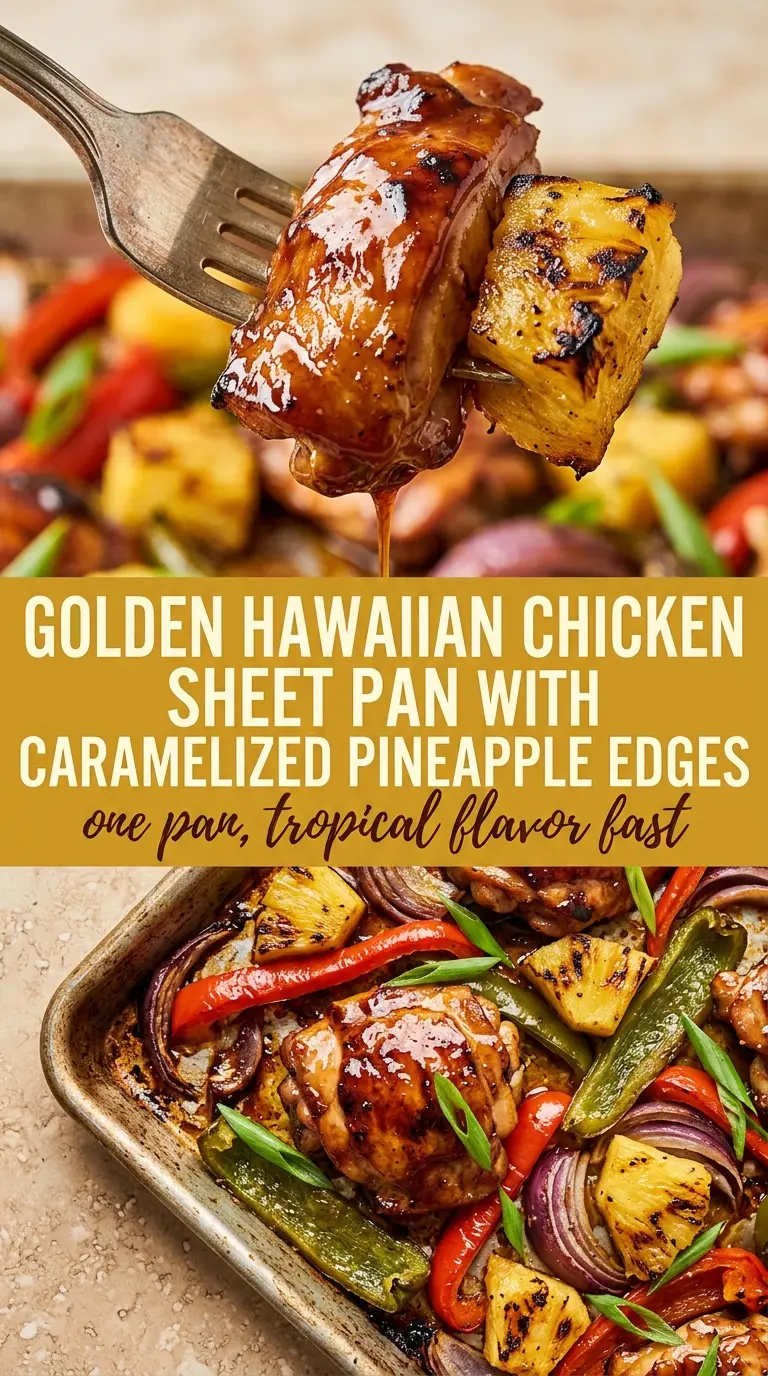
- Boneless chicken thighs — These stay tender at 425°F and handle the sticky glaze better than chicken breasts. If you swap in breasts, cut them into large even pieces so they finish before the pineapple dries out.
- Pineapple chunks — Fresh or canned both work, but canned should be drained well so the pan doesn’t flood. Pineapple adds sweetness and acidity, which helps the glaze taste brighter and keeps the dish from reading as one-note.
- Bell peppers and red onion — These give the pan balance and shape. The peppers soften and sweeten, while the onion picks up browned edges that taste almost jammy after roasting.
- Teriyaki sauce — This is the backbone of the glaze, so use one you actually like eating. A thin, overly sugary sauce can scorch quickly, while a fuller-bodied teriyaki clings better and caramelizes into a glossy coating.
- Soy sauce and honey — Soy sauce sharpens the teriyaki and keeps it from tasting flat. Honey helps the glaze brown and stick, but too much will burn, so don’t drift far from the ratio here.
How to Get the Glaze Sticky Without Burning the Fruit
Building the Pan
Line the sheet pan with parchment and spread the chicken, pineapple, peppers, and onion out in an even layer. If the pieces are stacked or crowded, the moisture stays trapped and the glaze can’t tighten up. The goal is edges that sizzle and brown, not a tray full of steaming sauce.
Coating Everything Evenly
Whisk the teriyaki sauce, soy sauce, and honey together before pouring it over the pan. Toss gently so every piece gets coated, but don’t overwork the fruit or it’ll break down and leak extra liquid. The sauce should look glossy and cling in a thin layer instead of sitting like puddles.
Roasting to the Right Point
Roast until the chicken is cooked through and the peppers have collapsed just enough to bend when pierced. The pineapple should look darker at the edges, with browned spots where the sugars hit the hot pan. If the pan still looks wet at the 25-minute mark, give it a few more minutes before broiling; otherwise the broiler will just flash-burn the sauce before it has a chance to concentrate.
The Broiler Finish
Broil for 2 to 3 minutes only if you want deeper caramelization. Stay close, because the sugars in the honey and pineapple can go from bronzed to bitter fast. Pull the pan the moment you see dark sticky edges and a little char on the onion tips.
How to Adapt This for Different Kitchens
Make It Gluten-Free
Use a gluten-free teriyaki sauce and tamari in place of regular soy sauce. The flavor stays close to the original, but check the label on the teriyaki because some versions use wheat as a thickener. Once you’ve made that swap, the rest of the recipe can stay the same.
Use Chicken Breasts Instead of Thighs
Chicken breasts work, but they need a little more attention because they dry out faster under high heat. Cut them into larger chunks and start checking early, since the goal is just-cooked and juicy, not firm and chalky. Thighs are still the better choice if you want the most forgiving result.
Swap the Pineapple
Mango works if you want a softer, less acidic sweetness, though it won’t caramelize quite as sharply as pineapple. Peaches also work in the right season, but they release more juice, so keep the pan a little more spread out. If you skip fruit entirely, the dish loses the sticky contrast that makes it taste Hawaiian.
Make It Lower in Sugar
Use a no-sugar-added teriyaki sauce and cut the honey back to 1 teaspoon or omit it. The glaze won’t brown as aggressively, so lean on the broiler carefully for color. You’ll lose a little stickiness, but the savory side of the dish will come through more clearly.
Storage and Reheating
- Refrigerator: Store leftovers in an airtight container for up to 4 days. The pineapple softens a bit more, but the flavor holds well.
- Freezer: It freezes fine for up to 2 months, though the peppers will lose some texture after thawing. Freeze in portions with rice if you want an easy full meal later.
- Reheating: Warm in a skillet over medium-low heat or in a 325°F oven until hot. High heat will dry out the chicken and make the sugars on the pan taste harsh before the center is warmed through.
Questions I Get Asked About This Recipe
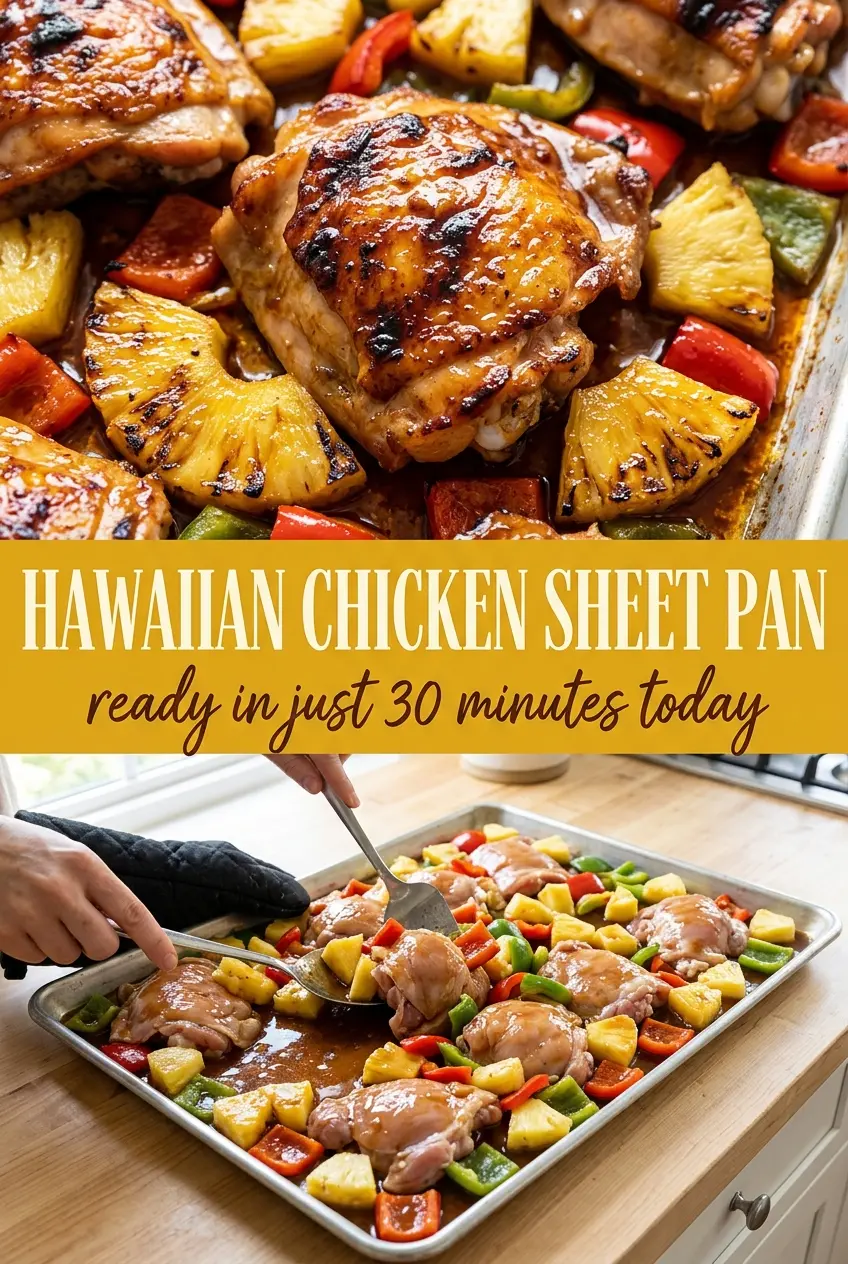
Hawaiian Chicken Sheet Pan
Ingredients
Equipment
Method
- Preheat the oven to 425°F and line a large sheet pan with parchment paper.
- Arrange the chicken thighs, pineapple chunks, bell peppers, and red onion on the sheet pan.
- Whisk together the teriyaki sauce, soy sauce, and honey, then pour evenly over everything.
- Roast for 25-30 minutes, flipping halfway, until the chicken is cooked through and the edges are caramelized.
- Broil for the last 2-3 minutes for extra caramelization if desired.
- Garnish with sliced green onions before serving.