
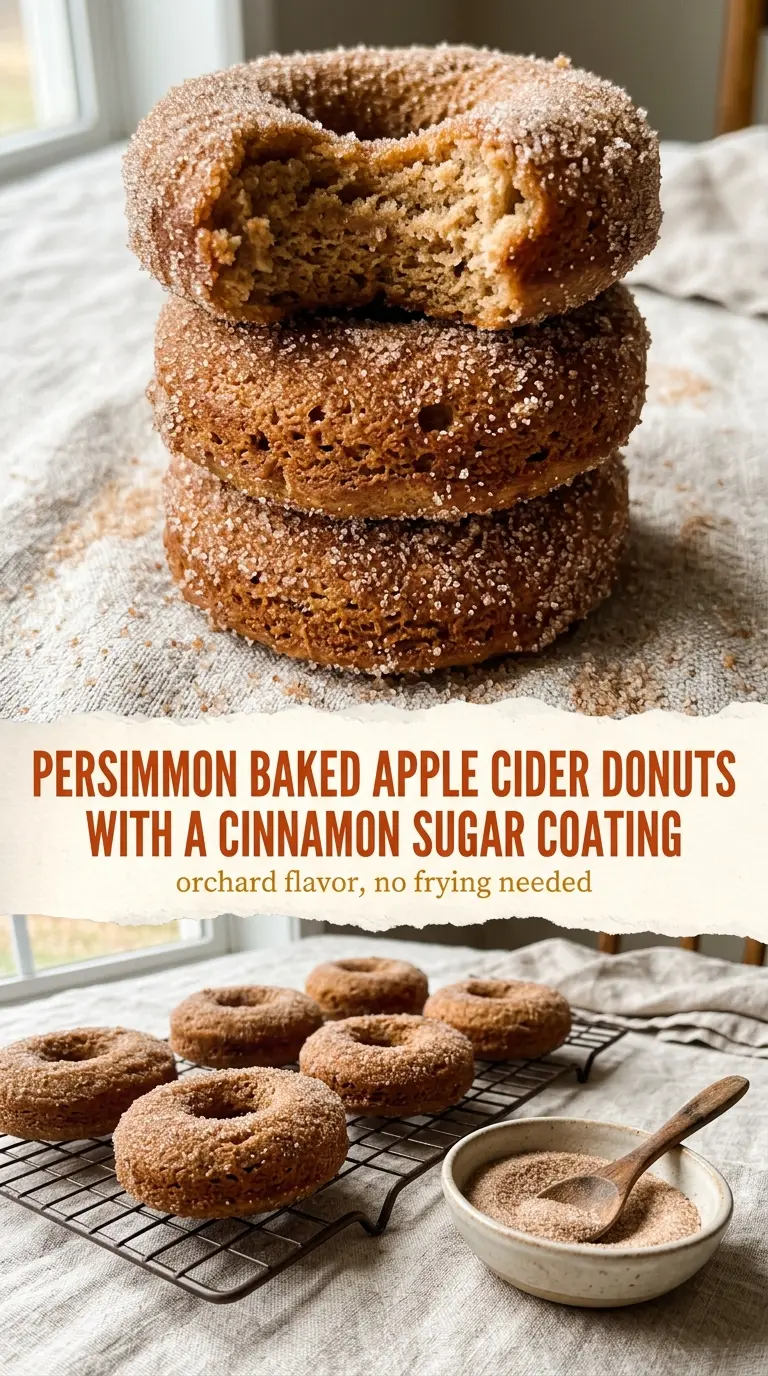
These baked apple cider donuts come out tender in the middle with a lightly crisp sugar shell that crackles when you bite in. The reduced cider gives them a clear apple flavor without turning the batter watery, and the cinnamon sugar coating clings best while the donuts are still warm from the oven.
Reducing the cider first is the part that gives these donuts their depth. If you skip that step, the apple flavor gets lost once the flour and milk go in. A donut pan keeps the edges defined and helps the centers bake through quickly, which is what gives you that soft, cakey crumb instead of a muffin texture.
Below, I walk through the one step that matters most for flavor, plus the easiest way to coat the donuts so the cinnamon sugar actually sticks instead of sliding off.
The cider flavor came through even after baking, and the cinnamon sugar stuck perfectly because I brushed them while they were still warm. Mine were done right at 11 minutes and had that soft cake-donut texture I was hoping for.
Save these baked apple cider donuts for the weekend when you want a soft cake donut with a crisp cinnamon sugar shell.
The Cider Reduction Is What Keeps These Donuts From Tasting Flat
Apple cider brings a softer, less sharp apple note than juice, but it also brings a lot of water. If you pour it straight into the batter, the donuts can bake up pale and a little bland. Reducing the cider concentrates the flavor and gives the crumb a fuller apple taste without making the batter heavy.
The other thing that matters here is not overmixing once the wet and dry ingredients come together. Cake-style donuts get tough fast when the flour is worked too long, and the batter only needs to come together until you stop seeing dry streaks. A lumpy batter is fine. A smooth, elastic batter is not what you want.
What Each Ingredient Is Actually Doing in This Batch
- Apple cider — This is the flavor base. Reducing it concentrates the apple note and cooks off extra water so the donuts bake with more structure and less steam.
- All-purpose flour — Regular AP flour gives the donuts a tender but sturdy crumb. Cake flour would make them lighter, but it also makes them more delicate and less like a classic baked donut.
- Baking powder — This is the lift. Since these donuts don’t rely on yeast or frying, baking powder is what gives them that soft rise in the pan.
- Melted butter — Butter adds richness and helps the cinnamon sugar coating cling later. Don’t swap it for oil if you want the same bakery-style flavor.
- Milk — Milk loosens the batter just enough to pipe cleanly. Whole milk gives the best texture, but 2% works if that’s what you have.
- Cinnamon sugar — This isn’t just decoration. The warm butter brushed on after baking acts like glue, and the sugar turns into that crackly shell that makes these donuts taste finished.
How to Mix, Pipe, and Bake Them Without Losing the Shape
Reduce the Cider First
Start with the cider and simmer it until you have half a cup left. You want it a little syrupy, not caramelized or brown, and it should smell strongly of apples. Let it cool before it goes into the batter, because hot cider can melt the butter back into a greasy mixture and throw off the texture.
Build the Batter Gently
Whisk the dry ingredients in one bowl and the sugar, egg, melted butter, milk, and reduced cider in another. Add the wet to the dry and fold just until the flour disappears. If you keep mixing after that point, the donuts tighten up and lose that soft, cakey bite.
Pipe Cleanly Into the Pan
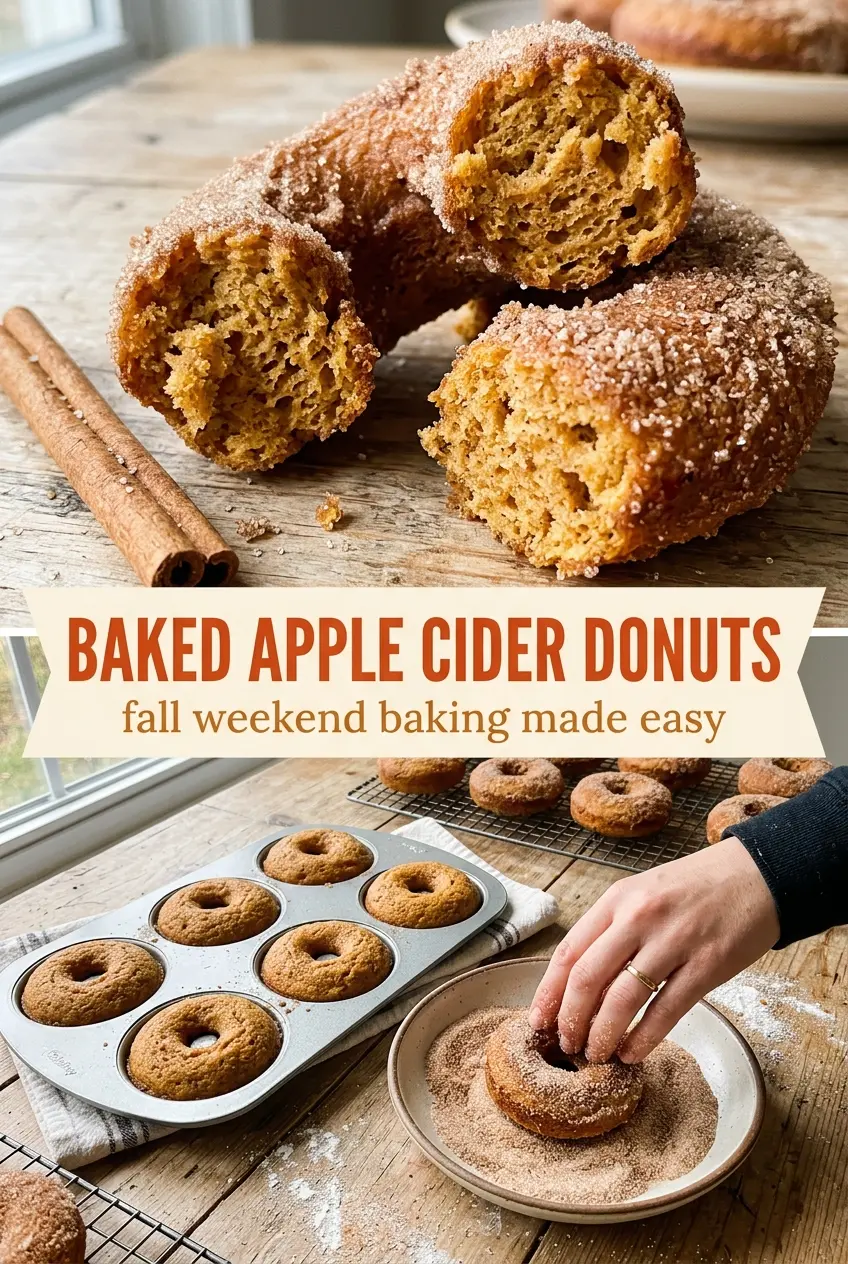
Spoon the batter into a zip-top bag and snip off one corner, then pipe it into a greased donut pan. Fill each ring about three-quarters full so the centers rise without spilling over the top. If the batter sits too long before baking, the baking powder starts working early and the donuts won’t spring as well in the oven.
Coat Them While They’re Warm
Bake just until the tops spring back and the edges are set. Brush each donut with melted butter as soon as it’s cool enough to handle, then roll it in cinnamon sugar. If you wait until they’re fully cool, the coating won’t stick nearly as well and you’ll lose that crackly finish.
Three Ways to Make These Donuts Fit What You Need
Dairy-Free Version
Use a neutral dairy-free butter in both the batter and coating, and swap the milk for unsweetened oat or almond milk. The donuts still bake up tender, but the flavor is a little less rich, so the cider reduction matters even more.
Gluten-Free Adaptation
Use a good 1:1 gluten-free baking blend that already includes xanthan gum. The texture will be a touch more delicate, and the donuts should cool in the pan for a few minutes before you lift them out so they don’t break.
Extra-Spiced Orchard Stand Flavor
Add a small pinch of allspice or cloves to the dry mix if you want a sharper, more chai-like spice note. Go light here, because too much warm spice will cover up the apple instead of backing it up.
Storage and Reheating
- Refrigerator: Store in an airtight container for up to 3 days. The sugar coating softens a bit, but the donuts stay tender.
- Freezer: Freeze the uncoated donuts for up to 2 months, then thaw and coat after warming. The cinnamon sugar coating doesn’t hold up well in the freezer.
- Reheating: Warm in a 300°F oven for 5 to 8 minutes. The common mistake is microwaving them until they turn rubbery; the oven brings back the soft crumb without drying the edges.
Questions I Get Asked About These Baked Apple Cider Donuts
Baked Apple Cider Donuts
Ingredients
Equipment
Method
- Simmer the apple cider until reduced to 1/2 cup, then let it cool to warm so it doesn’t scramble the egg.
- Preheat the oven to 350°F and grease a donut pan, setting it on a sheet pan for easy handling.
- Whisk together the all-purpose flour, baking powder, cinnamon, nutmeg, and salt until evenly combined with no visible clumps.
- In a separate bowl, whisk the sugar, egg, 1/3 cup melted butter, milk, and reduced cider until smooth and glossy.
- Fold the wet ingredients into the dry until just combined, then pipe the batter into the donut pan cavities.
- Bake at 350°F for 10 to 12 minutes, until the centers spring back lightly and the edges look set.
- Brush the warm donuts with the remaining melted butter, then roll in cinnamon sugar to form a crackly coating as they cool.