
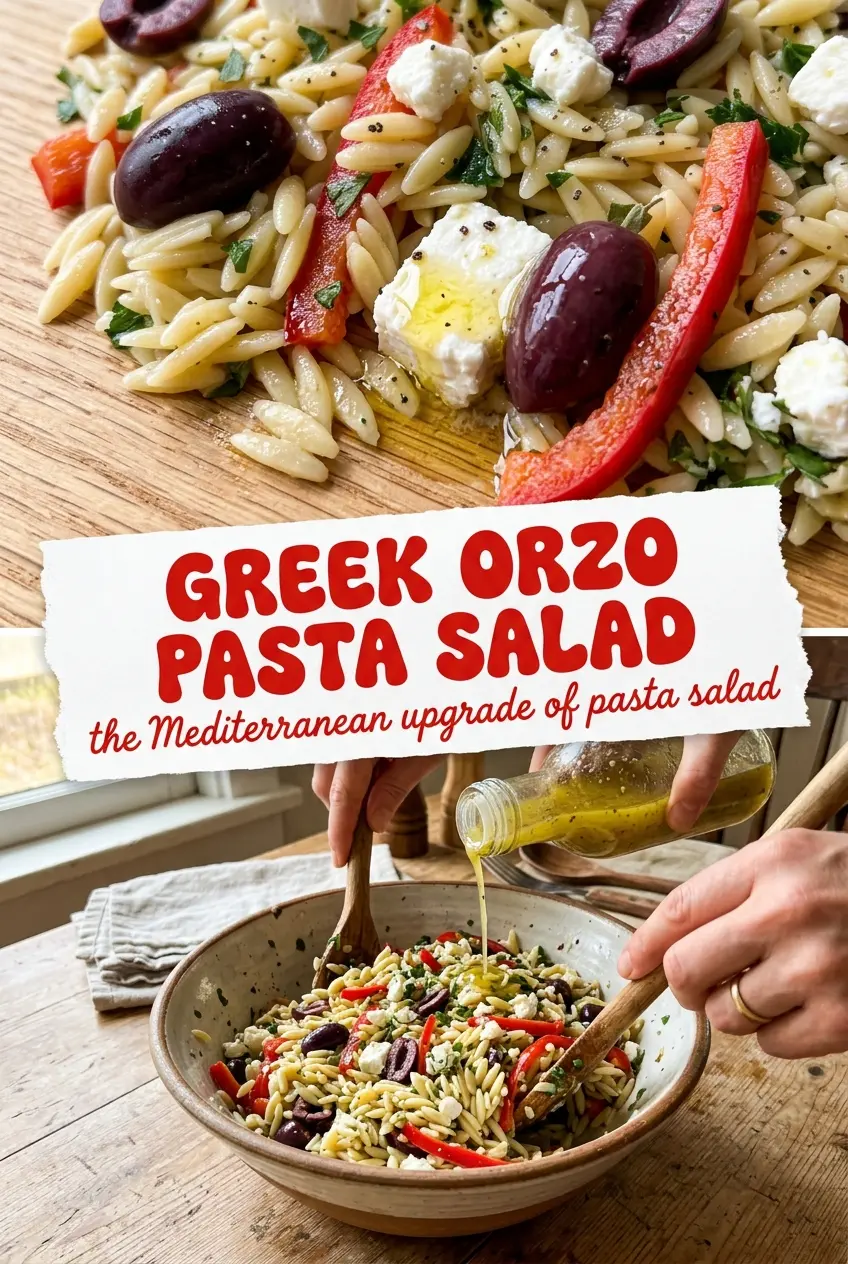
Orzo pasta salad earns its place on repeat when it tastes bright on the first bite and even better after a little time in the fridge. This version does that balance well: the orzo catches the dressing, the feta stays salty and creamy, and the olives, roasted peppers, and herbs keep every forkful sharp and lively instead of soft and one-note. It’s the kind of pasta salad people keep hovering over because it doesn’t eat like a side dish that was rushed together.
The trick is treating the dressing like part of the salad, not something you drizzle on at the end. A good Greek-style dressing needs enough acid to wake up the pasta, enough oil to coat the grains, and just a touch of honey to round out the vinegar without making it sweet. The other detail that matters is texture: rinsing the orzo cold stops the cooking fast, and folding in the feta last keeps the crumbles intact instead of turning the whole bowl cloudy.
Below, I’ve included the timing that keeps the salad from going soggy, the swap I’d use if you need to adapt it, and the small finishing step that makes the whole bowl taste cleaner and fresher.
The dressing coated every little piece of orzo, and the salad still tasted fresh the next day. I loved that the feta stayed in crumbles instead of melting into the bowl, and the lemon zest at the end made it taste brighter than the usual pasta salad.
Save this Greek orzo pasta salad for the days when you want a make-ahead bowl that stays punchy, herby, and dressed all the way through.
The Reason Orzo Pasta Salad Stays Dressed Instead of Drying Out
Orzo behaves differently from bigger pasta shapes. Those small grains have more surface area, so the dressing clings instead of sliding to the bottom of the bowl. That’s why this salad tastes balanced even after chilling; every spoonful gets some acid, some oil, and some of the briny toppings.
The other thing working here is contrast. Kalamata olives bring depth, roasted red peppers add sweetness, cucumber keeps the bowl crisp, and the sun-dried tomatoes pull in a concentrated savory note you don’t get from fresh tomatoes alone. If this salad ever tastes flat, it usually needs more salt from the feta or a little more vinegar, not more oil.
- Orzo pasta — This shape is what makes the salad eat like a proper composed dish instead of a loose pile of toppings. Cook it to al dente and rinse it cold so it stops right before soft, because overcooked orzo turns pasty fast.
- Kalamata olives — Their briny, slightly winey flavor does more work here than black olives would. If you need a substitute, use another olive with real character; bland olives disappear once the dressing goes in.
- Sun-dried tomatoes in oil — These bring concentrated tomato flavor and a little built-in richness from the oil. Dry-packed sun-dried tomatoes work too, but soak them in warm water for a few minutes first, then chop and toss with a little olive oil so they don’t eat leathery.
- Feta cheese — Add it at the end so the crumbles stay distinct. Block feta packed in brine has better texture than pre-crumbled feta, which tends to be drier and more powdery.
- Fresh parsley and mint — The parsley gives the salad its clean herbal backbone, while the mint lifts the whole bowl and keeps it from tasting heavy. If you skip the mint, the salad still works, but it loses some of that deli-style brightness.
- Greek dressing — The red wine vinegar gives the salad its edge, the honey rounds it out, and the garlic keeps it from tasting flat after chilling. Whisk it well before tossing so the honey and oregano distribute evenly instead of settling at the bottom.
How to Keep the Pasta from Going Soft and Starchy
Cooking the Orzo to the Right Bite
Boil the orzo until it’s just al dente, then drain it and rinse under cold water right away. That rinse isn’t just to cool it down; it also washes away surface starch that would otherwise glue the grains together. If the pasta feels fully tender in the pot, it’s already too far gone for a chilled salad.
Building the Bowl in the Right Order
Start with the pasta, vegetables, olives, and sun-dried tomatoes, then add the dressing and toss until everything looks lightly glossy. The herbs go in after that so they stay green and fragrant instead of bruising under the spoon. If you toss the feta too early, it breaks down and turns the salad muddy instead of giving you clean salty bites.
Chilling Before the Final Taste
Give the salad at least an hour in the fridge so the orzo can absorb the dressing and the flavors can settle together. Taste it cold before serving, because chilled pasta always reads a little flatter than it did in the mixing bowl. A pinch more salt, a splash more vinegar, or a final squeeze of lemon can wake it right back up.
Three Ways to Adjust This Salad Without Losing What Makes It Work
Make it dairy-free
Leave out the feta and add a handful of chopped olives or a few extra sun-dried tomatoes to keep the salty, savory backbone. The salad will taste a little cleaner and less creamy, but the dressing and briny ingredients still carry the same Mediterranean feel.
Swap the orzo for gluten-free pasta
Use a small gluten-free pasta shape that holds dressing well, then pull it from the water the moment it turns tender. Gluten-free pasta softens more quickly after cooking, so rinse it cold and dress it promptly or it can go grainy and break apart in the fridge.
Turn it into a fuller lunch
Add chickpeas, diced grilled chicken, or chopped cooked shrimp if you want more protein. Chickpeas keep the vegetarian angle and soak up the dressing nicely, while chicken or shrimp make the salad feel more like a meal without changing the flavor balance.
Storage and Reheating
- Refrigerator: Keeps well for 3 to 4 days. The herbs soften a little, but the flavor deepens as it sits.
- Freezer: I don’t recommend freezing this salad. The cucumber, feta, and dressing all lose their texture once thawed.
- Reheating: Don’t reheat it. Serve it cold or let it sit at room temperature for 15 to 20 minutes, then stir and add a splash of vinegar or olive oil if the pasta has absorbed too much dressing.
Answers to the Questions Worth Asking
Pasta Salad
Ingredients
Equipment
Method
- Bring a large pot of water to a boil and cook orzo until al dente (about 8–10 minutes). Visual cue: the orzo should be tender with a slight bite in the center.
- Rinse the orzo cold under running water and drain well. Visual cue: it should cool quickly and stop steaming.
- Add the drained orzo to a mixing bowl and combine with Kalamata olives, roasted red peppers, cucumber, sun-dried tomatoes, and parsley. Visual cue: the mixture looks jewel-toned with purple, green, and red throughout.
- Toss in the mint. Visual cue: herb ribbons should be evenly distributed so green flecks show in every forkful.
- Whisk olive oil, red wine vinegar, dried oregano, honey, minced garlic, and salt and pepper together until emulsified. Visual cue: the dressing looks slightly opaque and cohesive rather than oily.
- Pour the dressing over the orzo mixture and toss generously to coat. Visual cue: the orzo pearls look glossy and lightly slick.
- Fold in feta last to preserve the crumbles. Visual cue: feta stays in small, intact bits rather than melting.
- Chill for at least 1 hour. Visual cue: flavors deepen and the salad firms up slightly when chilled.
- Taste and adjust seasoning before serving, then finish with lemon zest. Visual cue: the top looks brightened with pale yellow zest flecks.