
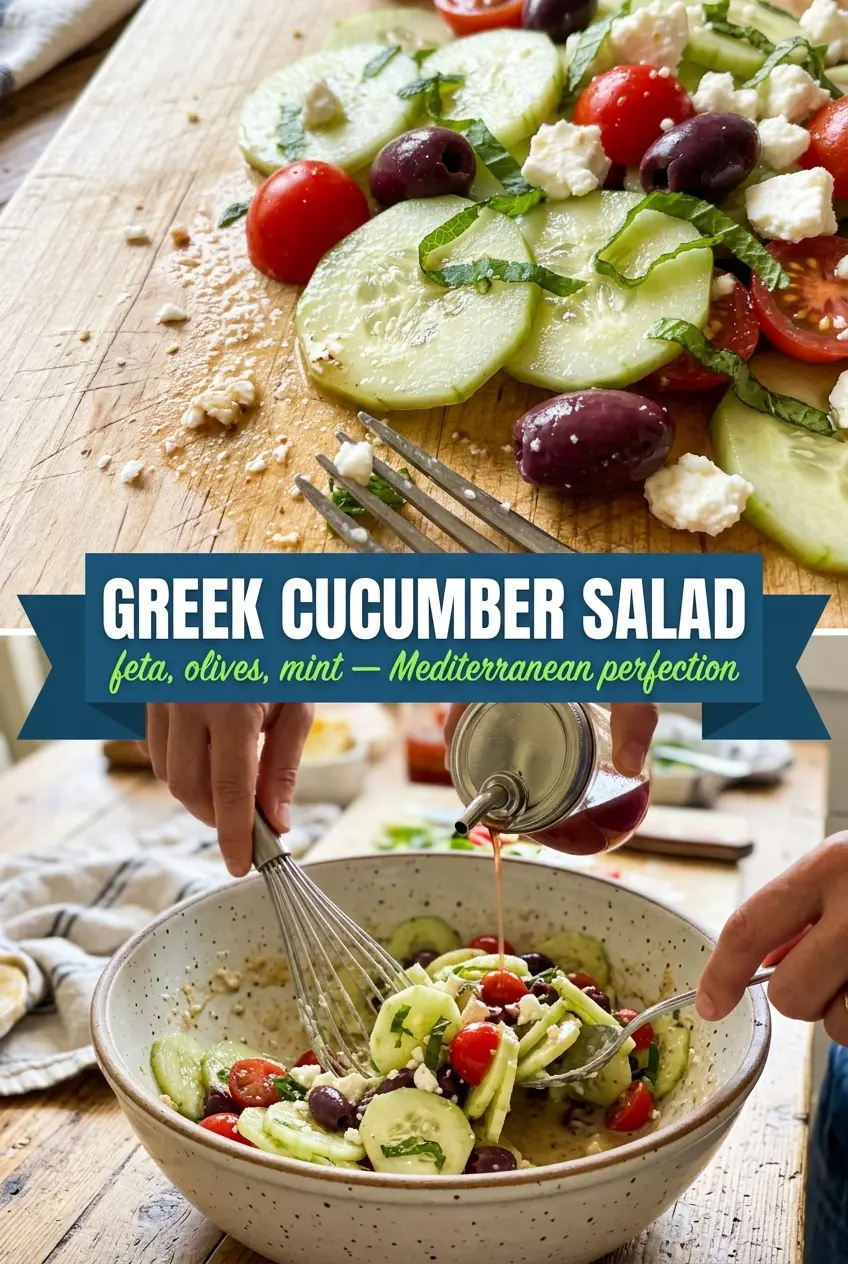
Crisp cucumbers, briny olives, juicy tomatoes, and feta make this Greek cucumber salad the kind of side dish that disappears before the main course settles in. The texture stays lively because the cucumbers are salted first, which pulls out extra water instead of letting it dilute the dressing. That one small step keeps every bite bright instead of watery.
The dressing leans simple on purpose: olive oil, red wine vinegar, oregano, honey, and garlic. Nothing in it needs to be fussy, but the balance matters. The honey softens the vinegar, the feta brings its own salt, and the mint with parsley gives the salad a fresher finish than dried herbs alone ever could.
Below, you’ll find the exact reason the cucumbers stay crunchy, plus a few easy ways to adapt this for different diets or what you already have in the fridge.
I’ve made a lot of cucumber salads, but salting the cucumbers first changed everything. The dressing stayed bright, the tomatoes didn’t get soggy, and the mint with parsley made it taste like something from a good Greek restaurant.
Save this Greek cucumber salad for the days when you want something crisp, briny, and cooling with almost no prep.
The Step That Keeps Cucumber Salad Crisp Instead of Watery
The biggest mistake with cucumber salad is treating the cucumbers like they’re already ready to dress. They’re not. Cucumbers carry a lot of water, and once they sit in salt and acid, they start releasing even more. If you skip the drain time, the salad turns pale, diluted, and soggy fast.
Salting the sliced cucumbers for 10 minutes changes the texture in a useful way. You lose the excess moisture, but the cucumbers still stay snappy. That means the dressing clings instead of sliding to the bottom of the bowl, and the feta stays in distinct crumbles instead of dissolving into a salty puddle.
- English cucumbers — These are worth using because the skin is thin, the seeds are small, and the texture stays clean after salting. Regular cucumbers work too, but if the skin feels thick or waxy, peel them and scoop out the seeds first.
- Feta cheese — A block of feta crumbled by hand tastes better than pre-crumbled feta and gives you softer, creamier pieces. Since feta is already salty, hold back on the dressing salt until the end.
- Fresh mint and parsley — This is the part that makes the salad taste vivid instead of merely dressed. Dried herbs won’t give you the same lift, so use fresh here if at all possible.
- Red wine vinegar — Its sharpness wakes up the cucumbers and balances the oil. White wine vinegar works in a pinch, but it tastes a little flatter and less Mediterranean.
Building the Salad So Every Bite Stays Bright
Salting the Cucumbers
Slice the cucumbers thinly so the salt can reach the surface quickly, then let them sit for about 10 minutes. You’ll see a small puddle form in the bowl, which is exactly what you want. If the cucumbers look dry and leathery, they sat too long; drain them and move on, because they should still taste fresh and cool.
Mixing the Vegetables and Herbs
Add the tomatoes, olives, red onion, mint, and parsley after the cucumbers have drained. Toss gently so the tomatoes stay intact and the herbs don’t bruise into dark flecks. If you stir aggressively, the feta breaks down too soon and the salad loses its clean, chunky texture.
Whisking the Dressing
Shake or whisk the olive oil, vinegar, oregano, honey, garlic, salt, and pepper until the honey is fully dissolved. The dressing should look glossy and slightly thick, not separated. If the garlic sits in clumps, keep whisking for another few seconds so it spreads evenly instead of biting in one harsh pocket.
Letting It Sit Briefly Before Serving
After tossing, refrigerate the salad for 15 minutes so the flavors settle into each other. That short rest is enough to take the edge off the onion and let the herbs perfume the cucumbers without softening them too much. Taste right before serving and add only a little more salt if needed, since the feta and olives already bring plenty.
Three Ways to Adjust This Greek Cucumber Salad Without Ruining It
Dairy-Free Version
Leave out the feta and add a handful of chickpeas or extra olives for body. You lose the creamy-salty contrast, so the salad leans sharper and cleaner, but the herbs and dressing still carry it well.
No Fresh Mint
Use extra parsley and a pinch of dried dill if that’s what you have. It won’t taste quite as bright, but it still lands in the same Mediterranean lane and keeps the salad from feeling flat.
Lower-Salt Version
Rinse the olives before slicing and use a lighter hand with the feta. This helps if you’re watching sodium, but the salad will taste a little less punchy, so the herbs and vinegar need to stay lively.
Make It More Filling
Add cooked chickpeas, grilled chicken, or tuna and keep the dressing amount the same. The salad becomes more of a lunch than a side, and the extra protein also helps mellow the acidity.
Storage and Reheating
- Refrigerator: Best within 1 day. The cucumbers soften and release more liquid as they sit.
- Freezer: Don’t freeze it. Cucumbers, tomatoes, and feta all change texture in a way that makes the salad unpleasant.
- Reheating: No reheating needed. If it has been sitting in the fridge, drain off excess liquid and give it a quick toss before serving.
Questions I Get Asked About This Recipe
Cucumber Salad
Ingredients
Method
- Thinly slice the English cucumbers, then salt lightly and drain for 10 minutes so they release excess water.
- Combine the drained cucumbers with cherry tomatoes, Kalamata olives, feta cheese, red onion, torn fresh mint, and fresh flat-leaf parsley.
- Whisk olive oil, red wine vinegar, dried oregano, honey, and minced garlic until evenly combined.
- Pour the dressing over the salad and toss gently until every cucumber slice is lightly coated.
- Refrigerate for 15 minutes before serving to let the flavors meld.
- Taste and adjust salt and pepper, keeping in mind feta is salty so go easy.