
Pale, silky clam chowder with fennel and crème fraîche has a way of feeling familiar and a little more elegant at the same time. The broth stays light enough to let the clams taste like clams, but the pancetta, leeks, and potatoes still give it the kind of comfort that makes you want a second bowl. The fennel does quiet work here. It adds a soft anise note that reads clean and coastal, not heavy or sweet, and the crème fraîche finishes the soup with a gentle tang instead of the flat richness you get from plain cream.
What separates this version from the usual clam chowder is restraint. The base is built with just enough flour to give the broth body, but not so much that it turns pasty. The clams go in at the end so they stay tender, and the vermouth adds a dry edge that keeps the whole pot from tasting dull. If you’ve ever had chowder that felt thick but somehow bland, this is the fix.
Below, I’ll walk through the one point that matters most for keeping the soup silky, plus the ingredient choices that give this chowder its bistro-style finish. There’s also a storage note worth reading if you want leftovers that still taste clean the next day.
The chowder thickened up just enough without turning gluey, and the fennel with the vermouth gave it such a nice restaurant-style flavor. Even my husband, who usually wants a heavier chowder, went back for seconds.
Save this clam chowder with fennel and crème fraîche for the nights when you want something silky, briny, and a little more polished than the usual chowder.
The Reason This Chowder Stays Silky Instead of Turning Heavy
The difference between a chowder that feels elegant and one that feels leaden comes down to when you thicken it and how hard you heat it after the dairy goes in. Flour needs a minute to cook out with the vegetables and fat before the broth hits the pan. That gives you body without raw flour taste. Once the crème fraîche goes in, the heat needs to stay gentle. A rolling boil can make the dairy separate or make the potatoes break down too fast.
The clams are added last for a reason. They only need a brief warm-through, and if they simmer too long they turn tough and lose their clean briny flavor. The same goes for the fennel fronds at the end. They’re not there for volume; they sharpen the finish and echo the fennel bulb in the base.
What Each Ingredient Is Actually Doing in This Chowder
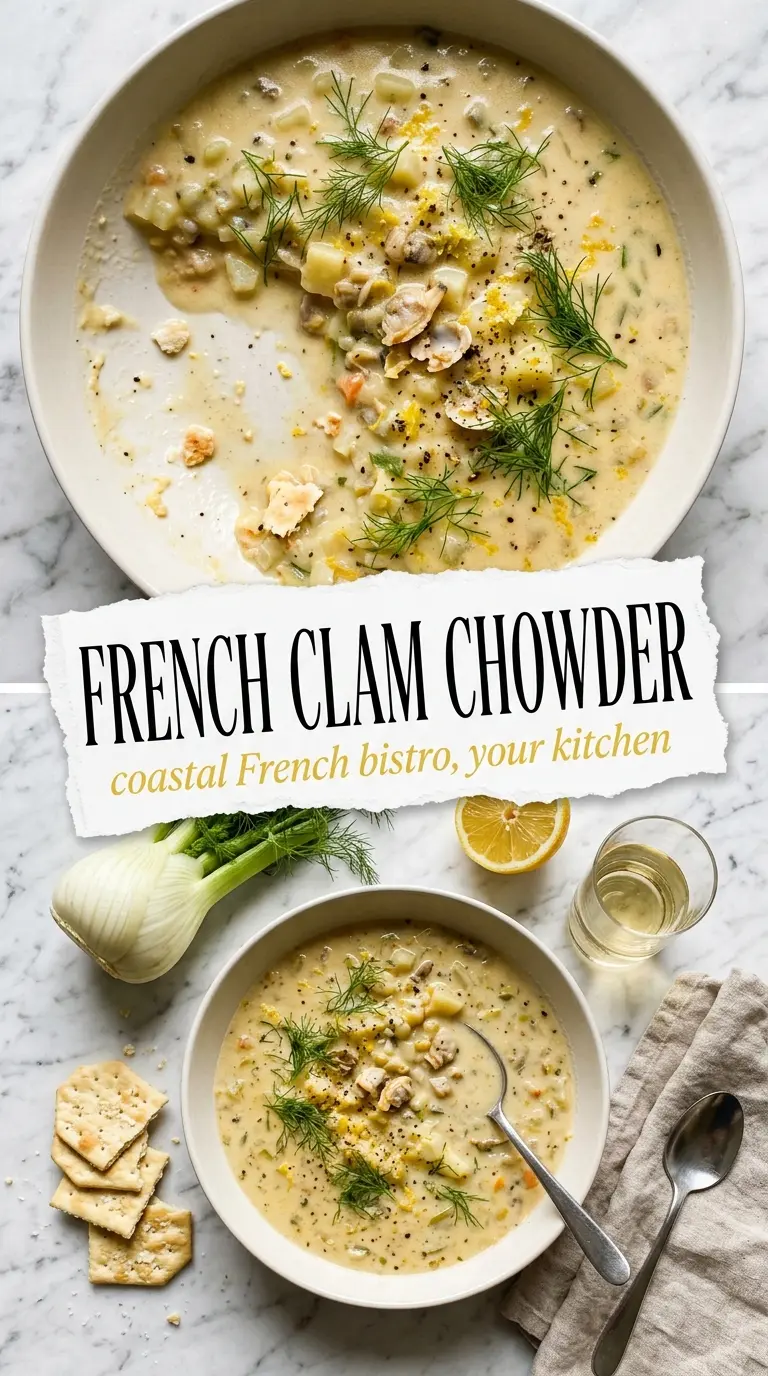
- Chopped clams and their juice — The juice gives you the briny backbone that plain stock can’t fake. Canned clams are fine here, as long as you add the clams near the end so they stay tender.
- Pancetta — This is the savory base note. Bacon works if that’s what you have, but pancetta is a little cleaner and less smoky, which lets the fennel and vermouth come through.
- Leek and fennel — This is the signature move. Leeks melt into sweetness while fennel adds that soft herbal edge that makes the chowder taste more coastal and less diner-style.
- Crème fraîche — This is where the finish gets its polish. It’s tangier and more stable than heavy cream, so the soup tastes richer without losing brightness. Sour cream is the closest swap, but it’s sharper and can look slightly less smooth if you boil it.
- Dry vermouth — It deglazes the pan and pulls the browned bits into the broth. Dry white wine works too, but vermouth adds a lightly herbal note that fits the fennel.
- Yukon gold potatoes — They hold their shape and give the chowder a creamy body without disintegrating. Russets will thicken the soup more, but they can make it grainier if you simmer too long.
- Tarragon and lemon zest — Both are small additions that matter. Tarragon and fennel echo each other, and lemon zest wakes up the whole pot at the end so the chowder doesn’t taste flat.
Building the Base Without Breaking the Dairy
Rendering the Pancetta and Softening the Aromatics
Start the pancetta in a cold pot and let it render slowly until the fat is crisp and the bits are browned at the edges. That fat becomes the cooking medium for the leeks and fennel, so don’t rush it. When the vegetables go in, they should soften and turn glossy, not brown hard. If the pot looks dry, the pancetta didn’t render long enough; give it another minute before adding the vegetables.
Deglazing and Thickening at the Right Moment
Once the vegetables are soft, pour in the vermouth and scrape up every brown bit from the bottom. That layer carries most of the flavor. Sprinkle in the flour and cook it briefly with the fat and vegetables before adding the broth and clam juice. This is what keeps the finished soup from tasting chalky. If you dump the liquid in before the flour has a chance to coat the vegetables, you’ll get tiny raw-flour clumps that never fully disappear.
Simmering the Potatoes Until They’re Tender, Not Falling Apart
Add the potatoes and keep the simmer steady, not aggressive. You want small bubbles around the edges and a broth that looks slightly fuller as the starch releases. The potatoes should yield cleanly when pierced with a knife but still hold their shape in the spoon. If they start breaking down before the clock is up, the heat is too high.
Finishing with Clams, Crème Fraîche, and Herbs
Lower the heat before you stir in the crème fraîche. It should melt into the broth smoothly and leave the soup looking pale and silky. Add the clams and tarragon after that, then warm everything just until the clams are hot. Finish with lemon zest right before serving. That last hit of citrus is what keeps the chowder from tasting heavy after a few spoonfuls.
Three Ways to Adapt This Chowder Without Losing Its Character
Dairy-Free Version That Still Tastes Creamy
Use full-fat coconut milk or an unsweetened cashew cream in place of the crème fraîche. Coconut milk gives you body, but it shifts the flavor, so cashew cream is the better fit if you want to keep the chowder tasting close to the original. Add a small splash of lemon at the end to replace the tang you lose from crème fraîche.
Gluten-Free Thickening
Swap the flour for a cornstarch slurry added near the end, after the potatoes are tender. That keeps the chowder from tasting floury, but the texture will be a little glossier and less velvety than the original. Start with less than you think you need and let it simmer for a minute before deciding whether to add more.
Make It Heavier on the Vegetables
Add diced celery with the leeks and fennel, or stir in a handful of sweet corn near the end for a more substantial bowl. Celery makes the base more classic; corn pushes it toward a sweeter chowder. Either way, keep the clams as the last addition so they stay tender and the broth still tastes clean.
Storage and Reheating
- Refrigerator: Store for up to 3 days. The potatoes will absorb a little liquid, so the chowder gets thicker overnight.
- Freezer: Freezing isn’t ideal because the dairy can turn grainy and the potatoes can go mealy. If you need to freeze it, do it before adding the crème fraîche and clams, then finish those after reheating.
- Reheating: Warm it slowly over low heat and stir often. A hard boil is the fastest way to break the dairy and toughen the clams. Add a splash of broth or water if it looks too thick.
Answers to the Questions Worth Asking
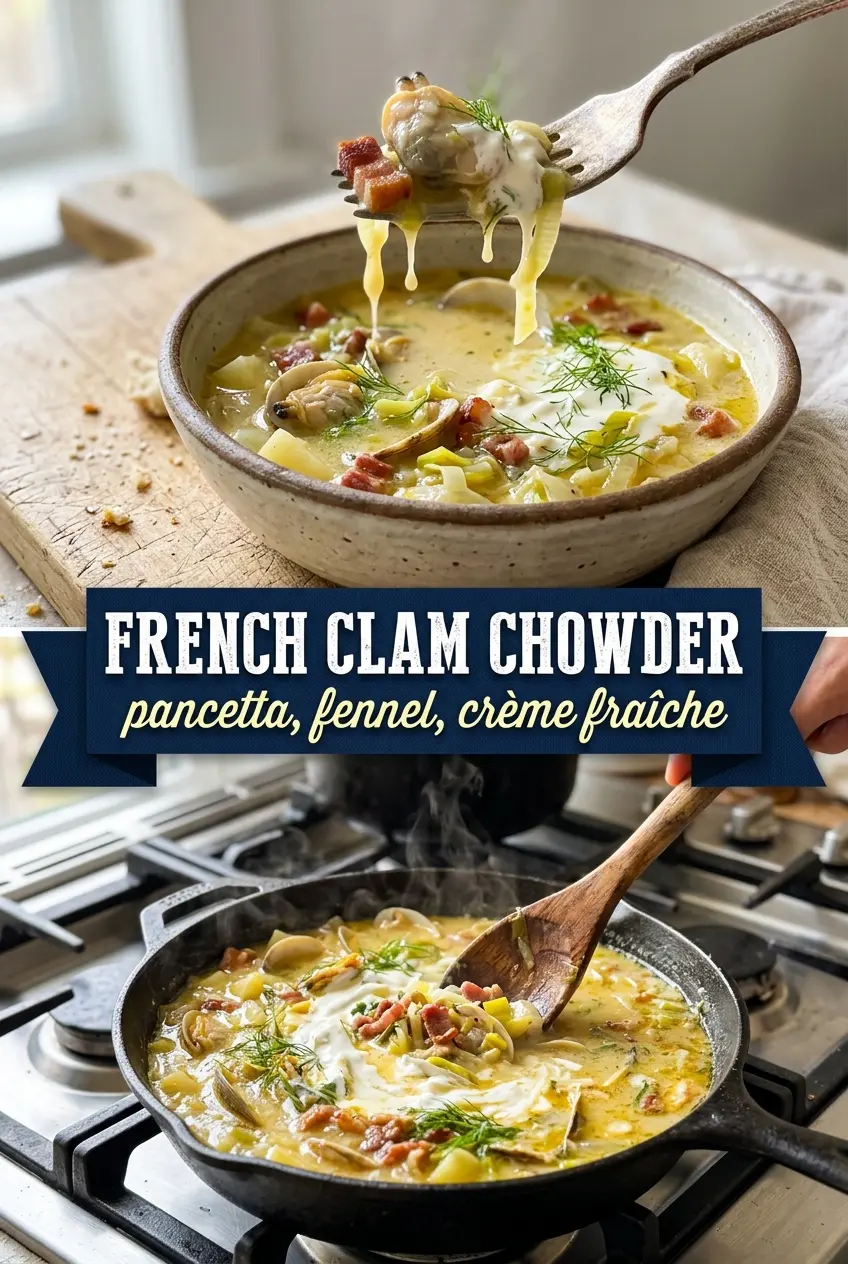
Clam Chowder Recipe
Ingredients
Equipment
Method
- In a Dutch oven, render diced pancetta over medium heat until crispy, about 6-8 minutes, until the fat is mostly rendered and the bits are browned (visual cue: crisp edges).
- Add the sliced leek and fennel and sauté over medium heat until soft, about 8-10 minutes, stirring occasionally so the ribbons wilt and turn glossy (visual cue: vegetables look translucent and tender).
- Pour in the dry vermouth and deglaze, scraping the browned bits from the bottom of the Dutch oven, about 2 minutes, until the liquid reduces slightly (visual cue: steam and a glossy pan bottom).
- Stir in the garlic and cook for 30-45 seconds until fragrant (visual cue: garlic aroma turns sharp and sweet).
- Sprinkle in the flour and whisk into the butter/juices for 1 minute until it looks smooth and lightly thickened (visual cue: no dry flour remains).
- Slowly add the vegetable broth + clam juice and the diced Yukon gold potatoes, then stir until combined and evenly colored (visual cue: broth turns cloudy and potatoes are coated).
- Simmer until the potatoes are tender, about 15 minutes, keeping the surface at a gentle bubble (visual cue: potato cubes yield when pressed).
- Reduce heat to low and stir in crème fraîche, heating gently for 2-3 minutes without boiling (visual cue: creamy sheen forms and steam stays mild).
- Stir in the chopped clams + juice and fresh tarragon, then heat gently for 3-5 minutes until warmed through (visual cue: clams turn opaque).
- Turn off the heat and finish with lemon zest, then stir once to distribute (visual cue: bright flecks across the surface).
- Ladle into bowls and serve immediately with oyster crackers and fennel fronds for garnish (visual cue: crackers on top or alongside, with visible fronds).