
Golden-skinned chicken thighs and accordion-fanned baby potatoes land in the same pan, then get bathed in a Dijon cream sauce that turns sharp, silky, and deeply savory all at once. The potatoes keep their crisp edges while the cut layers drink in the sauce, so every bite gives you crunch, cream, and a little mustard bite instead of the usual one-note chicken dinner.
The details matter here. Hasselback potatoes need time in the oven before the sauce goes in, so the slices open up and brown instead of collapsing into mush. The chicken skin gets its best color when it starts in a dry, cold pan, which sounds backward until you see how steadily the fat renders and how evenly the skin browns. That same pan builds the sauce, so nothing good gets wiped away.
Below, I’ll walk through the part that keeps the sauce smooth, the best way to tuck the potatoes back into the pan, and a few swaps that still keep the dish feeling special.
The potatoes turned out crisp on the edges but stayed tender after they went back into the sauce, and the Dijon cream never broke. My husband kept spooning extra sauce over everything.
Save these Dijon cream chicken thighs and Hasselback potatoes for the night you want a skillet dinner with crisp edges and a sauce that tastes like it took all evening.
The Reason the Potatoes Stay Crisp After Going Back Into the Sauce
The biggest mistake with a dish like this is rushing the potatoes into the sauce before they’ve opened up and browned. Hasselback cuts create more surface area, but they also need time for the edges to dry out and crisp before they can handle liquid. If you add them too soon, they taste steamed in the middle and the whole point of the cut is lost.
The other thing that matters is the order of the sauce. White wine goes in first to loosen the browned bits from the pan, then broth gives the sauce some structure before the cream softens it. If the cream goes in too early, you don’t get the same depth, and the sauce can taste flat instead of rounded and savory.
- Pat the chicken dry — wet skin won’t brown cleanly, and the first sear is what gives the dish its flavor base.
- Cut the potatoes evenly — the thinner the slices, the better they fan, but they still need enough thickness to hold their shape.
- Keep the roast hot — 425°F is doing two jobs at once: crisping the potatoes and finishing the chicken without drying it out.
What the Dijon, Cream, and Wine Are Each Doing Here

- Bone-in, skin-on chicken thighs — thighs stay juicy during the roast and the skin renders into the sauce base. Breasts can work, but they cook faster and don’t give you the same richness.
- Baby potatoes — their size keeps the cut edges tidy, and their starch helps them hold onto the sauce. If you use larger potatoes, cut them into smaller, even pieces before Hasselbacking them.
- Heavy cream — this is what gives the sauce its body and sheen. Half-and-half can work in a pinch, but the sauce will be thinner and less stable.
- Smooth Dijon — the mustard sharpens the cream and keeps the sauce from tasting heavy. Grainy mustard brings more texture, but smooth Dijon blends into the pan most cleanly.
- White wine — it pulls flavor off the pan and adds brightness that broth alone can’t give. If you don’t cook with wine, use extra broth plus a small splash of lemon juice at the end.
- Fresh tarragon, chives, and lemon zest — these finish the dish with lift. Tarragon is especially good with mustard and cream, but parsley can step in if that’s what you have.
Building the Sauce in the Same Pan Without Breaking It
Roasting the Potatoes First
Toss the Hasselback potatoes with olive oil, paprika, salt, and pepper, then roast them until the slices begin to separate and the edges take on color. That first roast is where the texture gets built, and it’s the reason the potatoes keep their shape once the sauce goes in. If the slices still look tight and pale, they need more time before they’re ready for the liquid.
Getting the Chicken Skin Crisp
Season the chicken and start it skin-side down in a dry, cold oven-safe skillet. As the pan heats, the fat renders slowly and the skin turns deeply golden instead of scorching in spots. If you drop the chicken into a hot pan, the skin can seize and stick before it has a chance to release naturally.
Making the Dijon Cream Sauce
Once the chicken is browned, pull it out briefly and deglaze the pan with white wine, scraping up every browned bit from the bottom. Add the broth, cream, Dijon, and garlic, then stir until the sauce looks smooth and slightly thickened. Keep the heat moderate; if the cream boils hard, the sauce can split or turn grainy.
Finishing in the Oven
Return the potatoes and chicken to the skillet and roast until the chicken reaches temperature and the potatoes are tender all the way through. The sauce will tighten a little in the oven and cling better to the cut layers. Finish with tarragon, chives, and lemon zest right before serving so the herbs stay fresh and the sauce doesn’t lose its brightness.
Three Ways to Change It Without Losing the Point
Dairy-Free Version
Use full-fat coconut cream or an unsweetened dairy-free cooking cream in place of the heavy cream. The sauce won’t taste exactly the same, but it will still be rich enough to coat the potatoes and chicken. Keep the Dijon and wine, since that sharpness helps cover the flavor gap from skipping the dairy.
Gluten-Free as Written
This dish is naturally gluten-free as long as your broth and Dijon are certified gluten-free. The technique doesn’t need any flour to thicken, because the cream and reduced broth do the work on their own. That means the sauce stays silky without any extra starch.
No Wine, Still Good
Swap the white wine for extra chicken broth and add a small squeeze of lemon after the sauce comes off the heat. You lose a little of the sharp edge that wine gives the pan, so the lemon is there to wake the sauce back up. It won’t be identical, but it stays balanced.
Using Boneless Chicken Thighs
Boneless thighs work if that’s what you have, but they cook faster and won’t give you the same pan richness from the skin. Sear them briefly, then shorten the oven time and check early so they stay juicy. The dish will still taste great, just a little less layered.
Storage and Reheating
- Refrigerator: Store leftovers in an airtight container for up to 3 days. The potatoes soften a bit, but the sauce helps keep everything from drying out.
- Freezer: I don’t recommend freezing this one. Cream sauces can separate, and the potatoes turn grainy after thawing.
- Reheating: Warm gently in a covered skillet over low heat with a splash of broth or cream. High heat is the mistake here — it tightens the sauce and can make the chicken tough before the center is hot.
Answers to the Questions Worth Asking
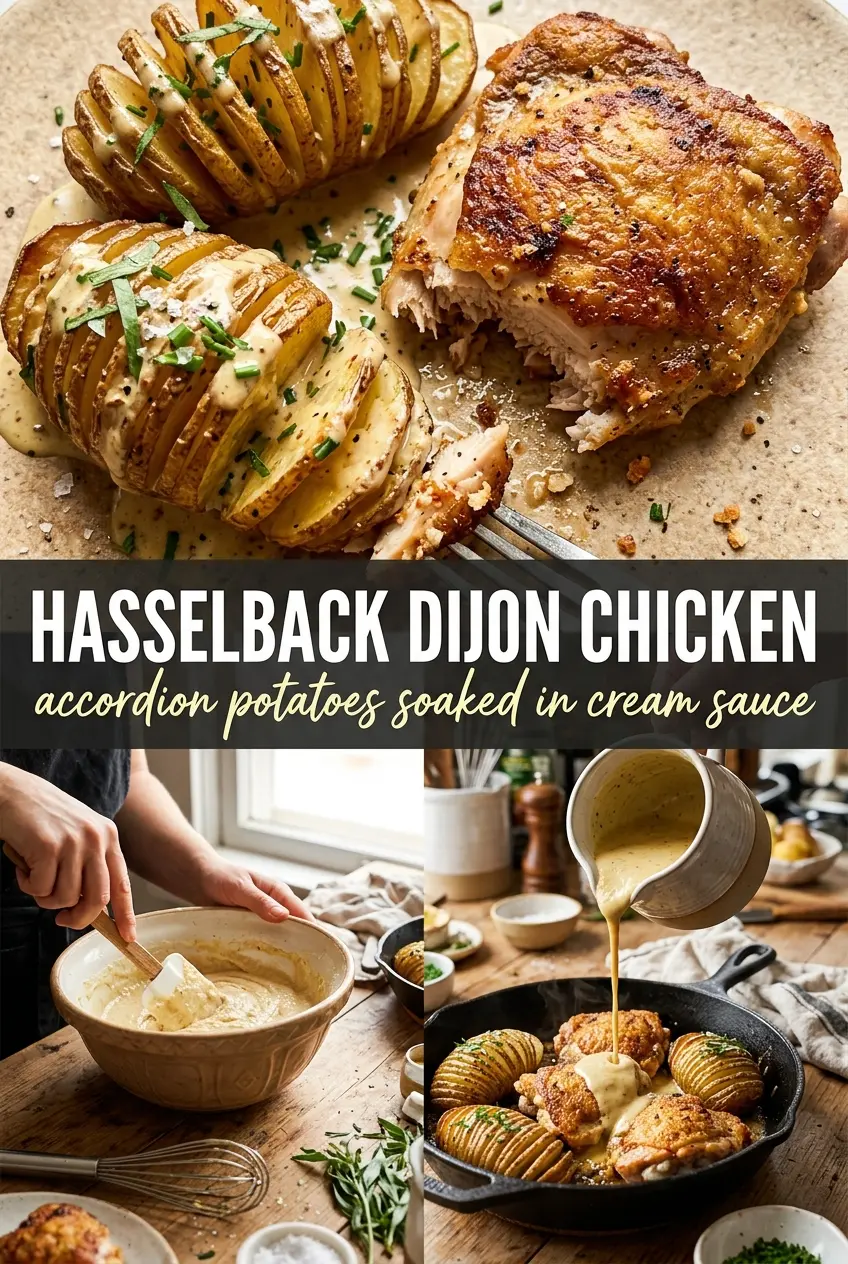
Chicken And Potatoes With Dijon Cream Sauce
Ingredients
Equipment
Method
- Heat oven to 425°F. Slice the baby potatoes into thin Hasselback slits without cutting through the bottom.
- Toss the Hasselback potatoes with olive oil, smoked paprika, salt, and black pepper until every fan layer is coated.
- Spread potatoes on a sheet pan cut-side up. Roast at 425°F for 30 min until the potatoes fan open and the edges are crisp.
- Season the chicken thighs with salt and black pepper. Place them skin-side down in a DRY cold cast iron skillet.
- Sear in the skillet until the skin is golden, then flip and proceed in the same skillet to finish later. Keep the rendered fat in the pan.
- In the same skillet, deglaze with white wine, scraping up browned bits from the bottom. Stir until the wine is slightly reduced, about 2-3 min at a steady simmer.
- Add chicken broth and heavy cream to the skillet, then whisk in smooth Dijon and minced garlic. Simmer 3-4 min until the sauce thickens slightly.
- Add the roasted potatoes and the chicken to the Dijon sauce, turning potatoes so they sit in sauce. Roast at 425°F for 20 min more until chicken is cooked through.
- Remove from the oven and finish with fresh tarragon, chives, and lemon zest. Spoon extra Dijon cream sauce over the potatoes before serving.