
Garlic bread grilled cheese hits that sweet spot between comfort food and straight-up indulgence: crisp, buttery bread on the outside, a molten center that stretches when you pull it apart, and enough garlic to taste like dinner matters. The best versions don’t stop at one cheese. They use a cheese that melts into those long, satisfying strings and another that brings real flavor, so the sandwich tastes as good as it looks.
The garlic butter does the heavy lifting here, and it works because it goes on the outside of the bread instead of inside the sandwich. That keeps the crust deeply golden and crisp while the cheese melts gently in the middle. Aged white cheddar brings sharpness, American cheese brings the smooth melt, and caramelized onions add just enough sweetness to keep the whole thing from feeling one-note. Grill it over medium-low heat and you’ll get a dark, even crust before the bread burns and the cheese is still stubborn in the middle.
Below you’ll find the small details that make this sandwich work every time, plus the best way to handle the heat if your bread tends to brown too fast.
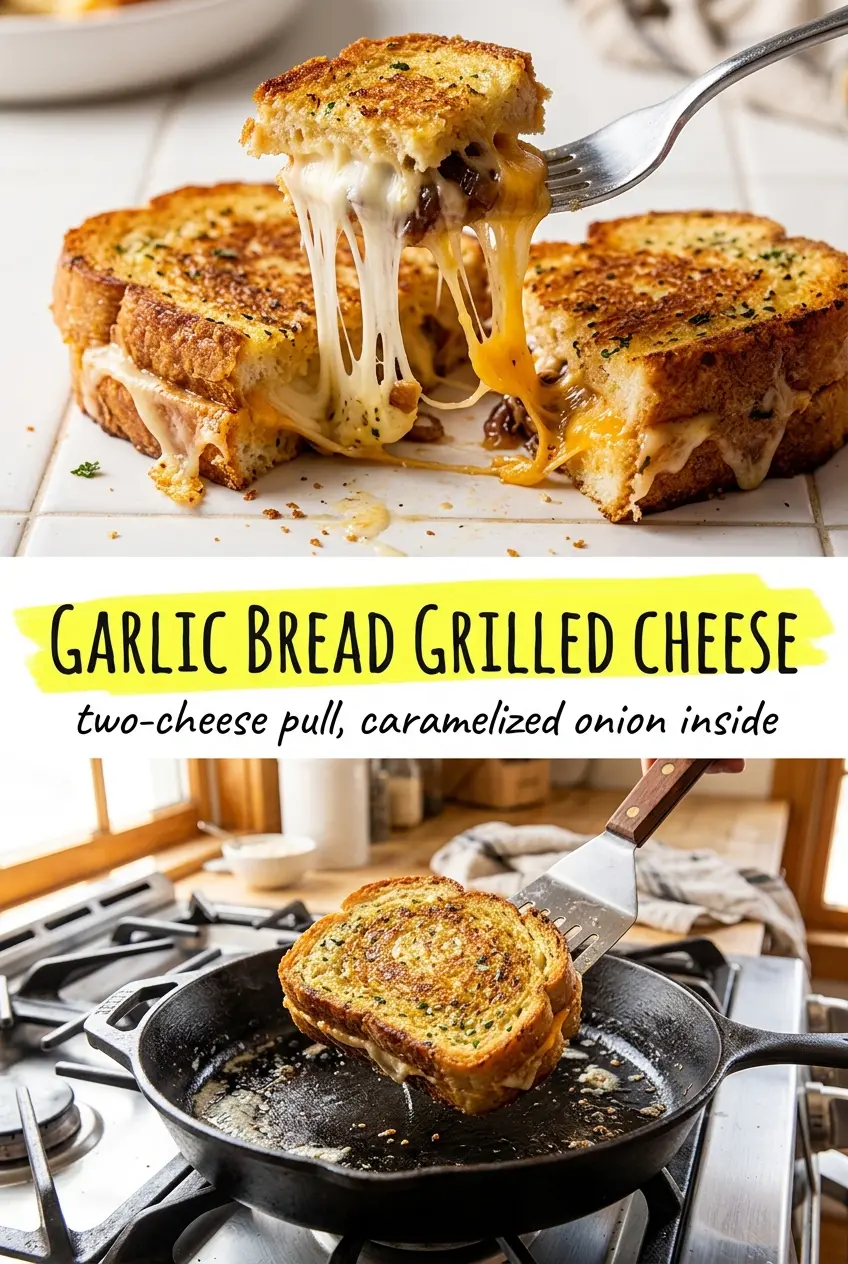
The sandwich browned up evenly and the American cheese gave me those long, gooey pulls without the filling leaking out. The caramelized onions made it taste like something from a diner, and the tomato soup was the perfect match.
Save this garlic bread grilled cheese for the night you want a shatter-crisp crust, a stretchy cheese pull, and a bowl of tomato soup beside it.
The Sandwich Fails When the Heat Is Too High
Grilled cheese is one of those meals that looks simple until the bread is dark before the center has a chance to melt. That’s the main trap here. Garlic butter browns fast because of the milk solids in the butter and the minced garlic, so medium-low heat gives you control. You want a slow, steady sizzle, not an aggressive fry.
The other mistake is treating this like a plain grilled cheese and loading it with only sharp cheese. Aged cheddar tastes great, but it doesn’t melt as smoothly on its own. The American cheese keeps the filling creamy and elastic, which is what gives you those long strands when you cut into the sandwich. The onions matter too, but only if they’re truly caramelized. Pale, undercooked onions taste sharp and watery here.
What Each Ingredient Is Doing in This Sandwich
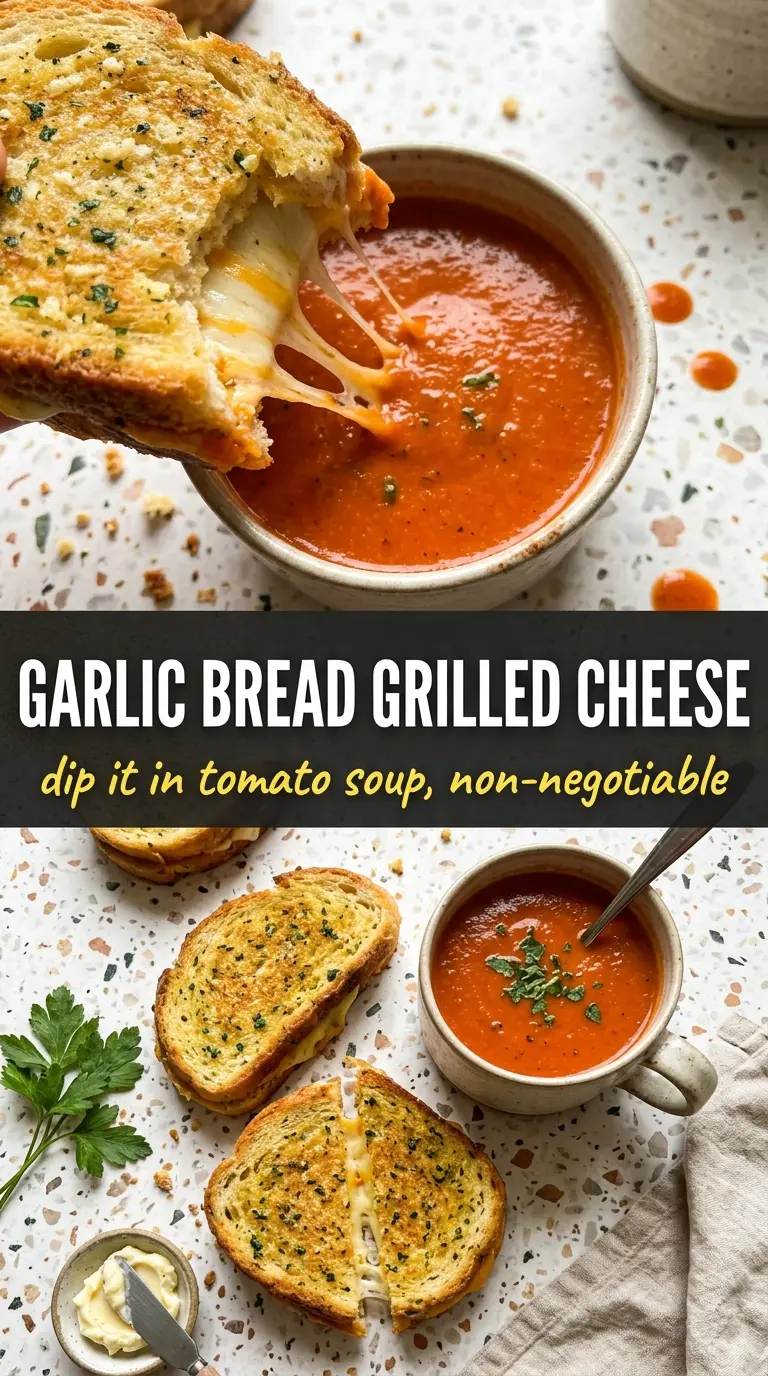
- Texas toast or thick white bread — The thickness helps the sandwich hold up to the garlic butter and the weight of the filling. Thin sandwich bread works, but it softens faster and is easier to tear when you flip it.
- Softened butter — Soft butter spreads in an even layer, which means the bread browns evenly instead of spotting in patches. Melted butter tends to soak in too fast and can leave you with greasy spots.
- Fresh garlic and garlic powder — The fresh garlic gives you the sharp, savory bite you want in garlic bread, while garlic powder rounds it out so the flavor doesn’t disappear once the bread hits the pan. If you only use fresh garlic, some pieces can taste harsh and some can burn.
- Fresh parsley — This doesn’t make the sandwich taste herby in a grassy way. It lightens the butter and keeps the garlic from reading heavy.
- Aged white cheddar — This is the flavor cheese. It brings the tang and depth you’d miss if you used only a mild melt. If you swap it, choose another good melting cheddar or Gruyère-style cheese with some personality.
- American cheese — This is what gives the filling that smooth, stretchy melt. One slice is enough per sandwich, and it does a job sharper cheeses can’t do on their own.
- Caramelized onions — These add sweetness and a jammy texture that plays against the salty cheese. They need to be cooked down until soft and browned; raw onions won’t blend into the sandwich the same way.
The Short Window That Gives You the Best Melt
Build the Garlic Butter First
Mix the softened butter, minced garlic, parsley, and garlic powder until the garlic is spread through the butter instead of clumped in one spot. That even distribution matters because any big pocket of garlic will scorch in the pan. Spread the butter on the outside faces of the bread, edge to edge, so the crust browns evenly all the way across. If the butter is too cold, it tears the bread; if it’s melted, it slides around instead of coating.
Stack the Cheese for Texture and Melt
Layer the cheese on the inside of two bread slices, then add the caramelized onions before topping with the remaining bread. The order matters because the cheese helps anchor the onions, and the onions stay tucked in instead of slipping out when you flip the sandwich. Keep the American cheese near the center of the stack so it melts into the middle first. If you pile the filling too high, the sandwich will brown before the heat gets to the center.
Grill Low and Let the Pan Work Slowly
Set the sandwich in a skillet over medium-low heat and give it about 4 minutes per side, pressing gently with a spatula. You’re listening for a steady sizzle and watching for a deep golden crust, not a fast, aggressive browning. If the bread darkens too quickly, lower the heat right away; a sandwich this thick needs time more than intensity. The cheese is ready when the sides feel soft and you can see a little melt starting to ooze at the seam.
Cut and Serve While the Cheese Is Stretching
Let the sandwich sit for a minute after it comes off the pan, then slice it diagonally. That short rest keeps the cheese from flooding out the moment the knife goes through. Serve it with warm tomato soup, because the acidity cuts through the butter and cheese and makes each bite taste less heavy. If you wait too long to cut it, the cheese firms up and you lose that dramatic pull.
Three Ways to Adjust It Without Losing What Makes It Good
Dairy-Free Version
Use a sturdy dairy-free butter and a melt-friendly plant-based cheese slice. You’ll lose some of the sharpness and stretch that real cheddar and American cheese give you, so add a pinch more garlic powder and a little extra salt if needed. The texture still works if the cheese you choose is designed to melt instead of stay firm.
Gluten-Free Version
Use a gluten-free sandwich bread that’s thick enough to hold up in the skillet. Many gluten-free breads brown faster and can dry out at the edges, so keep the heat a little lower and don’t rush the flip. The filling doesn’t need to change.
Extra-Savory Upgrade
Add a thin layer of mustard inside the sandwich or a few chopped pickled jalapeños with the onions. The mustard sharpens the cheese without changing the texture much, while the jalapeños bring acidity and heat. Keep the amount small so the sandwich still tastes like garlic bread first.
Storage and Reheating
- Refrigerator: Store leftovers in an airtight container for up to 2 days. The bread softens a bit, but it still reheats well.
- Freezer: I don’t recommend freezing it after cooking. The bread loses its crispness and the cheese can turn grainy when thawed.
- Reheating: Warm it in a skillet over low heat or in a toaster oven until the outside crisps back up and the center is hot. The common mistake is using the microwave, which makes the bread limp and the filling rubbery.
Questions I Get Asked About This Recipe
Garlic Bread Grilled Cheese
Ingredients
Equipment
Method
- Mix butter, minced garlic, chopped parsley, and garlic powder until smooth and spreadable.
- Spread the garlic butter on the outside of all bread slices.
- Layer aged cheddar, American cheese, and caramelized onions on the inside of 2 bread slices, then top with the remaining slices.
- Cook in a pan over medium-low heat for 4 min per side, pressing gently, until deeply golden.
- Let the sandwiches rest briefly so the American cheese finishes melting into strings and the aged cheddar flavor sets.
- Slice diagonally and serve immediately with warm tomato soup for dipping.