
Flower potatoes come out of the oven looking like something far fancier than a side dish, but the real payoff is the texture: crisp, bronzed edges on every thin petal and a center that stays soft and steamy. The first bite gives you that sharp little crackle from the tips, then the rich, savory middle. They disappear fast, which is exactly what a good potato dish should do.
What makes this version work is the combination of a thin, careful cut and a hot oven. Slicing the potatoes almost all the way through lets them fan open like little blooms, and brushing fat between the layers gives each slice a chance to brown instead of steam. Duck fat is the best choice here because it carries heat well and helps the petals turn deeply golden, but clarified butter will still give you excellent crisping if that’s what you have.
Below, I’ve included the part that matters most: how to keep the slices open, why the oven needs to stay hot, and what to serve with them so the garlic aioli tastes as good as the potatoes look.
The potato petals got crisp all the way down the sides, and the garlic aioli was the perfect match. I brushed the fat halfway through like you said and they came out golden instead of dry.
Save these crispy flower potatoes for the night you want a side dish that looks dramatic and bakes up with deep-amber edges.
The Cut That Keeps the Potatoes Blooming Instead of Collapsing
The whole trick here is stopping the knife before it reaches the bottom. If you cut straight through, the slices fall apart in the oven and you lose the flower shape before the potatoes ever brown. Leave a thin base intact, and the slices stay attached while they open into neat little layers as the heat works through them.
Thin slices matter more than perfect symmetry. The thinner the petals, the more surface area you give the fat and seasoning to cling to, which means more crisp edges and less pale potato hiding in the middle. If one or two potatoes are a little uneven, they still roast fine as long as the base holds together.
- Duck fat gives the deepest color and the most shatteringly crisp edges. It’s worth using if you can get it.
- Clarified butter is the next best choice because it handles the oven heat without burning as quickly as regular butter.
- Regular butter works, but it browns faster and can scorch on the tray, so watch the color closely if that’s what you use.
- Fresh herbs matter here. Dried thyme and rosemary can work in a pinch, but the flavor won’t land as cleanly between the slices.
What Each Layer Is Doing While the Potatoes Roast
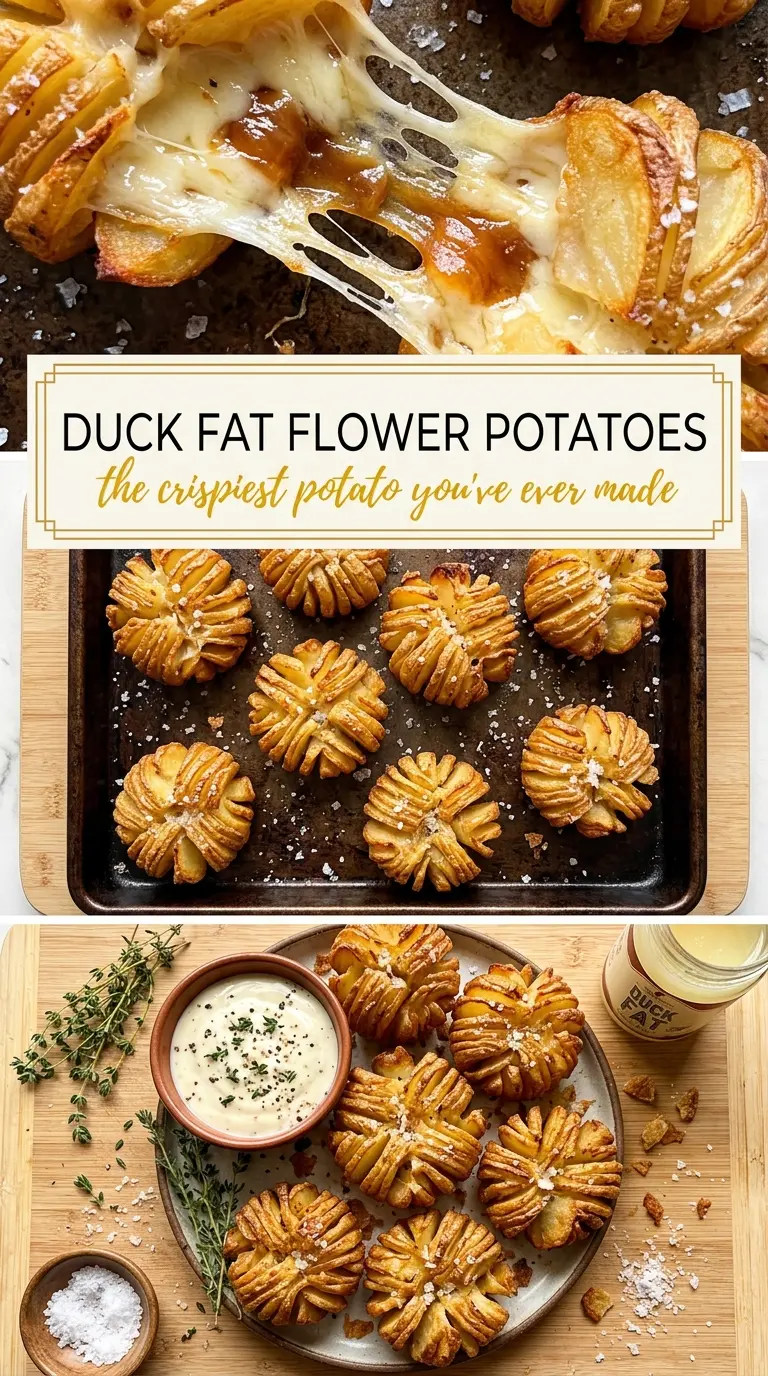
- Baby potatoes hold their shape better than larger russets and give you tighter, prettier blooms. Pick potatoes that are close in size so they cook at the same pace.
- Duck fat or clarified butter slips between the slices and helps them fry in place while they roast. That coating is what keeps the petals from drying out before they color.
- Garlic, thyme, rosemary, and smoked paprika build the savory crust. The paprika adds warmth and a hint of color without making the potatoes taste smoky in an obvious way.
- Aioli matters because the potatoes are rich and crisp. The lemon and Dijon cut through the fat and keep each bite from feeling heavy.
How to Roast the Petals Until They Turn Deep Gold
Building the Bloom
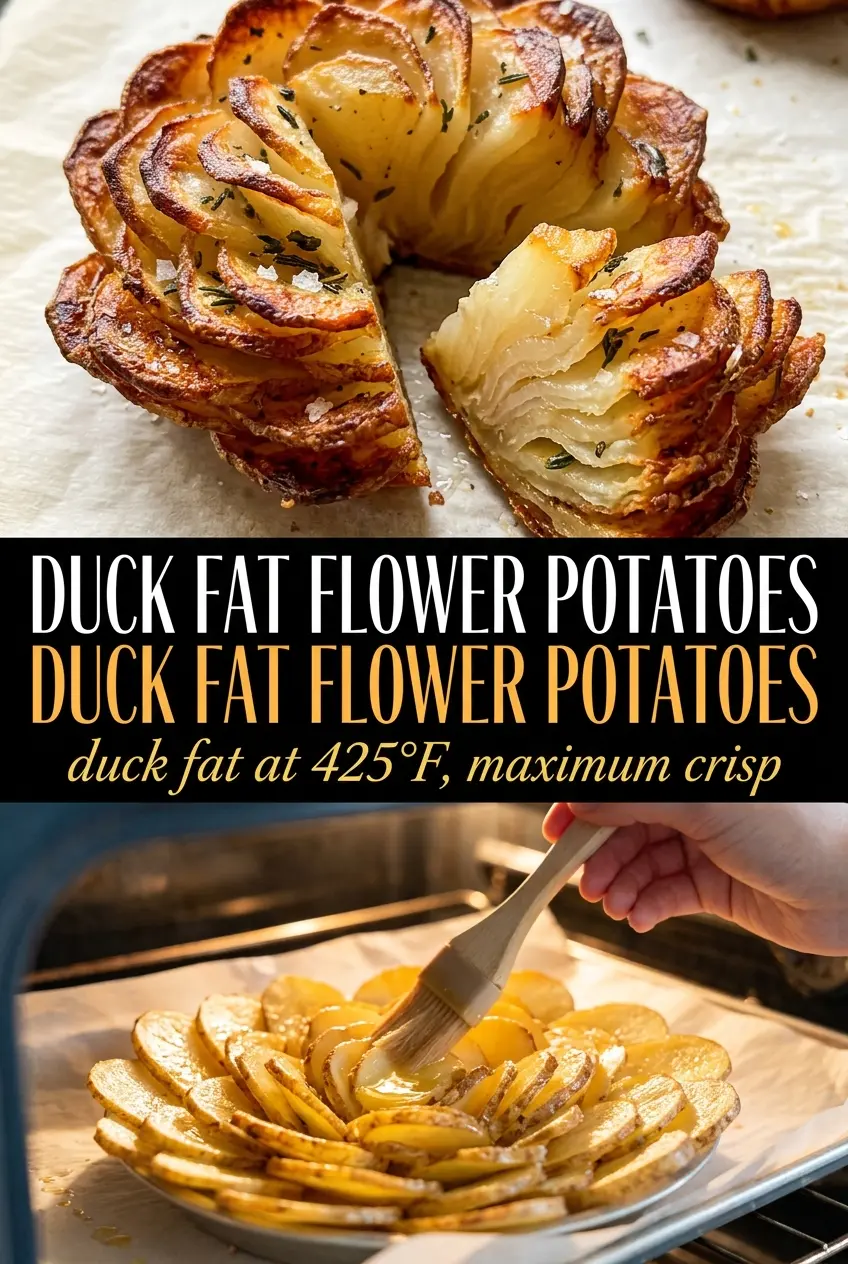
Set each potato on a cutting board and slice it thinly, stopping about a quarter inch from the bottom. A pair of chopsticks or wooden spoons on either side of the potato helps prevent an accidental cut all the way through. Fan the slices gently with your fingers once they’re cut so the layers separate a little before they hit the oven.
Coating Between the Slices
Brush the fat over the top and work it down between the petals as much as you can. This part takes a minute, but it’s what turns the edges crisp instead of leathery. Add the garlic, herbs, paprika, salt, and pepper after the fat so they cling to the potatoes instead of falling straight onto the pan.
Roasting for Color, Not Just Tenderness
Roast at 425°F on a lined sheet pan. Lower heat gives you soft potatoes, but it won’t give you those amber, crackly tips. Halfway through, brush on a little more fat and rotate the pan if your oven runs uneven, then keep roasting until the petals are deeply golden and the centers give easily when pierced.
Finishing for Maximum Crunch
Pull the potatoes when the edges look bronzed and the bottoms have a little color too. A shower of flaky salt right after they come out wakes up the flavor and sharpens the contrast between the crisp exterior and the fluffy center. Serve them warm with the garlic aioli while the petals are still at their best.
Three Useful Ways to Adapt These Flower Potatoes
Dairy-Free Version With the Same Crispy Edges
Use duck fat instead of butter and swap the aioli for a dairy-free mayo-based dip. You still get the same layered crunch, and the result tastes a little richer and cleaner because duck fat doesn’t have the milk solids that can brown too fast.
If You Only Have Butter
Regular butter works best if you brush on a thinner coat and keep an eye on the last 10 minutes of roasting. It gives the potatoes a softer, more buttery flavor, but the color can go from golden to too dark faster, so line the pan and check the bottoms as they roast.
A Faster Weeknight Version
Cut the potatoes a little smaller and use uniform baby potatoes so they finish closer to the 50-minute mark. The shape won’t be quite as dramatic, but you’ll still get the same crisp petal edges and an easier path to a side dish that looks special without extra work.
Gluten-Free by Default
These flower potatoes are naturally gluten-free as written. Just check your Dijon and mayonnaise labels if you’re serving someone with celiac disease, since some brands use additives or shared equipment that matter for strict gluten-free cooking.
Storage and Reheating
- Refrigerator: Store leftovers in an airtight container for up to 3 days. The petals soften as they sit, but they still reheat well.
- Freezer: I don’t recommend freezing these. The sliced layers lose their texture and turn a little mealy after thawing.
- Reheating: Warm them on a sheet pan in a 400°F oven or air fryer until the edges crisp back up. The biggest mistake is microwaving them, which turns the petals limp before the center warms through.
Answers to the Questions Worth Asking
Flower Potatoes
Ingredients
Equipment
Method
- Preheat the oven to 425°F and line a sheet pan so the potatoes roast hot from the start.
- Slice each baby potato thin without cutting through the base, then fan it into a bloom shape.
- Brush duck fat between every slice, letting it run into the gaps for crisp, lacquered edges.
- Season the fanned potatoes with minced garlic, thyme, rosemary, smoked paprika, flaky sea salt, and cracked black pepper so each petal is coated.
- Roast the potatoes for 50–60 minutes, until each petal is deeply golden and crispy.
- Re-brush with duck fat halfway through roasting so the petal tips brown evenly and stay shatter-crisp.
- Finish with flaky sea salt at the end for extra crunch and serve immediately.
- Mix mayo with minced garlic, lemon juice, Dijon, and salt until smooth, then set aside for dipping.
- Serve the hot flower potatoes with garlic aioli for dipping while the petals are crisp.