
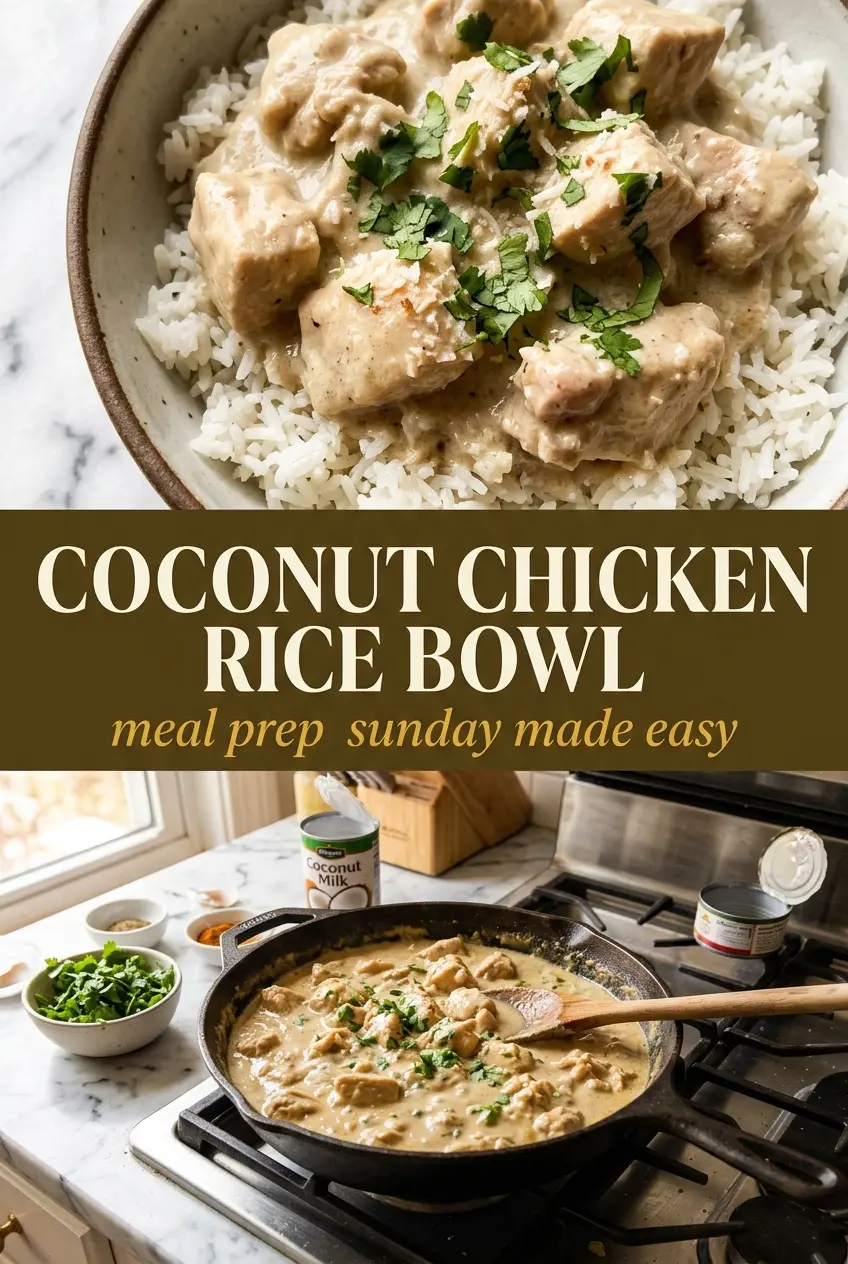
Tender chicken, creamy coconut sauce, and fluffy rice make this bowl the kind of dinner that disappears fast and still feels steady enough to repeat all week. The sauce coats every grain instead of pooling at the bottom of the bowl, and the curry powder gives it enough warmth to keep the coconut milk from tasting flat or heavy. Fresh cilantro at the end lifts everything back up.
What makes this version work is the order of the cooking. The chicken gets browned first so the pan starts with real flavor, then the garlic, ginger, and curry powder bloom in the leftover fat before the coconut milk goes in. That short step matters. If the spices go straight into liquid, they taste dull instead of round and fragrant.
Below, I’m walking through the small things that keep the sauce silky and the chicken juicy, plus the best way to portion this for lunches without ending up with dry rice or broken sauce on day three.
The sauce turned out silky and clung to the rice instead of separating, and the chicken thighs stayed tender even after reheating for lunch the next day.
Creamy coconut chicken rice bowls like this one are worth pinning for meal prep nights and quick leftovers that still taste fresh.
The Secret to Coconut Chicken That Stays Creamy, Not Greasy
Coconut milk can go two different ways in a skillet: glossy and cohesive, or separated and oily. The difference usually comes down to heat. If the pan is screaming hot when the coconut milk goes in, the fat can split before the sauce has a chance to settle into itself. Lower the heat once the spices are fragrant, then let the sauce simmer gently until it thickens around the chicken.
Chicken thighs matter here for more than just flavor. They hold onto their juices during a simmer, which means the sauce can reduce without turning the meat stringy. Breast meat works in a pinch, but it needs less time and a little more attention so it doesn’t dry out while the sauce finishes.
What Each Ingredient Is Actually Doing in This Dish

- Browned chicken: The first sear builds the savory base for the whole bowl. Pale chicken will still cook, but it won’t give you the same depth in the sauce.
- Coconut milk: Use full-fat coconut milk for the best texture. Light coconut milk works, but the sauce won’t cling as well and it can taste thin after reheating.
- Curry powder: This is the main seasoning, so use one you actually like. If yours is old and dusty, the dish will taste flat no matter how carefully you cook it.
- Ginger and garlic: Fresh is worth it here. Powdered versions won’t give you the same sharp, fragrant lift when the coconut milk comes in.
Building the Sauce in the Same Pan You Brown the Chicken
Get the Chicken Deeply Browned
Cook the diced chicken thighs in a hot skillet until the edges pick up good color and the pieces release easily from the pan. If the chicken steams instead of browns, the pan is too crowded or too cool. Pull the chicken out once it’s browned on the outside; it finishes in the sauce later, so it doesn’t need to be cooked through yet.
Bloom the Garlic, Ginger, and Curry Powder
Stir the garlic and ginger into the skillet for about a minute, just until they smell sharp and fragrant. Then add the curry powder and stir it through the fat in the pan before adding the coconut milk. That step wakes up the spice and keeps it from tasting raw or chalky in the finished sauce.
Simmer Until the Sauce Naps the Chicken
Return the chicken to the pan and pour in the coconut milk, then let it simmer at a low bubble for 10 to 12 minutes. You’re looking for a sauce that thickens enough to coat a spoon and cling to the chicken without turning paste-like. If it boils hard, the coconut milk can separate and the chicken can seize up instead of staying tender.
Finish Over Rice With Fresh Cilantro
Spoon the chicken and sauce over warm jasmine rice while the sauce is still loose enough to settle into the grains. A handful of chopped cilantro at the end gives the bowl a fresh edge that keeps the coconut from feeling heavy. If you’re using rice that’s been sitting around, sprinkle it with a little water and warm it before serving so it doesn’t stay dry under the sauce.
How to Adapt This for Different Diets and Busy Weeks
Dairy-Free by Default
This bowl already lands naturally in dairy-free territory as long as your curry powder doesn’t contain added milk powder. The coconut milk gives the sauce its body, so you don’t need any cream or butter to get that rich finish.
Lower-Carb Serving
Serve the chicken over cauliflower rice or shredded cabbage if you want to cut the carbs. The sauce is strong enough to carry those swaps, but cabbage will keep a firmer bite and cauliflower rice will absorb more of the coconut gravy.
Chicken Breast Instead of Thighs
Chicken breast works if that’s what you have, but cut it a little larger and keep a closer eye on the simmer. It dries out faster than thighs, so pull the pan from the heat as soon as the chicken is cooked through and the sauce has thickened.
Storage and Reheating
- Refrigerator: Store leftovers in an airtight container for up to 4 days. The sauce thickens as it chills, which actually helps it cling to the rice when you reheat it.
- Freezer: This freezes well for up to 2 months. Cool it completely first, then portion it into containers so the rice and chicken reheat more evenly.
- Reheating: Reheat gently in the microwave or in a covered skillet with a splash of water or coconut milk. Hard heat is the mistake here; it can dry out the chicken and make the coconut sauce look split.
Questions I Get Asked About This Coconut Chicken Rice Bowl
Coconut Chicken Rice Bowl
Ingredients
Equipment
Method
- Heat a cast iron skillet over medium-high heat and sear the diced chicken until browned, about 5–7 minutes total with occasional stirring and a clear golden surface.
- Transfer the browned chicken to a plate or bowl and set aside while you build the sauce, leaving any browned bits in the skillet.
- Add the minced garlic and grated ginger to the skillet and cook for 1 minute until fragrant, stirring so they don’t brown too much.
- Sprinkle in the curry powder and stir for 30 seconds, then pour in the coconut milk and scrape up browned bits for a smooth sauce.
- Return the chicken to the skillet and simmer on medium-low for 10–12 minutes, stirring occasionally, until the sauce thickens and the chicken is cooked through.
- Season with salt and pepper to taste, then simmer 1 minute more to meld the flavors.
- Spoon cooked jasmine rice into bowls and ladle the coconut curry chicken gravy over the top until the rice is coated.
- Garnish with chopped cilantro and serve hot, with visible creamy sauce clinging to the chicken.