
Chewy French toast cookies bring the cozy flavor of a diner breakfast into a soft, bakery-style cookie with crisp edges, a tender center, and a maple glaze that sets just enough to leave a glossy finish. The cinnamon comes through in every bite, but it doesn’t read like a snickerdoodle. It tastes like French toast in cookie form, especially once the glaze sinks into the warm top and the cookies cool into that perfect chewy middle.
The dough starts with a familiar butter-and-sugar base, but the texture depends on not overworking it once the flour goes in. That keeps the cookies soft instead of bready. Cinnamon is doing a lot of the heavy lifting here, so don’t treat it like background seasoning. The maple glaze matters too. It gives the cookies that unmistakable breakfast-table finish and keeps the flavor from leaning flat or overly sweet.
Below you’ll find the small details that make these cookies bake up chewy instead of cakey, plus the easiest way to get the glaze to set cleanly if you want a neat finish for serving or sharing.
The cinnamon flavor came through perfectly and the maple glaze set up just enough that the cookies stacked cleanly for brunch. I baked them for 12 minutes and they stayed soft for days.
These chewy French toast cookies with maple glaze are the ones to pin for a brunch bake that tastes like cinnamon toast and stays soft for days.
The Reason These Cookies Stay Chewy Instead of Bready
The difference between a soft, chewy cookie and one that eats like a muffin usually comes down to two things: how long you beat the butter mixture and how much you stir after the flour goes in. Cream the butter and sugars until fluffy, but stop as soon as the mixture lightens. That traps enough air for lift without turning the dough cakey.
Once the flour is added, mix only until the last streak disappears. Overmixing builds gluten, and gluten is what gives you a tougher, more bread-like cookie. These should spread just enough to set at the edges while staying tender in the center. Pull them when the edges are golden and the middle still looks slightly soft. They finish setting on the baking sheet.
What Each Ingredient Is Doing in This French Toast Cookie Dough
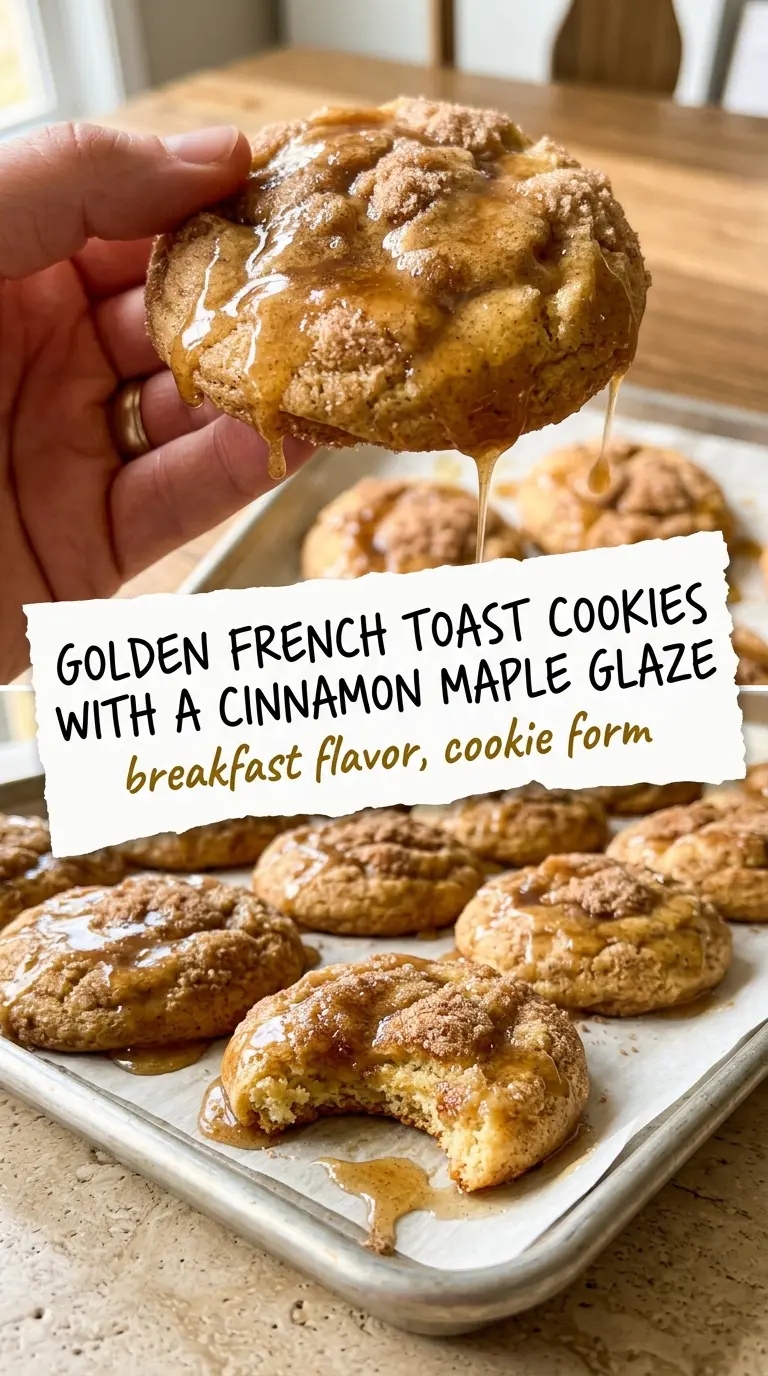
- Butter — Softened butter gives these cookies their tender, rich crumb. If it’s too warm, the dough spreads too fast, so aim for cool-room-temperature butter that still holds its shape when pressed.
- Brown sugar — This is what keeps the cookies chewy and adds a little molasses depth that plays nicely with the cinnamon. You can swap in more granulated sugar in a pinch, but the cookies will bake up drier and flatter.
- Granulated sugar — It helps the cookies spread and gives the edges a delicate crackle. Brown sugar does the heavy lifting for moisture, but the white sugar keeps the texture from feeling dense.
- Cinnamon — This is the French toast note. Don’t reduce it unless you want the cookies to taste more like plain sugar cookies with glaze.
- Powdered sugar and maple syrup — Together they make the glaze that seals in the breakfast flavor. Real maple syrup tastes warmer and cleaner here than pancake syrup, which can come off candy-sweet.
Getting the Dough Mixed, Baked, and Glazed Without Losing the Texture
Creaming the Butter and Sugars
Beat the softened butter with both sugars until the mixture looks pale and a little fluffy, about 2 to 3 minutes. You’re looking for a light texture, not whipped frosting. If the butter is greasy or melting around the bowl, the cookies will spread too much in the oven and lose that chewy center.
Bringing the Dough Together
Add the eggs and vanilla first, then mix in the flour, cinnamon, and baking soda just until the dough comes together. The dough should look thick and scoopable, not sticky and wet. If you keep mixing after the flour disappears, the cookies turn tougher and the French toast texture gets lost.
Baking to the Right Center
Scoop the dough onto the baking sheet with enough space for light spreading, then bake until the edges are golden and the centers still look a touch soft. That underdone-looking middle is what keeps them chewy after cooling. If you wait until the tops look fully set in the oven, you’ll overshoot and end up with a drier cookie.
Glazing After Cooling
Whisk the powdered sugar and maple syrup until smooth, then drizzle over completely cooled cookies. If the cookies are warm, the glaze melts into the surface and disappears instead of sitting on top. Let the glaze set before stacking or packing them, especially if you want a clean finish for brunch trays or gift boxes.
Three Ways to Adapt These Cookies Without Losing the French Toast Flavor
Gluten-Free Version
Use a good cup-for-cup gluten-free flour blend that includes xanthan gum. The cookies will still be soft and chewy, though they may spread a little less and bake up with a slightly more delicate crumb. Let the dough rest for 10 minutes before scooping so the flour hydrates fully.
Dairy-Free Swap
Use a plant-based butter that bakes and creams well. The flavor stays close, but the dough can soften faster if the substitute has a high water content, so chill it for 20 minutes before baking if your kitchen is warm.
Extra Maple Finish
Add a tiny splash more maple syrup to the glaze if you want the maple note to stand out more than the cinnamon. Go slowly. Too much syrup makes the glaze thin and sticky instead of set enough to stay neat on the cookies.
Storage and Reheating
- Refrigerator: Store in an airtight container for up to 5 days. The glaze may soften slightly against the cookie, but the texture stays pleasantly chewy.
- Freezer: Freeze the unglazed cookies for up to 2 months. Thaw at room temperature, then glaze after defrosting so the topping sets properly.
- Reheating: If you want them warm, heat unglazed cookies for a few seconds in the microwave or a few minutes in a low oven. Don’t reheat glazed cookies too long or the topping will melt and slide off.
Answers to the Questions Worth Asking
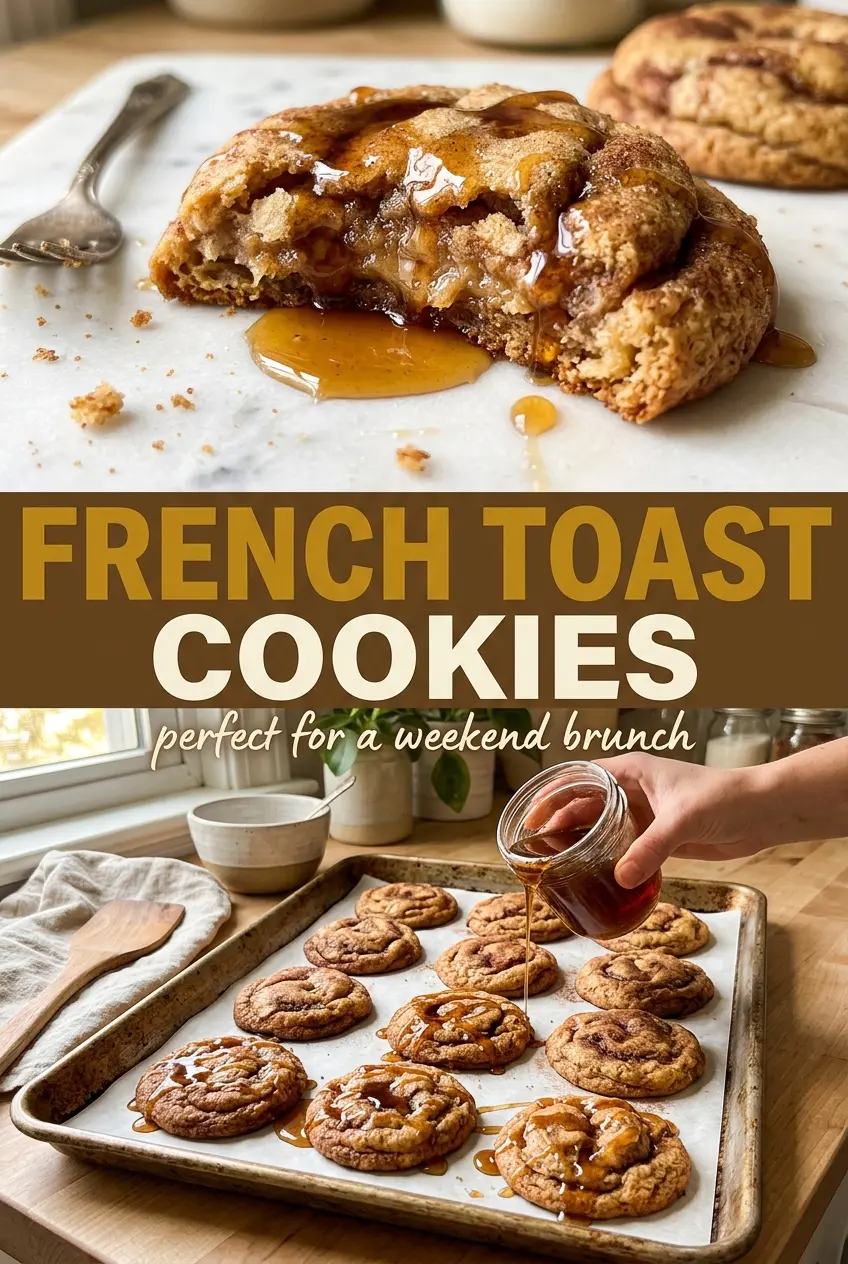
Chewy French Toast Cookies
Ingredients
Equipment
Method
- Preheat the oven to 350°F and line a sheet pan. Cream butter, brown sugar, and granulated sugar until fluffy, then beat in eggs and vanilla for a smooth batter.
- Mix in flour, cinnamon, and baking soda until just combined. Stop mixing as soon as no dry streaks remain for a chewy, tender cookie texture.
- Scoop dough onto the sheet pan and bake 11–13 minutes until edges are golden. Pull them out when the centers look set but still slightly soft.
- Whisk powdered sugar and maple syrup for the glaze until smooth and pourable. Adjust with a tiny bit more syrup if it feels too thick.
- Drizzle glaze over the cooled cookies for even coverage. Use a gentle hand so the glaze doesn’t pool too heavily.
- Let the glaze set before serving until it looks matte and feels set to the touch. This usually takes a short rest on the tray.