
Cilantro lime noodles hit that sweet spot between fast and memorable: slick noodles coated in a bright, garlicky sauce with just enough heat to keep each bite interesting. The cilantro doesn’t just sit on top here. It gets lightly wilted by hot oil, which softens the raw edge and turns the whole thing into a fragrant, almost salsa-like sauce that clings to the noodles instead of sliding off.
The trick is to build the sauce in a heatproof bowl before the noodles ever go in. Hot oil blooms the garlic, shallot, and chili powder in a way cold mixing never can, and the soy sauce plus lime juice balance out the herbiness with salt and acid. Rinsing the noodles after cooking also matters more than you might think. It stops the carryover cooking and keeps the texture springy so the sauce can coat every strand cleanly.
The sauce coated every noodle instead of pooling at the bottom, and the lime at the end kept it from tasting flat. I made it with spaghetti and my son asked for the leftovers in his lunch the next day.
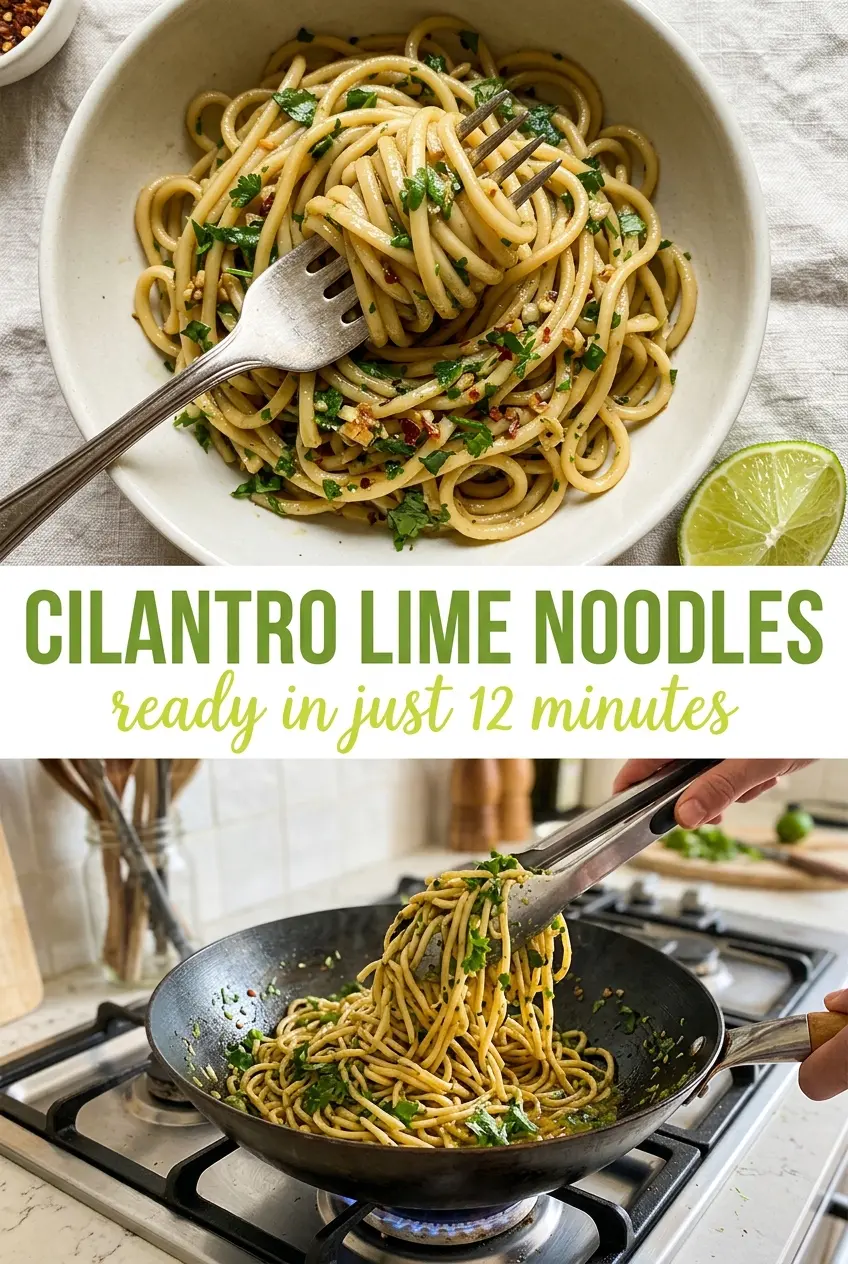
Cilantro lime noodles have a fast, fiery sauce that clings to every strand — pin this one for nights when dinner needs to happen in 12 minutes.
The Reason the Cilantro Gets Better After Hitting Hot Oil
A lot of herb-forward noodle dishes taste raw or muddy because the herbs never get a chance to open up. Here, the hot oil does the heavy lifting. It wakes up the garlic and shallot, bloomes the chili powder, and takes the edge off the cilantro so the sauce tastes bright instead of grassy. The bowl should sizzle the moment the oil hits it. That quick bloom is what gives the noodles a deep, savory base without any simmering.
The other thing that matters is balance. Lime juice goes in after the oil has done its work, not before, because acid can mute the aroma of garlic and herbs if it’s added too early. Soy sauce brings salt and a little umami, which keeps this from tasting like dressed noodles and turns it into a full sauce.
What Each Ingredient Is Actually Doing in This Dish
- Cilantro — Use fresh cilantro with tender stems. The leaves give the sauce its brightness, and the stems add even more flavor than most people realize. If yours looks a little soft, soak it in cold water for a few minutes and dry it well before chopping.
- Neutral oil — This needs to be plain and clean-tasting. Olive oil can work in a pinch, but it brings its own flavor and can overpower the lime. Heat it until it shimmers, not until it smokes.
- Chili powder — This adds warmth more than heat. If you want more bite, use a pinch of cayenne or red pepper flakes, but keep the chili powder in place because it rounds out the sauce.
- Soy sauce — This is the savory backbone. A lower-sodium soy sauce works fine if that’s what you keep on hand; just taste before adding more. Tamari is the best swap if you need this gluten-free.
- Lime juice — Fresh lime juice matters here. Bottled juice tastes flat and can make the sauce dull. Add it at the end so the sauce stays vivid and the aroma stays sharp.
How to Build the Sauce So It Stays Bright and Glossy
Cooking the Noodles First
Cook the noodles until just tender, then rinse them under cold water. That stops the cooking immediately and removes the surface starch that can turn the sauce gummy. If you skip the rinse, the noodles keep cooking from their own heat and the final bowl turns sticky instead of silky.
Blooming the Aromatics in a Heatproof Bowl
Combine the cilantro, garlic, shallot, sugar, and chili powder in a heatproof bowl before you heat the oil. Then pour the hot oil over the mixture and stir right away. The oil should sizzle and loosen the garlic’s bite, but it should not burn the garlic or darken the herbs. If your oil smells harsh or the garlic browns, it was too hot and the sauce will taste bitter.
Finishing with Lime and Soy
Whisk in the soy sauce and lime juice after the oil has cooled for a minute or two. This keeps the citrus fresh and prevents the soy from tasting cooked. The finished sauce should look glossy and loose enough to coat noodles evenly. If it seems oily, it usually needs more whisking rather than more liquid.
Tossing for Even Coating
Add the noodles to the sauce and toss until every strand looks evenly dressed. Use tongs and lift from the bottom of the bowl so the sauce reaches the noodles hiding underneath. Serve it right away while the noodles still have a little bite. The sauce is at its best when it clings to warm noodles, not after it sits and separates.
Three Ways to Adjust These Noodles Without Losing What Makes Them Work
Gluten-Free Version
Use rice noodles, soba labeled gluten-free, or any noodle you trust, then swap in tamari for the soy sauce. The flavor stays just as sharp and savory, and the texture is still glossy as long as you rinse the noodles well after cooking.
Milder, Less Spicy Bowl
Cut the chili powder in half and add a little extra lime zest for lift. You’ll keep the bright cilantro note and the savory base, but the heat steps back so the sauce tastes fresher and less smoky.
Extra Protein for a Full Meal
Toss in shredded chicken, sautéed shrimp, or crispy tofu right at the end. The sauce is light, so the protein should be cooked separately and added just before serving to keep the texture clean and the noodles from turning crowded.
Storage and Reheating
- Refrigerator: Store leftovers for up to 3 days. The noodles will absorb some of the sauce, so the bowl tastes a little less glossy the next day.
- Freezer: These noodles don’t freeze well. The fresh lime and cilantro lose their punch, and the noodle texture softens too much after thawing.
- Reheating: Warm gently in a skillet over low heat with a splash of water to loosen the sauce. Microwaving works, but do it in short bursts and stop as soon as the noodles are warm so they don’t turn dry and tight.
Answers to the Questions Worth Asking
Cilantro Lime Noodles
Ingredients
Equipment
Method
- Cook the noodles until just tender, then rinse under cold water and set aside in the colander for a silky, non-starchy texture.
- Combine the cilantro, garlic, shallot, sugar, and chili powder in a heatproof bowl.
- Heat the neutral oil until shimmering, then pour it over the cilantro mixture and stir to combine for a fragrant bloom.
- Whisk in the soy sauce and lime juice until smooth and glossy.
- Add the cooked noodles to the sauce and toss until evenly coated, adding a splash of reserved noodle water if needed for slip.
- Serve immediately, garnished with extra cilantro and lime wedges.