
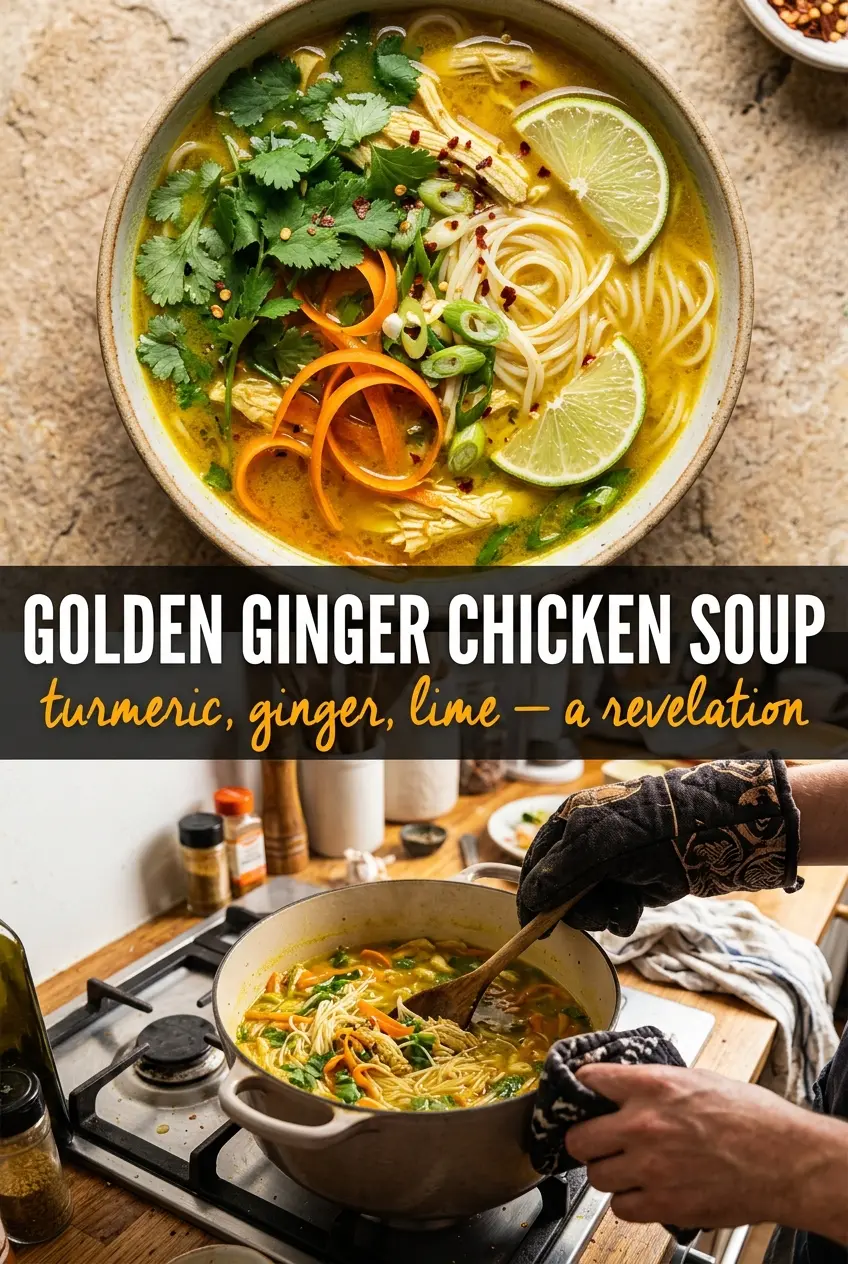
Golden broth, tender chicken, and slippery noodles that still have a little bite are what make chicken noodle soup worth coming back to. This version keeps the comfort people expect, but it adds ginger, turmeric, fish sauce, and lime so the bowl tastes brighter and deeper than the usual all-American version. The broth doesn’t feel heavy. It tastes clean, fragrant, and layered, with enough savoriness to stand up to the noodles and vegetables.
The trick is building flavor in the pot before the broth goes in. Onion, garlic, and ginger cook in sesame oil first, which gives the soup a warm base right away. Turmeric blooms in that fat for a minute, and that small step changes the whole color and aroma of the broth. Rice noodles keep this fast and gluten-free, but they need a short cook time or they’ll go soft and cloudy. Add the chicken at the very end so it stays juicy instead of stringy.
Below you’ll find the little timing details that keep the noodles from bloating and the broth from tasting flat. The lime and herbs at the finish matter more than they look on paper, and I’ve included a few ways to adapt the soup depending on what’s in your kitchen.
The broth had so much more depth than my usual chicken soup, and the lime at the end kept it from tasting heavy. I used the rice noodles and they held up perfectly for dinner without getting mushy.
Save this turmeric chicken noodle soup for the nights when you want a fast bowl with bright broth, tender chicken, and rice noodles that stay light.
The Reason the Broth Tastes Better Than Standard Chicken Soup
Most chicken noodle soups go flat because everything gets dumped into the pot at once. That leaves you with broth that tastes like boiled chicken and not much else. Here, the base gets cooked first so the ginger and garlic can open up in the oil, and the turmeric blooms instead of just floating around like powder. That one move gives the soup its color and its backbone.
Fish sauce is the quiet part people notice even when they can’t name it. It doesn’t make the soup taste fishy; it makes the broth taste fuller and more rounded, especially when you finish with lime juice. If your soup ever tastes thin even after plenty of salt, this is the kind of ingredient that fixes it without making the bowl heavier.
What Each Ingredient Is Actually Doing in This Bowl

- Rotisserie chicken — This keeps the soup weeknight-fast and gives you tender meat without needing to poach chicken separately. Shred it into bite-size pieces so it warms through quickly at the end. If you use leftover roasted chicken, the soup gets even more savory.
- Chicken broth — This is the body of the soup, so use the best broth you can manage. Homemade gives you the deepest flavor, but a good store-bought broth works well once the ginger, turmeric, and lime are in play. If your broth tastes weak, the soup will too, no matter how good the garnish is.
- Sesame oil, ginger, garlic, and onion — These build the aromatic base. Sesame oil brings a nutty note that regular neutral oil doesn’t give you, while ginger adds warmth and garlic keeps the soup grounded. Don’t rush this step; the vegetables should soften and smell fragrant before the broth goes in.
- Turmeric — This is for color and a faint earthy warmth. Blooming it in oil is the difference between a broth that looks dusty and one that turns a deep golden shade. Use fresh or ground turmeric if that’s what you have, but old turmeric loses punch fast.
- Rice noodles or glass noodles — These cook quickly and keep the soup light. Rice noodles make the dish naturally gluten-free, but they go soft if they sit too long, so add them near the end and serve right away. Thin wheat noodles or egg noodles work in a pinch, but the texture changes and the soup feels heavier.
- Fish sauce — This is the ingredient that quietly ties everything together. One teaspoon is enough to deepen the broth without announcing itself. If you skip it, add a little extra salt and a splash more lime, but you’ll still miss some of the depth.
- Lime, cilantro, green onion, and chili flakes — These finish the soup and keep it lively. Lime brightens the broth, herbs add freshness, and chili flakes give each bowl some heat if you want it. Don’t add these early or they’ll fade.
The 20 Minutes That Actually Matter
Cooking the Aromatics First
Warm the sesame oil in a large pot over medium heat, then add the onion, garlic, and ginger. Let them cook for about 2 minutes until the onion softens and the kitchen smells sharp and fragrant. If the garlic starts browning hard, the heat is too high and the soup will taste bitter, so keep the mixture moving and pull the pot back if needed.
Blooming the Turmeric
Stir in the turmeric before the broth goes in and cook it for a short minute. This step wakes up the spice and gives the soup that vivid golden color instead of a dull yellow stain. Once the broth hits the pot, scrape the bottom lightly so any cooked-on bits dissolve into the liquid instead of sticking.
Simmering the Vegetables
Add the carrots and celery and let them simmer until they’re tender but still have a little structure, about 8 minutes. You want the carrots softened at the edges and the celery no longer raw and grassy. If you cook them until completely limp now, they’ll go soft again when the noodles and chicken go in.
Cooking the Noodles at the End
Drop in the rice noodles only after the vegetables are ready. They need just a few minutes, and the pot should stay at a gentle simmer, not a rolling boil, or they’ll break apart and cloud the broth. If you’re planning leftovers, undercook them by about a minute so they don’t turn mushy later.
Finishing With Chicken, Fish Sauce, and Lime
Stir in the shredded chicken and fish sauce once the noodles are tender. The chicken only needs time to warm through, not to cook again. Turn off the heat and add the lime juice at the end so it stays bright instead of flattening out in a hard boil.
Three Ways to Make This Soup Fit Your Kitchen
Make It Gluten-Free Without Losing Texture
Use rice noodles or glass noodles and keep the simmer gentle so they stay silky instead of breaking down. The rest of the soup already leans gluten-free, so this swap mainly protects the texture and keeps the bowl light.
Make It Dairy-Free and Naturally Light
This recipe is already dairy-free, which is part of why it feels so clean and bright. If you want a little more richness without dairy, add a splash of coconut milk at the end, but expect the broth to soften and move away from the classic clear-soup finish.
Swap the Chicken for Tofu
For a vegetarian version, use cubed extra-firm tofu and vegetable broth, then add the tofu near the end just long enough to heat through. You’ll lose the roasted depth from rotisserie chicken, so the broth needs the ginger, turmeric, and lime to do more of the work.
Stretch It for a Bigger Crowd
Double the broth, chicken, and vegetables, but don’t double the noodles unless you want the pot to thicken fast. Cook the noodles separately if you’re serving a crowd, then add them to each bowl so the leftovers don’t turn starchy.
Storage and Reheating
- Refrigerator: Store for up to 4 days. The noodles will keep absorbing broth, so the soup gets thicker as it sits.
- Freezer: Freeze the broth, chicken, and vegetables without the noodles for best results. Noodles turn soft and a little gummy after thawing, so add a fresh batch when reheating.
- Reheating: Warm gently on the stove over medium-low heat until steaming. If the soup looks too thick, add a splash of broth or water before serving so the noodles and chicken don’t dry out.
Answers to the Questions Worth Asking
Chicken Noodle Soup
Ingredients
Equipment
Method
- Heat sesame oil in a Dutch oven over medium heat and sauté onion, garlic, and ginger for 2 minutes, stirring until fragrant and lightly softened.
- Add turmeric and stir for 15 to 30 seconds so the color blooms and the aroma wakes up.
- Pour in chicken broth and bring to a simmer over medium-high heat, bubbling steadily around the edges.
- Add carrots and celery, then simmer for 8 minutes until the vegetables are tender-crisp.
- Add thin rice noodles or glass noodles and cook for 3 to 4 minutes, stirring occasionally until just tender.
- Stir in shredded rotisserie chicken and fish sauce, cooking for 1 to 2 minutes until heated through and well incorporated.
- Turn off the heat and stir in the juice of 1 lime; finish with a quick taste adjustment before serving.
- Ladle into bowls and top with cilantro, green onion, lime wedges, and chili flakes to serve.