
Watermelon sorbet lands with that clean, icy snap that makes a spoonful disappear faster than you expect. This version has a bright, almost floral finish because the lime zest goes into the base along with the juice, and the mint gets blended smooth instead of stirred in at the end. The result tastes layered, not flat — sweet watermelon up front, then lime, then a cool mint note that hangs around after each bite.
The biggest difference between a grainy sorbet and a silky one is how you handle the fruit. Watermelon carries a lot of water, which sounds helpful until you try to freeze it and end up with hard crystals instead of a scoopable dessert. Straining the puree pulls out some of that roughness, and a short chill before churning helps the base freeze more evenly. A little sugar matters here, too, because it keeps the sorbet soft enough to scoop instead of turning into pink ice.
Below, I’ve included the trick that gives this sorbet its clean texture even without an ice cream maker, plus a few variations if you want to keep it dairy-free, make it adult, or prep it ahead for a warm-weather dinner.
The texture came out smooth instead of icy, and the lime zest made it taste like more than just frozen watermelon. I used the fork method and it was scoopable after the third scrape.
Save this watermelon sorbet for the nights when you want a frozen dessert that tastes clean, bright, and finished with lime zest and mint.
The Part That Keeps Watermelon Sorbet from Turning Icy
Watermelon sorbet fails for the same reason a lot of fruit ices fail: the base is too watery and not balanced enough to freeze into something scoopable. Watermelon tastes generous and juicy, but that juice can freeze into hard crystals if you don’t give it enough sugar, enough acid, and enough processing time. The sugar here isn’t just for sweetness. It changes the way the mixture freezes, which is why a sorbet made with the right ratio stays tender instead of biting back at you straight from the freezer.
Blending the mint into the base also matters. Dried mint would come through muddy and flat, and chopped fresh mint can leave little leafy bits that interrupt the smooth texture. When it’s blended in with the lime zest, it disappears into the sorbet and reads as coolness, not garnish. That’s the kind of detail that separates a good fruit dessert from one that tastes one-note.
What Each Ingredient Is Actually Doing in This Sorbet
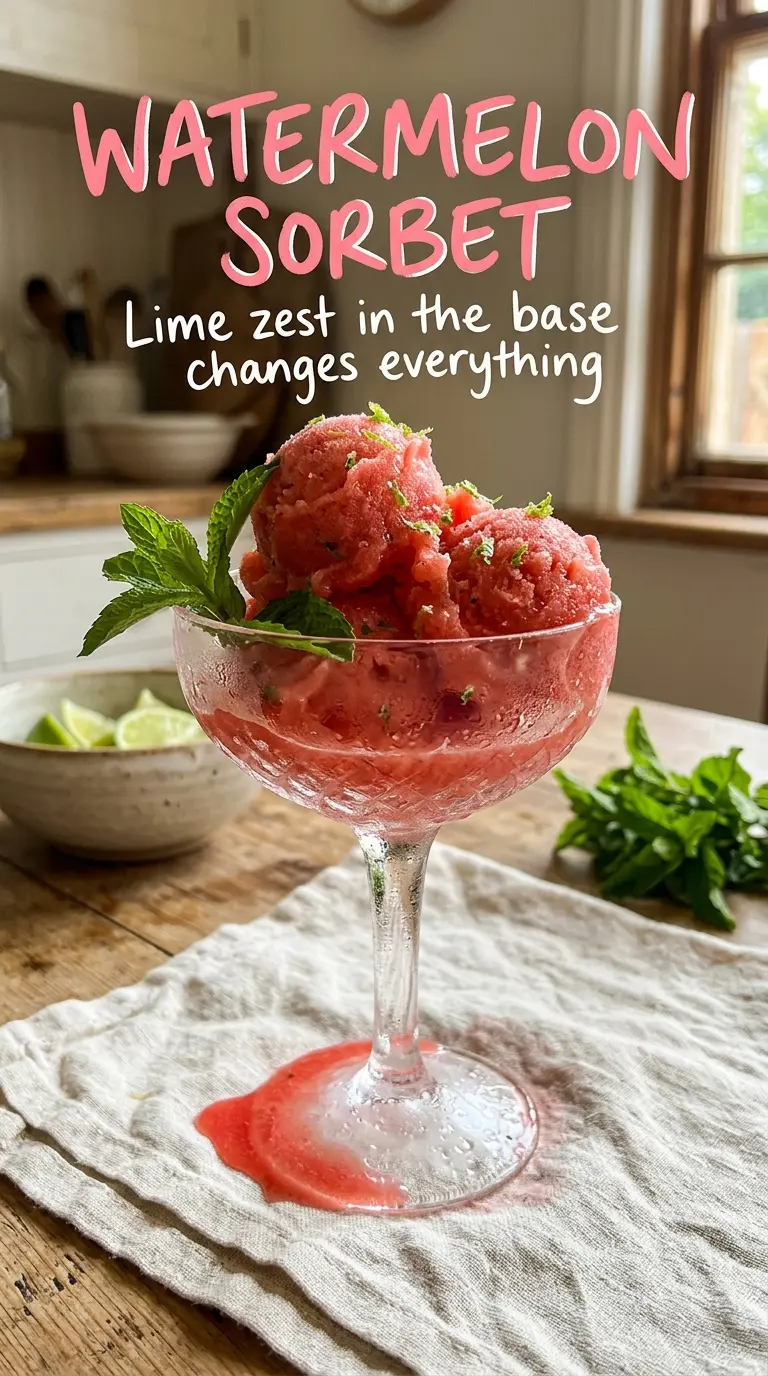
- Watermelon — Use ripe, deeply colored melon for the best flavor. If it tastes bland out of the fridge, it will taste bland frozen, so start with fruit that already has a clean, sweet finish.
- Sugar — This is what keeps the sorbet from freezing into a solid block. You can shave a little off if your watermelon is exceptionally sweet, but don’t cut it much further or the texture turns icy.
- Lime juice and zest — Juice brings sharpness, but zest brings the floral citrus note that makes this taste finished. If you skip the zest, the sorbet still works, but it loses the lift that keeps each spoonful bright.
- Fresh mint — Fresh mint blends into the base and gives the sorbet a cool, fragrant edge. Don’t swap in dried mint; it tastes dusty here and never blends into the same clean flavor.
- White rum — Optional, but useful if you want a softer scoop and a more grown-up finish. It also lowers the freezing point a bit, which helps the sorbet stay less brittle.
- Salt — Just a pinch, but it sharpens the watermelon and keeps the fruit from tasting thin.
Building the Base So It Freezes Smoothly
Puree and strain the watermelon
Blend the watermelon until it’s completely smooth, then push it through a fine-mesh sieve. That step catches the fibrous bits and some of the loose pulp that can make the finished sorbet feel sandy or loose. If you’re tempted to skip it because the melon already looks smooth, don’t — this is one of the easiest ways to improve the final texture without changing the flavor at all.
Balance the flavor before freezing
Stir in the sugar, lime juice, lime zest, mint, and salt until the sugar dissolves and the mixture tastes bright, not flat. The base should taste a little stronger than you want the final sorbet to taste because freezing dulls sweetness and acid. If it tastes shy now, it will taste muted later.
Freeze with enough agitation
Chill the base for about an hour before churning so it starts cold. Then churn in your ice cream maker until it looks like soft sorbet and holds gentle ridges from the paddle. If you don’t have a machine, freeze the mixture in a shallow container and scrape it with a fork every hour for about three hours; that scraping breaks up crystals before they grow large enough to turn the whole batch icy.
Serve before it turns hard
Transfer the sorbet to a chilled container if you need a firmer finish, or scoop it straight into frozen glasses for the cleanest texture. Watermelon sorbet firms up fast, and the first few minutes after freezing are when it’s easiest to scoop. If it sits too long in the freezer, let it stand at room temperature just until a spoon can glide through the surface.
How to Adapt This Watermelon Sorbet for Different Needs
Dairy-Free and Naturally Vegan
The base is already dairy-free, so nothing needs to change here. That’s part of why the sorbet stays so clean and refreshing — there’s nothing heavy enough to dull the watermelon or lime.
Making It Without an Ice Cream Maker
The fork-scraping method works because it keeps the ice crystals small as the sorbet freezes. Use a shallow container so the mixture freezes evenly, and scrape from the edges into the center each hour. You won’t get the same aerated texture as a machine, but you will get a scoopable sorbet instead of a frozen slab.
Adult Version with White Rum
A tablespoon of white rum softens the freeze and gives the sorbet a cleaner, slightly more elegant finish. Don’t add much more than that or the mixture can stay too loose and refuse to set properly.
Using What You Have on Hand
If you’re out of mint, leave it out rather than swapping in a stronger herb. Basil changes the character completely and can overpower the watermelon. Extra lime zest is the best backup if you want to keep the flavor bright without changing the core recipe.
Storage and Reheating
- Refrigerator: Not a refrigerator dessert; the texture breaks down fast and turns watery within hours.
- Freezer: Store in a covered container for up to 1 week. Press parchment directly onto the surface if you want to protect it from ice crystals.
- Reheating: No reheating needed. Let it stand at room temperature for 5 to 10 minutes before scooping so the surface softens without melting the whole batch.
Answers to the Questions Worth Asking
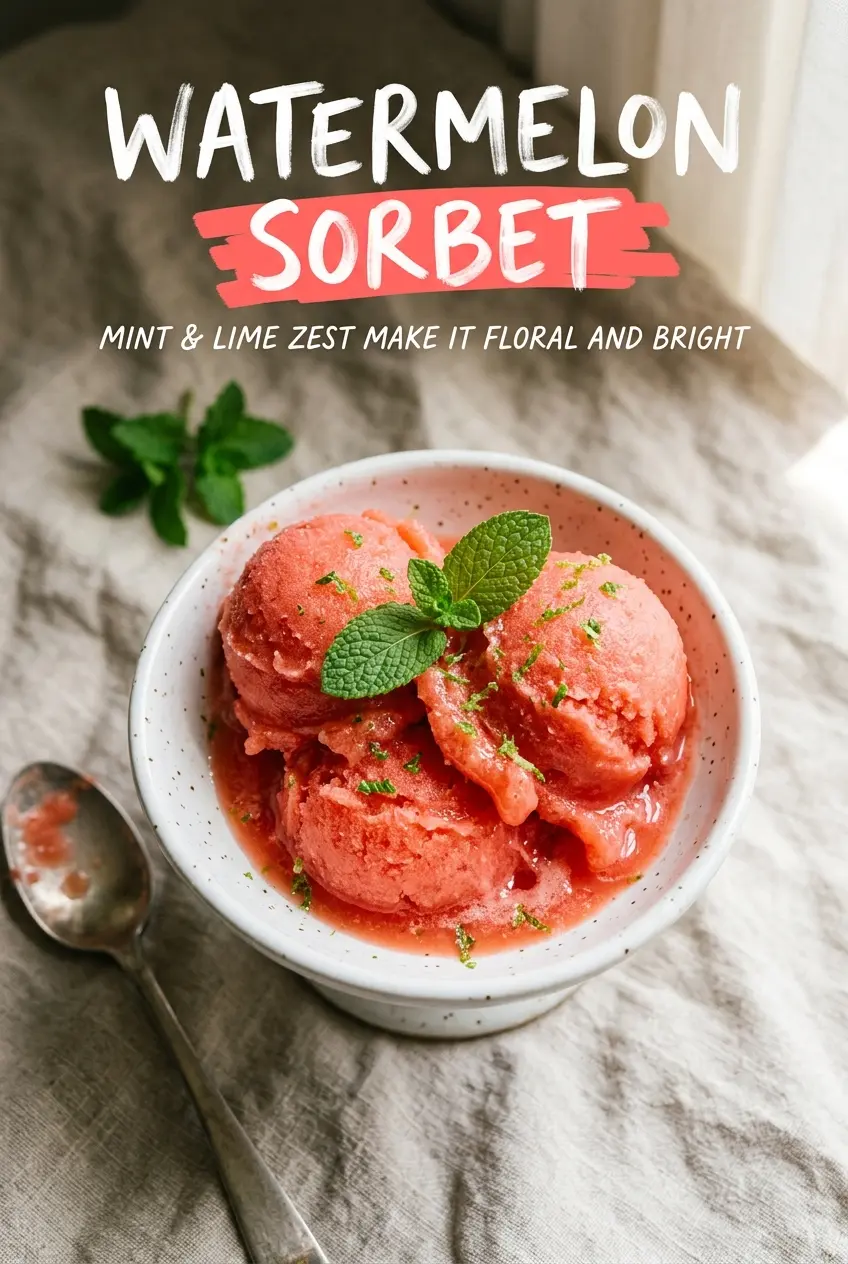
Watermelon Sorbet
Ingredients
Equipment
Method
- Blend the cubed fresh watermelon until completely smooth, with no visible chunks. Strain through a fine-mesh sieve to remove pulp so the sorbet stays silky.
- Combine the sugar, fresh lime juice, lime zest, fresh mint, and salt. Blend briefly until the sugar dissolves and the mint is smooth throughout.
- Chill the base for 1 hour to help it set up for churning. Then churn in an ice cream maker for 20-25 minutes until thick like soft serve.
- Transfer to a container and freeze for 1 hour to firm up. You should be able to scoop it with a spoon without it turning liquid immediately.
- If you don’t have an ice cream maker, pour into a shallow container and freeze. Scrape with a fork every hour for 3 hours to break up ice crystals for a smoother texture.
- Scoop the sorbet into chilled glasses. Serve immediately for the best cold, bright mint-lime finish.