
Cheesy chicken fried rice packs the kind of hot, savory lunch that still tastes good hours later. The rice stays separate enough to eat cleanly from a thermos, the chicken and eggs add real heft, and the cheddar melts into the soy-seasoned grains without turning the whole pan greasy. It’s a smart use of leftovers, but it doesn’t eat like leftovers.
The trick is starting with cold rice. Warm rice clumps and steams; chilled rice fries. That one detail gives you the little toasted edges and distinct grains that hold up best in a thermos. The cheese goes in at the very end so it melts into the rice instead of coating the pan, and the thermos itself needs a quick preheat so the food goes in hot enough to stay hot.
Below you’ll find the part that matters most: how to keep the rice from turning soft on the stove and soggy in the thermos. I’ve also included the substitutions that still work when you need to use what’s already in the fridge.
The rice stayed fluffy even after a few hours in the thermos, and the cheddar melted right into everything without getting oily. My son said it tasted like takeout fried rice but better because it was still hot at lunch.
Cheesy chicken fried rice for thermos lunches stays hot, fluffy, and packed with melty savory flavor.
The Reason Fried Rice Gets Soggy in a Thermos
Thermos lunch rice fails for two reasons: too much steam trapped in the food, or rice that started out too soft. This version avoids both by frying cold rice over medium-high heat long enough to dry the surface before the cheese goes in. You want the grains moving freely in the pan, not sitting in a wet mound.
The other thing that matters is seasoning timing. Soy sauce goes in after the rice and chicken have had a chance to heat through, which keeps the pan from going watery. If you add it too early, the rice steams instead of fries and you lose that loose, savory texture that holds up later in the thermos.
What Each Ingredient Is Actually Doing in This Dish
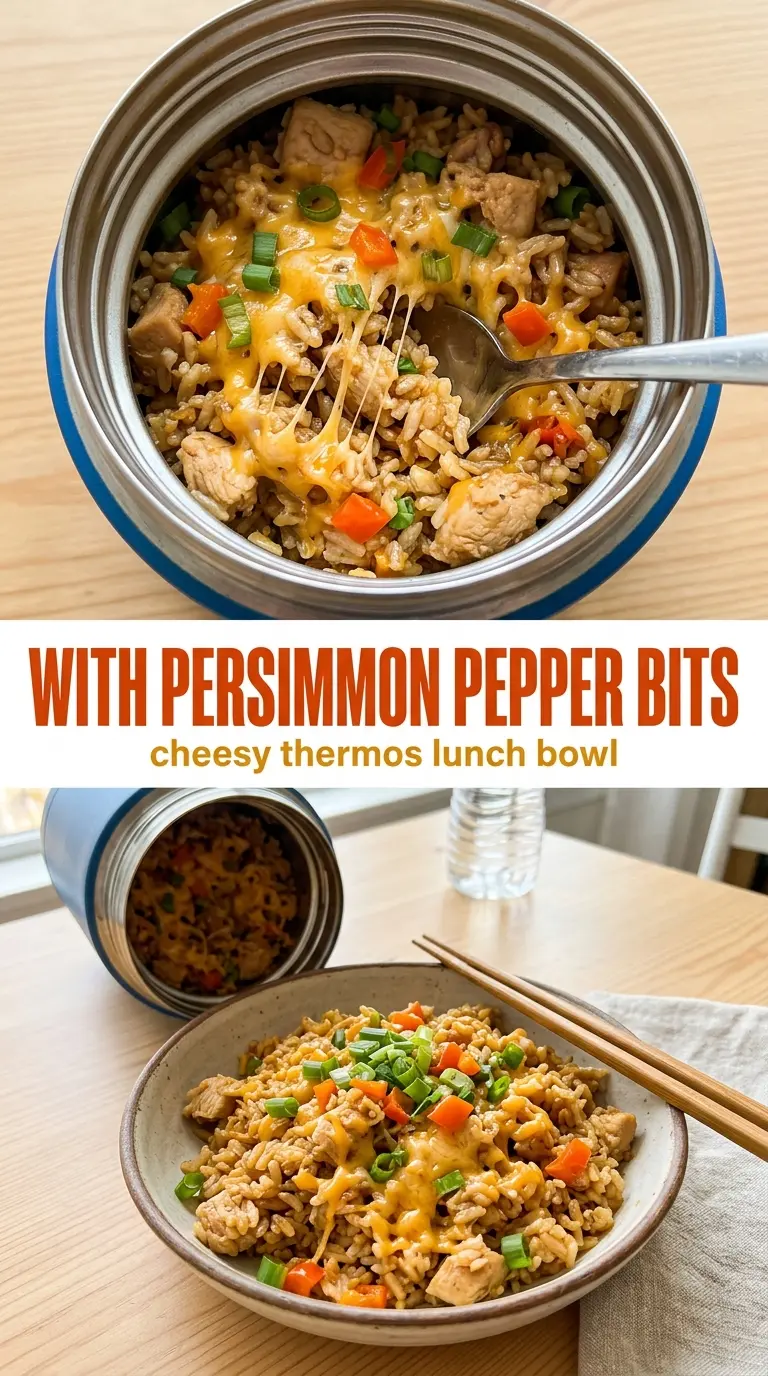
- Cooked, cooled rice — Day-old rice is the backbone here. Fresh rice clumps and turns gummy when it hits the pan, while cooled rice stays separate and fries instead of steaming. If you only have freshly cooked rice, spread it on a sheet pan and chill it until it’s no longer warm.
- Diced cooked chicken — Pre-cooked chicken keeps this fast and prevents overcooking. Rotisserie chicken works well, but any plain leftover chicken is fine as long as it’s cut small enough to heat quickly. Bigger chunks won’t mix evenly with the rice.
- Frozen peas and carrots — Frozen vegetables are the right shortcut here because they hold their shape and don’t need much prep. Let them cook long enough to lose their icy edge before adding the rice, or they’ll cool the pan down too much.
- Eggs — The eggs add richness and give the rice that classic fried rice texture. Scrambling them in the same pan keeps the flavor concentrated and means one less dish to wash. Pull them just past soft-set so they finish cooking when everything else goes back in.
- Cheddar cheese — Sharp cheddar melts into the rice and gives the lunch a salty, creamy finish. Mild cheddar works too, but sharp cheese stands up better to the soy sauce. Add it at the very end so it melts into strands instead of clumping.
- Green onions — These add freshness at the finish and keep the dish from tasting flat. Stir some in at the end and save a few for the top if you’re eating right away. If they’re not in the fridge, a pinch of garlic powder at the end can help bridge the gap, but it won’t replace the bite of fresh onion.
The 20 Minutes That Matter in the Pan
Wake Up the Garlic and Vegetables First
Heat the oil until it shimmers, then add the garlic and frozen peas and carrots. The garlic should smell fragrant within seconds, not brown; if it darkens, it will taste bitter in the finished rice. Give the vegetables a full couple of minutes so the moisture cooks off before anything else goes in.
Scramble the Eggs in the Open Space
Push the vegetables to one side of the pan and pour the beaten eggs into the empty space. Stir them gently until they’re just set and still soft in places, then fold them into the vegetables. If the pan is crowded, the eggs won’t scramble cleanly and you’ll end up with dull streaks instead of tender curds.
Fry the Rice Until It Moves Freely
Add the cold rice and chicken and break up any clumps with your spatula. Keep the heat up so the grains fry and the moisture evaporates; the rice should sound a little dry as you stir it. If it starts sticking badly, the pan is either too hot or too full, and you’ll get pale, steamed rice instead of the loose texture you want.
Finish With Soy Sauce and Cheese Off the Heat
Drizzle in the soy sauce and toss until the rice is evenly seasoned. Then add the cheddar and stir just until it melts through the hot rice. If you cook the cheese for too long, it can get stringy and greasy, so pull the pan off the burner as soon as it disappears into the grains.
How to Adapt This for Different Fridges and Lunch Plans
Gluten-Free Without Losing the Savory Edge
Use a gluten-free soy sauce or tamari and the dish stays just as savory. The rest of the ingredients are naturally gluten-free, so this is an easy swap with no texture penalty.
Dairy-Free Version That Still Eats Like Fried Rice
Leave out the cheddar and finish with a small drizzle of sesame oil or a spoonful of dairy-free butter for richness. You’ll lose the melty comfort of the cheese, but the rice will taste cleaner and a little more classic.
Vegetarian Swap That Still Feels Substantial
Skip the chicken and add diced sautéed mushrooms or small cubes of tofu. Mushrooms bring savoriness, while tofu gives you more protein; either one keeps the lunch filling without changing the cooking method.
Packing It for a Thermos Without Losing Heat
Preheat the thermos with boiling water for a few minutes, then drain it completely before adding the hot rice. Pack the food in while it’s steaming, seal it right away, and don’t open the lid again until lunchtime or you’ll dump out the heat you just trapped.
Storage and Reheating
- Refrigerator: Store leftovers in an airtight container for up to 3 days. The rice will firm up as it chills, which is normal.
- Freezer: It freezes well for up to 1 month if you cool it fully first. Freeze in flat portions so it thaws evenly.
- Reheating: Reheat in a skillet with a splash of water over medium-low heat, or microwave covered until hot. The common mistake is blasting it on high heat, which dries out the chicken and makes the rice tough before the center is warm.
Answers to the Questions Worth Asking
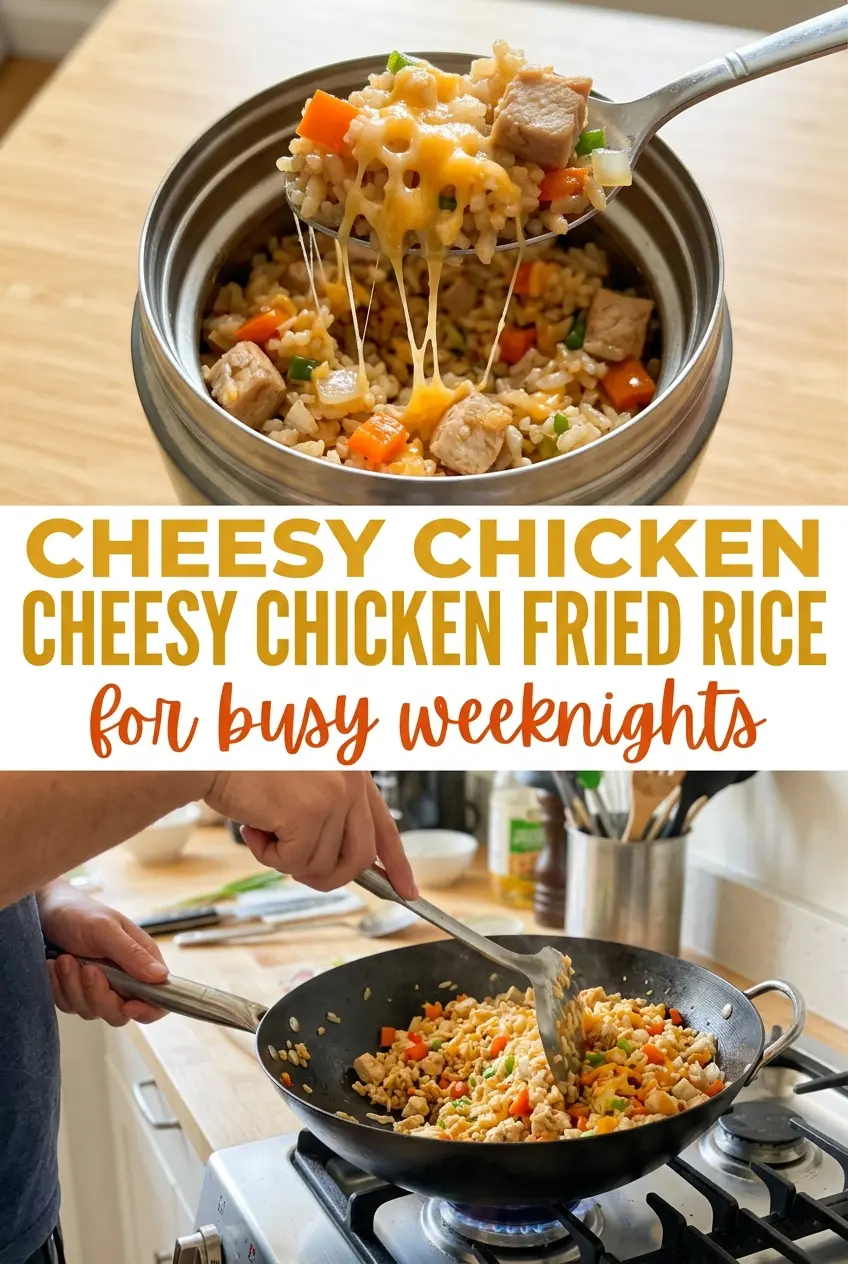
Cheesy Chicken Fried Rice for Thermos
Ingredients
Equipment
Method
- Heat the oil in a large skillet or wok over medium-high heat until it shimmers, then add the oil to coat the pan evenly. No separate oil phase is needed—keep it hot for quick cooking.
- Add the garlic and frozen peas and carrots, cooking for 2 minutes while stirring so the vegetables warm through and the garlic smells fragrant. Visual cue: vegetables look brighter and slightly tender.
- Push the vegetables aside and scramble the large eggs in the same pan over medium-high heat until set in soft curds. Visual cue: eggs turn from wet to softly firm.
- Add the cooked, cooled rice and diced cooked chicken, breaking up any clumps, and stir-fry for 3 to 4 minutes. Visual cue: rice heats through and starts to look separate rather than sticky.
- Stir in the soy sauce and shredded cheddar cheese until melted and combined, then cook just until glossy and cohesive. Visual cue: cheddar threads disappear into the rice.
- Preheat a thermos with boiling water, drain, then pack the hot fried rice inside and seal for lunch. Visual cue: thermos stays capped and hot—use right away so it stays steamy.
- Top with green onions, sliced right before sealing (or sprinkle on top as you pack) so they stay fresh-looking. Visual cue: bright green pieces visible on the surface.