
Crisp baguette, creamy ricotta, and caramelized butternut squash make a crostini that disappears fast once it hits the table. The contrast is what keeps people reaching for one more: crunchy toast, cool dairy, soft roasted squash, then a thin thread of honey that wakes everything up without turning the whole bite sweet. It feels polished, but it’s built from a short list of ingredients that do their jobs well.
The part that matters most is giving the squash enough heat to brown at the edges before it goes anywhere near the bread. If it roasts until tender but pale, you lose the deep, nutty note that makes this appetizer worth serving. I also like to toast the baguette a little farther than you think you need to, because ricotta and warm squash will soften it quickly once assembled.
Below, you’ll find the timing that keeps the bread crisp, the best way to mound the ricotta, and a few smart swaps if you need to work around what’s in the kitchen.
I mashed the squash a little like you suggested, and it stayed on the crostini instead of rolling off. The honey with the thyme gave it that sweet-savory balance, and the bread was still crisp when I served it.
Save these butternut squash crostini for the appetizer that brings crunchy toast, creamy ricotta, and caramelized squash together in one bite.
The Reason the Squash Needs to Brown Before It Touches the Bread
Butternut squash can go soft and sweet without ever getting interesting. That’s the mistake that makes crostini taste flat. You want the cubes roasted until the edges take on color and the surfaces look a little sticky from the heat; that’s where the nutty depth comes from. If the pan is crowded, the squash steams instead of caramelizing, and you lose the contrast that makes the topping taste layered instead of one-note.
The bread matters for the same reason. A crostini that’s only lightly toasted will buckle under ricotta and warm squash almost immediately. Bake or toast it until the edges are firm and dry, with enough structure to hold a topping without turning soggy after the first minute on the platter.
What Each Ingredient Is Actually Doing in This Dish
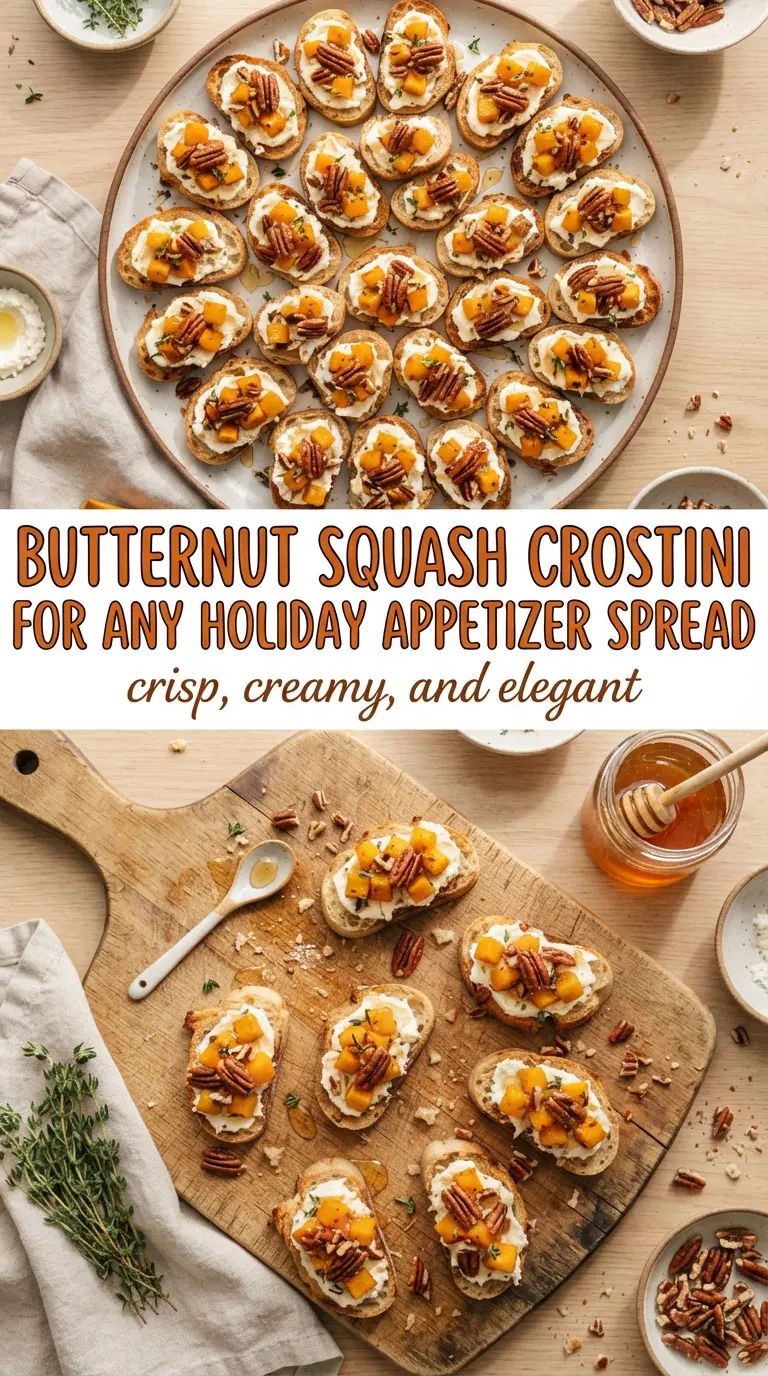
- Butternut squash — This is the heart of the crostini, and roasting is non-negotiable if you want any depth. Cubes that are too large take longer to soften and usually brown unevenly, so keep them bite-size. If you only have pre-cut squash, it works fine as long as the pieces are roughly the same size.
- Ricotta — Use a ricotta that tastes clean and milky, not watery. Whole-milk ricotta gives the best body and keeps the toast from tasting flimsy. If your ricotta looks loose, drain it in a fine sieve for 10 to 15 minutes before spreading.
- Baguette — A sturdy baguette gives you the crisp base this recipe needs. Thin slices toast up best because they stay crunchy under the topping instead of becoming chewy. Day-old bread works well here, and it often slices more cleanly than a very fresh loaf.
- Honey — This is more than garnish; it ties the squash and ricotta together. Use enough to brighten the bite, not drown it. If you want a sharper finish, a light drizzle of hot honey works well and adds a little lift.
- Fresh thyme — Thyme keeps the crostini from leaning too sweet. Strip the tiny leaves from the stems and add them at the end so they stay fragrant. Dried thyme won’t give the same fresh, piney finish, so it’s worth using the real thing if you can.
Roast, Toast, Assemble: the Three Steps That Matter Most
Roasting the Squash Until It Browns
Toss the squash with olive oil, salt, and pepper, then spread it in a single layer on the baking sheet. The pieces need space around them so the heat can dry the surface and build color. Pull them from the oven when they’re tender and the edges look browned, not when they’ve collapsed into a soft pile. If the squash starts to scorch before it’s tender, the pieces are probably too small or the oven rack is too high.
Toasting the Bread for Structure
Toast the baguette slices until they’re crisp all the way through and lightly golden at the edges. A soft center is the fastest way to end up with soggy crostini. If you’re toasting in the oven, keep an eye on the bottoms; they can go from pale to overdone fast once the cut sides dry out. You want a toast that feels sturdy in the hand before anything goes on top.
Building the Final Bite
Spread the ricotta first so the squash has something creamy to cling to. Add the roasted squash while it’s still warm, then drizzle with honey and finish with thyme right before serving. If you assemble too far ahead, the bread loses its crunch and the whole texture turns softer than it should. This is one of those appetizers that tastes best the moment it’s put together.
How to Adapt These Crostini for Different Tables
Dairy-Free Version with Olive Oil Whip
Swap the ricotta for a thick dairy-free spread, such as whipped almond- or cashew-based cheese. You’ll lose a little of ricotta’s mild tang, but the creamy base still balances the sweet squash well. Choose a spread that holds shape at room temperature so the crostini don’t slump.
Gluten-Free Base That Still Stays Crisp
Use a sturdy gluten-free baguette or sliced gluten-free bread and toast it until it feels dry, not just warmed through. Gluten-free bread often softens faster, so a deeper toast helps it stand up to the ricotta and squash. Slice a little thicker than you would a standard baguette so the base doesn’t crumble.
A More Savory Finish
If you want less sweetness, cut the honey back to a light drizzle and finish with flaky salt and extra thyme. The squash still brings natural sweetness from roasting, but the bite lands more squarely in savory appetizer territory. A small swipe of lemon zest over the ricotta also gives the whole crostini more lift.
Storage and Reheating
- Refrigerator: Store the roasted squash and ricotta separately for up to 3 days. The toasted bread will soften if stored assembled.
- Freezer: The assembled crostini don’t freeze well. You can freeze the roasted squash if needed, but the texture will soften when thawed.
- Reheating: Warm the squash in a low oven or skillet until just heated through, then assemble on freshly toasted bread. Reheating the full assembled crostini is the usual mistake; it turns the bread chewy instead of crisp.
Answers to the Questions Worth Asking
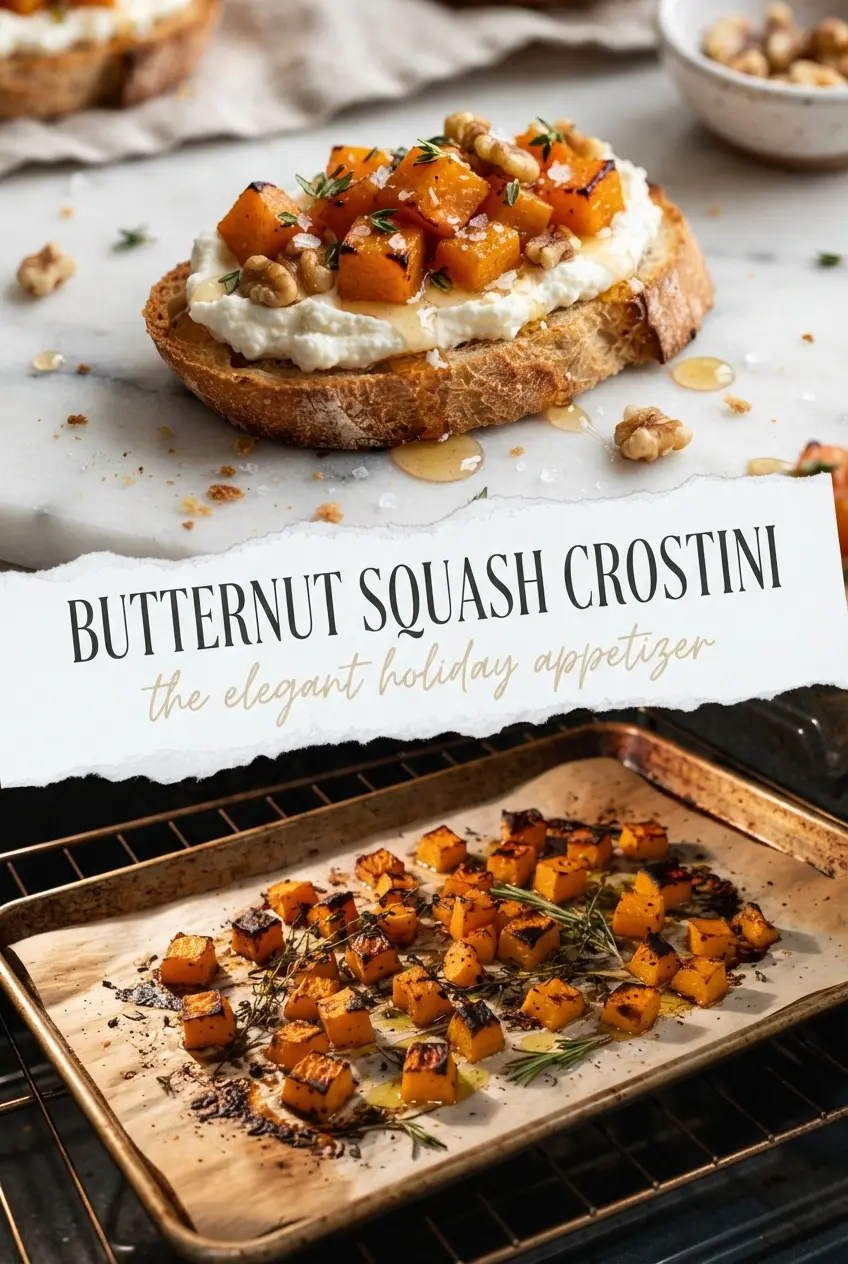
Butternut Squash Crostini with Ricotta
Ingredients
Equipment
Method
- Preheat the oven to 400°F. Toss the butternut squash cubes with olive oil, salt, and pepper.
- Roast at 400°F for 25 minutes, until caramelized and tender, then set aside.
- Toast the baguette slices until golden and crisp, then keep them warm.
- Spread each toasted slice with a layer of ricotta.
- Top with the roasted butternut squash cubes.
- Drizzle with honey and garnish with fresh thyme leaves before serving.