
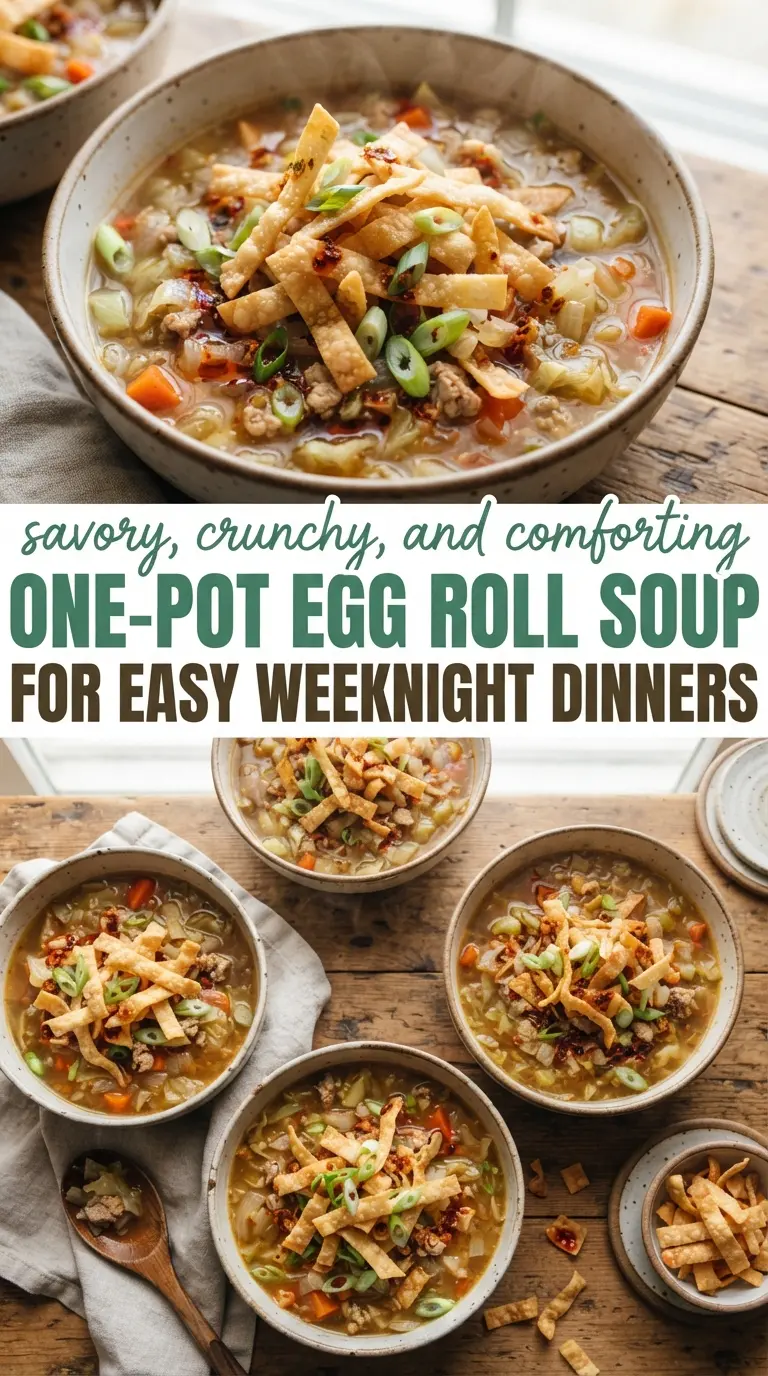
Savory, brothy, and full of the same satisfying crunch-and-tender contrast you get from a good egg roll, this soup earns its place in the regular dinner rotation fast. The pork turns the broth rich without making it heavy, the cabbage softens just enough to stay a little toothsome, and the crisp wonton strips on top give every bowl that one-bite payoff people remember.
What makes this version work is the way the aromatics and broth are handled. The garlic and ginger go in after the pork has browned, so they bloom in the rendered fat instead of disappearing into the liquid. Then the cabbage simmers only until tender, which keeps the soup from turning dull and mushy. A small hit of sesame oil adds that familiar takeout-style finish without taking over the pot.
Below, I’ve included the small details that matter most here — when to fry the wonton strips, how to keep the broth balanced, and what to change if you want a brighter, lighter bowl.
I was surprised how much this tasted like an egg roll, especially with the crispy wonton strips on top. The broth was seasoned perfectly and the cabbage stayed tender without falling apart, which made it great for leftovers too.
Save this egg roll soup for the nights when you want takeout-style flavor, crispy wonton topping, and one pot to clean.
The Reason This Soup Tastes Like an Egg Roll Instead of Just Pork Broth
The difference is in how the flavor gets built before the broth goes in. Browning the pork first gives you a base with depth, and the garlic and ginger need that hot pan so they perfume the fat instead of tasting flat. If you dump everything in together, the soup still works, but it loses the layered taste that makes it feel like an egg roll in a bowl.
The other big mistake is overcooking the cabbage. It should soften and slump, but not collapse into strings. That little bit of texture matters because the soup needs to taste fresh, not cooked to death. Keep the simmer gentle and pull it off the heat as soon as the cabbage is tender and the carrot still has a little bite.
What Each Ingredient Is Doing in This Bowl
- Ground pork — This gives the soup its savory backbone and enough fat to carry the ginger, garlic, and sesame oil. If you swap in lean turkey, the broth will taste a little cleaner and less rich; it still works, but you may want an extra drizzle of sesame oil at the end.
- Cabbage — Shredded cabbage is what makes this feel like egg roll filling instead of generic soup. Use green cabbage for the best texture; it softens without turning limp, while pre-shredded slaw mix works in a pinch if you don’t mind thinner strands.
- Ginger and garlic — These are not background players here. Fresh ginger gives the broth that warm, sharp edge, and minced garlic rounds it out. Powdered versions can fill the gap in a hurry, but the soup loses the bright, aromatic lift that makes it taste fresh.
- Soy sauce — This seasons the broth and brings the salty, umami note that pulls the pork and vegetables together. Use regular soy sauce for the most balanced result; if you use low-sodium, taste before serving and add more only if needed.
- Wonton wrappers — Fried at the end, they give you the crunch that makes the bowl feel complete. Don’t add them early or they’ll go soft fast; fry them just before serving so they stay crisp on top of the soup.
The Short Simmer That Makes the Whole Pot Work
Browning the Pork First
Cook the pork over medium-high heat until it has real color and the bits in the pan start to stick. That browning is where the savory depth comes from, so don’t rush it by crowding the pot or stirring constantly. Break the meat up as it cooks, but let it sit long enough in places to get a few crisp edges.
Blooming the Ginger and Garlic
Add the garlic and ginger once the pork is cooked through and there’s a little fat left in the pot. One minute is enough; you want them fragrant, not browned. If the garlic starts to darken, the broth will pick up a bitter note, so move fast once they hit the heat.
Simmering the Broth and Vegetables
Pour in the broth, soy sauce, and sesame oil, then bring the pot to a gentle simmer before adding the cabbage and carrot. A hard boil will make the cabbage tired and the broth cloudy, while a steady simmer lets the vegetables soften without losing shape. Cook until the cabbage is tender and the carrot has just enough bite to keep the bowl from feeling soft all the way through.
Frying the Wonton Strips at the End
Fry the wonton strips in a small layer of oil until they turn pale gold and crisp. They brown fast, so stay close to the pan and pull them as soon as they’re ready. If they sit in the soup too long, they’ll go soggy, which is why this step belongs right at the end, just before serving.
How to Adapt This Bowl Without Losing What Makes It Good
Make It Dairy-Free and Gluten-Free
This soup is already naturally dairy-free, so the main adjustment is the soy sauce and the wonton topping. Use tamari or a gluten-free soy sauce, and skip the fried wonton strips or replace them with crispy rice noodles for a similar crunch. The soup itself stays just as satisfying.
Use Ground Turkey Instead of Pork
Ground turkey makes the soup lighter and a little cleaner tasting. It won’t bring as much fat to the pot, so the broth benefits from an extra splash of sesame oil or a pinch more salt at the end. The texture stays great as long as you don’t overcook it before adding the broth.
Add Brightness with Rice Vinegar
A small splash of rice vinegar at the end sharpens the broth and makes the cabbage taste fresher. Add it after the soup is off the heat so the flavor stays clean instead of cooking away. Start with a teaspoon, taste, and stop when the broth tastes a little brighter, not sour.
Storage and Reheating
- Refrigerator: Store the soup without the wonton strips for up to 4 days. The cabbage softens a little more as it sits, but the flavor gets even better.
- Freezer: The soup freezes well for up to 2 months, though the cabbage will be softer after thawing. Freeze it in portions and leave the wonton strips out until serving.
- Reheating: Warm it gently on the stove over medium-low heat until steaming. Don’t boil it hard, or the pork can dry out and the vegetables can go limp before the center is hot.
Questions I Get Asked About This Recipe
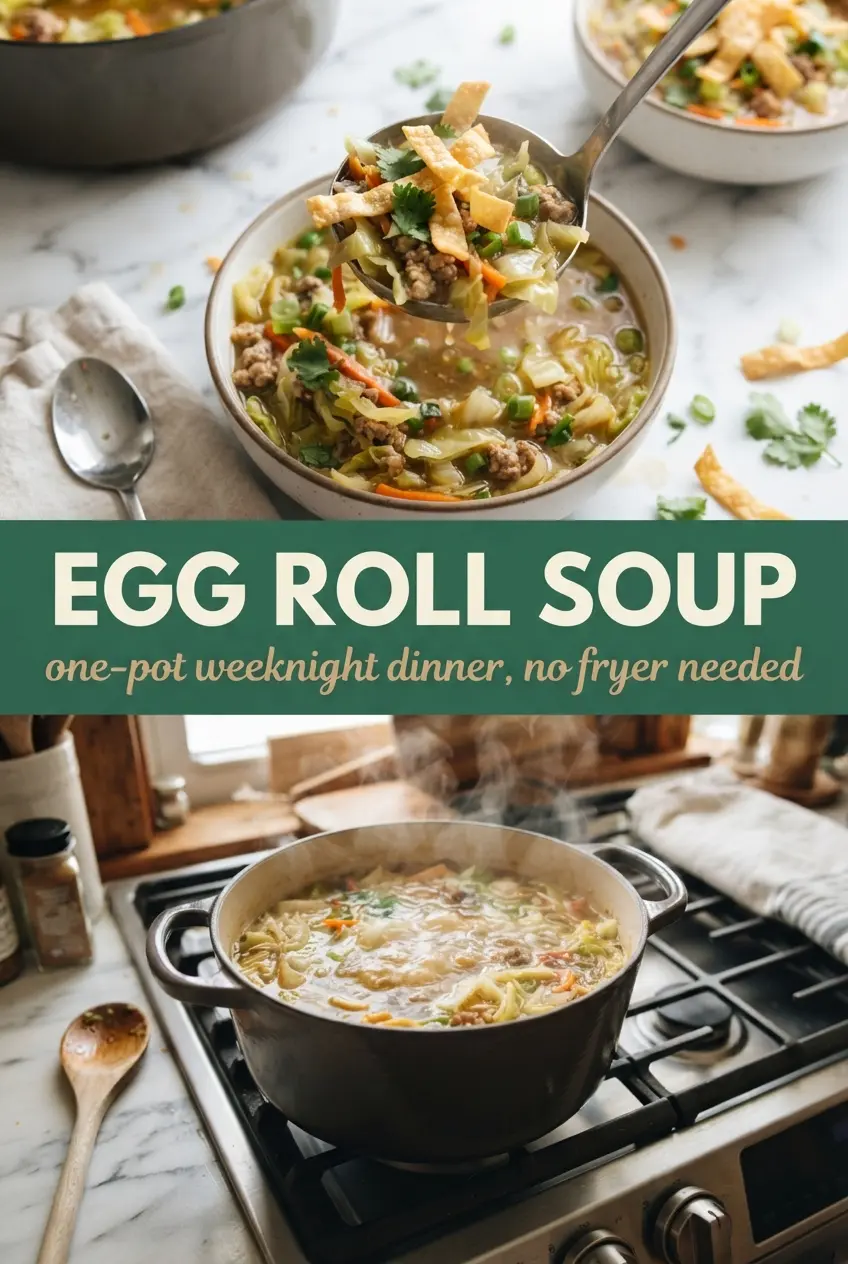
Egg Roll Soup
Ingredients
Equipment
Method
- Brown the ground pork in a large pot over medium-high heat, breaking it up as it cooks until no longer pink, about 6-8 minutes. Visual cue: the meat should be crumbly and browned with some fond on the bottom.
- Add the garlic and ginger, cooking until fragrant for about 1 minute over medium-high heat. Visual cue: you should smell a strong ginger-garlic aroma and see light browning at the edges.
- Stir in the chicken broth, soy sauce, and sesame oil, bringing the mixture to a simmer. Visual cue: small bubbles should break the surface steadily, not a rolling boil.
- Add the shredded cabbage and carrot and simmer for 10-12 minutes until tender. Visual cue: the cabbage should soften and turn slightly translucent while the broth stays hot and gently bubbling.
- Fry the wonton strips in a small amount of oil until golden and crisp. Visual cue: the strips should look amber-gold with crisp, craggy edges.
- Ladle the soup into bowls and top each serving with crispy wonton strips and sliced green onions. Visual cue: the topping should sit on top without soaking in immediately for crunch.