
Coconut pineapple banana bread bakes into a soft, fragrant loaf with a tender crumb, a sunny sweetness, and just enough tropical character to keep every slice interesting. The banana keeps it familiar and plush, the pineapple brings a juicy lift, and the coconut adds texture without turning the loaf heavy. Toasted coconut on top is the part people notice first, but the real payoff is how the fruit keeps the interior moist for days.
This version works because the pineapple is drained well before it goes into the bowl, which keeps the batter from turning loose and gummy in the center. The bananas should be ripe and well mashed so they disappear into the batter instead of leaving pockets. I also like oil here instead of butter, because it stays softer after baking and lets the coconut and fruit stay front and center.
Below you’ll find the small details that keep this loaf from baking up dense or wet, plus the easiest way to freeze it so you can pull out a slice whenever you want one.
I drained the pineapple like you said and the loaf baked up perfectly moist instead of soggy. The coconut on top got crisp at the edges, and my kids kept asking for “the pineapple banana bread” again.
Save this coconut pineapple banana bread for the days you want a soft, fruity loaf with a toasted coconut finish.
The Pineapple Has to Be Dry, Not Just Drained
Banana bread is one of those batters that looks forgiving until it isn’t. Add too much fruit moisture and the center stays heavy and damp long after the edges look done. That’s the main trap here. Pineapple brings bright flavor, but it also brings juice, and that juice changes the bake if it goes in unchecked.
The fix is simple: drain the crushed pineapple well, then press it lightly in a fine sieve or with the back of a spoon. You don’t need to squeeze it bone-dry, just remove the loose liquid that would otherwise seep into the batter. Once that’s handled, the loaf bakes up with a soft crumb instead of a gummy middle.
- Overripe bananas give you sweetness and moisture, but they also soften the structure, so mash them smooth and don’t add extra fruit unless you’re adjusting the liquid elsewhere.
- Shredded coconut adds body and chew. Use unsweetened coconut if you want the loaf less sweet; sweetened coconut makes the top and crumb richer.
- Oil keeps this bread tender after cooling. Butter tastes great, but it firms up more as the loaf sits, which isn’t what you want in a fruit-forward quick bread.
What Each Ingredient Is Actually Doing in This Loaf
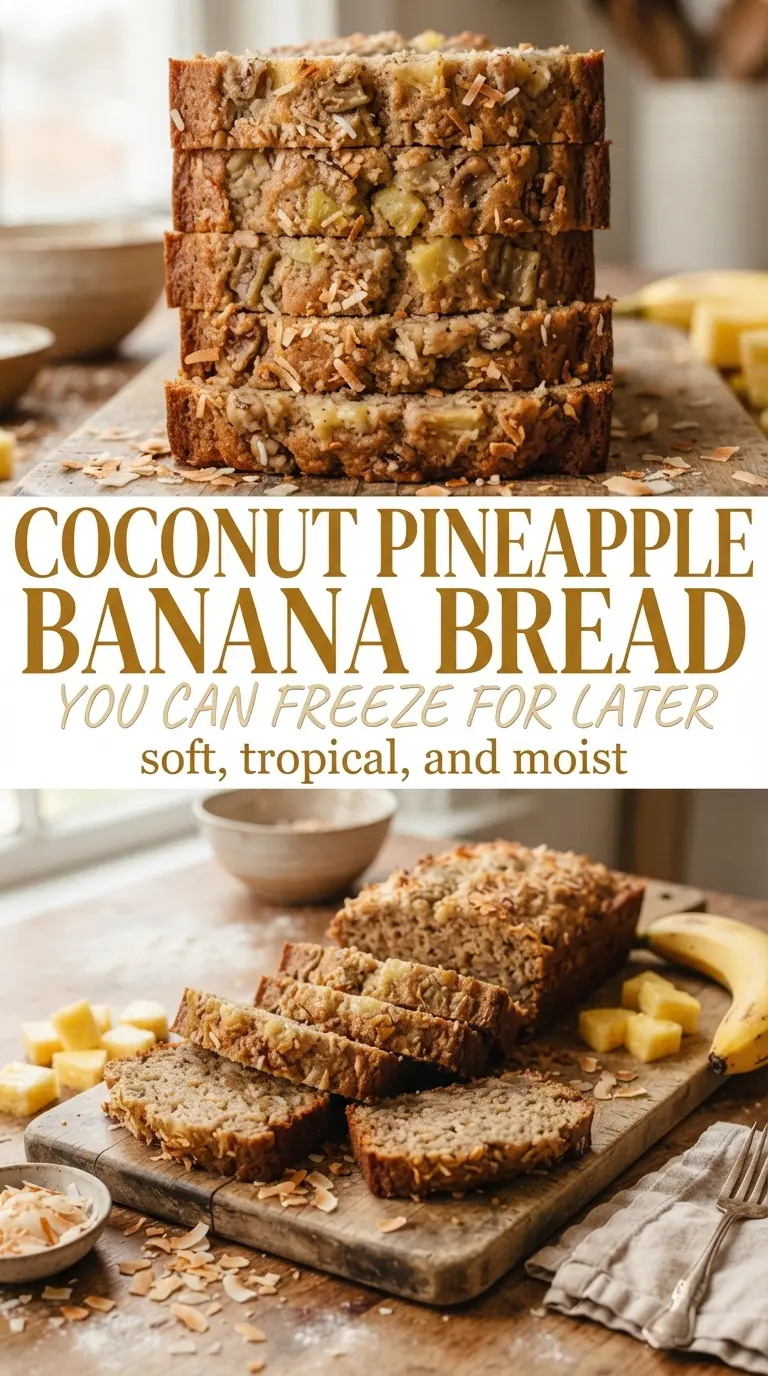
- Bananas — These carry the loaf’s texture and sweetness. Ripe bananas with plenty of brown speckles mash in smoothly and give the bread that soft, bakery-style crumb.
- Crushed pineapple — This is the bright, juicy note that keeps the loaf from tasting flat. Drain it well, because extra liquid is the difference between a moist slice and a dense one.
- Shredded coconut — Coconut gives the bread its signature texture and ties the banana and pineapple together. If you only have sweetened coconut, reduce the sugar slightly so the loaf doesn’t run too sweet.
- Vegetable oil — Oil makes the crumb stay tender even after the loaf cools. Neutral avocado oil works too; coconut oil will add more coconut flavor, but it can firm up as the loaf cools.
- Toasted coconut topping — This isn’t just decoration. It gives you a crisp, nutty finish that plays against the soft crumb underneath, and it turns a simple loaf into something that feels finished.
How to Keep the Loaf Tender From Batter to Slice
Mix the wet ingredients first
Combine the banana, pineapple, coconut, sugar, oil, eggs, and vanilla until everything looks evenly distributed. The batter should look thick and a little shaggy, not smooth like cake batter. If the pineapple wasn’t drained well, you’ll see liquid pooling at the bottom of the bowl, and that’s your warning sign before it becomes a baking problem.
Fold in the dry ingredients lightly
Add the flour, baking soda, and salt all at once, then fold just until the flour disappears. Stop while a few streaks still remain; overmixing develops gluten and gives you a tougher loaf. The batter should be heavy but spoonable, with visible coconut throughout.
Bake until the center sets
Scrape the batter into a greased 9×5-inch loaf pan and sprinkle the toasted coconut over the top. Bake at 350°F until the top is deep golden and a toothpick comes out clean or with a few moist crumbs, usually 55 to 65 minutes. If the top browns before the center is done, lay a loose piece of foil over it for the last stretch so the middle can finish without burning the coconut.
Let it cool before slicing
This loaf needs time to settle after it leaves the oven. If you slice too soon, the crumb can look underbaked and collapse slightly because the fruit is still steaming. Wait at least 20 minutes in the pan, then move it to a rack and let it cool until just warm before cutting clean slices.
Three Ways to Make This Banana Bread Fit What You Have
Dairy-Free as Written
This loaf already happens to be dairy-free when you use vegetable oil, so there’s nothing to change. That’s one reason it stays so soft after baking. Just keep an eye on any add-ins or toppings if you’re serving someone with specific dietary needs.
Gluten-Free Version
Use a good 1:1 gluten-free flour blend in place of the all-purpose flour. The loaf will be a little more delicate, so let it cool fully before slicing. If your blend already includes xanthan gum, don’t add anything extra.
Less Sweet, More Fruit-Forward
Drop the sugar to 1/2 cup if you want the banana and pineapple to lead the flavor. The loaf will still bake up tender, but the finish will be more breakfast bread than dessert-style quick bread. Keep the toasted coconut on top for texture, even if you reduce the sugar.
Storage and Reheating
- Refrigerator: Store tightly wrapped for up to 5 days. The crumb stays moist, though the coconut topping softens a bit after the first day.
- Freezer: Wrap the cooled loaf or individual slices tightly and freeze for up to 2 months. Thaw at room temperature while still wrapped so condensation doesn’t make the crust sticky.
- Reheating: Warm slices in a toaster oven or low oven for a few minutes until the edges are just warm. Microwaving too long makes the loaf rubbery and can pull moisture to the surface.
Answers to the Questions Worth Asking
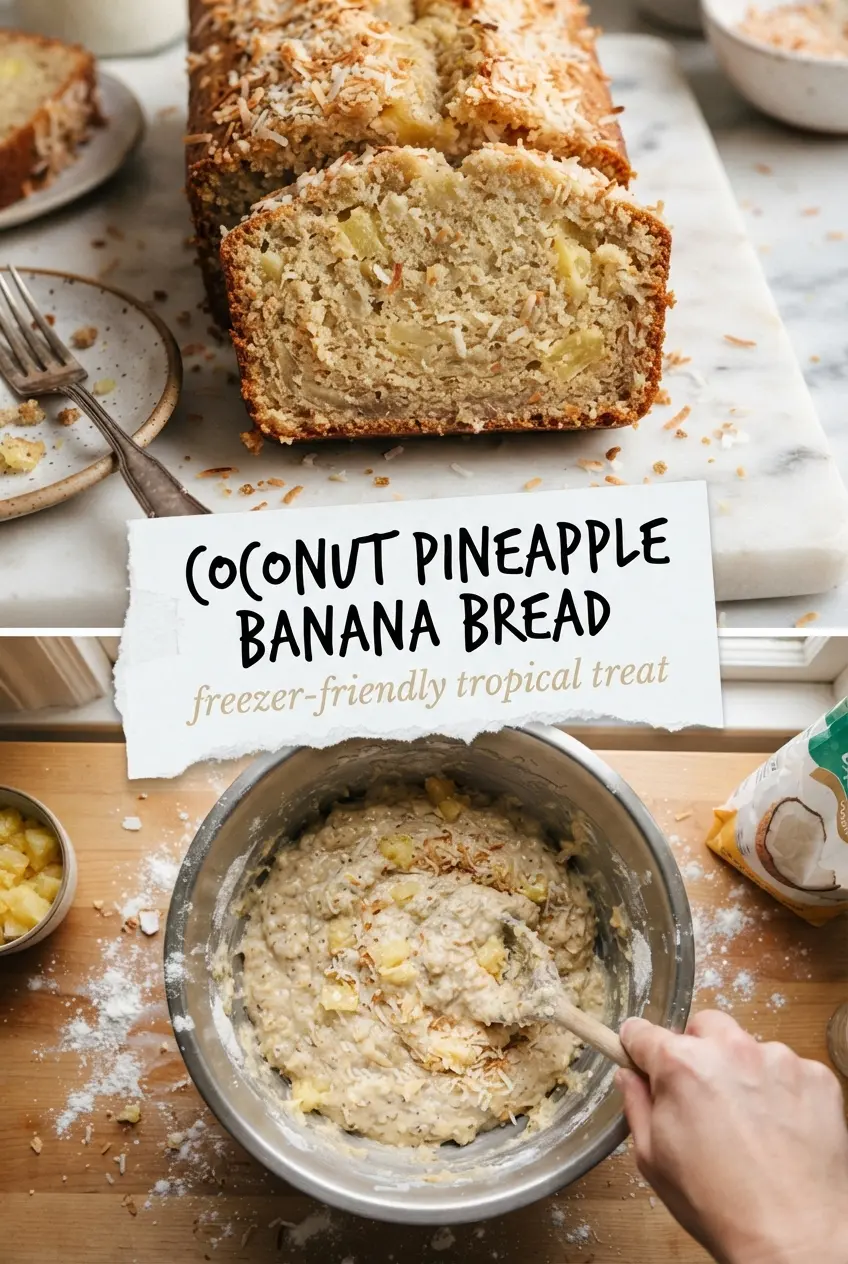
Coconut Pineapple Banana Bread
Ingredients
Equipment
Method
- Preheat the oven to 350°F and grease a 9x5-inch loaf pan. This ensures the batter bakes evenly from the start.
- Whisk together the all-purpose flour, baking soda, and salt in a bowl. Keep whisking until the dry ingredients look evenly combined with no visible streaks.
- In another bowl, mix the mashed bananas, crushed pineapple, shredded coconut, sugar, vegetable oil, eggs, and vanilla extract until smooth and evenly moistened. Break up any banana clumps so the crumb bakes tender.
- Fold the dry ingredients into the wet mixture just until combined. Stop as soon as you don’t see dry flour—overmixing can make the loaf tough.
- Pour the batter into the prepared pan and sprinkle toasted coconut on top. Spread it evenly so the topping stays visible after baking.
- Bake for 55-65 minutes at 350°F until a toothpick comes out clean. Look for a golden-brown top and set edges before checking doneness.