
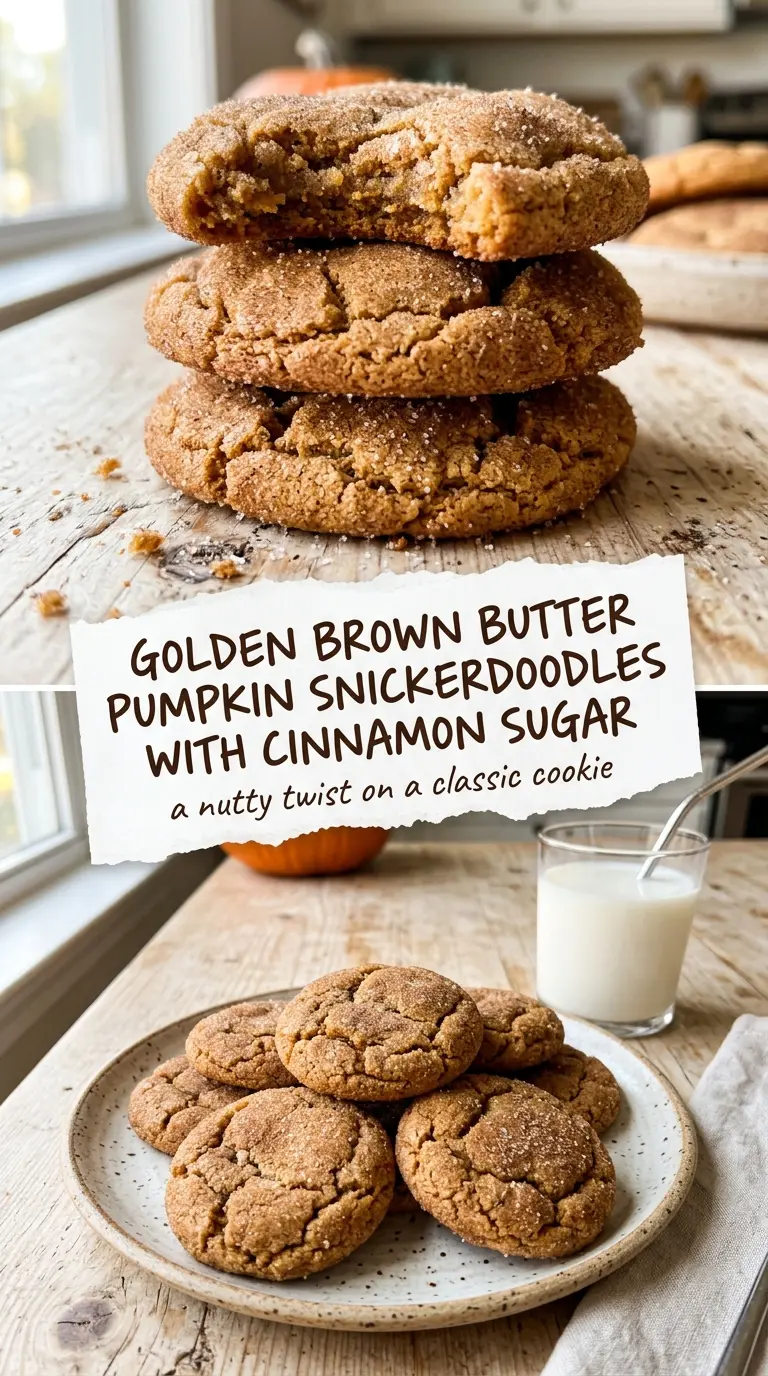
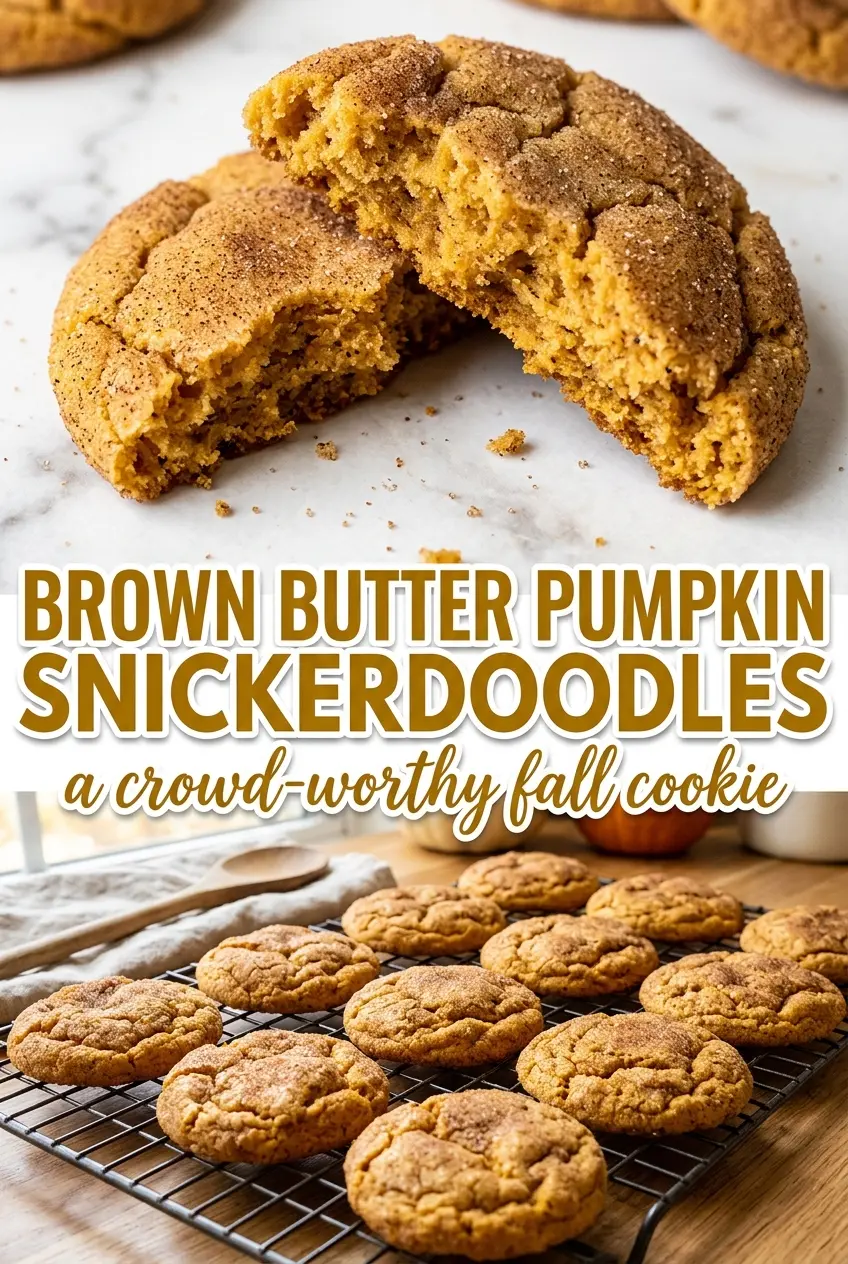
Brown butter pumpkin snickerdoodles bake up with crackly cinnamon-sugar tops, chewy centers, and the kind of warm spice that makes a kitchen smell like you’ve been baking all afternoon. The brown butter gives them a toasted, nutty depth that plain melted butter can’t touch, and the pumpkin keeps the crumb soft without turning the cookies cakey. You get a cookie that tastes familiar at first bite, then finishes with a deeper caramel note that keeps people reaching for one more.
The trick is in the balance. Pumpkin adds moisture, but too much can make snickerdoodles puff and lose that signature spread, so the dough needs just enough flour to hold its shape and enough cream of tartar to keep the flavor sharp and the texture tender. Browning the butter first changes everything here. It cools back down before mixing, so it can still whip with the sugar instead of melting the dough into a greasy mess.
Below, I’ve included the one step that keeps these cookies from turning soft and flat, plus the small dough cue that tells you when it’s ready to roll. If your pumpkin baking sometimes ends up bland or bready, this version fixes both problems without making the method fussy.
The brown butter came through beautifully and the centers stayed soft while the tops cracked just like the photos. I chilled the dough for 20 minutes and they baked up thick instead of spreading all over the tray.
Brown butter pumpkin snickerdoodles with crackly cinnamon-sugar tops are the kind of cookie you’ll want to keep in your saved recipes for quick fall baking.
The Brown Butter Step That Gives These Cookies Their Deepest Flavor
Brown butter is what keeps these snickerdoodles from tasting flat. When butter cooks long enough to pick up toasted milk solids, it adds a nutty, almost caramel edge that plays beautifully with pumpkin and cinnamon. If you stop too early, you get melted butter with a little extra color. Go until it smells like toasted hazelnuts and the bottom of the pan shows amber flecks, then pull it off the heat right away so it doesn’t tip into bitter.
The other place people get tripped up is the dough texture. Pumpkin puree adds moisture, which is great for a soft cookie, but it also makes the dough looser than a classic snickerdoodle. That’s why the recipe uses enough flour to keep the cookies tall at the edges while still staying tender in the middle. If your dough feels sticky or hard to roll, it needs a short chill, not more and more flour.
What Each Ingredient Is Actually Doing in This Dough
- Browned unsalted butter — This is the backbone of the recipe. Browning it adds depth that you can’t fake with extra vanilla or spice, and using unsalted butter keeps the flavor clean. Let it cool before mixing so it can cream with the sugar instead of melting everything together.
- Pumpkin puree — Pumpkin brings moisture and a gentle earthy note, but it also softens the dough. Use plain puree, not pumpkin pie filling, or you’ll end up with extra sugar and spices that throw off the texture. If the dough seems loose, a brief chill tightens it up without drying it out.
- Cream of tartar — This is what gives snickerdoodles their classic tang and tender bite. It also helps the cookies crackle on top instead of baking up like a standard pumpkin cookie. There isn’t a true one-to-one substitute if you want the same snickerdoodle character.
- Cinnamon sugar — The coating does more than decorate the cookies. It creates that sandy, sparkly crust and helps the tops split as the cookies bake. Roll the dough balls generously so the coating stands out after baking.
From Brown Butter to Crackled Tops: How These Cookies Come Together
Cooking the Butter Until It Smells Toasty
Use a light-colored pan so you can see the color change. The butter will foam, then quiet down, and the milk solids at the bottom will shift from pale to golden brown. The moment you smell toasted nuts, take it off the heat and pour it into a bowl so the residual heat doesn’t keep cooking it. If you walk away even for a minute, browned butter turns from nutty to burnt faster than most people expect.
Mixing the Dough Without Overworking It
Beat the cooled brown butter with the sugar until it looks thick and slightly fluffy. Add the pumpkin, egg, and vanilla, then fold in the dry ingredients just until the flour disappears. A few streaks at first are fine; aggressive mixing makes the cookies tougher and encourages extra spread. The dough should be soft but scoopable, like a thick, sticky cookie dough rather than a batter.
Rolling for a Thick, Crackly Bake
Scoop the dough into even balls and roll them in the cinnamon sugar until every surface is coated. If the dough is too soft to handle cleanly, chill it for 20 minutes and try again. That rest firms up the butter and gives the flour time to hydrate, which helps the cookies bake up thick instead of collapsing outward. Bake until the edges are set and the centers still look a little puffy; they finish on the pan as they cool.
How to Adapt These Snickerdoodles Without Losing the Good Parts
Dairy-Free Brown Butter Style
Use a plant-based butter that browns well if you can find one, but expect a slightly softer flavor than real brown butter. Some substitutes don’t brown the same way, so if yours stays pale, the cookies will still work, just with less toasted depth. The texture will be close, especially if you chill the dough before baking.
Gluten-Free Version That Still Holds Its Shape
A good 1:1 gluten-free flour blend can work here, but the dough may need the full chill time before rolling. The cookies will be a touch more delicate and may spread a little less evenly, but the cinnamon-sugar crust and pumpkin flavor still come through. Skip blends with heavy bean flour if you can; they tend to leave a stronger aftertaste in a cookie this simple.
Extra-Spiced Pumpkin Snickerdoodles
Add a small pinch of nutmeg or cardamom to the dry ingredients if you want the cookies to lean warmer and more aromatic. Keep it restrained, though, because the brown butter and cinnamon already do a lot of work. Too much spice can cover the toasted butter flavor, which is the whole point of this version.
Storage and Reheating
- Refrigerator: Store in an airtight container for up to 5 days. The cookies soften a little as they sit, but the flavor deepens.
- Freezer: Freeze the baked cookies for up to 2 months, or freeze the scooped dough balls and bake from frozen with 1 to 2 extra minutes.
- Reheating: Warm a cookie in the microwave for 8 to 10 seconds if you want the centers soft again. Don’t overheat them or the sugar coating will turn sticky instead of crisp at the edges.
Answers to the Questions Worth Asking
Brown Butter Pumpkin Snickerdoodles
Ingredients
Equipment
Method
- Melt the unsalted butter in a light-colored pan over medium heat until golden brown and nutty smelling, stirring as needed to prevent dark spots. Cool until no longer hot.
- Whisk the all-purpose flour, baking soda, and cream of tartar together in a mixing bowl until evenly combined. Stop mixing once the color is uniform.
- Beat the browned butter and granulated sugar together until smooth and well combined. Mix in the pumpkin puree, then beat in the egg and vanilla extract.
- Fold the dry ingredients into the pumpkin mixture until a soft dough forms with no visible dry flour. If it feels too soft to roll, chill for 20 minutes.
- Roll the dough into balls, then coat generously in the cinnamon sugar mixture. Press lightly so the coating adheres.
- Bake at 350°F for 10-12 minutes, until the edges are set and the tops are crackled. Let cool on the sheet pan for a few minutes before transferring.