
Brown butter pumpkin bread bakes up with a deep, nutty richness that plain pumpkin loaves just don’t have. The crumb stays tender and moist, but the flavor is fuller and warmer, with caramel notes from the butter that make every slice taste like it came from a better bakery. The top turns a deep golden brown and the center stays soft without feeling heavy, which is exactly what you want in a loaf you’ll keep slicing into all week.
The key is giving the butter enough time to brown without burning it, then letting it cool just enough so it won’t scramble the eggs. That one extra step changes the whole loaf. Pumpkin puree brings moisture and body, while brown sugar keeps the bread soft and adds a little molasses depth that plays nicely with cinnamon and nutmeg.
Below, I’ve included the trick for browning butter in a way that’s easy to read visually, plus a few swaps and storage notes that actually help when you’re baking ahead or working with what’s in your pantry.
The brown butter gave the loaf this incredible nutty edge, and the crumb stayed soft for days. I baked it for 58 minutes and it came out perfect with that little moist spot on the toothpick.
Save this brown butter pumpkin bread for the loaf that turns out rich, tender, and packed with nutty brown butter flavor.
The Reason Brown Butter Beats Oil in Pumpkin Bread
Oil keeps pumpkin bread soft, but brown butter gives it something oil never can: a toasted, caramelized flavor that runs through the whole loaf. The trick is not just swapping it in. Brown butter has to cool a bit before it meets the eggs and pumpkin, or you’ll lose that smooth batter texture and risk little cooked bits in the mix. That cooling step matters more than people think.
Because pumpkin puree already carries a lot of moisture, this loaf doesn’t need any extra liquid. The batter should be thick and spoonable, not pour-like. If it looks loose, the bread can bake up gummy in the center even when the edges look done.
What Each Ingredient Is Actually Doing in This Dish
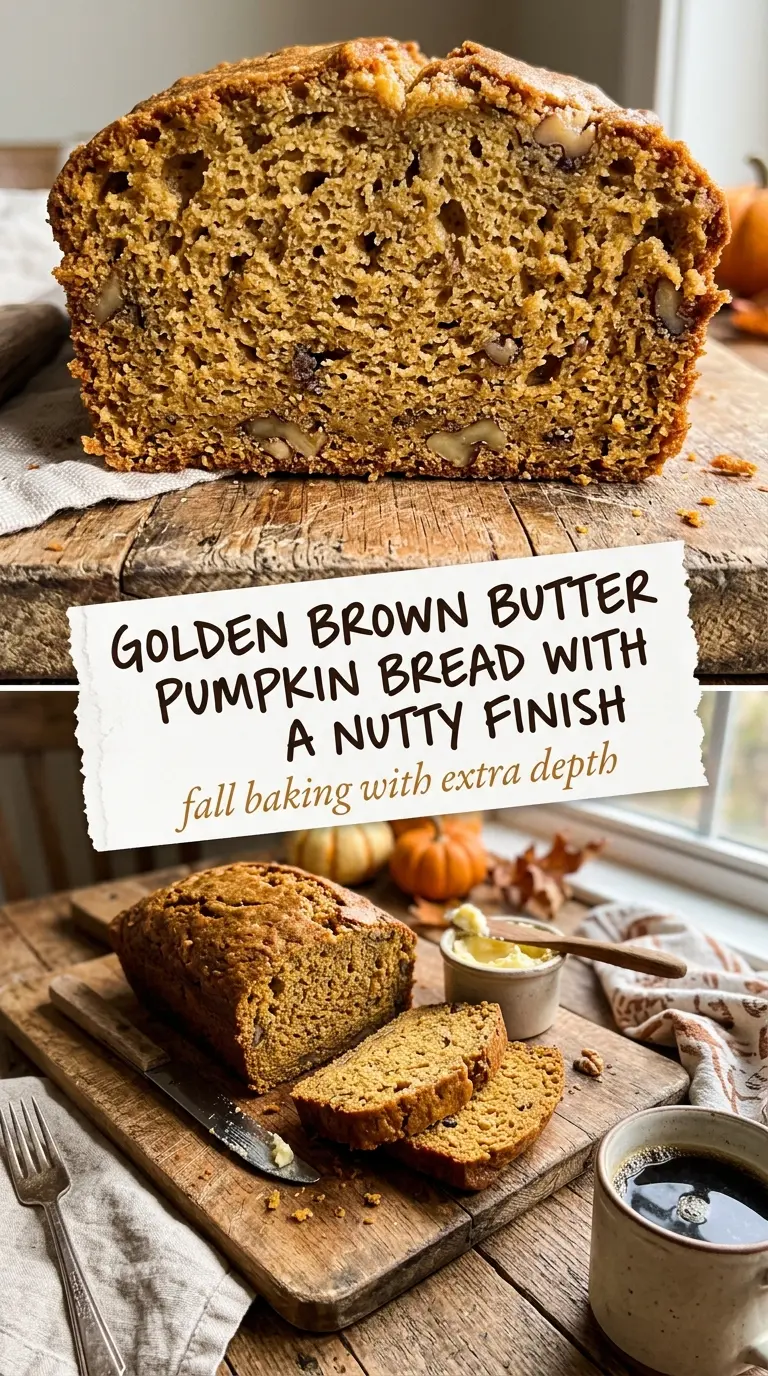
- All-purpose flour — This gives the loaf enough structure to hold the pumpkin and brown butter without turning dense. Measure it lightly; packed flour is one of the fastest ways to get a heavy bread.
- Baking soda — It reacts with the pumpkin batter and helps the loaf rise. If yours is old, the bread can bake up flat and tight.
- Cinnamon and nutmeg — These don’t need to dominate. They should round out the brown butter and pumpkin instead of covering them up.
- Brown butter — This is the flavor engine. Use a light-colored pan so you can see the milk solids turn golden brown. If it smells nutty and looks amber with little brown flecks, it’s ready.
- Pumpkin puree — Use pure pumpkin, not pumpkin pie filling. Pie filling adds sugar and spices that throw off the balance of the loaf.
- Brown sugar — This keeps the crumb soft and adds molasses depth that works naturally with the browned butter. Light or dark brown sugar both work; dark just gives a deeper caramel note.
How to Keep the Crumb Tender While the Butter Does the Heavy Lifting
Browning the Butter Without Burning It
Set the butter in a light-colored skillet or saucepan over medium heat and swirl it often as it melts. The foam will rise first, then settle, and you’ll start seeing amber specks form at the bottom. The butter is ready when it smells nutty and looks golden brown, not when it turns dark. If it goes from fragrant to smoky, it’s gone too far and will taste bitter in the finished loaf.
Mixing the Batter Without Overworking It
Whisk the dry ingredients together first so the baking soda and spices are evenly distributed. In a separate bowl, beat the pumpkin, browned butter, eggs, and brown sugar until smooth, then fold the dry ingredients in just until you don’t see streaks of flour. Overmixing develops the flour and makes the loaf tougher, which is the opposite of what this bread should be.
Baking Until the Center Is Set
Pour the batter into a greased loaf pan and bake at 350°F for 55 to 60 minutes. Start checking near the end of the range. A toothpick should come out with a few moist crumbs, not wet batter. If the top is browning too quickly before the center is done, lay a loose piece of foil over it for the last 10 to 15 minutes.
Make It Dairy-Free
Use a good dairy-free butter that browns well, not a soft spread that stays pale in the pan. You won’t get quite the same toasted depth as real butter, but you’ll still get a rich loaf with a similar texture.
Swap In Whole Wheat Flour for a Heartier Loaf
Replace up to half the all-purpose flour with white whole wheat flour. The loaf will be a little more rustic and slightly less tender, but the pumpkin and brown butter can handle the extra nuttiness.
Turn It Into Muffins
Divide the batter into a lined muffin tin and bake at 350°F for about 18 to 22 minutes. Muffins set faster, so they stay a little lighter in texture and are easier to freeze and grab one at a time.
Storage and Reheating
- Refrigerator: Keep tightly wrapped at room temperature for up to 3 days, or refrigerate for up to 5 days. The crumb firms up a little in the fridge, but the flavor deepens.
- Freezer: This freezes well. Wrap the cooled loaf or individual slices tightly, then freeze for up to 3 months. Thaw at room temperature so the texture stays soft instead of drying out in the microwave.
- Reheating: Warm slices in a toaster oven or a low oven for the best texture. Microwaving works in a pinch, but too much heat can make the crumb rubbery and dull the brown butter flavor.
Answers to the Questions Worth Asking
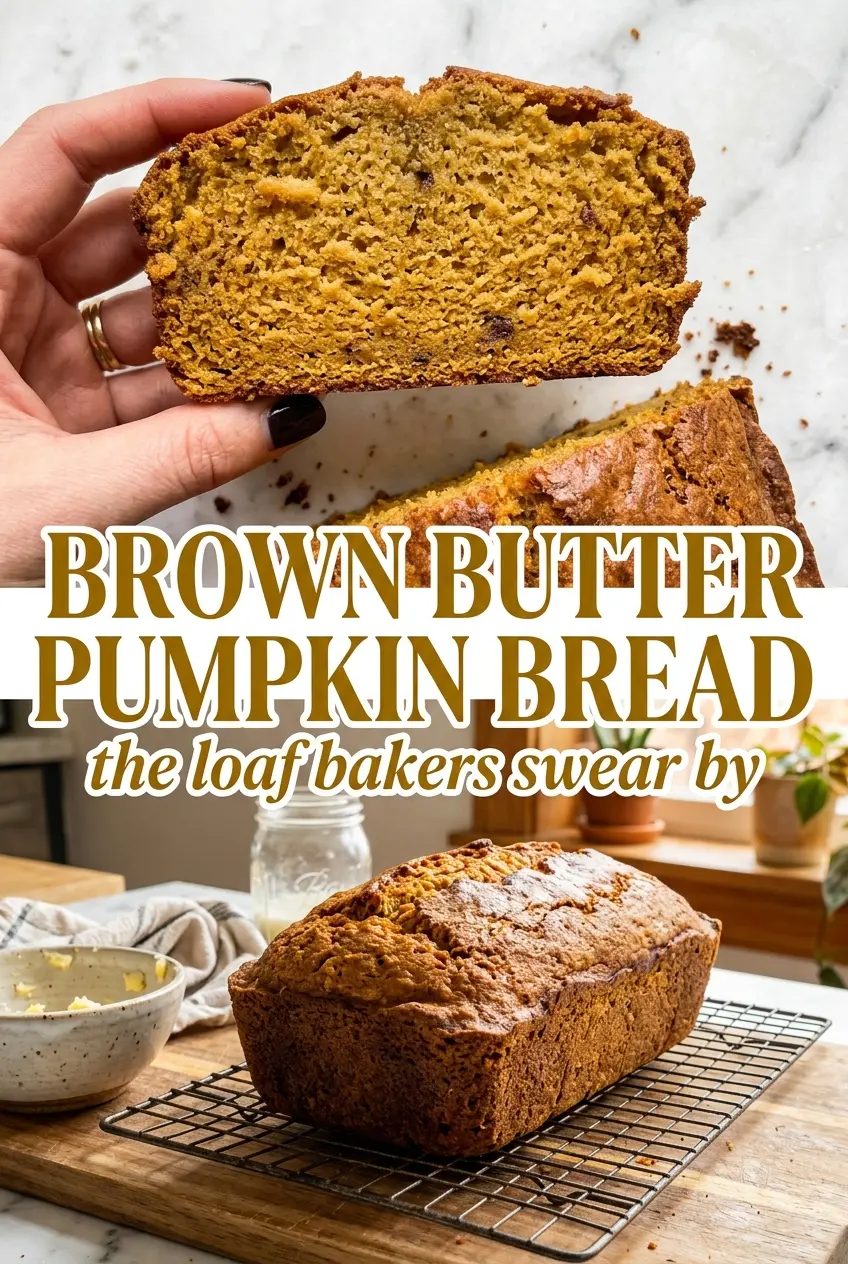
Brown Butter Pumpkin Bread
Ingredients
Equipment
Method
- Melt butter in a light-colored pan over medium heat, swirling until it turns golden brown and smells nutty, then cool slightly. Watch closely because it can go from golden to burnt in seconds (visual cue: golden-brown butter solids).
- Grease a loaf pan and set it aside so it’s ready for pouring. (Visual cue: pan surface lightly coated, no thick puddles.)
- In a bowl, whisk flour, baking soda, cinnamon, and nutmeg until evenly combined. (Visual cue: uniform speckled dry mix.)
- Beat pumpkin puree, brown butter, eggs, and brown sugar until smooth. (Visual cue: glossy, fully incorporated wet mixture.)
- Fold the wet ingredients into the dry ingredients until just combined. (Visual cue: no large streaks of dry flour, thick batter texture.)
- Pour batter into the greased loaf pan and spread it level. (Visual cue: batter evenly fills the pan with a flat top.)
- Bake at 350°F for 55-60 minutes until a toothpick comes out mostly clean. (Visual cue: loaf is golden-brown and springs back lightly when touched.)
- Cool in the pan for 10 minutes before moving to a rack to cool further. (Visual cue: loaf holds shape, crumb sets and doesn’t look wet.)