
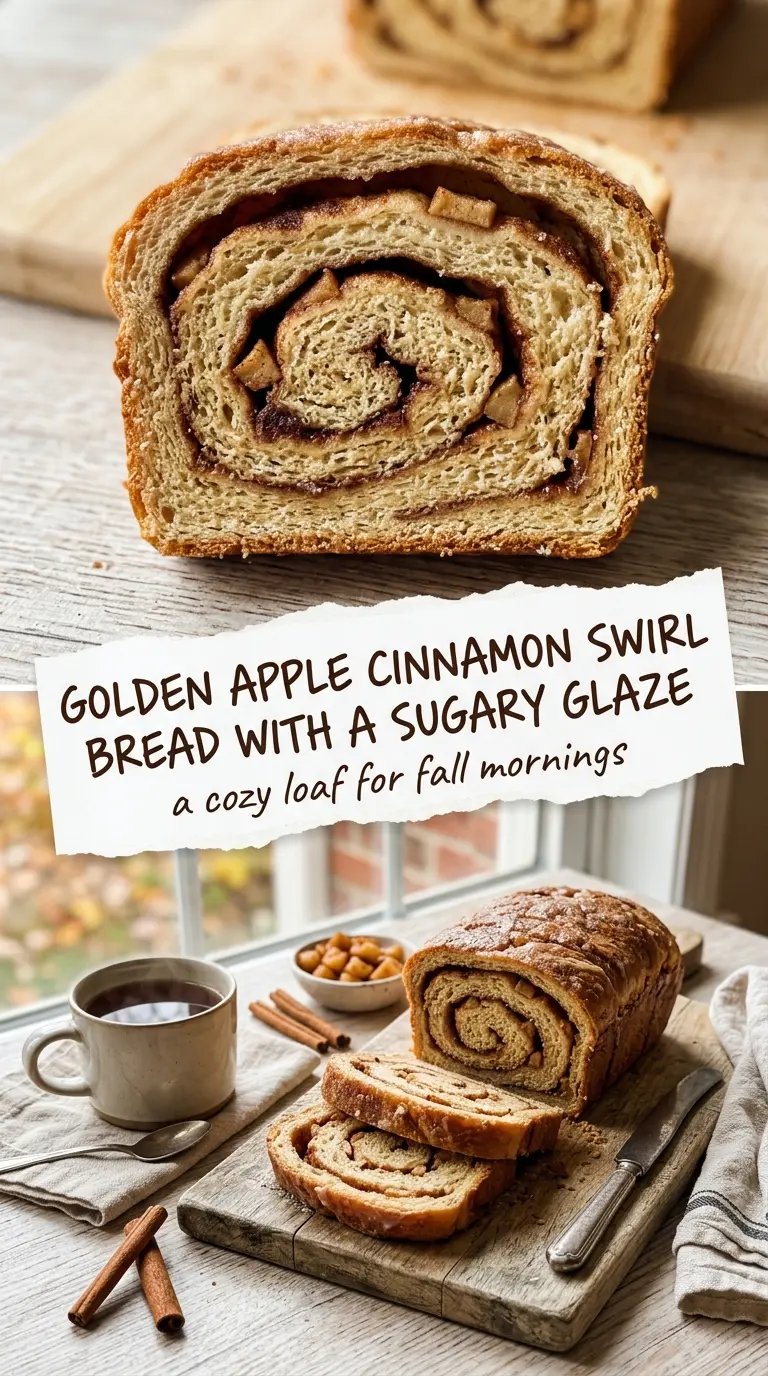
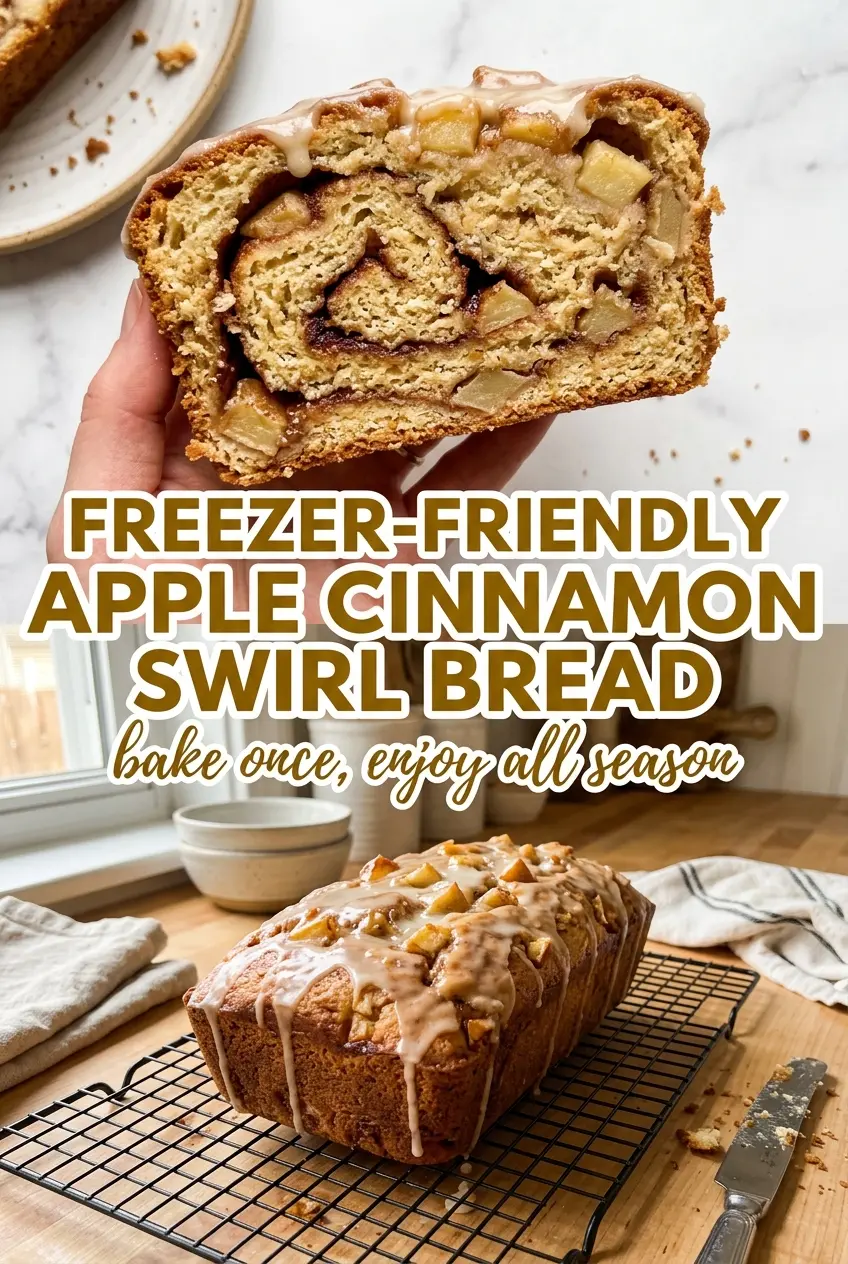
Apple cinnamon swirl bread bakes up with a soft, buttery crumb, tender bits of apple, and those thick ribbons of cinnamon sugar that turn every slice into something worth slowing down for. The glaze drips into the ridges and settles into the top crust, so you get a little sweet finish without burying the bread under frosting. It slices cleanly once cooled and keeps that cozy swirl all the way through the loaf.
What makes this version work is the balance between the tender batter and the dry cinnamon-sugar mixture tucked between the layers. The batter stays simple and rich, which gives the bread structure without turning it heavy, and the apple pieces add little bursts of moisture instead of making the loaf soggy. Tossing the diced apple with a little flour helps it stay suspended instead of sinking to the bottom.
Below, I walk through the swirl pattern that gives you clear layers instead of one muddled middle, plus the small timing cues that tell you when the loaf is done even if the toothpick isn’t perfectly dry.
The swirl stayed distinct and the loaf baked up so soft in the middle. I tossed the apples in flour like you suggested and they didn’t sink at all.
Save this apple cinnamon swirl bread for the mornings when you want a soft, swirled loaf with a clean apple layer and a glossy glaze.
The Swirl Needs Layers, Not a Stir
Most quick breads go wrong when the cinnamon sugar gets mixed straight through the batter. That gives you a uniformly speckled loaf instead of the deep ribboning that makes each slice look and taste special. Here, the batter goes into the pan in two additions, with the cinnamon-sugar mixture scattered between them so it can melt into a defined spiral as it bakes.
The other thing to watch is how much you swirl. One or two gentle passes with a knife is enough. If you drag the blade through too many times, the swirl blends into the batter and you lose those distinct cinnamon pockets. You want visible ribbons on top, not a marbled mess all the way through.
What Each Ingredient Is Actually Doing in This Loaf
- All-purpose flour — This gives the loaf enough structure to hold the apple pieces and swirl without turning tough. Cake flour would make it too fragile, and bread flour would make it chewier than this recipe needs.
- Baking powder — This is the lift that keeps the loaf from baking up dense. If your baking powder is old, the bread will still bake, but it won’t rise with the same light crumb.
- Cinnamon — There are two cinnamon jobs here: one in the batter for background warmth and one in the swirl for a stronger line of flavor. Use a fresh jar if you can, because stale cinnamon gets muddy fast.
- Butter — Softened butter creams with the sugar and traps air, which gives the loaf a finer crumb. Don’t melt it; melted butter won’t whip in the same way and the bread comes out heavier.
- Brown sugar — This is what creates the sticky, caramel-like swirl. Light or dark brown sugar both work, but dark brown sugar gives a deeper molasses note.
- Apple — Use a firm baking apple if you have one. A soft apple can disappear into the loaf, while a firmer one stays tender and gives you distinct little bites.
- Powdered sugar and milk — This glaze should be thin enough to drizzle, not spread like frosting. Add the milk a little at a time so you don’t end up with a runny glaze that slides right off the loaf.
The Mixing Order That Keeps the Crumb Soft
Building the Base
Beat the softened butter and granulated sugar until the mixture turns pale and fluffy, not just combined. That step matters because it builds the air pockets that keep the loaf light. Once the eggs go in, the batter may look slightly curdled; that’s normal and it smooths out after the dry ingredients are added.
Bringing the Batter Together
Fold in the flour mixture just until the streaks disappear. Overmixing turns quick bread elastic and tight, which is how you end up with a tough slice instead of a tender one. Add the diced apple at the end and stir only enough to distribute it evenly.
Layering the Cinnamon Sugar
Pour half the batter into a greased loaf pan, sprinkle on half the cinnamon sugar, then run a knife through it in a loose S pattern. Repeat with the rest of the batter and topping. The goal is a visible swirl without digging all the way to the bottom of the pan, where the filling can settle and make the base too sticky.
Baking to the Right Center
Bake at 350°F until the top is deeply golden and a toothpick inserted in the center comes out mostly clean, with a few moist crumbs attached. If the top browns before the middle is done, tent it loosely with foil for the last part of baking. Let the loaf cool in the pan for a short rest before turning it out so the swirl sets instead of collapsing.
Three Ways to Make This Loaf Work for Your Kitchen
Make it dairy-free
Swap the butter for a plant-based baking stick and use an unsweetened non-dairy milk in the batter and glaze. The loaf will still rise and slice well, though the crumb will be a touch less rich than the original.
Use pears instead of apples
A firm pear works if that’s what you have, but it softens faster in the oven and gives a gentler, less tart bite. Dice it the same way you’d dice the apple and keep the flour toss, or the pieces will sink.
Turn it into muffins
Portion the batter into lined muffin tins and bake until the centers spring back and a tester comes out with just a few crumbs. You’ll lose the dramatic loaf swirl, but you gain more cinnamon-sugar crust in every bite.
Storage and Reheating
- Refrigerator: Keep the loaf covered for up to 4 days. The crumb stays soft, though the glaze will soak in a little more by day two.
- Freezer: This bread freezes well. Wrap individual slices or the whole cooled loaf tightly, then thaw at room temperature so the glaze doesn’t turn sticky from condensation.
- Reheating: Warm slices in a toaster oven or microwave for a few seconds only. Long reheating dries out the crumb and makes the swirl tough instead of soft and fragrant.
Answers to the Questions Worth Asking
Apple Cinnamon Swirl Bread
Ingredients
Equipment
Method
- Whisk all-purpose flour, baking powder, and cinnamon together until evenly combined.
- Whisking creates a uniform spice distribution so the loaf has consistent cinnamon flavor in every bite.
- Beat softened unsalted butter and granulated sugar until fluffy, about 2 minutes.
- Beat in large eggs one at a time, then mix in milk until smooth.
- Fold the dry ingredients into the wet ingredients until just combined, taking care not to overmix.
- Fold in diced apple (tossed lightly in flour first) until the pieces are evenly distributed.
- Stir brown sugar and cinnamon for swirl together until it forms an even cinnamon-sugar mixture.
- Pour half the batter into a greased loaf pan and sprinkle with half the cinnamon sugar.
- Swirl the cinnamon sugar gently through the batter using a figure-eight motion without stirring completely through.
- Repeat with the remaining batter and remaining cinnamon sugar, then swirl again gently.
- Bake at 350°F for 55-60 minutes, until a toothpick comes out mostly clean.
- Let the loaf cool before glazing so the glaze stays glossy instead of melting into the crumb.
- Whisk powdered sugar and milk for glaze together until smooth.
- Drizzle the glaze over the cooled loaf, then slice once set for clean ribboned pieces.